
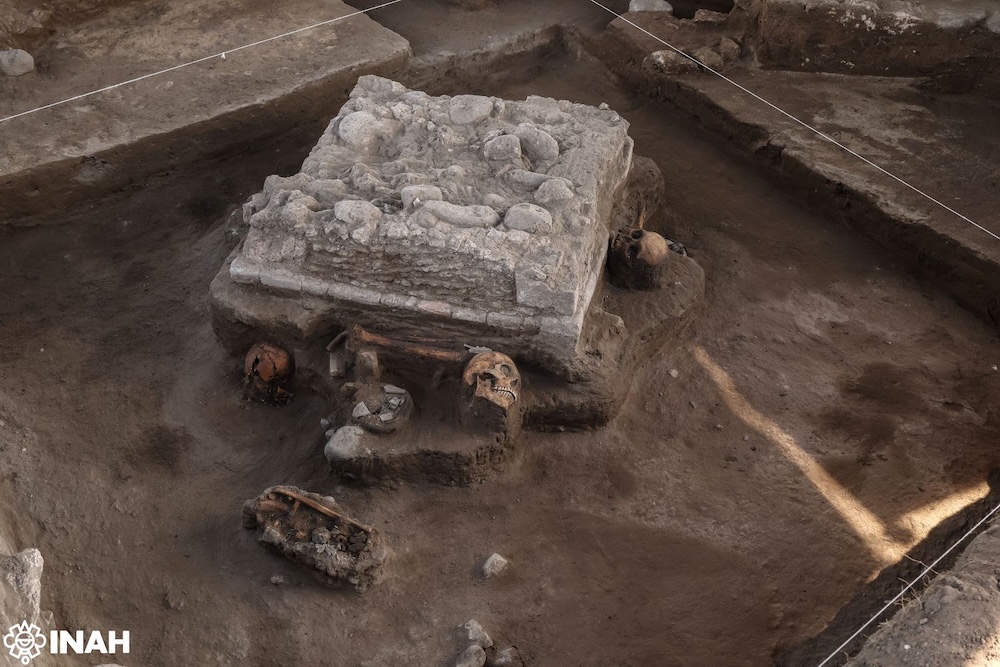
Archaeologists conducting salvage work for a new passenger train line between Querétaro and Mexico City have unearthed a 1,000-year-old Toltec stone altar. Located within the Tula Archaeological Monument Zone in Hidalgo, the three-level structure was found alongside four human skulls, long bones, a black ceramic bowl, and obsidian blades. Preliminary assessments by the National Institute of Anthropology and History (INAH) suggest the remains belong to individuals offered as ritual sacrifices.
This discovery highlights the ongoing tension and collaboration between modern infrastructure development and cultural preservation in Mexico. By integrating archaeological salvage into major transit projects, the Mexican government aims to fulfill its mandate of safeguarding Mesoamerican heritage. The find provides critical new data for researchers studying Toltec sacrificial practices and the complex history of one of central Mexico's most influential prehistoric civilizations.