
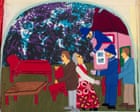
The British textile artist Elizabeth Allen, who lived in a dilapidated hut and gained brief international fame in the 1960s after being discovered by artist Patrick Heron, is the subject of a major rediscovery. A new exhibition at Compton Verney in Warwickshire features works that have been hidden in storage or private collections for nearly fifty years, including the first public display of 'Autobiraggraphy,' a textile work documenting her wrongful eviction in 1934.
Allen’s resurgence highlights the enduring power of 'outsider' perspectives and the technical sophistication of narrative needlework. By elevating her personal struggles—including poverty, disability, and displacement—into vibrant, modernist compositions, the exhibition reclaims her status as a significant 20th-century colorist whose work bridges the gap between traditional craft and contemporary social commentary.