
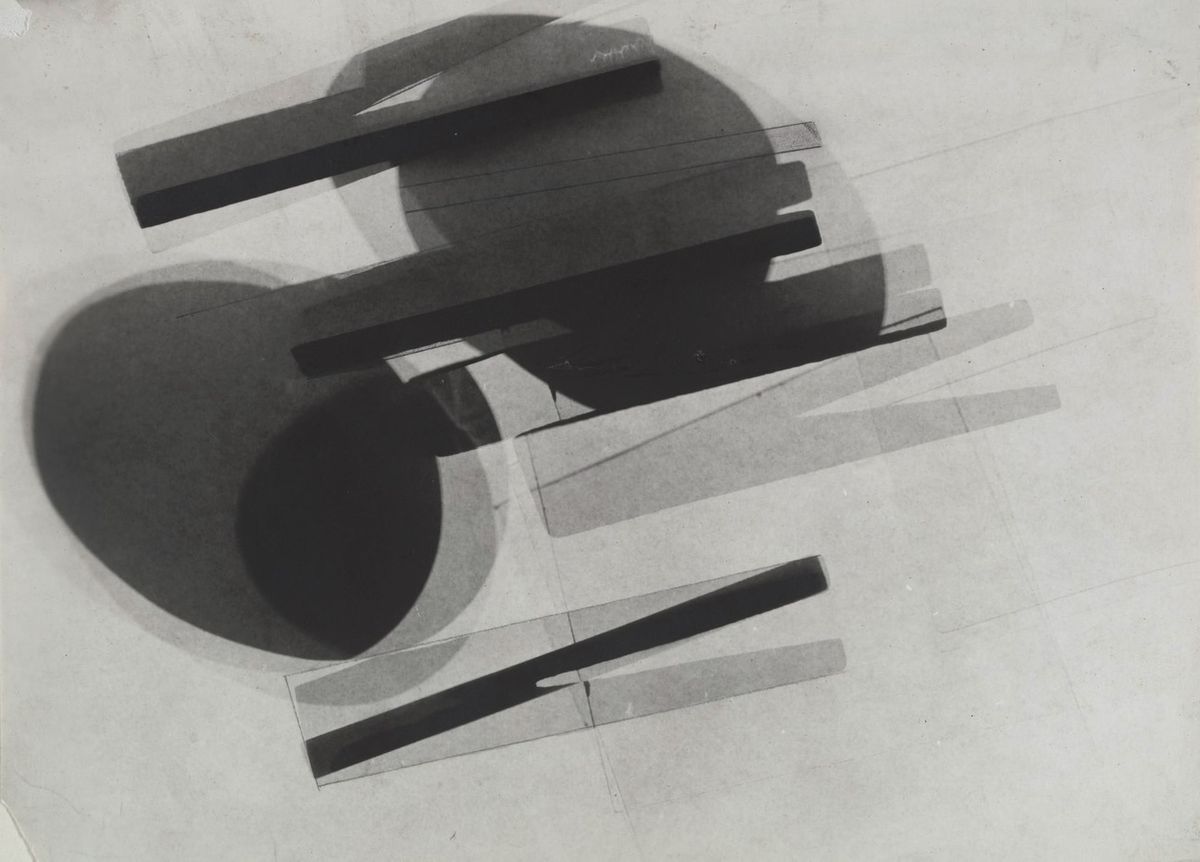
The Bauhaus artist László Moholy-Nagy proposes a radical departure from traditional filmmaking in his 1925 text, "Simultaneous or Poly-Cinema." He envisions a cinematic experience that moves beyond the static, rectangular screen, suggesting instead curved, spherical, or multi-planar surfaces that can accommodate multiple simultaneous projections. By utilizing rotating prisms and intersecting film strips, Moholy-Nagy describes a system where different narrative threads—such as the lives of multiple characters—can physically overlap and merge, creating a dynamic architectural arrangement of light and movement.
This text is a foundational document for what would eventually become expanded cinema and multi-screen video installation art. Writing decades before these forms became mainstream in contemporary art galleries, Moholy-Nagy argues that the sensory pressures of modern urban life have evolved human perception to handle simultaneous streams of information. His theories represent a pivotal moment in modernist history, shifting the focus from cinema as a linear storytelling medium to an immersive, spatial, and non-objective sensory experience that challenges the viewer's cognitive and optical capacities.