
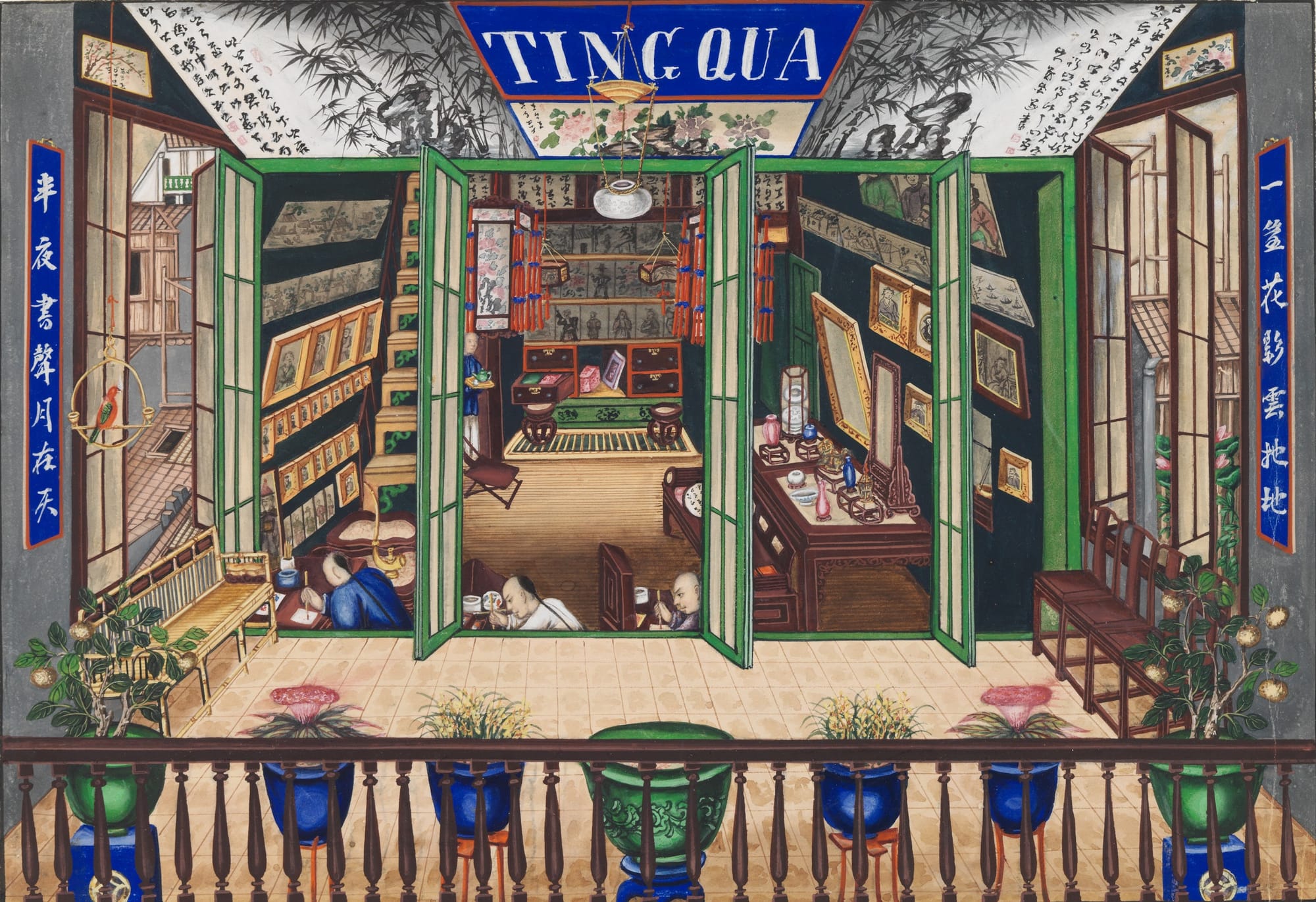
Art historian Winnie Wong’s new book, *The Many Names of Anonymity: Portraitists of the Canton Trade*, investigates the lives and legacies of 18th and 19th-century Chinese artists who produced works for Western traders under the Canton system. These artists, often dismissed by history as mere copyists or left anonymous in museum "tombstone" labels, created complex works that blended European techniques with Chinese traditions. Wong challenges the reductive category of "Asian export art," proposing instead the term "Canton trade painting" to better reflect the unique atmosphere of cultural exchange in Guangzhou.
This study matters because it deconstructs long-standing racialized tropes that characterize Chinese artisans as unimaginative laborers rather than creative agents. By examining the enigmatic qualities of their work—such as reverse glass paintings and fictive studio composites—Wong highlights the limitations of Western art historical taxonomies that prioritize individual biography over collective practice. The research forces a reevaluation of how museums categorize global art history and how the pursuit of "authenticity" can often obscure the sophisticated reality of cross-cultural artistic production.