
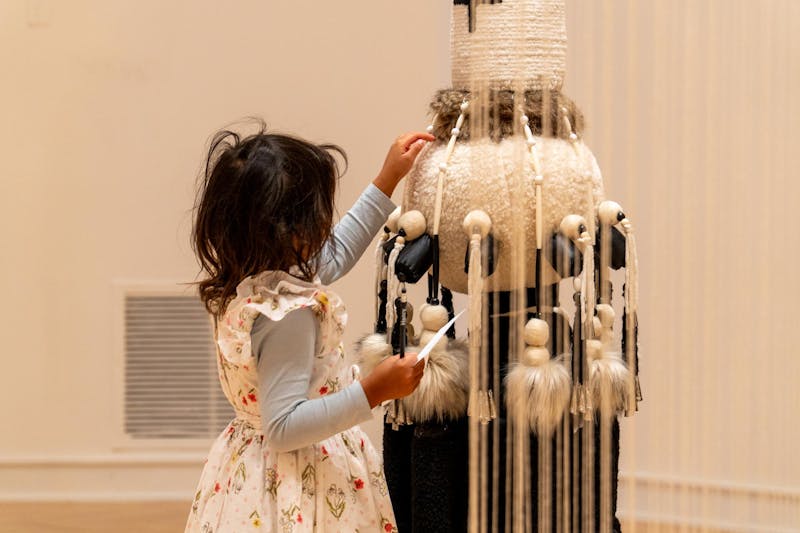
Diné artist Eric-Paul Riege has launched his largest exhibition to date, titled “ojo|-|ólǫ́,” at the Henry Art Gallery. The show features large-scale soft sculptures, wearable art, and multimedia installations that reinterpret traditional Navajo symbols like the weaving comb and the hogan. Central to the exhibition is Riege’s rejection of traditional museum barriers; he encourages visitors to touch the tactile, plush works to honor the many hands involved in the production of his materials.
This exhibition serves as a critical intervention in the ongoing debate regarding the preservation and display of Indigenous artifacts within Western institutions. Curated by Nina Bozicnik and Thea Quiray Tagle, the project explores how museums can move toward "care and repair" by prioritizing Indigenous-led forms of knowledge production. By allowing physical interaction with the art, Riege challenges the sterile, colonial-era practice of keeping cultural objects behind glass, instead fostering a living connection between the viewer, the artist, and ancestral traditions.