
medieval art christ side wound vulva
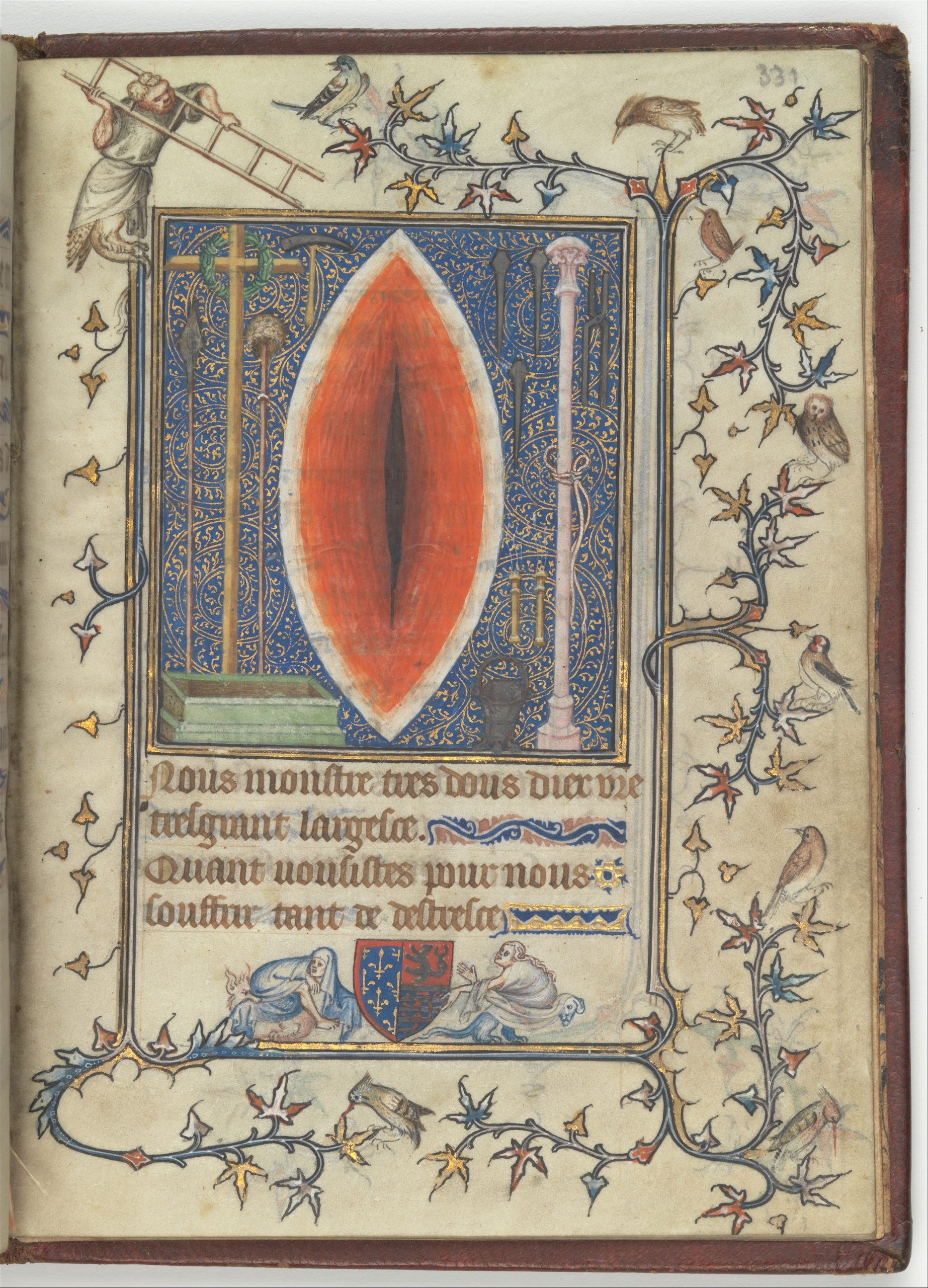
The Met Cloisters in New York is hosting "Spectrum of Desire: Love, Sex, and Gender in the Middle Ages," an exhibition exploring how medieval art depicted the body, sexuality, and gender. A central focus of the show is the intentional depiction of Christ’s side wound as a vulva-like shape, or mandorla, in illuminated manuscripts such as the 14th-century Prayer Book of Bonne of Luxembourg. These images were designed as intimate devotional tools, inviting viewers to meditate on Christ's suffering through a lens that transcended traditional gender binaries.
This exhibition matters because it challenges modern assumptions about medieval prudery and fixed gender roles, revealing a historical period where the divine was often conceptualized as both male and female. By highlighting works by female illuminators like Bourgot and Jeanne de Montbaston, the show also restores visibility to women artists of the era. It demonstrates how medieval iconography used corporeal and yonic imagery to facilitate spiritual nourishment, likening Christ’s wounds to both a womb and a lactating breast.