
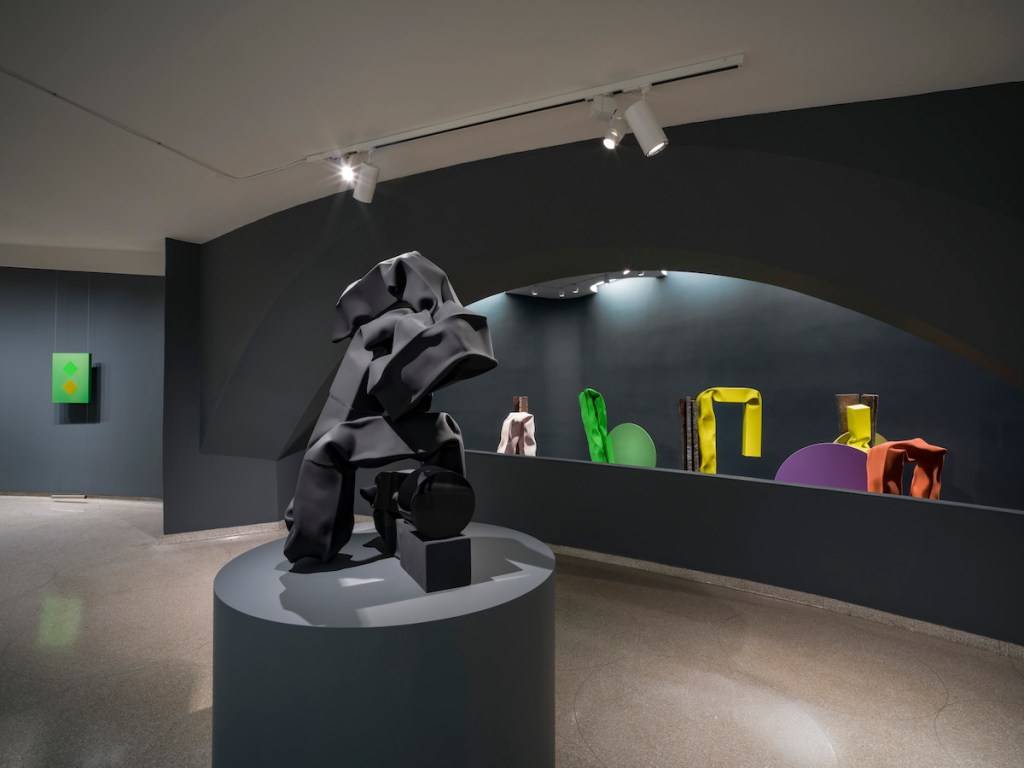
The Solomon R. Guggenheim Museum has launched a major retrospective of Carol Bove, filling the iconic Frank Lloyd Wright rotunda with approximately 100 works spanning her career. The exhibition showcases Bove’s evolution from her early assemblages of driftwood, peacock feathers, and vintage books to her more recent large-scale, brightly colored steel sculptures. A defining feature of the show is Bove’s inclusion of "para-artworks"—pieces by other artists such as Lionel Ziprin, Agnes Martin, and Arnaldo Pomodoro—integrated into her own installations to highlight the influences and histories that inform her practice.
This retrospective matters because it redefines the traditional solo museum exhibition by blurring the lines between artist and curator. By excavating a long-hidden Joan Miró mural and championing the work of the nearly forgotten Lower East Side poet Lionel Ziprin, Bove uses her institutional platform to perform an act of art-historical recovery. The show positions her not just as a sculptor of industrial materials, but as a conceptual thinker who treats the museum’s permanent collection and the legacies of her predecessors as raw material for her own creative output.