
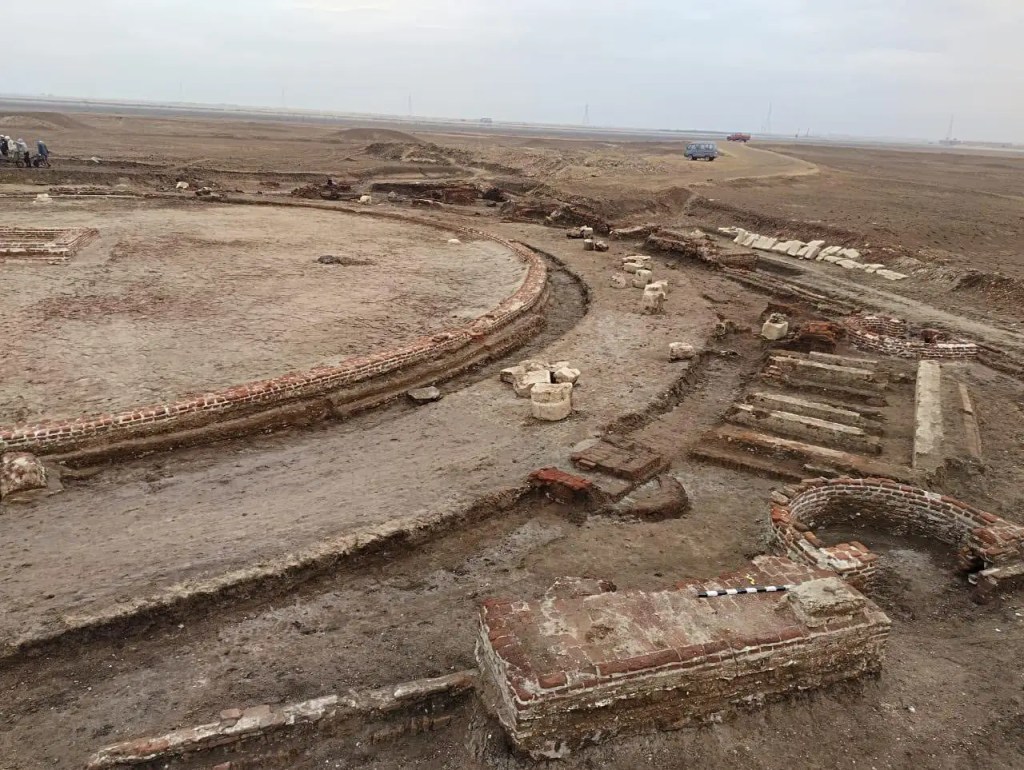
An Egyptian archaeological mission has unearthed a unique temple complex at Tell el-Farama, the site of the ancient city of Pelusium in northern Sinai. The discovery features a massive circular water basin, approximately 100 feet in diameter, surrounded by drainage channels and a central plinth likely intended for a statue. Initially mistaken for a civic building when first excavated in 2019, further study has revealed the site to be a sacred water installation used for religious rituals between the 2nd century BC and the 6th century AD.
The find is significant because it provides physical evidence for the cult of Pelusius, a deity previously known almost exclusively through classical texts like Plutarch’s 'Isis and Osiris.' The structure’s architectural blend of Egyptian, Greek, and Roman elements reflects the complex cultural synthesis of the region following Alexander the Great’s conquest. If confirmed as a temple to Pelusius, it would represent a major milestone in understanding the local religious landscape of the Greco-Roman period in Egypt.