
La poetica dell’errore tra arte e architettura
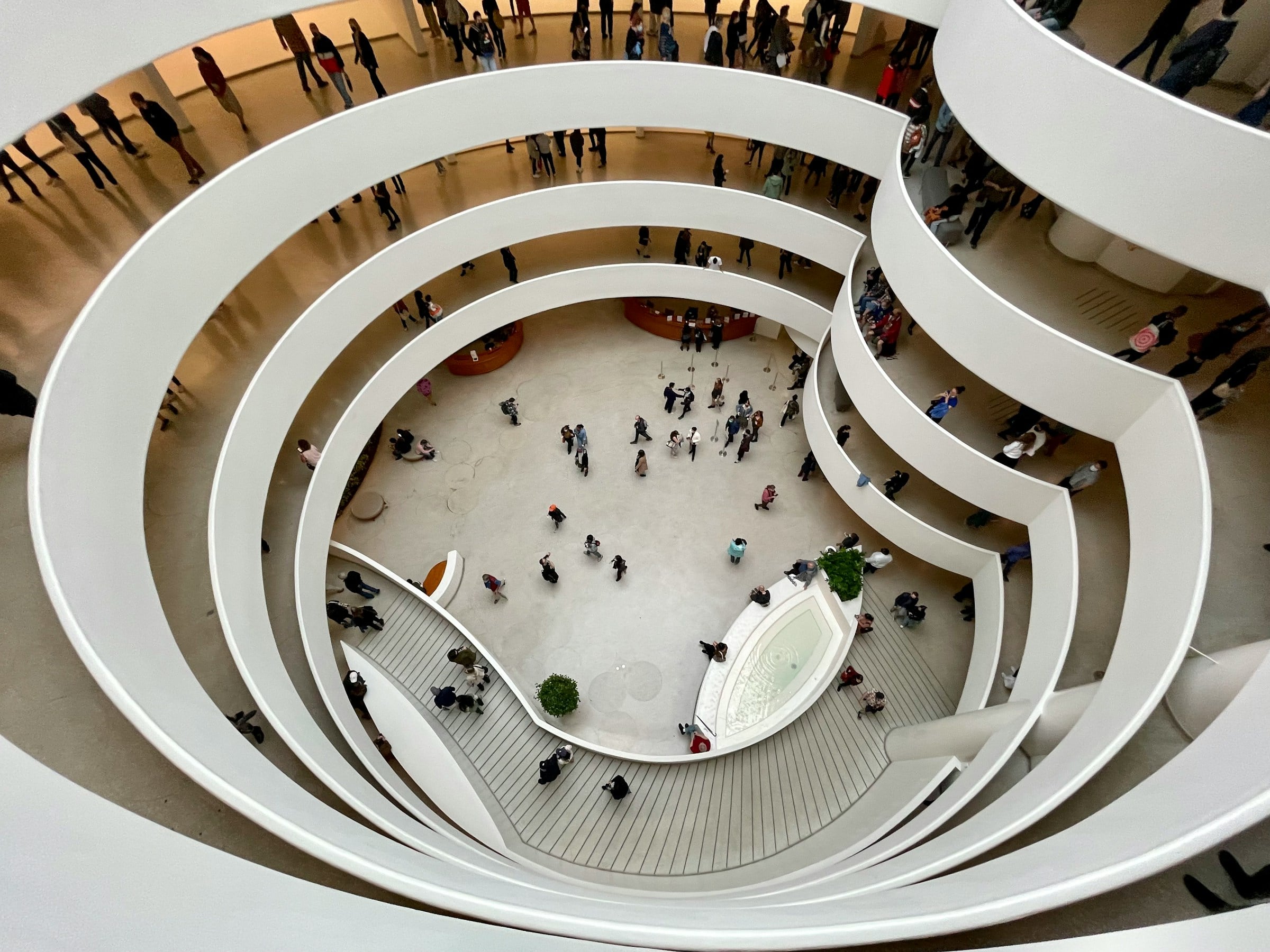
This essay challenges the historical obsession with perfection in architecture and art, rooted in Hegelian philosophy where beauty is equated with truth and flawlessness. It argues that the pursuit of the 'ideal' is a cognitive bias that ignores the value of complexity and structural failure. By reframing the 'error' not as a mistake but as a generative method, the text suggests that imperfection is often what elevates a work to the status of a masterpiece.
Using iconic examples like Frank Lloyd Wright’s Guggenheim Museum and Mies van der Rohe’s Barcelona Pavilion, the analysis demonstrates how functional or structural 'errors' create unique spatial experiences. The Guggenheim is cited as a 'wrong' museum that succeeds precisely because its difficult proportions force a new kind of engagement. Ultimately, the piece advocates for an aesthetic that embraces the unresolved and the experimental over the sterile safety of perfection.