
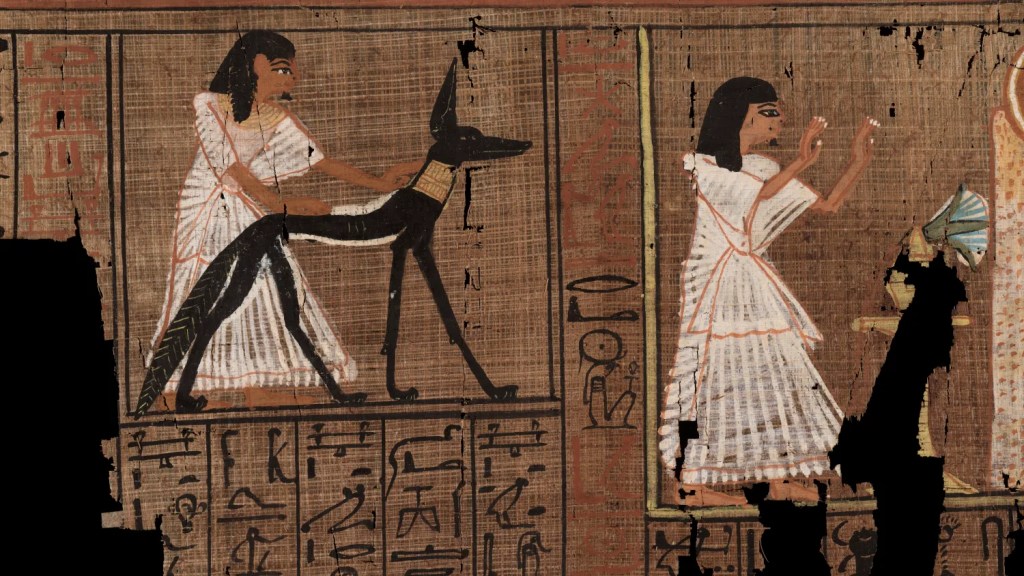
Researchers at the Fitzwilliam Museum have discovered that ancient Egyptian scribes used a primitive form of correction fluid to amend errors on papyrus scrolls. While preparing a 3,300-year-old copy of the Book of the Dead for the tomb of the scribe Ramose, conservators noticed white lines of huntite and calcite mixed with yellow orpiment used to slim down a painted jackal. This 'ancient Wite-Out' was specifically blended to match the cream-colored tone of fresh papyrus, concealing revisions made during the artistic process.
This discovery provides significant insight into the meticulous standards of ancient Egyptian craftsmanship and the professional pressures faced by royal scribes. By identifying similar corrections on major artifacts at the British Museum and the Egyptian Museum in Cairo, scholars are uncovering a previously overlooked technical practice that humanizes ancient artists and highlights the sophisticated chemical knowledge used to maintain the aesthetic perfection of funerary documents.