
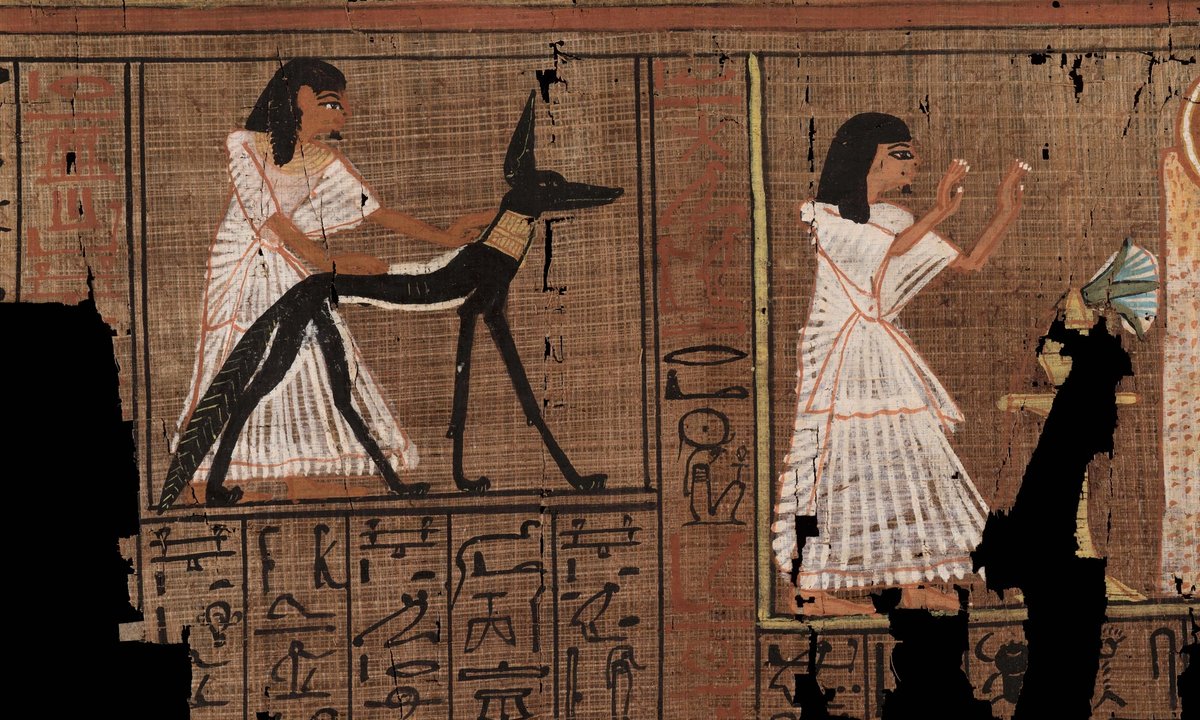
Researchers at the Fitzwilliam Museum in Cambridge have discovered a 3,300-year-old form of corrective fluid on an Ancient Egyptian papyrus. Analysis of a 'Book of the Dead' created for a royal archivist named Ramose revealed that a mixture of huntite, calcite, and yellow orpiment was used to paint over a jackal figure to make it appear slimmer. This 'ancient Tipp-Ex' was specifically tinted to match the cream-colored papyrus, demonstrating a sophisticated level of aesthetic correction and attention to detail by Egyptian craftspeople.
This discovery provides rare insight into the artistic standards and collaborative workflows of ancient workshops, suggesting that senior artists or scribes actively reviewed and edited illustrations. By identifying similar corrections in other major collections like the British Museum, researchers are uncovering a previously overlooked technical practice in Egyptology. The find highlights how modern non-invasive imaging, such as infrared photography and 3D digital microscopy, can reveal the human decisions and 'mistakes' hidden beneath centuries-old pigments.