
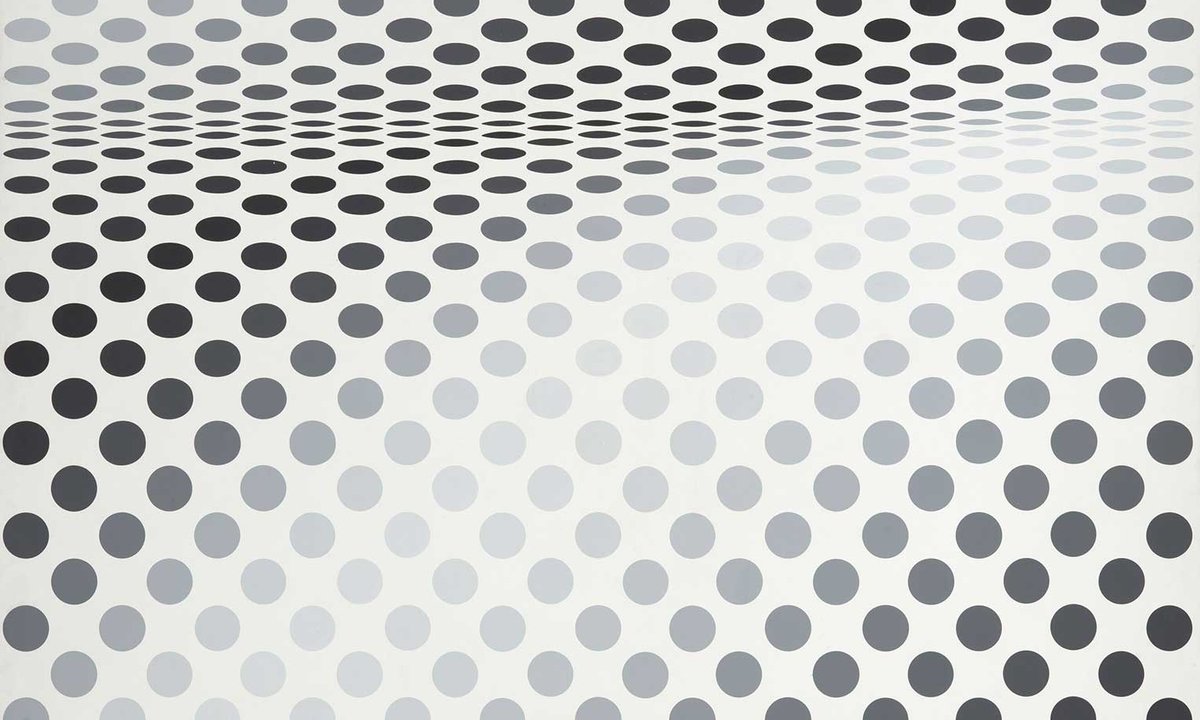
Tate Britain has completed the first-ever cleaning of Bridget Riley’s landmark 1964 Op art painting, 'Hesitate,' using a pioneering 'green' conservation method. Developed through the international Greenart research program, the treatment utilizes specialized hydrogels that lift dirt from the surface without the mechanical pressure of traditional swab rolling. This breakthrough allows conservators to safely clean the sensitive, unvarnished polyvinyl acetate house paints Riley favored, which were previously deemed too fragile for standard restoration techniques.
This development represents a significant advancement in the preservation of mid-20th-century modern art, particularly for works using industrial materials that are prone to yellowing and 'burnishing' under pressure. By successfully applying these eco-friendly, non-invasive hydrogels to high-profile masterpieces by Riley and Roy Lichtenstein, the Tate and its European partners are setting a new global benchmark for sustainable and safe conservation. The project ensures that popular but vulnerable works can remain on public display without the long-term risk of irreversible surface damage.