
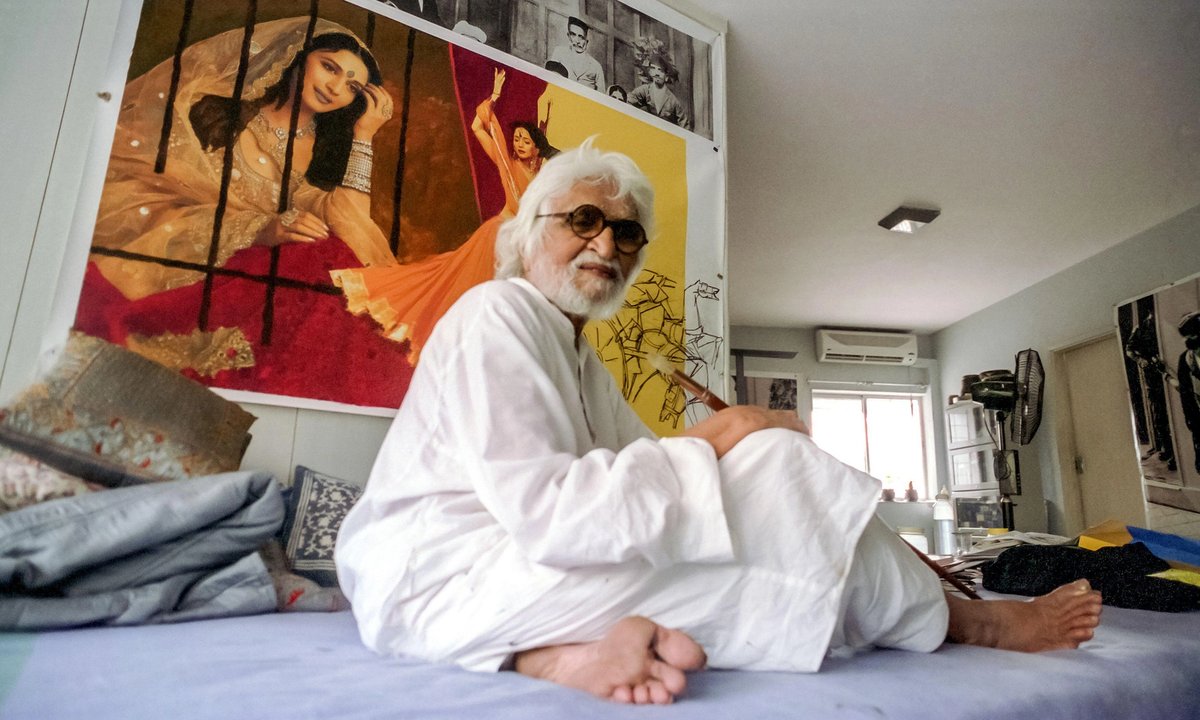
The article examines the life and legacy of Indian modernist painter M.F. Husain, focusing on his final years as a citizen of Qatar. It details his rise as a leading figure of the Progressive Artists' Group, his embodiment of a secular, post-independence Indian identity through his art, and the controversy that forced him into exile after 1996 due to accusations of blasphemy for depicting Hindu deities. He ultimately accepted Qatari citizenship in 2010 and died in London in 2011.
The story matters because it explores the complex intersection of art, national identity, and politics. Husain's journey from being hailed as India's 'national artist' to his exile and Qatari citizenship raises questions about artistic freedom, secularism, and how nations claim cultural figures. The new M.F. Husain Museum in Doha, part of Qatar's cultural strategy, positions his work as a bridge between Asian and Arab worlds, reframing his legacy within a global, rather than solely Indian, context.