
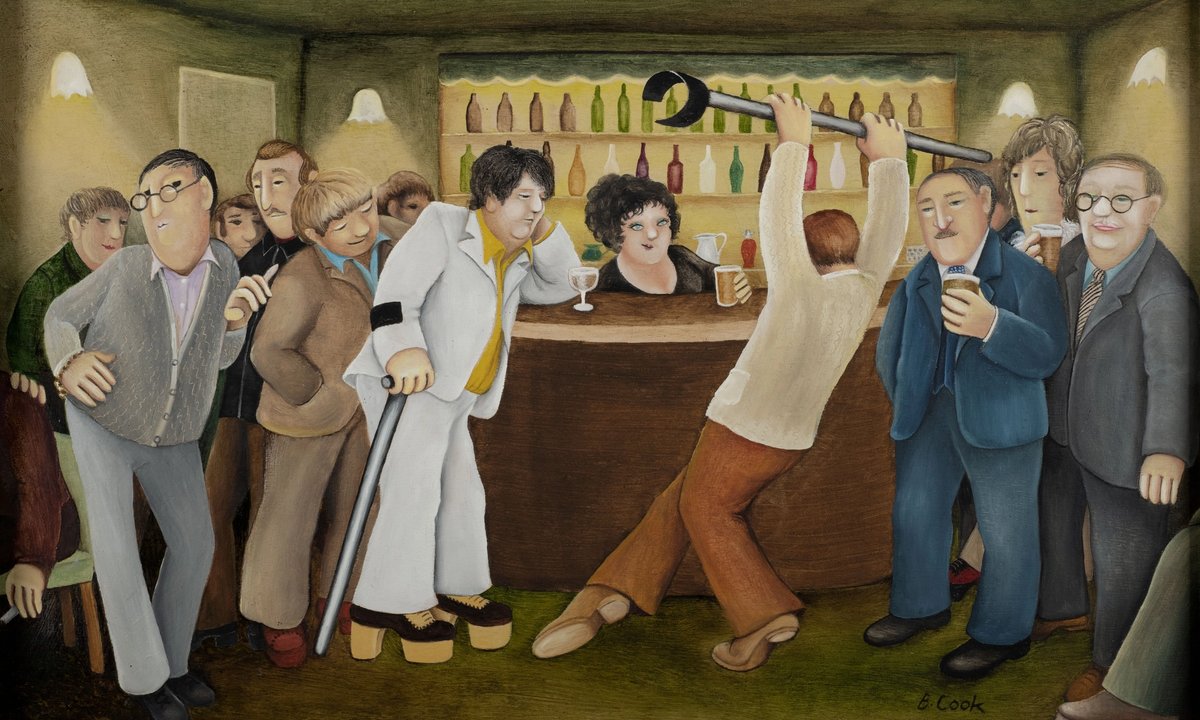
Two concurrent exhibitions in Plymouth, England, are re-evaluating the work of the late British artist Beryl Cook, long dismissed by critics for her popular, humorous paintings of plump, joyful people. The Box gallery presents "Beryl Cook: Pride and Joy" (until 31 May), which places Cook within the Western art canon by tracing her influences from Peter Paul Rubens and Pieter Brueghel the Younger to Stanley Spencer and Edward Burra. The show features over 80 paintings, sculptures, textiles, and a personal archive, and is curated by Terah Walkup. A parallel exhibition at Karst gallery, "Discord and Harmony" (until 18 April), pairs Cook's legacy with contemporary artists like Olivia Sterling, Rhys Coren, and Flo Brooks, who similarly champion overlooked communities.
These exhibitions matter because they represent a significant scholarly and institutional reappraisal of an artist who was long marginalized by the art establishment despite her immense popular appeal. By contextualizing Cook's work art-historically—linking her to Old Masters and examining her documentation of Plymouth's LGBTQ+ nightlife in the 1970s—the shows argue for her importance as a visual historian and a painter of working-class, queer, and female joy. This centenary reassessment could permanently shift Cook's place in British art history, challenging the divide between "high" art and popular imagery.