
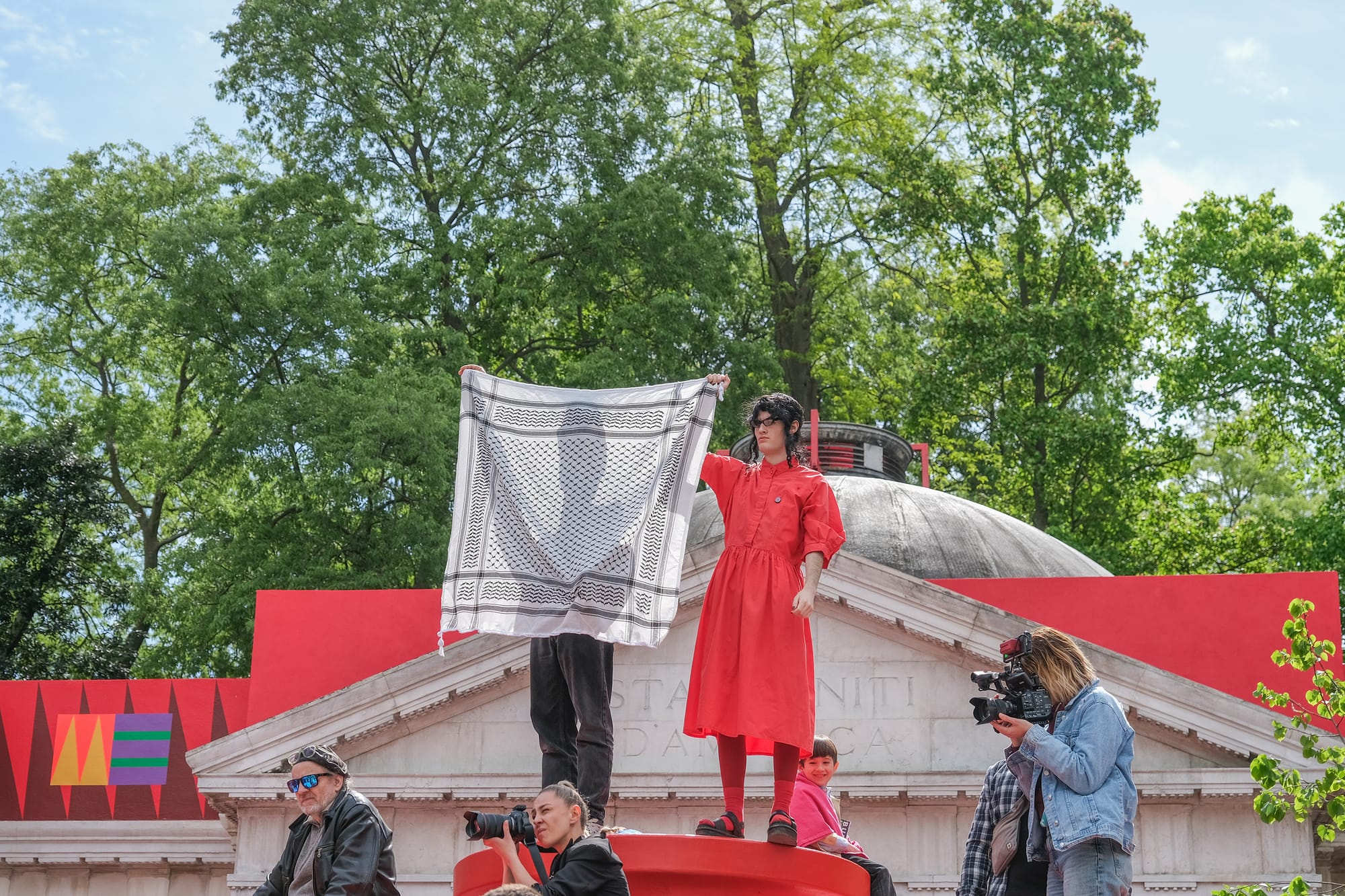
The international awards jury for the 61st Venice Biennale has announced it will not consider countries whose leaders are charged with crimes against humanity by the International Criminal Court (ICC) for prizes. The all-women jury, chaired by Solange Farkas, published a statement on e-flux declaring this policy, which implicitly targets Russia and Israel, whose leaders Vladimir Putin and Benjamin Netanyahu face ICC warrants. The jury is responsible for awarding Golden Lions for the best national pavilion and best artist in the central exhibition. A majority of artists in the main show issued an open letter supporting the decision, while the Biennale Foundation faces criticism for allowing both nations to participate in 2026.
This decision matters because it directly challenges the Venice Biennale's traditional structure of national pavilions, which bind artists to their governments' actions. It comes amid mounting pressure on the Biennale Foundation, including a nearly 10,000-signature petition against Russia's return and a European Union threat to suspend a €2 million grant over Russia's participation. The jury's stance could set a precedent for how major international exhibitions handle geopolitical conflicts, potentially reshaping the role of national representation in art world events. It also highlights growing tensions between institutional ethics and state sponsorship in the global art community.