
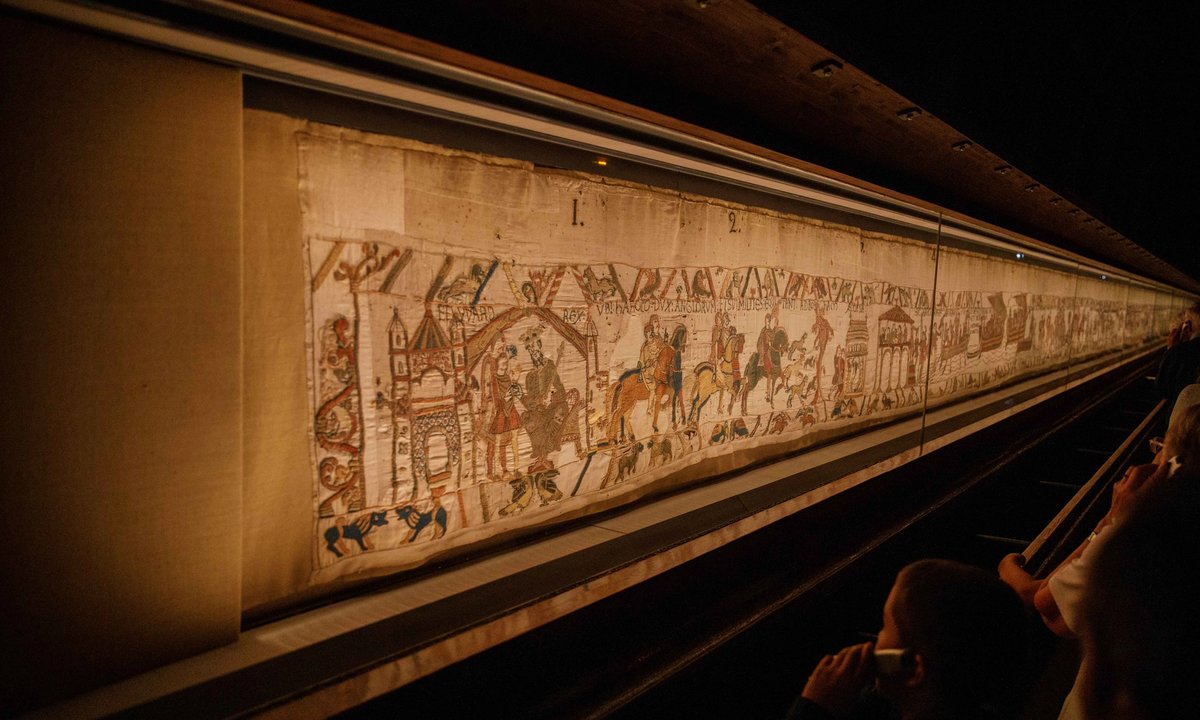
British artist David Hockney has publicly criticized plans to loan the Bayeux Tapestry from France to the British Museum in London, calling the move “madness.” Writing in The Independent, Hockney argues that the 11th-century embroidery, which depicts the Norman invasion of England, could be damaged during transport across the English Channel, citing risks to its aged linen backing and wool threads. The tapestry is set to be displayed at the British Museum’s Sainsbury Exhibitions Gallery from September 2026 to July 2027 while its home in Normandy undergoes renovations. In response, British Museum director Nicholas Cullinan defended the loan, citing the museum’s expertise in handling ancient artifacts. The UK Treasury will insure the tapestry for an estimated £800 million, and in exchange, British treasures including the Lewis chessmen and Sutton Hoo helmet will travel to Normandy.
This controversy matters because it highlights tensions between preservation and public access in major museum loans, especially for fragile historical artifacts. Hockney’s intervention—as a celebrated artist with a personal connection to the tapestry—adds weight to concerns about the risks of moving irreplaceable cultural heritage. The loan also carries political significance, having been announced by French President Emmanuel Macron and UK Prime Minister Keir Starmer, and the debate underscores broader questions about national pride, museum diplomacy, and the responsibilities of institutions like the British Museum.