
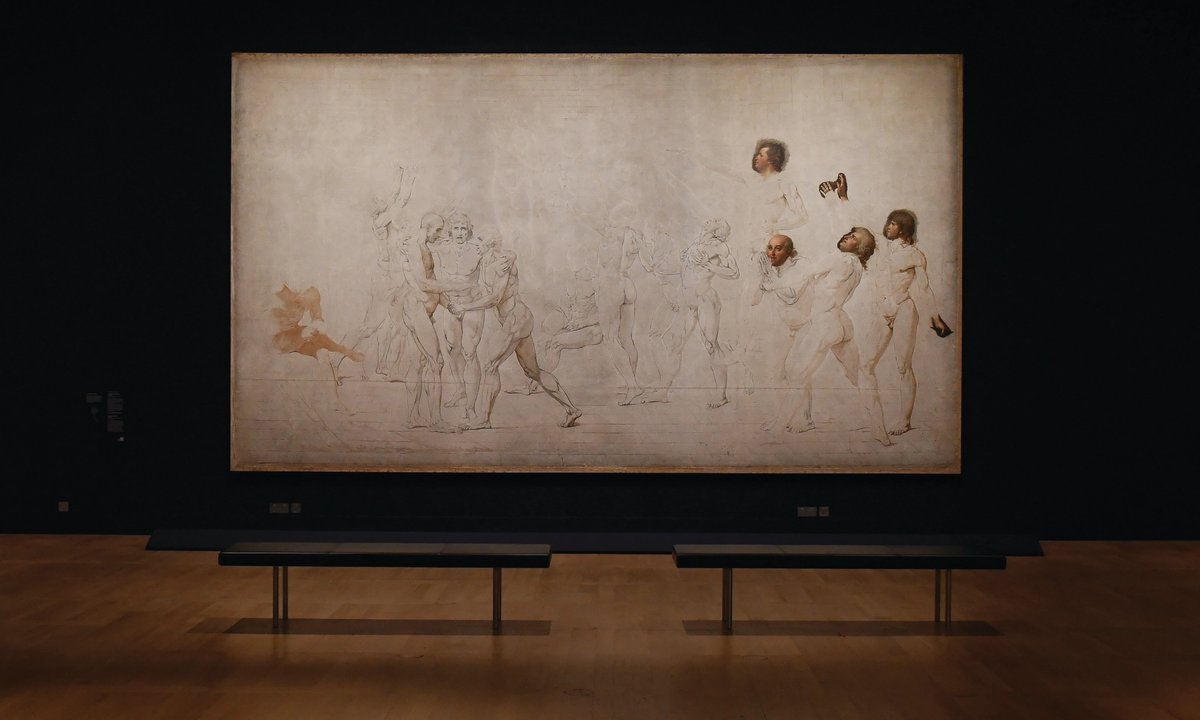
The Musée du Louvre in Paris has opened a major retrospective of Jacques-Louis David (1748-1825), the greatest Neoclassical artist, marking his biggest survey in nearly four decades. The exhibition, mounted for the 200th anniversary of his death, comprises just over 100 works, including strategic loans from France and eight other countries, and complements the Louvre's own holdings. The show aims to redefine David beyond the Neoclassical label, presenting him instead as both a "realist" and an "idealist," and is compared to blockbusters like the Rijksmuseum's Vermeer show.
This exhibition matters because it challenges long-held perceptions of Neoclassicism, a movement often seen as predictable and least admired, by reframing David's legacy through a revolutionary curatorial lens. It also highlights the Louvre's ability to mount a definitive artistic event despite a recent high-profile robbery, and could reshape scholarly and public understanding of David's turbulent biography—from his role as a Jacobin and dictator of the arts during the French Revolution to his exile in Brussels—for decades to come.