
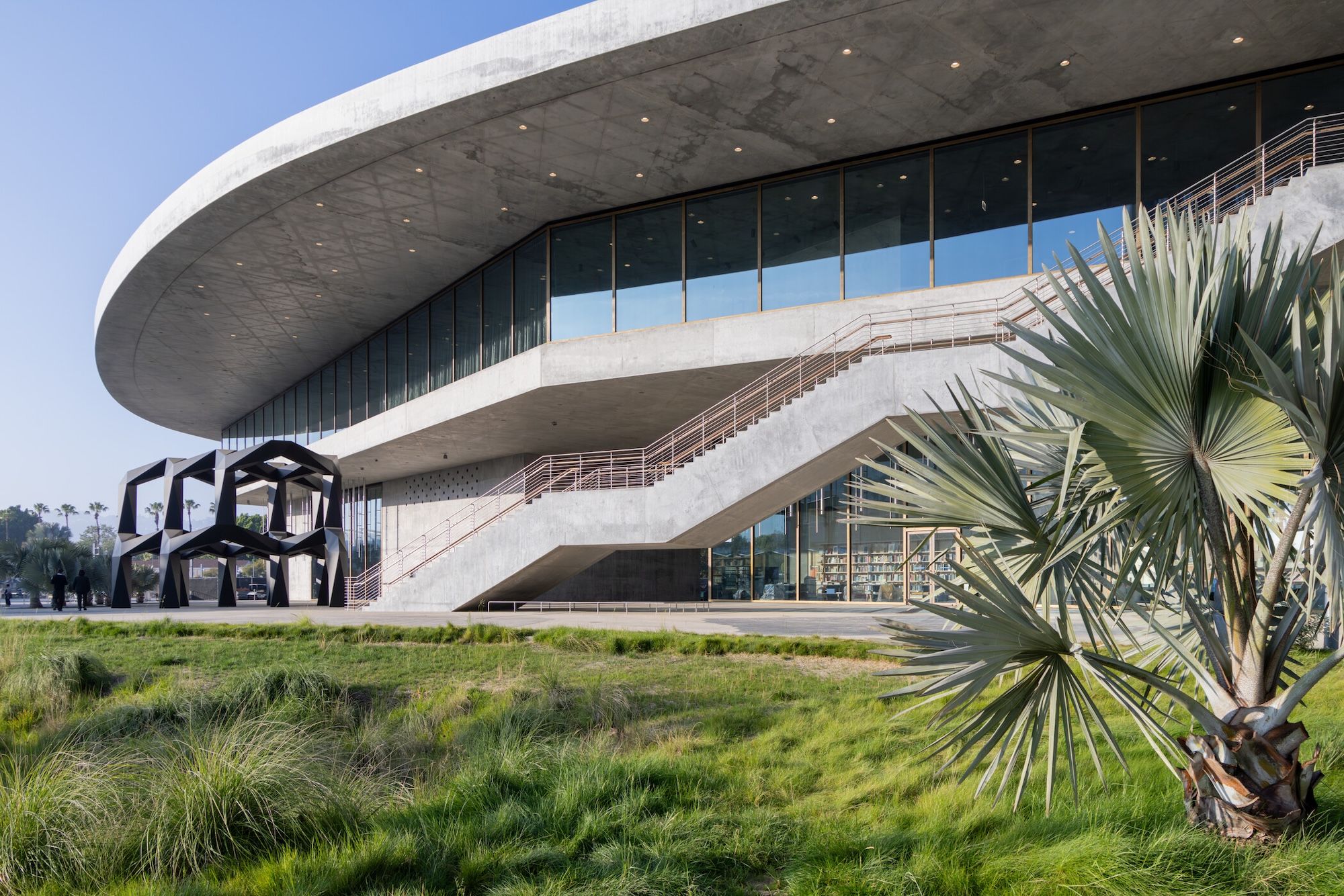
The article describes the author's evolving impression of the newly opened David Geffen wing at the Los Angeles County Museum of Art (LACMA), designed by architect Peter Zumthor. Initially visiting at 11am, the author found the $724 million, 110,000 sq ft building to be a "dismal, dated, inelegant brute," with thick bronze windows, dark concrete slabs, and bunker-like galleries. However, returning at 4pm, the author experienced a transformation: golden afternoon light warmed the concrete, illuminated the interiors, and revealed the building as a "brilliant innovation and true gift to the city." The article details the building's 20-year design evolution, challenges including fossil discoveries on site, and Zumthor's public frustrations with the compromised details.
This matters because LACMA's new wing represents a major architectural and institutional milestone for one of the largest encyclopedic museums in the United States. The building's reception will influence perceptions of museum architecture in Los Angeles and beyond, particularly the use of glass walls and non-hierarchical exhibition spaces. The article also highlights the tension between architectural ambition and practical realities, as well as the subjective nature of experiencing large-scale public architecture. The museum's curatorial approach—organizing galleries around bodies of water rather than continents—offers a fresh perspective on global art history, making this a significant moment for both museum design and exhibition philosophy.