
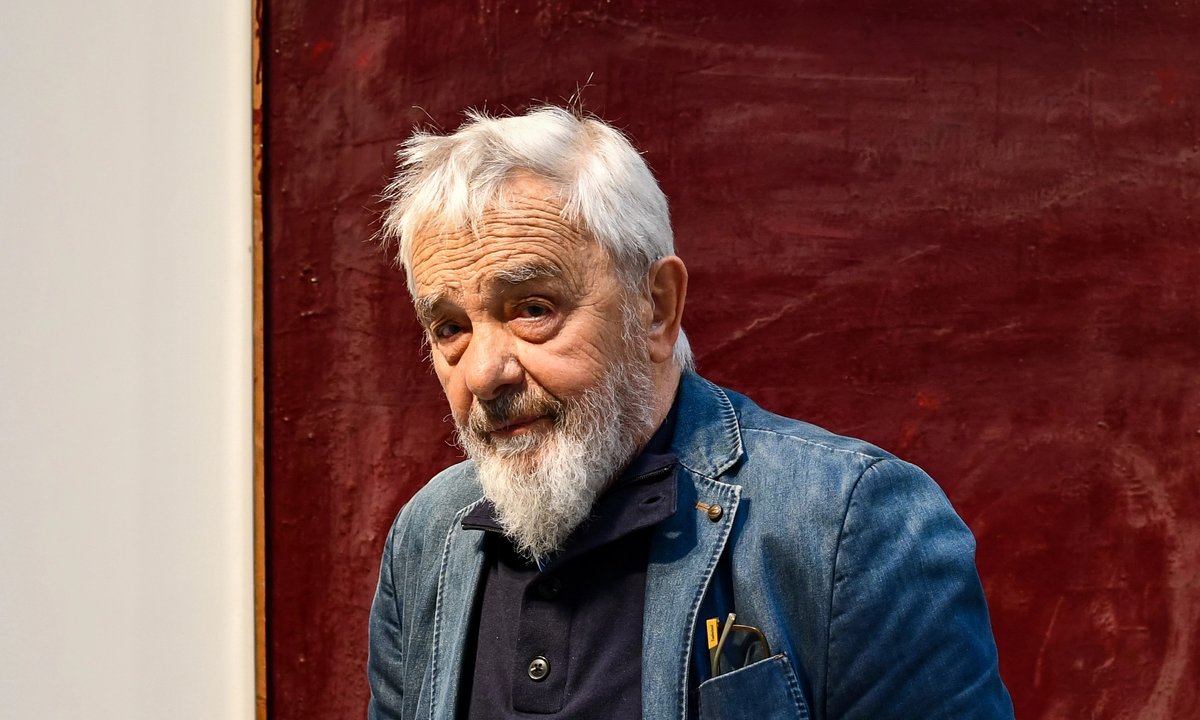
Arnulf Rainer, a revolutionary figure in postwar Austrian art, has died at age 96. His death on 18 December was confirmed by his gallery Thaddaeus Ropac, which described him as one of the most influential artists of the post-war period. Born in 1929 in Baden, Austria, Rainer emerged as a leading figure of the Austrian avant-garde, known for his gestural paintings confronting the atrocities of the Holocaust and Hiroshima, and for his experimental self-portraiture. He was a founding member of Galerie nächst St Stephan in postwar Vienna, a vital hub for artists seeking alternatives to the conservative art world. His signature Übermalungen (overpaintings) involved painting over photographs and self-portraits with aggressive gestures, dense black strokes, and erasures, creating charged works where violence and vulnerability coexist.
Rainer's work matters because he fundamentally challenged the conventions of painting and self-portraiture, turning the canvas into a record of psychic struggle and historical trauma. His insistence on psychological intensity and rejection of polished surfaces helped define a generation of Austrian art, influencing figures like Maria Lassnig. By addressing 20th-century tragedies such as Hiroshima and the Holocaust through gesture and erasure, he demonstrated art's capacity to confront the impossible. His work entered major museum collections including the Museum of Modern Art in New York and the Art Institute of Chicago, and he represented Austria twice at the Venice Biennale. Rainer's legacy endures as a fiercely independent artist who resisted easy categorisation, remaining a crucial figure in the reawakening of Austrian contemporary art.