
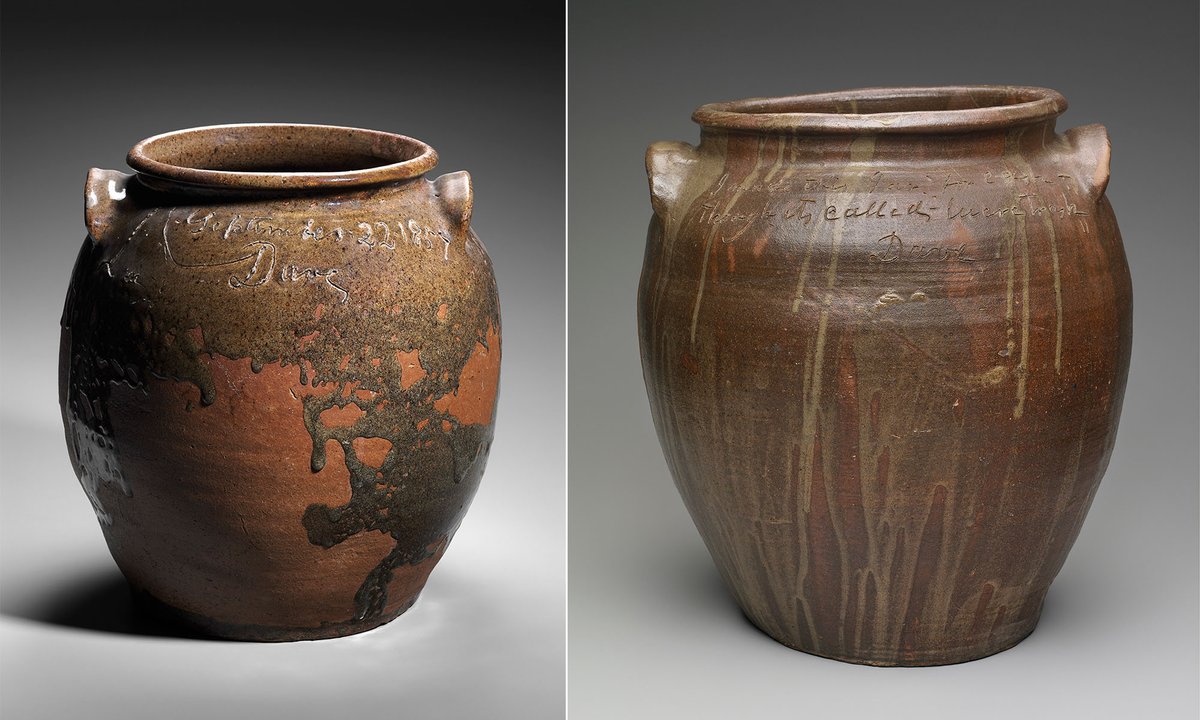
David Drake, also known as Dave the Potter, was an enslaved African American ceramicist and poet in 19th-century South Carolina who inscribed his stoneware jars with defiant poetry at a time when teaching enslaved people to read or write was a crime. The article argues that despite his recognized genius, Drake was not fully an artist during his lifetime because he was denied the fundamental right to own, control, and benefit from his creations—a right the Berne Convention calls 'inalienable.' Only recently, after the Museum of Fine Arts Boston returned two of his jars to his heirs, has Drake begun to receive the full recognition and economic justice that define true artistic status.
This matters because it challenges conventional art-historical narratives by centering the legal and economic dimensions of artistic identity, particularly for enslaved creators. The article reframes the concept of 'artist' not merely as a maker of beautiful objects but as someone who possesses inalienable rights over their work—rights that were violently denied to Black artists under slavery. The restitution of Drake's jars to his descendants sets a precedent for addressing historical injustices in the art world, linking contemporary debates about provenance, repatriation, and equity to the foundational question of who gets to be called an artist.