
filter_list Showing 7 results for "Google News" close Clear
dashboard All 636 museum exhibitions 371article local 175trending_up market 28article news 25person people 12article culture 7article policy 6rate_review review 5article event 4candle obituary 2article events 1
date_range Range Today This Week This Month All
Subscribe

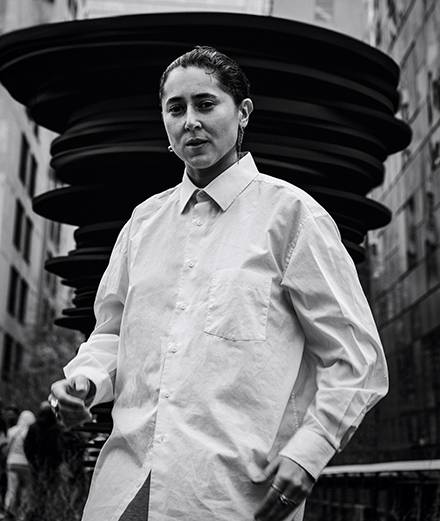
Meriem Bennani, the artist who went viral during the pandemic

Meriem Bennani, a New York-based artist known for her shape-shifting practice of videos, installations, and immersive environments, gained viral fame during the COVID-19 lockdown in March 2020. She co-created the animated series '2 Lizards' with fellow artist Orian Barki, which depicted surreal, humorous conversations between anthropomorphic reptiles navigating the first weeks of the pandemic in New York City. The series, posted on Instagram, resonated widely and led to eight episodes. Bennani's broader work, including 'Life on the CAPS' (2018–2022) and 'Mission Teens' (2019), blends digital animation, live-action footage, and cultural critique, often exploring themes of diaspora, post-colonialism, and migration through dystopian, supernatural narratives.

Max Mara will stage next cruise show in Shanghai’s Long Museum West Bund - FashionNetwork

Max Mara has announced that its next cruise show, the Resort 2027 collection, will take place at the Long Museum West Bund in Shanghai on June 16, 2026. The event will also mark the opening of a public exhibition titled 'The Max,' curated by French fashion expert Olivier Saillard, celebrating the brand's 75th anniversary. The show continues Max Mara's tradition of staging cruise collections in museums, following previous shows at Berlin's Neues Museum and Venice's Doge Palace.

This Is Where Max Mara Will Hold Its Resort 2027 Show in Shanghai

Max Mara has chosen the Long Museum West Bund in Shanghai as the venue for its Resort 2027 runway show on June 16. The event will coincide with the opening of an exhibition titled “The Max!”, curated by Olivier Saillard, celebrating the brand’s 75th anniversary. The Long Museum is a private art museum founded by collectors Liu Yiqian and Wang Wei, with three locations across China. This marks Max Mara’s second show in Shanghai, following a 2016 presentation at the Shanghai Exhibition Center.

Recording Presence: Practical Strategies For Documenting Contemporary Exhibitions

The article provides a practical guide to documenting contemporary art exhibitions, outlining methods for creating useful, ethical, and durable records. It emphasizes the importance of shot lists, consistent file naming, descriptive metadata, and accessibility features like captions and transcripts to ensure archives remain searchable and meaningful over time.

The National Museum of Mexican Art’s Special Mission

The National Museum of Mexican Art (NMMA) in Chicago was founded in 1987 by a group of public school educators, led by Carlos Tortolero, to address a lack of Mexican history and culture in the curriculum. It has grown into a 48,000-square-foot institution with a collection of over 20,000 objects, spanning from Pre-Columbian times to the present, and was the first Latino museum in the U.S. to be accredited by the American Alliance of Museums.

How Digital Animation Can Help Audiences Understand Installation Art Before They Experience It in Person

The article examines the inherent limitations of traditional photography in documenting installation art, arguing that static images fail to convey the experiential qualities of scale, sequence, and audience interaction central to the medium. It uses Olafur Eliasson's iconic 'The Weather Project' as a prime example of a work whose atmospheric and social dimensions are lost in photographic reproduction.

Do you hate art museums? Why (and how) to take a 2nd look

Do you hate art museums? Why (and how) to take a 2nd look

The traditional art museum experience often leads to exhaustion and a sense of alienation due to the overwhelming abundance of artworks and the pressure to see everything quickly. This phenomenon, which affects even visitors to world-class institutions like the Vatican or the Uffizi, stems from a 'problem of abundance' rather than a lack of appreciation for the art itself. The author suggests that smaller, more intimate spaces and a slower approach to viewing would make art more accessible and less intimidating for the general public.