filter_list Showing 4 results for "Holly Herndon" close Clear
search
dashboard All 30 museum exhibitions 21article culture 4article news 2person people 2rate_review review 1
date_range Range Today This Week This Month All
Subscribe

The Year AI Captured Art

The article surveys the visual art landscape of 2025, arguing that the year's defining throughline is the increasing centrality of artificial intelligence—a technological revolution most people didn't ask for but cannot escape. It highlights several exhibitions and works that engage with AI in different ways: Seth Price's show at Isabella Bortolozzi in Berlin, which uses generative images from the pandemic era overlaid with gestural paint strokes; Charmaine Poh's video "GOOD MORNING YOUNG BODY" (2023) at Palais Populaire, where she deploys deepfake technology to have her twelve-year-old self speak back to internet trolls; and Philippe Parreno's show at Haus der Kunst, which poeticizes how generative technologies interact with humans and nature. The article also notes the rise of AI-generated "slop" online and its incursion into the physical art world, as well as market shifts where larger galleries are increasingly acquiring Instagram-friendly emerging artists directly.

How AI Will Change Art, According to Arthur Jafa, Marilyn Minter, and Other Artists

Emily McDermott's article, published July 15, 2025, gathers perspectives from artists including Refik Anadol, Arthur Jafa, Marilyn Minter, and others on how AI will change art. It references the controversial Christie's 'Augmented Intelligence' auction in February-March 2025, which generated nearly $730,000 despite an open letter signed by nearly 4,000 individuals urging cancellation over claims that AI models exploit copyrighted material. The artists quoted offer varied views, from Anadol seeing AI as a collaborator that augments creativity to Jafa dismissing most AI-generated work as generic.

culture jamieson webster psychoanalysis ai sex

Psychoanalyst Jamieson Webster launches a new column for CULTURED titled "Neurotica," exploring the intersection of psychoanalysis, technology, and sexuality. In the debut installment, she interviews artist and theorist Mindy Seu about her work "A SEXUAL HISTORY OF THE INTERNET," which traces how sex workers were integral to developing digital platforms like chat rooms, e-commerce, and webcams, only to have their innovations co-opted by Big Tech. Webster reflects on how AI, chatbots, and online intimacy are reshaping human desire, pleasure, and relationships, drawing on Freud's pleasure-principle and contemporary anxieties about AI psychosis and digital dependency.

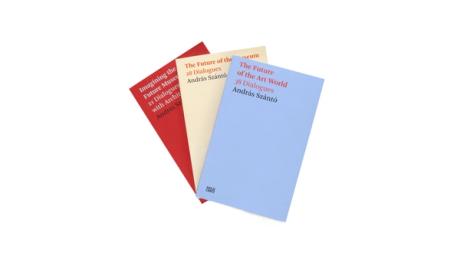
Final book in trilogy asks: What is the future of the art world?

Cultural strategist András Szántó has published the third and final volume of his trilogy on the future of museums, titled *What Is the Future of the Art World?*. The book features dialogues with a wide range of art-world figures—including gallerists José Kuri and Atsuko Ninagawa, collectors Alain Servais and Sylvain Levy, artists William Kentridge and Holly Herndon & Mathew Dryhurst, curator Fatoş Üstek, network scientist Albert-László Barabási, former Art Basel director Marc Spiegler, and Sheikha Al-Mayassa Al Thani—who discuss topics such as the definition of the art world, its rules, and its future trajectory. Szántó notes that there is no consensus on whether the art world is still expanding or entering a phase of slowdown, with different regions moving on divergent paths.