filter_list Showing 4 results for "Library of Congress" close Clear
search
dashboard All 42 museum exhibitions 16article news 10article culture 4trending_up market 4article policy 3article local 2person people 2gavel restitution 1
date_range Range Today This Week This Month All
Subscribe

How Hajime Sorayama’s Sexy Robots Reflect Our Fantasies

Japanese artist Hajime Sorayama has spent nearly five decades developing his iconic "Sexy Robots" series. These chrome-plated female figures, rendered first with airbrush and later as polished metal sculptures, have evolved to include life-sized works created through digital modeling and engineering collaborations.

frank lloyd wright didnt just design buildings he invented fonts too

Frank Lloyd Wright, renowned for his iconic architectural designs, also created distinctive hand-lettered typefaces that appeared on his architectural drawings. These letterforms, characterized by unique features like nearly meeting arcs in 'O's and double crossbars in 'A's and 'H's, were integral to his holistic artistic vision. The article traces how these lettering styles have been digitized into fonts, starting with Eaglefeather in 1993, designed by David Siegel in partnership with the Frank Lloyd Wright Foundation, followed by other typefaces like Exhibition, Terracotta, and Midway released by P22 Foundry, each drawing from different Wright projects.

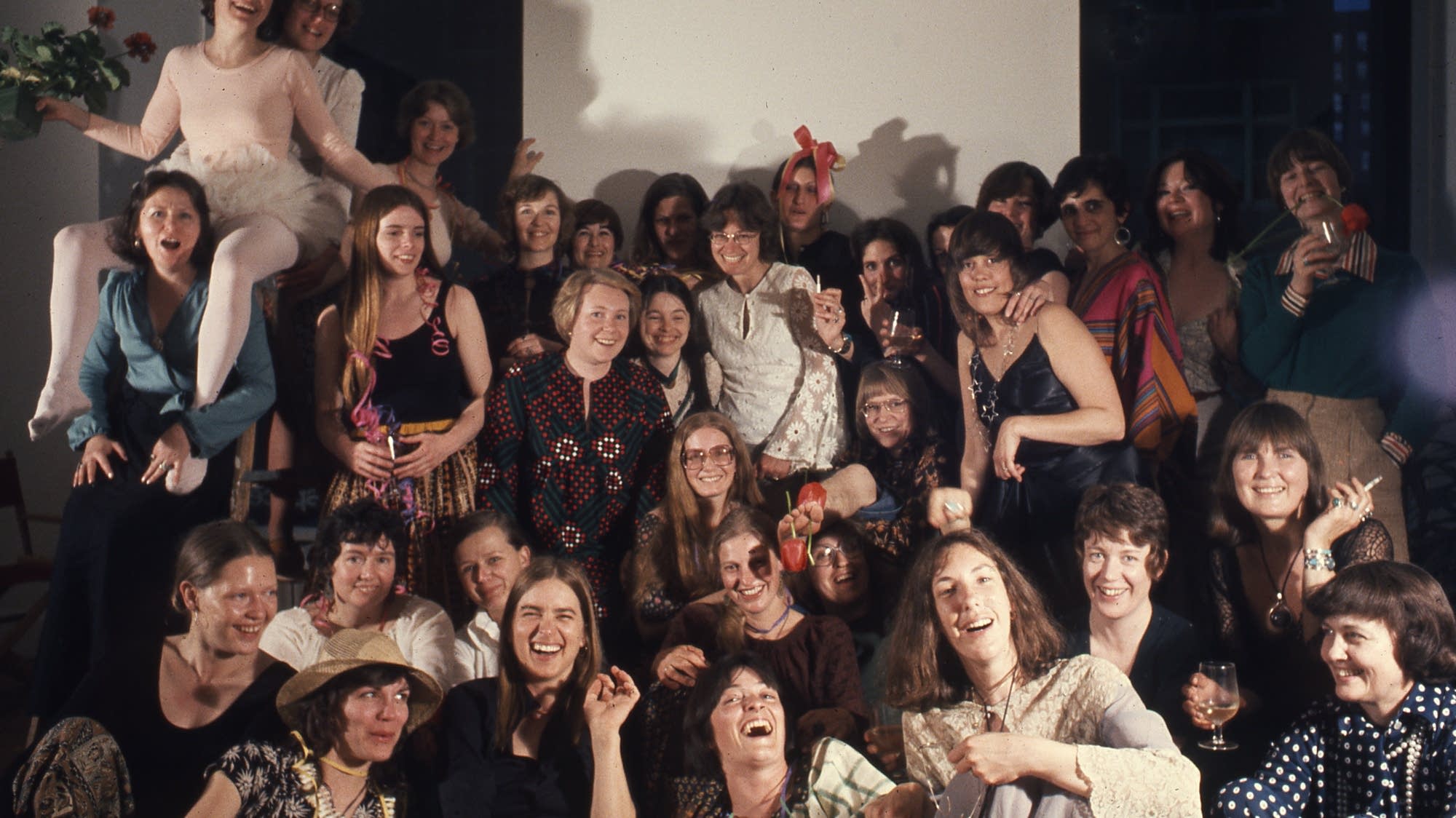
Why this Minneapolis feminist art collective still matters 50 years later

The Women’s Art Registry of Minnesota (WARM), one of the oldest feminist art collectives in the United States, is celebrating its 50th anniversary. Founded in 1973 in Minneapolis, the collective emerged as a grassroots response to the systemic exclusion of women from mainstream galleries and museums, eventually establishing its own gallery space and a robust mentorship program that continues to support female-identifying artists today.

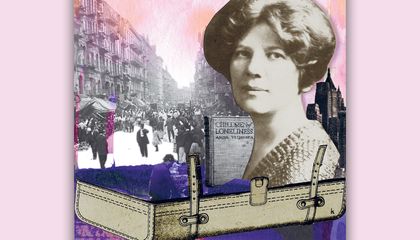
‘The Queen of the Ghetto’ Gave New York’s Immigrant Community a Voice. A Century Later, It’s Re-emerging

Anzia Yezierska, a Polish-Jewish immigrant who arrived in New York in 1890, defied traditional gender expectations to become a leading literary voice of the 1920s. Dubbed the 'Queen of the Ghetto,' she documented the raw struggles of immigrant women on the Lower East Side using a unique 'immigrant English' style that captured Yiddish idioms. After escaping a restrictive marriage and pursuing an education at Columbia University, she channeled her personal frustrations into stories of poverty, ambition, and the psychological toll of assimilation.