filter_list Showing 9 results for "artists rights" close Clear
search
dashboard All 149 museum exhibitions 109rate_review review 10trending_up market 10article culture 9article news 5article policy 3article local 1person people 1article event 1
date_range Range Today This Week This Month All
Subscribe

30 Iconic Feminist Works By Women Artists

ARTnews has expanded its list of iconic feminist works by women artists, adding 15 new entries to a previous selection. The article highlights specific pieces, such as Edmonia Lewis's *The Death of Cleopatra* (1876), Mary Cassatt's *The Reader* (1877), and Alice Pike Barney's *Medusa* (1892) and *Lucifer* (1902), providing historical context for each artist and their contribution to feminist discourse through art.

The 21st Century’s Biggest Art Trend is Not a Style. But Once You See It, You’ll Notice It Everywhere.

The article traces the evolution of "systems art," a term coined by critic Jack Burnham in 1968 to describe art that uses rules, seriality, and repetition to mirror and reveal the growing protocols of the Cold War era. It highlights early practitioners like Kenneth Noland, Robert Morris, Dan Flavin, and notably Hans Haacke and Adrian Piper, who shifted from atmospheric systems (e.g., Haacke's *Condensation Cube*) to social systems (e.g., Haacke's *Shapolsky et al. Manhattan Real Estate Holdings*). The piece argues that systems thinking has become unavoidable in contemporary life—from algorithms to systemic racism—and that art remains a crucial tool for making these invisible systems legible.

judy chicago google

Artist Judy Chicago recounts her frustrating experiences with public art commissions, focusing on a recent failed collaboration with Google for its Chicago headquarters at the Thompson Center. After being encouraged by her dealer to apply, Chicago was awarded a commission in fall 2025 to create a large terrazzo floor and a 17-story glass elevator shaft using her "Through the Flower" imagery. However, the project fell through after months of effort, mirroring earlier disappointments with the Beverly Hills Sculpture Park, where a city councilor questioned the value of her work, which Chicago attributes to institutionalized sexism.

art bites dan flavin airily dog

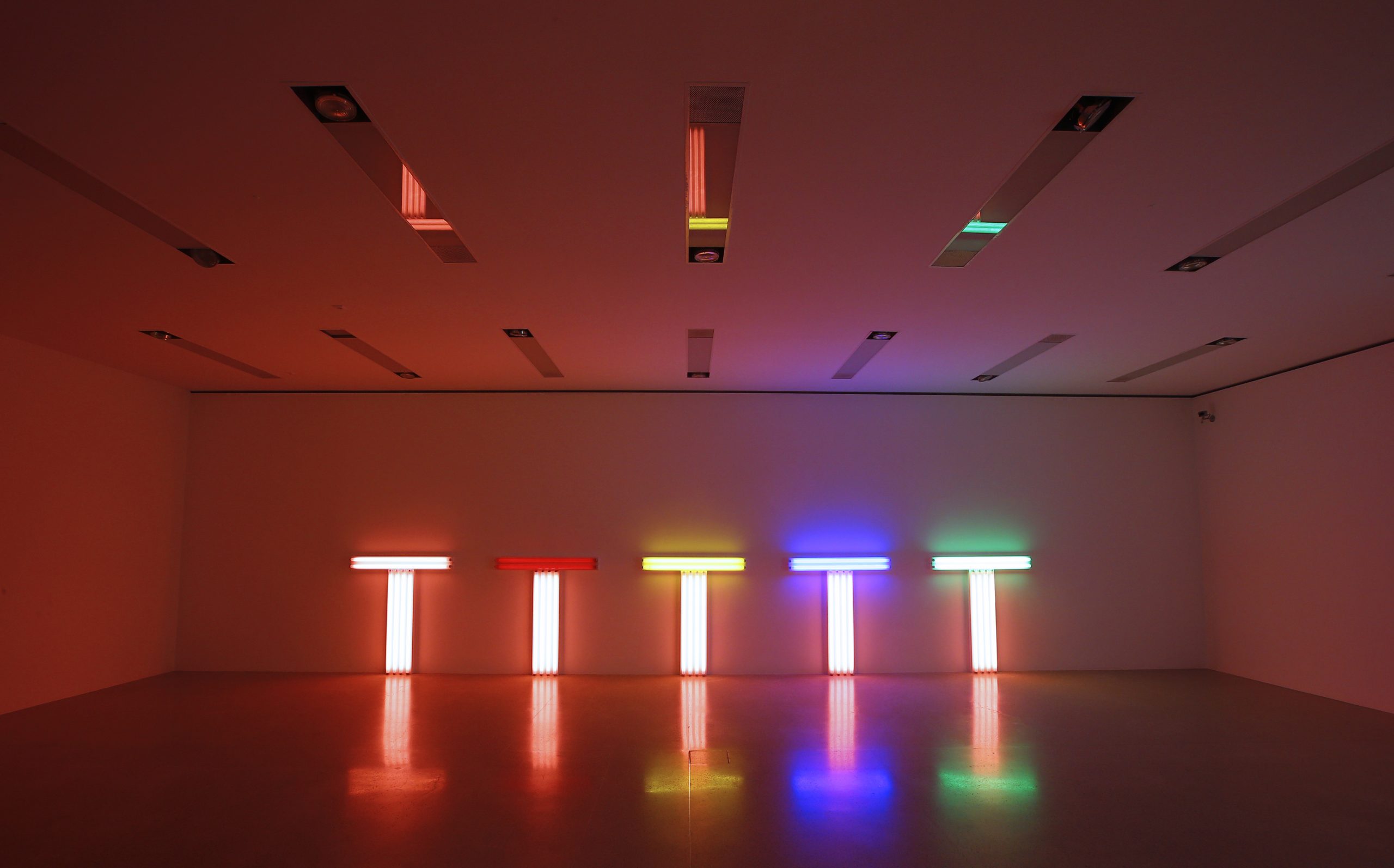
Dan Flavin, the renowned Minimalist artist known for his fluorescent light installations, created two artworks dedicated to his golden retriever Airily, who was a champion show dog. The works, titled "untitled (to my dear bitch, Airily)" (1981) and "untitled (to my dear bitch, Airily) 2" (1984), are discussed in the context of Flavin's practice of dedicating pieces to people and pets. The second work, held by Kunstmuseum Basel, was displayed at the Pulitzer Arts Foundation in 2008 and at Dia Bridgehampton in 1985.

the right influential art historian victoria coates project esther

The article profiles Victoria Coates, an art historian and former Trump administration official, who is leading 'Project Esther,' a conservative initiative aimed at taking over US higher education and targeting progressive organizations. Named after the biblical queen, the project accuses critics of Israel of anti-Semitism and seeks to dismantle what it describes as a 'terrorist support network.' Coates, who previously served as Deputy National Security Advisor and worked on Rumsfeld's memoirs, has a long history of attacking academia from within, including as an anonymous blogger behind 'Elephants in Academia.'

Comment | As the US’s 250th anniversary approaches, museums must keep pushing the American story forward

The Phillips Collection in Washington, DC, is launching a new strategic plan and an upcoming exhibition titled "Out of Many: Reframing an American Art Collection," timed to the US's 250th anniversary. The museum's director reflects on founder Duncan Phillips's original vision of the museum as a space for civic dialogue and shared inquiry, arguing that this model is urgently needed amid current political pressures, loss of federal funding, and debates over historical narrative.

art peter hujar paul thek andrew durbin

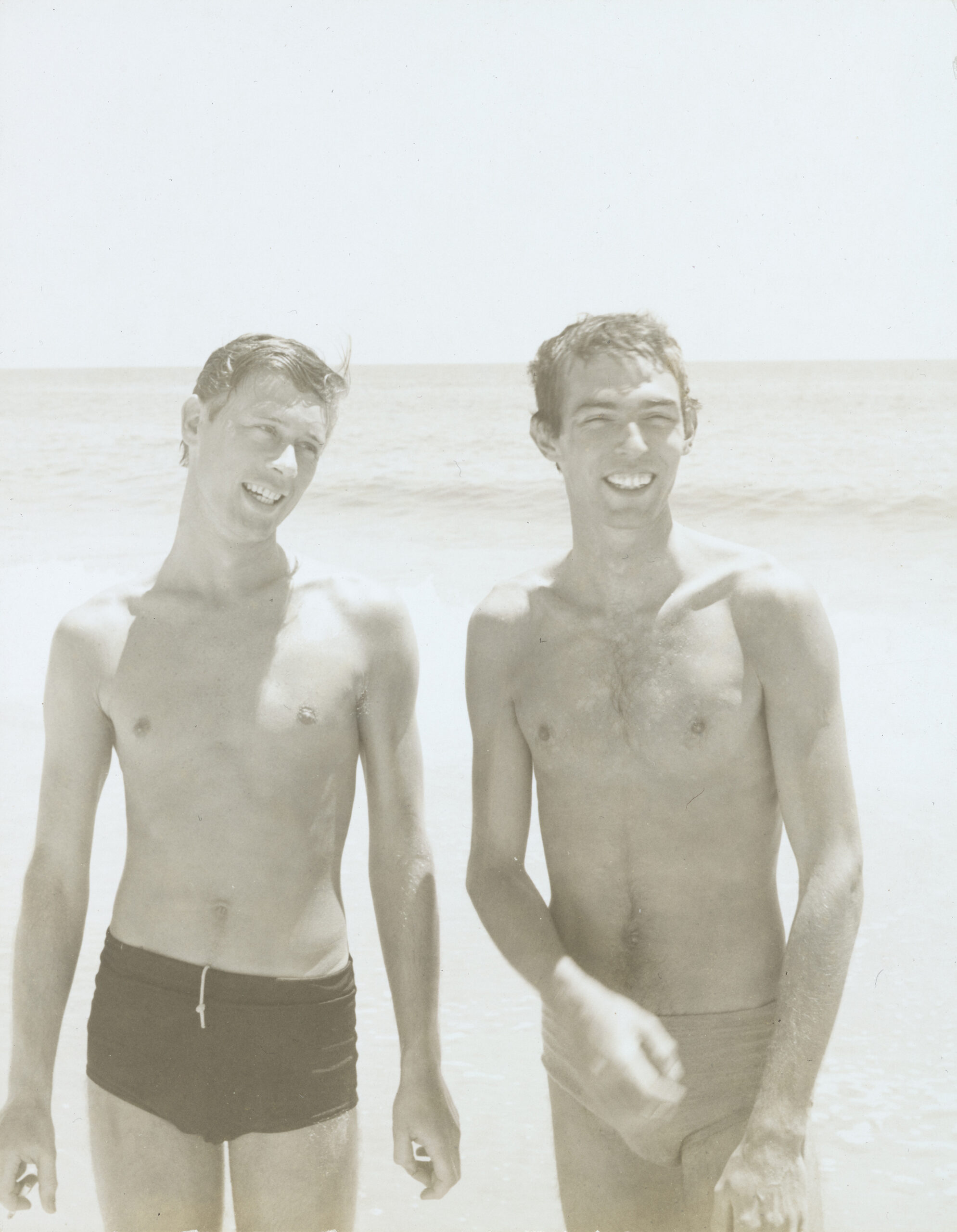
In 2015, photographer Peter Hujar experienced a mainstream resurgence when his work appeared on the cover of Hanya Yanagihara's novel *A Little Life*, in a campaign for menswear designer Patrik Ervell, and at Christie's, where his 1973 photograph *Candy Darling on Her Deathbed* sold for $50,000. Now, two new publications—*Stay Away From Nothing* and *The Wonderful World That Almost Was*—focus on Hujar's complex relationship with sculptor Paul Thek, who died nine months after Hujar from AIDS complications. Author Andrew Durbin, who wrote *The Wonderful World That Almost Was* and curated the group show "How Beautiful This Living Thing Is" at New York's Ortuzar gallery, discusses their elusive bond, rivalry, and the queer social dynamics that shaped their lives and art.

Meet Elizabeth Catlett in 11 Facts

Elizabeth Catlett (1915–2012) was a sculptor, printmaker, feminist, and social activist whose art was inseparable from her life and politics. Born in Washington, DC, to parents who worked in education, she faced racial discrimination early on—denied a scholarship to the Carnegie Institute of Technology and paid less than white colleagues as a teacher. She became the first Black woman to earn an MFA from the University of Iowa, studying under Grant Wood, and later taught at the George Washington Carver School in Harlem, where she connected with Harlem Renaissance figures. Catlett moved to Mexico, married artist Francisco Mora, and created woodblock and linocut prints for 20 years. She was investigated by the House Un-American Activities Committee, declared an "undesirable alien," and became a Mexican citizen in 1962. Her work centered on Black and Mexican women, and she famously stated, "We have to create an art for liberation and for life."

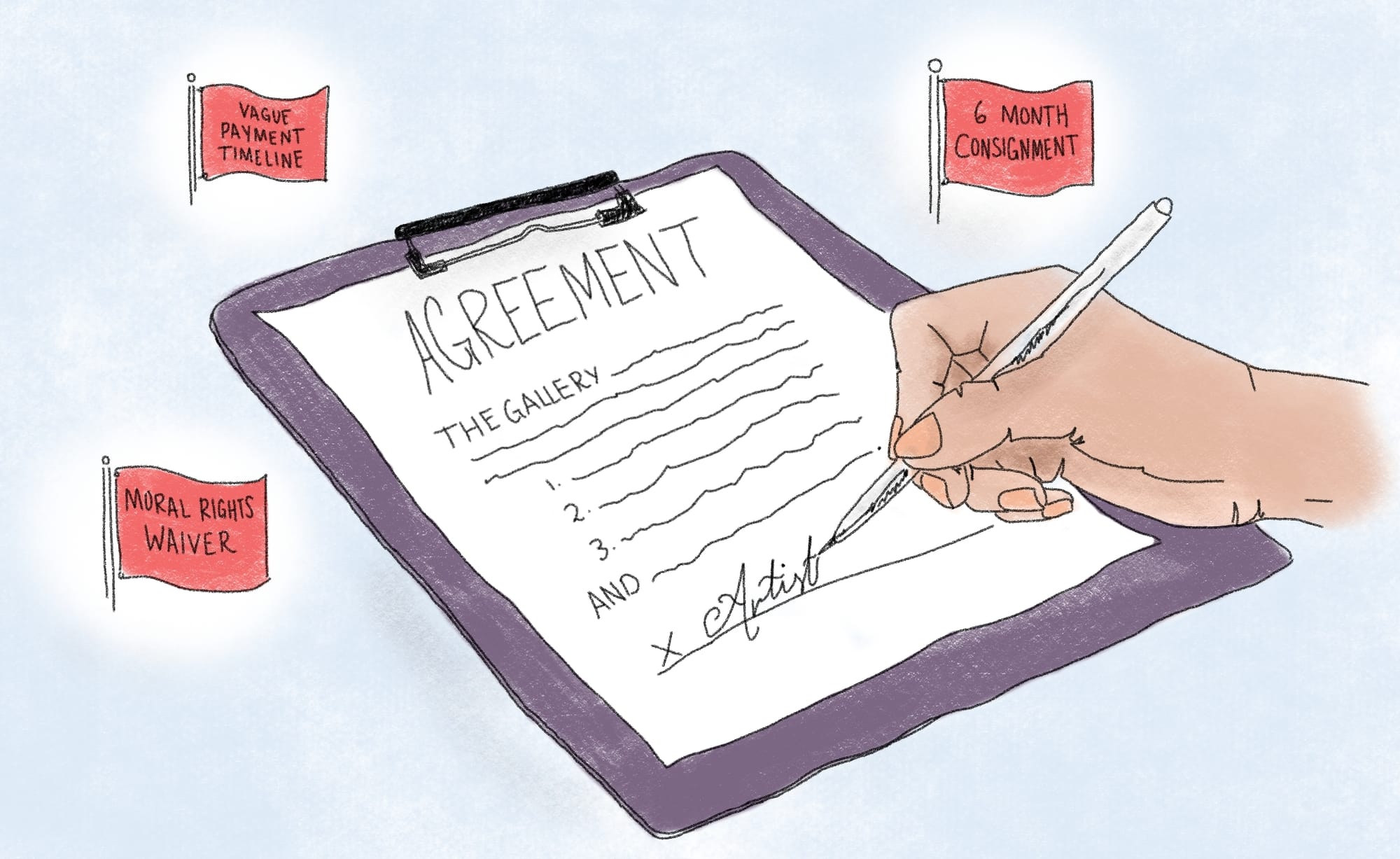
What Artists Sign Away

Artist and writer Sarah Hotchkiss recounts two personal experiences where galleries and residency programs used standard contracts to limit artists' rights. In the first, a new gallery refused to shorten a six-month consignment period after an exhibition, leaving her work in "contractual limbo" where she would owe the gallery half of any sale even if she found the buyer herself. In the second, a residency required her to waive moral rights under the Visual Artists Rights Act, protections that allow artists to prevent distortion and control attribution of their work.