filter_list Showing 9 results for "community art" close Clear
search
dashboard All 674 article local 560museum exhibitions 92article culture 9article news 7article policy 5person people 1
date_range Range Today This Week This Month All
Subscribe

‘It’s a tiny bit of joy!’ How trinket swapping is making the world a happier place, one china sheep at a time

Trinket exchange boxes, where people swap small items like pins, stickers, and ceramic animals, are rapidly spreading across the UK and US. The phenomenon, which began in Philadelphia in autumn 2024, has grown from 800 to nearly 1,500 installations in two months, according to Portland-based artist Rachael Harms Mahlandt, who tracks them on a world map. In Edinburgh, pet-sitter Sam Stevens runs a popular pink box outside Argonaut Books, inspired by a San Francisco exchange, and has seen her follower count jump overnight as locals trade trinkets for fun.
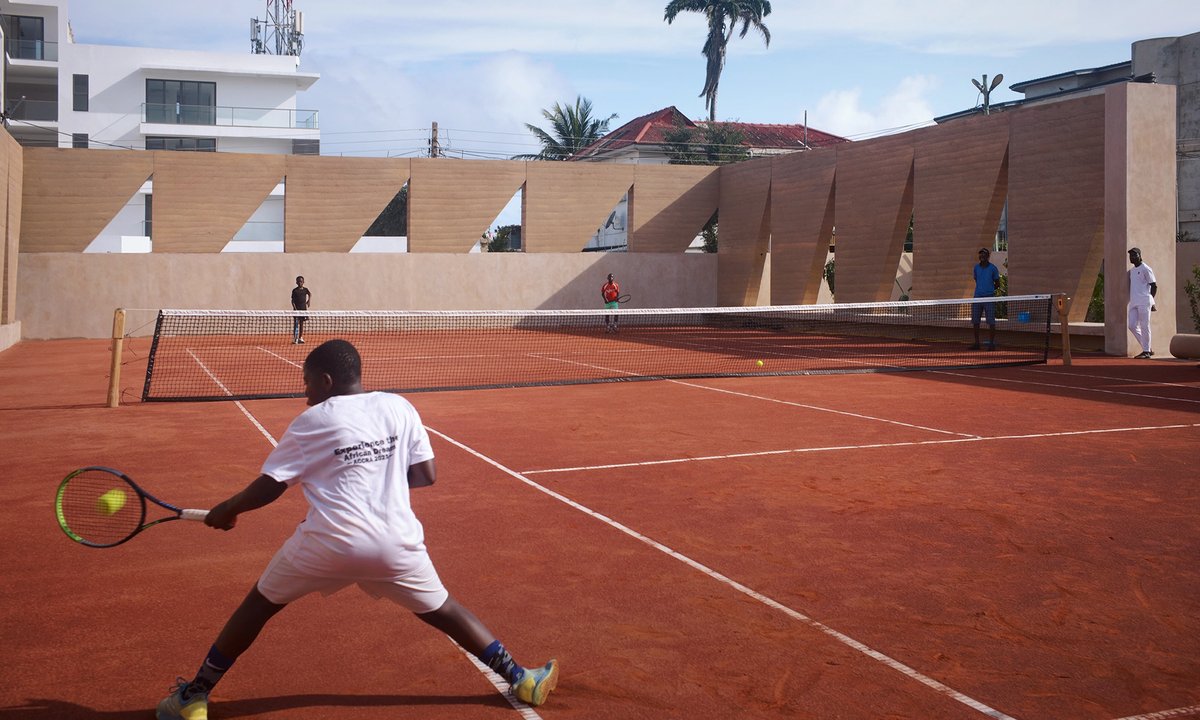
Amoako Boafo serves up a community tennis court in Ghana

Ghanaian artist Amoako Boafo has opened Backyard Community Club, a tennis training facility in Osu, Accra, featuring the country's first regulation clay court. Designed by Accra-based architecture firm DeRoche Projects, the court is enclosed by precast rammed-earth panels—also a first in Ghana—and includes shaded seating, changing rooms, and edible plants. The project offers free tennis lessons to local children, drawing on Boafo's own background as a ball boy and tennis player before his rise as a global art star.

Meet Elizabeth Catlett in 11 Facts

Elizabeth Catlett (1915–2012) was a sculptor, printmaker, feminist, and social activist whose art was inseparable from her life and politics. Born in Washington, DC, to parents who worked in education, she faced racial discrimination early on—denied a scholarship to the Carnegie Institute of Technology and paid less than white colleagues as a teacher. She became the first Black woman to earn an MFA from the University of Iowa, studying under Grant Wood, and later taught at the George Washington Carver School in Harlem, where she connected with Harlem Renaissance figures. Catlett moved to Mexico, married artist Francisco Mora, and created woodblock and linocut prints for 20 years. She was investigated by the House Un-American Activities Committee, declared an "undesirable alien," and became a Mexican citizen in 1962. Her work centered on Black and Mexican women, and she famously stated, "We have to create an art for liberation and for life."

Go big or go home: how The Lost Giants revived the ancient art of goliath-making

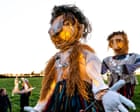
The Lost Giants (TLG), an art collective based in Lostwithiel, Cornwall, is reviving the British tradition of making processional giants—large, community-built figures made from wood, cloth, and papier-mâché. Founded three years ago by theatre designer Ruth Webb and her sister-in-law Amy Webb, the group has created giants for events ranging from local lantern parades to a harvest procession at Hauser & Wirth’s Somerset gallery. This New Year’s Eve, environmentalist Lisa Schneidau joined a massive procession of these giants in Lostwithiel, describing it as an extraordinary experience. The collective recently issued a public callout for an environmental group to collaborate on making a new beastie.

Around North America, Community Members Are Stitching Nearly 11,000 Birds

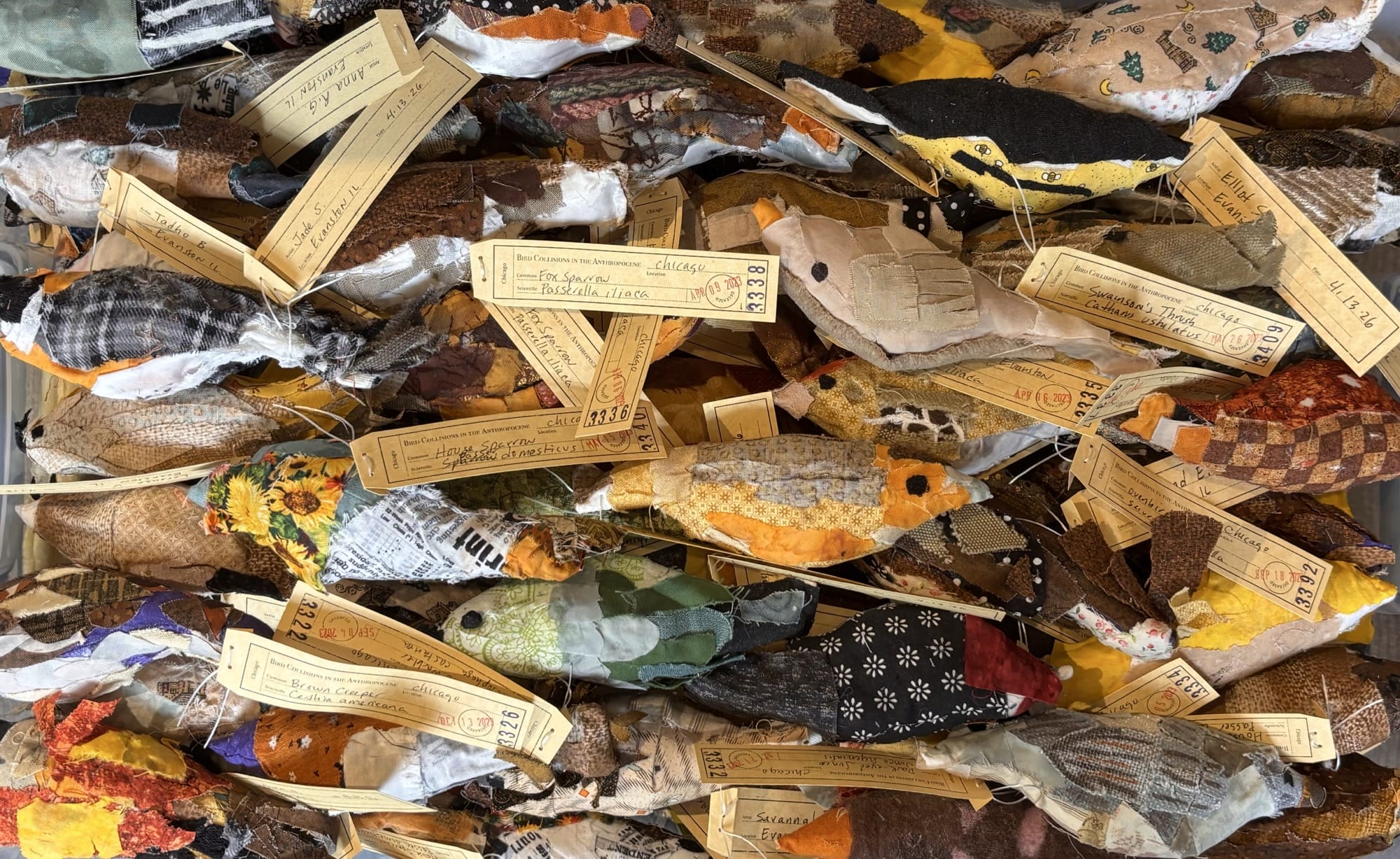
Artist and educator Holly Greenberg launched the multi-year project "Bird Collisions in the Anthropocene" in 2024 after learning about a mass bird collision at Chicago's McCormick Place Lakeside Center in October 2023, where nearly 1,000 birds died in a single night. Using data from the Chicago Field Museum and ornithologist Dave Willard, Greenberg focuses on the 10,863 birds found dead after hitting Chicago buildings in 2023 alone. The project involves community members stitching nearly 11,000 fabric birds to raise awareness and educate the public about preventing window collisions, which kill an estimated one billion birds annually across North America.

Linocuts by Eduardo Robledo Celebrate Mexican Heritage and Community

Eduardo Robledo, a Mexico City-based artist from Xochimilco, creates detailed linocuts that celebrate Mexican heritage, community, and spiritual motifs. His work features traditional symbols like skulls, skeletons, and Sacred Hearts alongside regional animals and cultural references such as Xochimilco's canal boats. Robledo also engages in social activism through printmaking, viewing it as a democratic medium for spreading messages about causes he supports. His prints are available at Hecho a Mano in Santa Fe, and he co-founded Lugar de Huida, a gallery in Mexico City that highlights Mexican printmakers.

Provincial Cosmos. Interview with Serena Fineschi, the artist who turned off all the lights of Siena

Provincia Cosmica. Intervista a Serena Fineschi, l’artista che ha spento tutte le luci di Siena

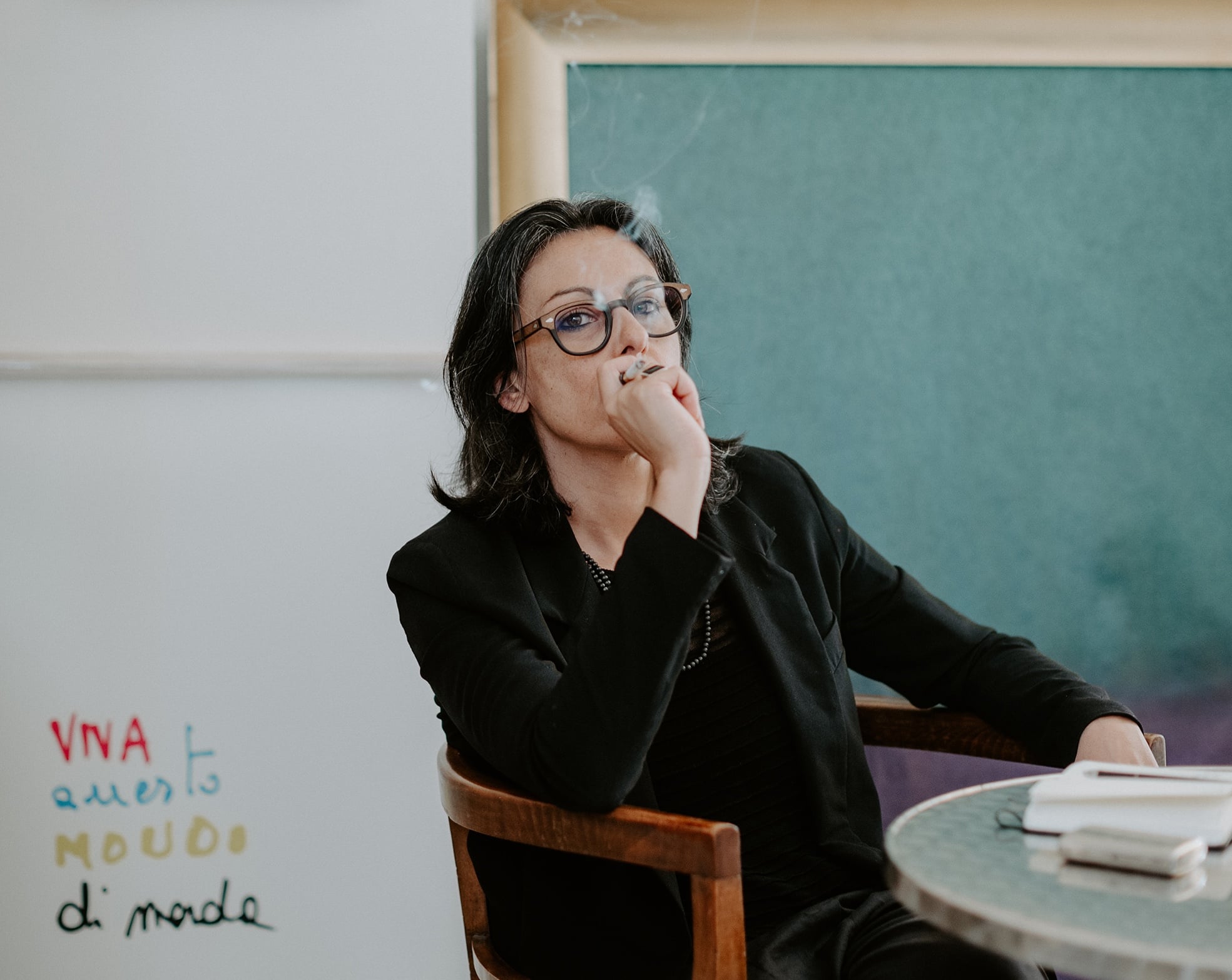
Serena Fineschi, an artist from Siena, Italy, discusses her return to her hometown after twelve years abroad, primarily in Brussels. She reflects on her public art projects, including one where she turned off all the city's lights for three minutes without warning, and another titled "Assistere il buio." The interview explores how her time in Belgium reshaped her artistic vision, shifting her perspective from the golden light of Siena to the sharp contrasts of northern light.

Che Onejoon: ‘The AfroAsia collective is now more important to me than my personal art’

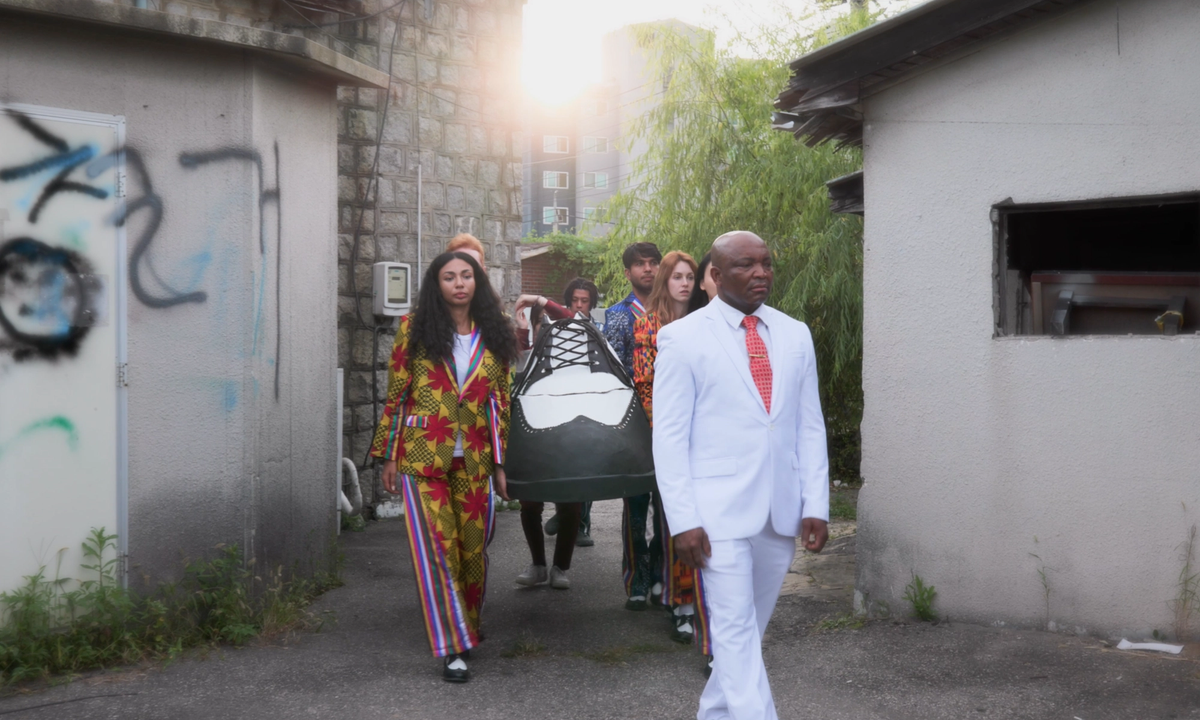
Che Onejoon, a South Korean artist, has shifted his focus from documenting North Korea's Cold War-era monument-building in Africa to working directly with West African migrant communities in South Korea. His earlier projects, including the Mansudae Masterclass series and films like *Black Monument* (2017) and *My Utopia* (2018), explored the little-known history of North Korean-built statues and buildings across at least 20 African nations. More recently, he co-founded Space AfroAsia, the Afroasia Eco Museum, and the AfroAsia Artist Collective, and now lives and works in the Bosan-dong "Africa Town" near the Demilitarized Zone, creating multilingual music videos and even a K-pop girl group with a mixed Korean-African lineup.

‘Eudaimonic well-being’ — the impact of art in healthcare - The Island News

The article discusses the growing recognition of art's role in healthcare settings, citing research that visual art enhances 'eudaimonic well-being'—a sense of meaning, growth, and purpose—which aids patient healing. Studies, including a 2025 review in The Journal of Positive Psychology, show that incorporating art in hospitals reduces stress and anxiety for patients and staff, improves communication, and even reduces patient aggression in high-stress areas like emergency rooms.