filter_list Showing 6 results for "hito steyerl" close Clear
search
dashboard All 38 museum exhibitions 22article culture 6rate_review review 6article local 2article news 1article school 1
date_range Range Today This Week This Month All
Subscribe

Trevor Paglen’s New Book Says AI Is Rewriting What Images Do

Artist Trevor Paglen has published a new book, *How to See Like a Machine: Images After AI*, which argues that generative AI and computer vision are fundamentally changing how images function in culture. Drawing on his decade-long practice, Paglen contends that images are no longer merely representations for human interpretation but have become operational tools—'activations' that trigger automated responses and shape reality. He cites examples such as surveillance cameras at grocery stores, the Samsara navigation system in trucks, and the ImageNet database to illustrate how machine vision systems normalize surveillance in service of capital, a phenomenon he terms 'machine realism.'

art in america new talent issue 2025

Art in America's 2025 "New Talent" issue features 20 emerging artists chosen by the magazine's editors, including Nico Williams, Bint Mbareh, Justin Allen, Agnes Questionmark, and Brooklin A. Soumahoro. The issue also includes a postmortem on figurative painting by Barry Schwabsky, an essay on spiritual art by Eleanor Heartney, a symposium on art's purpose with seven artists, and a tribute to the late Jaune Quick-to-See Smith by Emmi Whitehorse. Other sections cover Suzanne Valadon, Hito Steyerl's book, and a debate between art fairs and biennials.

The Year AI Captured Art

The article surveys the visual art landscape of 2025, arguing that the year's defining throughline is the increasing centrality of artificial intelligence—a technological revolution most people didn't ask for but cannot escape. It highlights several exhibitions and works that engage with AI in different ways: Seth Price's show at Isabella Bortolozzi in Berlin, which uses generative images from the pandemic era overlaid with gestural paint strokes; Charmaine Poh's video "GOOD MORNING YOUNG BODY" (2023) at Palais Populaire, where she deploys deepfake technology to have her twelve-year-old self speak back to internet trolls; and Philippe Parreno's show at Haus der Kunst, which poeticizes how generative technologies interact with humans and nature. The article also notes the rise of AI-generated "slop" online and its incursion into the physical art world, as well as market shifts where larger galleries are increasingly acquiring Instagram-friendly emerging artists directly.

Women behind the lens: ‘After state massacres, I began burning the prints as an act of mourning’

Iranian-Canadian visual journalist and artist Parisa Azadi describes her process of creating protest photographs during the 2022 Iranian revolution from exile in Dubai. Unable to return to Iran, she used open-source protest footage from social media, isolating frames and printing them with a Fujifilm instax camera to transform ephemeral digital images into physical objects. In January 2026, after state massacres and executions, she began burning these prints as an act of mourning, scarring their surfaces to echo the violence they depict.

Art’s new hybrid economy: who is making creative waves in a sector where analogue and digital media exist together?

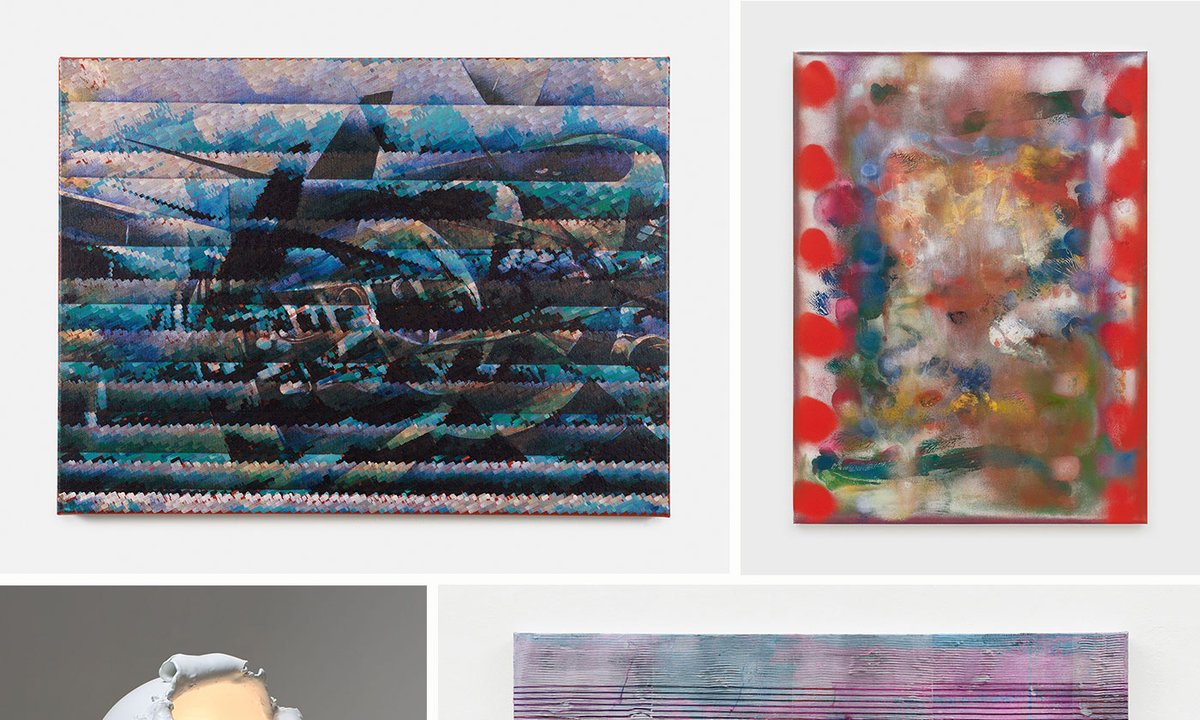
The article examines how contemporary artists are navigating a hybrid art economy where analogue and digital media converge, particularly in the age of AI. It profiles Simon Denny, recently appointed a Member of the New Zealand Order of Merit, whose machine-assisted paintings at Kraupa-Tuskany Zeidler in Berlin address the illegibility of AI-generated images and the militarized rhetoric of Italian Futurism. Other artists featured include Sara Ludy, whose postdigital paintings at Smart Objects, Los Angeles, reflect screen-based perception, and Chris Dorland, whose exhibition at Nicoletti Contemporary, London, exposes the limits of technical systems through glitch aesthetics. Hito Steyerl's new book *Medium Hot: Images in the Age of Heat* (2025) is also discussed, questioning the role of images in an era of operational, nonhuman vision.

Since 1968, Protests Have Revealed the Real Impact of the Venice Biennale

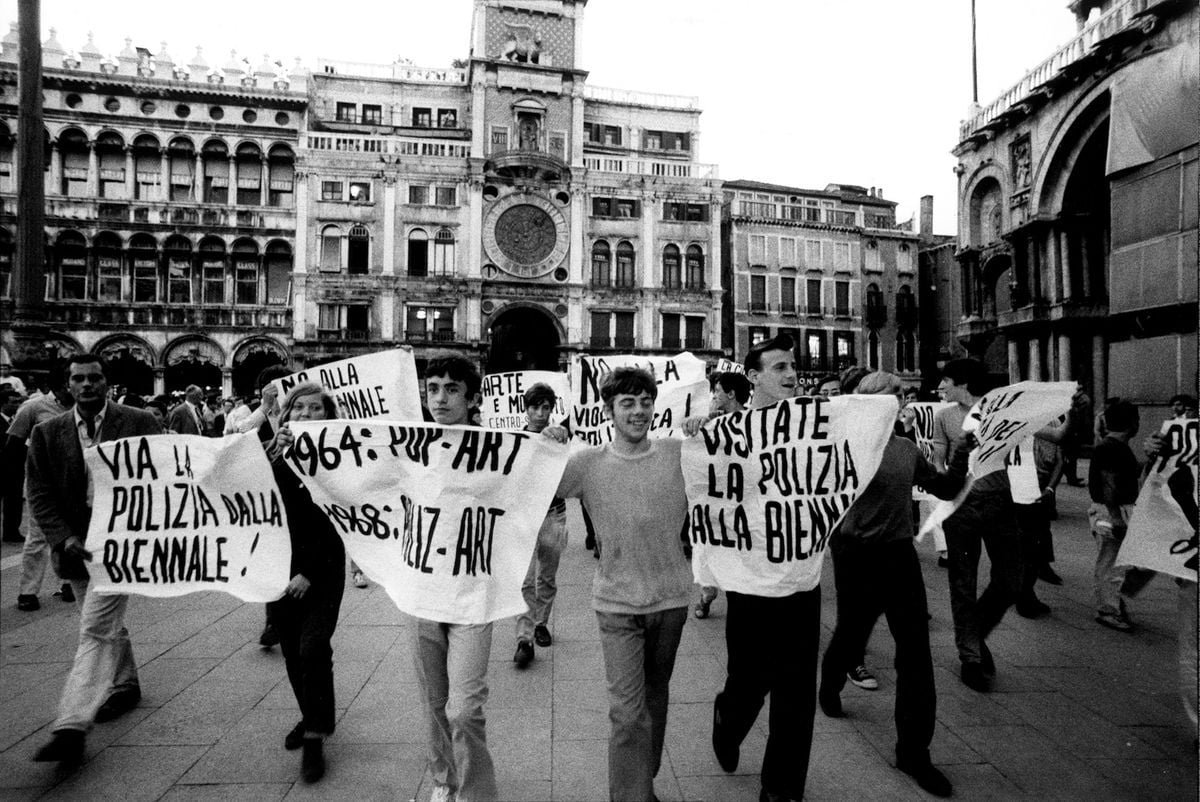
The article recounts the 1968 protests at the Venice Biennale, where artists, students, and activists clashed with police over the event's perceived ties to bourgeois power and capitalist commodification. It draws parallels to the 2024 Biennale, where groups like Art Not Genocide Alliance, Pussy Riot, and Femen demonstrated against the participation of Russia and Israel, while artists staged strikes and performances like the Solidarity Drone Chorus to highlight the Gaza conflict.