filter_list Showing 22 results for "miami beach" close Clear
search
dashboard All 328 museum exhibitions 129trending_up market 105article news 33article culture 22person people 22article local 8rate_review review 6article event 1candle obituary 1article policy 1
date_range Range Today This Week This Month All
Subscribe

art world acronyms

The article provides a comprehensive guide to essential acronyms used in the art world, explaining what each abbreviation stands for and its significance. It covers organizations like AAM (American Alliance of Museums), AAMD (Association of Art Museum Directors), and ADAA (Art Dealers Association of America), as well as art fairs such as ABMB (Art Basel Miami Beach) and ARCO (Arte Contemporáneo in Madrid). It also includes advisories like AIG (Art Intelligence Global), historical galleries like AIR (Artists in Residence), and defunct fairs like FIAC (Foire Internationale d'Art Contemporain), offering context on their origins and current relevance.

museum artists

The article reflects on the final 2025 edition of the Museum Artists list, which tracks the most exhibited artists in U.S. museums each quarter. The author notes that the top artists—such as Marie Watt, Jeffrey Gibson, and Rose B. Simpson—have remained consistent throughout the year, with a narrow band of stars appearing in many shows while a long tail of artists have limited visibility. Below the top 15, notable names include Julie Mehretu, Wangechi Mutu, and Jean Shin, with a cluster of older white female artists like Petah Coyne and Joyce Kozloff also gaining recognition.

forget blue chip art its a red chip art world now

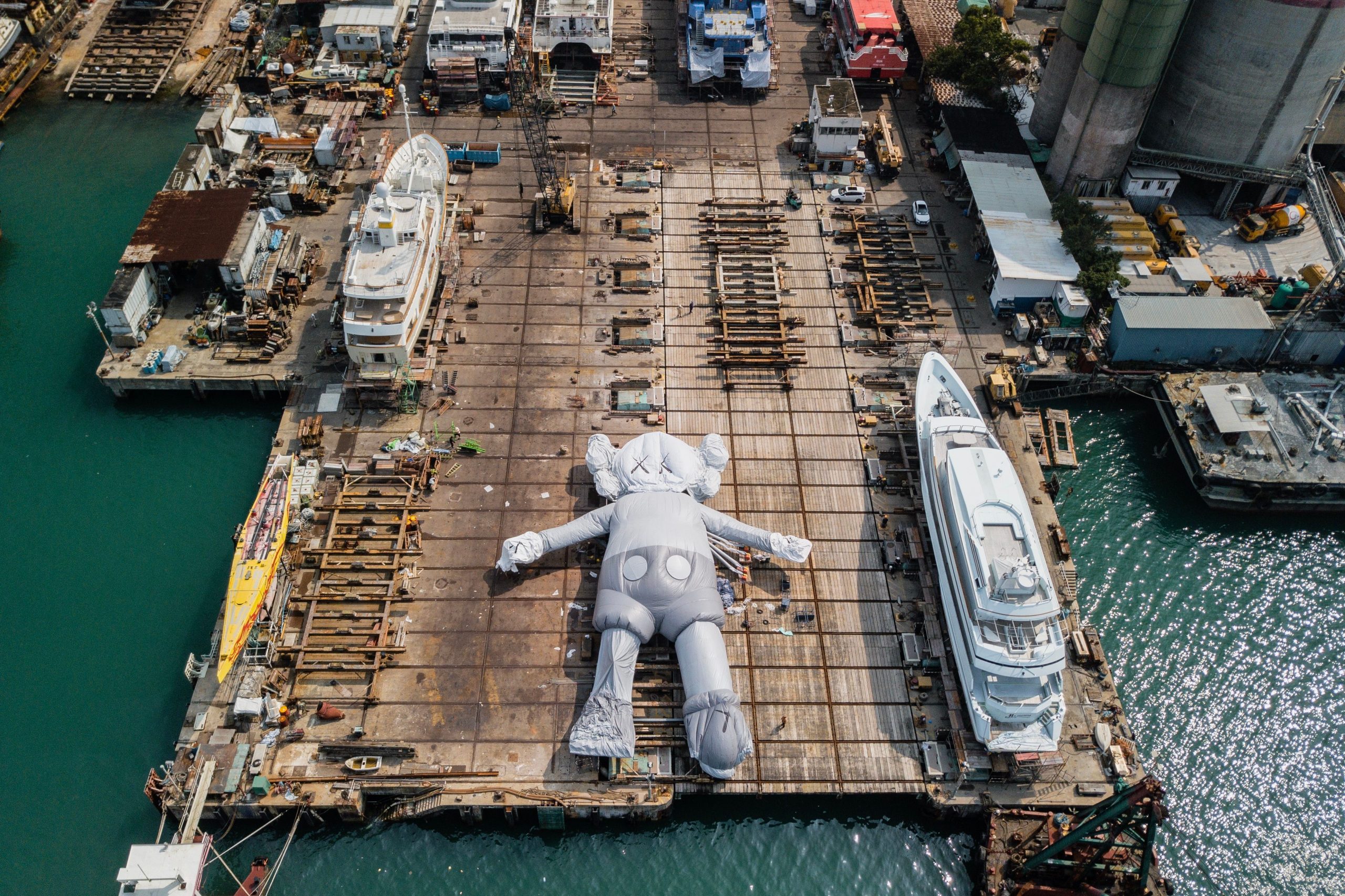
The article introduces and defines the concept of "red-chip art," a new category of art collecting that rejects traditional art-historical reverence in favor of aesthetics rooted in street art, graffiti, super-flat cartoons, multi-colored chrome, and crypto culture. It describes red-chip collectors as mysteriously affluent millennials, techies, hip-hop visionaries, and crypto aspirants who gravitate toward artworks that resemble toys, limited-edition dolls, NFTs, and memecoins, often consumed at venues like the Eden Fine Art gallery at the Wynn in Las Vegas or parties during Art Basel Miami Beach. Key artists associated with this movement include KAWS, George Condo, Virgil Abloh, Tom Sachs, Alex Israel, Damien Hirst, Harmony Korine, Yoshitomo Nara, and Banksy, with Jeff Koons and Takashi Murakami seen as transitional "purple chip" figures.

modern contemporary art

The article explores the distinction between Modern and contemporary art, explaining that Modern art emerged in the late 19th century as a reaction to classical art and the Industrial Revolution, with movements like Impressionism, Cubism, Futurism, and Surrealism redefining painting in response to photography. Contemporary art, by contrast, is a reaction to Modern art, with its start debated between World War II and the 1960s-70s consumerist era, encompassing diverse mediums such as sculpture, street art, and performance art, exemplified by artists like Jeff Koons, Banksy, and Yoko Ono.

can brainrot be art beeple thinks so

Digital artist Mike Winkelmann, known as Beeple, joined Ben Davis on the Artnet News podcast "The Art Angle" to discuss his work and the evolving perception of digital art. Beeple first gained global attention in 2021 when his NFT artwork "Everydays, The First 5,000 Days" sold for $69 million at Christie's, making him a symbol of the NFT boom. Since then, he has continued to experiment with new media, including interactive video sculptures shown at LACMA and robot dogs with human heads displayed at Art Basel Miami Beach 2025.

art basel swimming rhine river

Art Basel in Switzerland has a unique ritual: many attendees swim in the Rhine River, which flows through Basel. Participants use waterproof bags (often the fish-shaped Wickelfisch brand) to store clothes and belongings, then float downstream from the Museum Tinguely past the Trois Rois hotel. The practice is embraced by dealers, advisers, artists, and art handlers alike, with some describing it as a rejuvenating escape from the fair's intensity. However, not everyone is a fan—gallerist David Nolan calls the river "dirty, dangerous, deeply infested with microplastics," and some attendees avoid it due to concerns about pollution or safety.

julie curtiss motherhood pumping painting

Artnet News journalist Annie Armstrong recounts her emotional experience at Art Basel Miami Beach, where she desperately sought to see Julie Curtiss's painting "Mary With the Medela" (2024), a portrait of a woman using a breast pump. As a new mother balancing work and pumping, Armstrong felt a deep personal connection to the work but arrived at the White Cube booth moments after it had been sold and removed from view, leaving her in tears.

8 gulf artists defining the regions new cultural renaissance

Artnet News profiles eight Gulf artists who are shaping the region's cultural renaissance, including Mohammad Alfaraj and Dana Awartani. The article highlights their growing international recognition, with Alfaraj winning Art Basel Emerging Artist and Gold Awards in 2025 and Awartani exhibiting at the 2024 Venice Biennale. It notes the expansion of major art fairs like Art Basel and Frieze into the Gulf, alongside new homegrown initiatives such as the Diriyah Contemporary Art Biennale and Rubaiya Qatar.

todd von ammon grids galleries fairs column

Todd von Ammon, a young gallerist, critiques the contemporary art market's over-reliance on art fairs and the homogenization of gallery spaces into a sterile, grid-like system. He contrasts this with the lost charm of discovering hidden, architecturally unique galleries in labyrinthine neighborhoods, which he argues fosters a sense of urban belonging and agency for collectors and art workers. The article traces the shift from the rabbit warrens of SoHo to the dense Chelsea gallery district and the rise of the modern art fair, epitomized by Art Basel's expansion to Miami Beach in 2002, which he likens to a pyramid scheme that burdens young galleries with high costs for minimal returns.

issy wood charli xcx vanity fair cover

Issy Wood, a rising British artist known for her figurative paintings of luxury objects and body parts, created the cover for Vanity Fair's first art-themed issue in nearly two decades. The cover features a portrait of pop star Charli XCX titled *Charli 2* (2025), painted in oil on velvet with gauzy stars and white forms. Wood cited their shared Britishness and the singer's career longevity as inspiration, while the article draws parallels between Wood's subject matter and the 'Brat universe.'

art words of the year

Artnet News critic Ben Davis presents his annual "art words of the year" for 2025, a curated list of terms that capture prevailing moods and ideas in the art world. The list includes "antimemetics" (from writer Nadia Asparhouva and internet fiction), "cyniserity" (coined by art writer David Colman to describe Anne Imhoff's work), "delightmare" (a horror-adjacent feeling linked to overconsumption and AI art, exemplified by Beeple's Art Basel installation), "elite capture" (from philosopher Olúfẹ́mi O. Táíwò's book, now a tool for critiquing identity politics in art), and "K-shaped" (an economic term describing divergent recovery, applied to gallery closures versus record auction sales).

‘Like a carefully choreographed performance’: meet the logistics professionals who bring art fairs to life

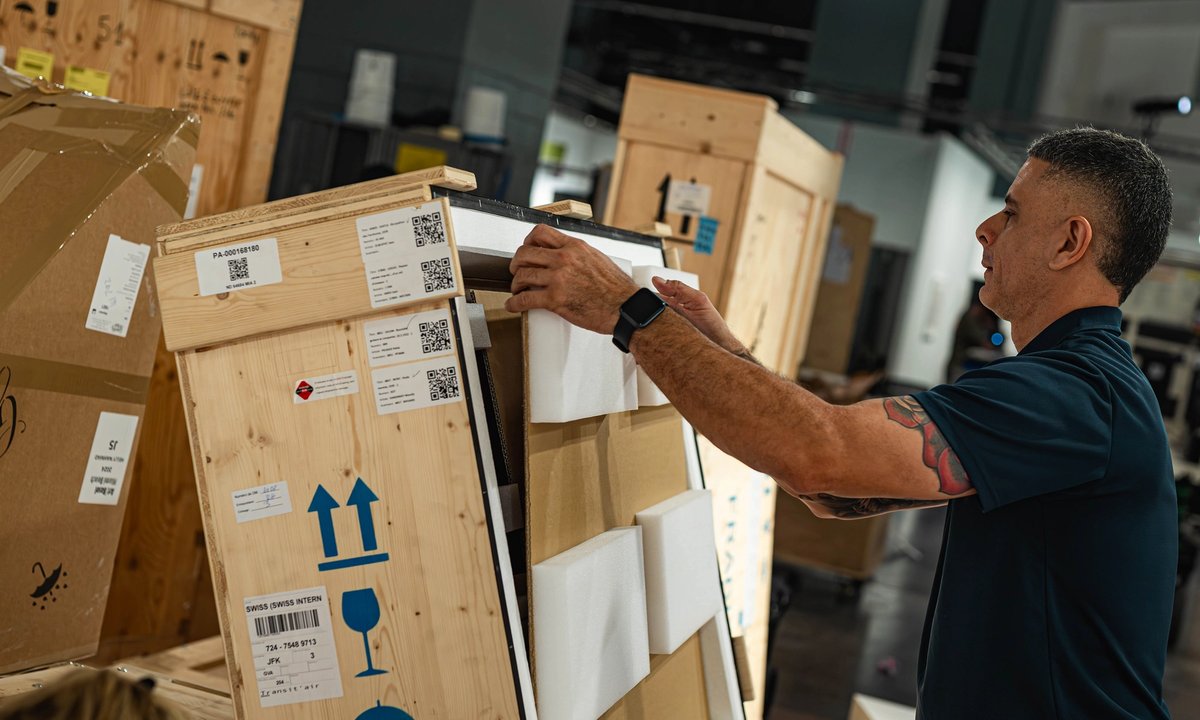
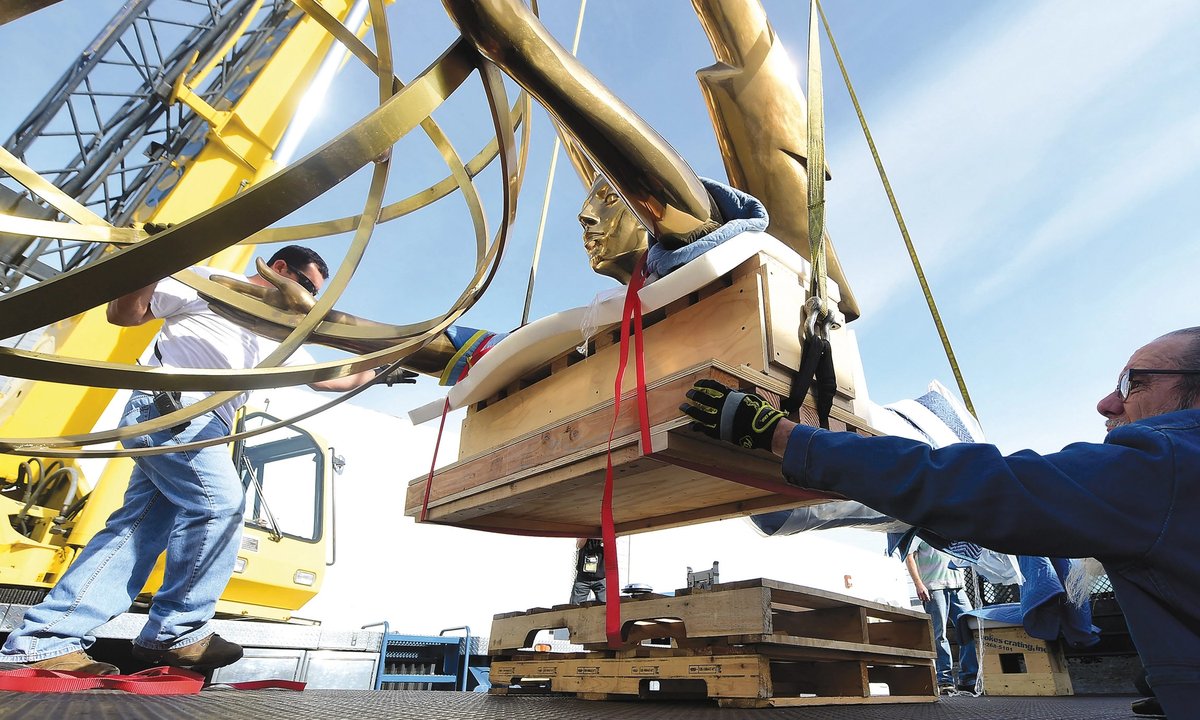
Art fairs appear serene on the surface, but behind the scenes, logistics professionals work frantically to ship, install, and present hundreds of artworks. The article shares dramatic installation tales from galleries and shippers, including Gianpietro Carlesso's heavy sculpture at Frieze Sculpture 2020, a Calder Stegosaurus transported for Art Basel Miami Beach 2013, and Mandy El-Sayegh's immersive booth installation at Frieze London 2023. These stories highlight the challenges of tight schedules, extreme weather, and complex installations that require structural engineers, cranes, and overnight work.

The Year AI Captured Art

The article surveys the visual art landscape of 2025, arguing that the year's defining throughline is the increasing centrality of artificial intelligence—a technological revolution most people didn't ask for but cannot escape. It highlights several exhibitions and works that engage with AI in different ways: Seth Price's show at Isabella Bortolozzi in Berlin, which uses generative images from the pandemic era overlaid with gestural paint strokes; Charmaine Poh's video "GOOD MORNING YOUNG BODY" (2023) at Palais Populaire, where she deploys deepfake technology to have her twelve-year-old self speak back to internet trolls; and Philippe Parreno's show at Haus der Kunst, which poeticizes how generative technologies interact with humans and nature. The article also notes the rise of AI-generated "slop" online and its incursion into the physical art world, as well as market shifts where larger galleries are increasingly acquiring Instagram-friendly emerging artists directly.

Art, fashion and nature join forces

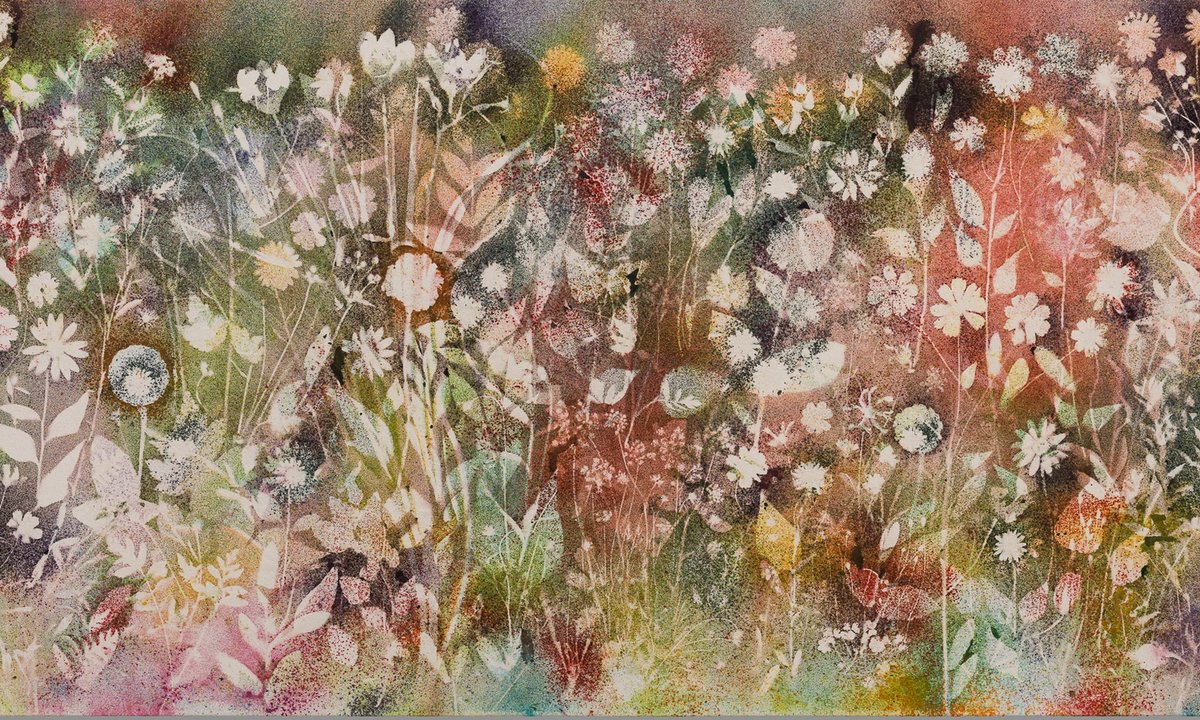
The article features a conversation between Los Angeles-based artist Sam Falls and Edoardo Zegna, chief marketing, digital and sustainability officer at the Italian luxury menswear brand Zegna, during Miami Art Week. Falls creates works that blend Land Art and plein air photography by leaving materials in natural environments, while Zegna discusses the brand's century-long stewardship of Oasi Zegna, a 100 sq. km forest in the Italian Alps. Zegna has created an invitation-only pop-up space called Villa Zegna in the Design District showcasing Falls's works, and Falls also has pieces at 303 Gallery's stand at Art Basel Miami Beach and in the Ruinart Lounge.

patrick eugene dior lady dior art anniversary

Haitian-American artist Patrick Eugène has been selected by Dior to reinterpret the iconic Lady Dior handbag for the 10th-anniversary edition of its Dior Lady Art initiative. He is one of ten international participants and one of only two U.S.-based artists in the milestone edition, which will premiere at Art Basel Paris later this month before becoming available at Dior boutiques worldwide. Eugène's design draws on his Haitian roots, incorporating leather and textile patchwork, wooden beads, macramé, raffia embroidery, and straw weaving, with a standout feature of woven leather side panels inlaid with pearls referencing Haiti's historic nickname, the "Pearl of the Antilles." The collaboration will also anchor special activations during Art Basel Miami Beach in December.

vanity fair nuzzi unreleased portrait scandal

Vanity Fair has commissioned and will publish an abstract nude portrait of journalist Olivia Nuzzi, titled "How to Disappear," by artist Isabelle Brourman, in its Dec. 2 Hollywood Issue. The painting, which depicts Nuzzi nude with Americana symbols swirling around her, was created after the two met during Donald Trump's criminal trial and will also be exhibited at Art Basel Miami Beach as part of Jeffery Deitch's presentation "The Great American Nude."

jeffrey deitchs coney art walls exploits artists real estate ploy

Jeffrey Deitch, former dealer and ex-director of MOCA LA, has partnered with property developer Thor Equities to create "Coney Art Walls," a summertime display of street art murals on concrete slabs in Coney Island, New York. Located on a vacant lot at 1320 Bowery Street owned by Thor Equities, the project features works by over a dozen artists including Lady Pink, Daze, Lee Quiñones, Swoon, and Mister Cartoon, and shares space with Smorgasburg, a food and drink pop-up village. The article criticizes the venture as a real estate marketing ploy rather than a genuine art exhibition.

Yu-Chi Lyra Kuo Shares a Vision for the Future of Art, Technology, and Creativity

Yu-Chi Lyra Kuo, an entrepreneur, investor, Harvard-educated lawyer, former Princeton academic, and board member of the Shed, shares her vision for integrating frontier technologies like artificial intelligence and robotics into the art world. She argues that these tools can enhance human creativity rather than replace it, drawing on her early experiences with Asian antiquities and her pioneering work in blockchain, including co-founding OpenSea 2.0. The article, based on an interview with CULTURED, traces her journey from collecting a jade gourd as a child to advising tech companies and joining the board of the Shed, a Bloomberg-backed cultural center in Hudson Yards.

11 Worst Modern Art Collection & It’s Reviews

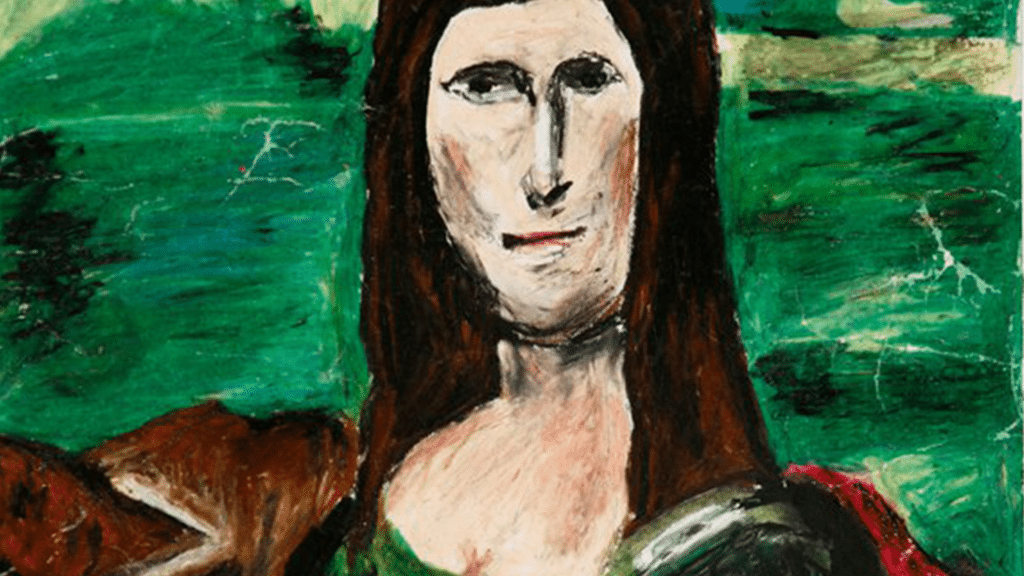
The article presents a list of what it considers the worst modern artworks, including Jackson Pollock's abstract expressionist paintings, Tracey Emin's installation 'My Bed,' and Damien Hirst's project 'The Currency.' It offers personal commentary and critical reviews for each piece, questioning their artistic merit and cultural value.

In the Studio with Jevon Brown

Artist Jevon Brown, a Miamian of Bahamian, Jamaican, and Black Southern descent, discusses his multidisciplinary practice in an interview conducted in his Miami Beach apartment and studio. Brown works across textiles, silkscreen printing, fashion, and photography to explore cultural identity, belonging, queerness, and history. He describes how memories of Miami sunsets, family members like his uncle (a sneakerhead and hat collector), and ancestral references inform his creative process. Key works discussed include the "HAIREtage" series (2025), which uses materials like burlap and raffia to connect contemporary streetwear culture with African and Caribbean spirituality, and his inclusion in the exhibition "Material, Material World" at David Castillo Gallery.

How can art fairs become greener?

Art fairs face significant sustainability challenges due to their temporary nature. Untitled Art in Miami Beach, held in a tent on the beach, works with environmental departments to ensure zero impact, reusing its tent annually. Fairs in permanent venues like Art Basel Miami Beach at the LEED Silver-rated convention center must manage temporary walls, energy use, and waste. Exhibitors struggle with high carbon emissions—art fair activities account for a third of a gallery's annual emissions—and waste from packing materials. Shipping constraints often force reliance on air freight over slower, greener options like ocean or rail, especially for last-minute, high-value consignments. The competitive, secretive atmosphere further hinders consolidated shipments and sustainable practices.

Natalie Portman tries to sell a corpse and film-makers traffic in art-market stereotypes in The Gallerist

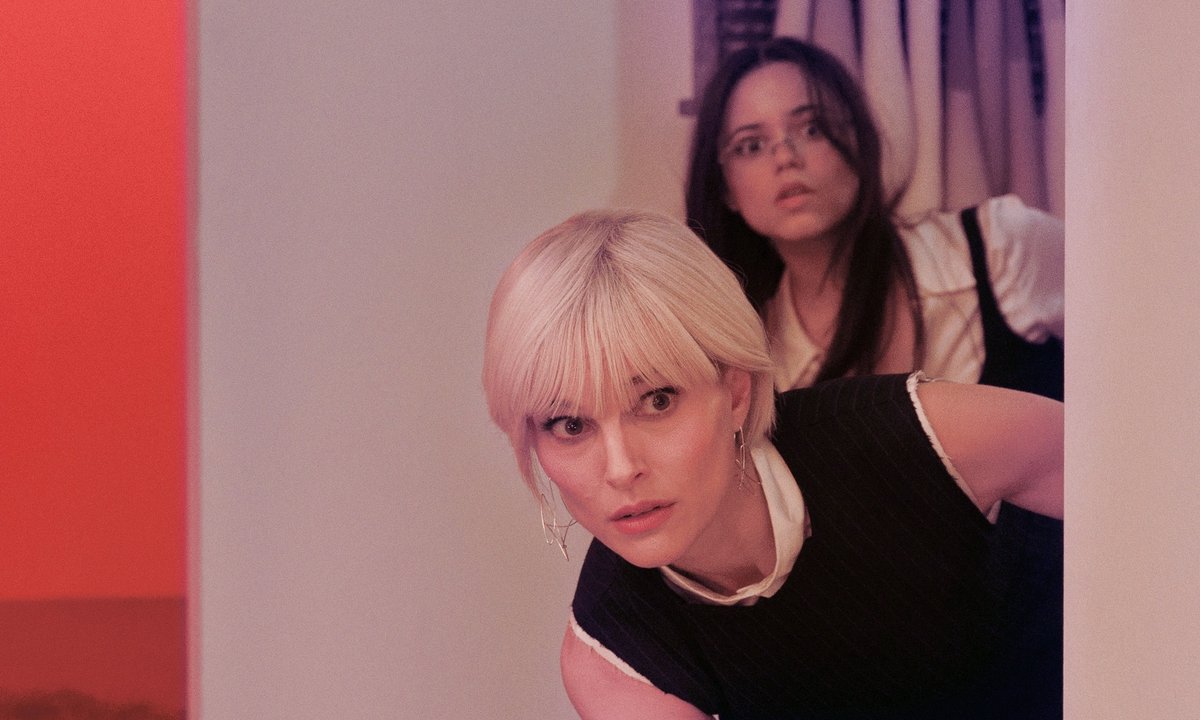
Cathy Yan's new black comedy caper *The Gallerist*, which premiered at the Sundance Film Festival, follows Miami-based dealer Polina Polinski (Natalie Portman) as she tries to sell a corpse impaled on a sculpture during Art Basel Miami Beach. The film, co-written by Yan and James Pedersen, features a cast including Da'Vine Joy Randolph, Zach Galifianakis, Jenna Ortega, Charli xcx, and Catherine Zeta-Jones, and leans heavily on art-world stereotypes for its farcical humor.