
filter_list Showing 3 results for "victorian art" close Clear
search
dashboard All 7 article culture 3museum exhibitions 2article local 1candle obituary 1
date_range Range Today This Week This Month All
Subscribe

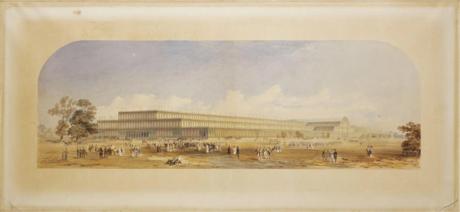
The story of London's Great Exhibition, as seen through the eyes of artists

Julius Bryant’s new book, the fourth volume in his history of the Victoria and Albert Museum, re-examines the 1851 Great Exhibition through its visual legacy. By analyzing paintings, prints, and ephemera—including the vast archive of Charles Wentworth Dilke—Bryant reconstructs the 'Crystal Palace' experience, highlighting the youth of its organizers and the staggering speed of its construction. The narrative shifts focus away from traditional social theory toward the actual visual evidence of the event, from David Roberts’s massive panoramic paintings to the 235 sculptures that defined the era's artistic output.

burton the meeting on the turret stairs

The article explores Frederic William Burton's iconic Victorian watercolor *Hellelil and Hildebrand, the Meeting on the Turret Stairs* (1864), held at the National Gallery of Ireland. It recounts the tragic medieval Danish ballad that inspired the painting, in which the noblewoman Hellelil and her guard Heldebrand are doomed lovers. Burton, an Irish painter influenced by the Pre-Raphaelite Brotherhood, worked exclusively in watercolor and gouache, making this delicate piece a technical marvel. The museum displays it only one hour twice weekly to protect it from light damage.

waterhouse tennyson lady of shalott

English painter John William Waterhouse created three paintings based on Lord Alfred Tennyson's poem "The Lady of Shalott," depicting a cursed woman from Arthurian legend. The article explores Waterhouse's deep admiration for Tennyson, noting that he filled his copy of Tennyson's works with sketches. It reveals that Waterhouse painted the story in reverse chronological order, starting with the final scene in 1888, then the moment of temptation in 1894, and finally the lady's lament in 1915. The article also identifies the model for the first painting as likely Waterhouse's wife, artist Esther Kenworthy Waterhouse, and describes symbolic details in the work, such as the snuffed candles foreshadowing death.