filter_list Showing 8 results for "FEMEN" close Clear
search
dashboard All 37 article news 27museum exhibitions 8article culture 2
date_range Range Today This Week This Month All
Subscribe

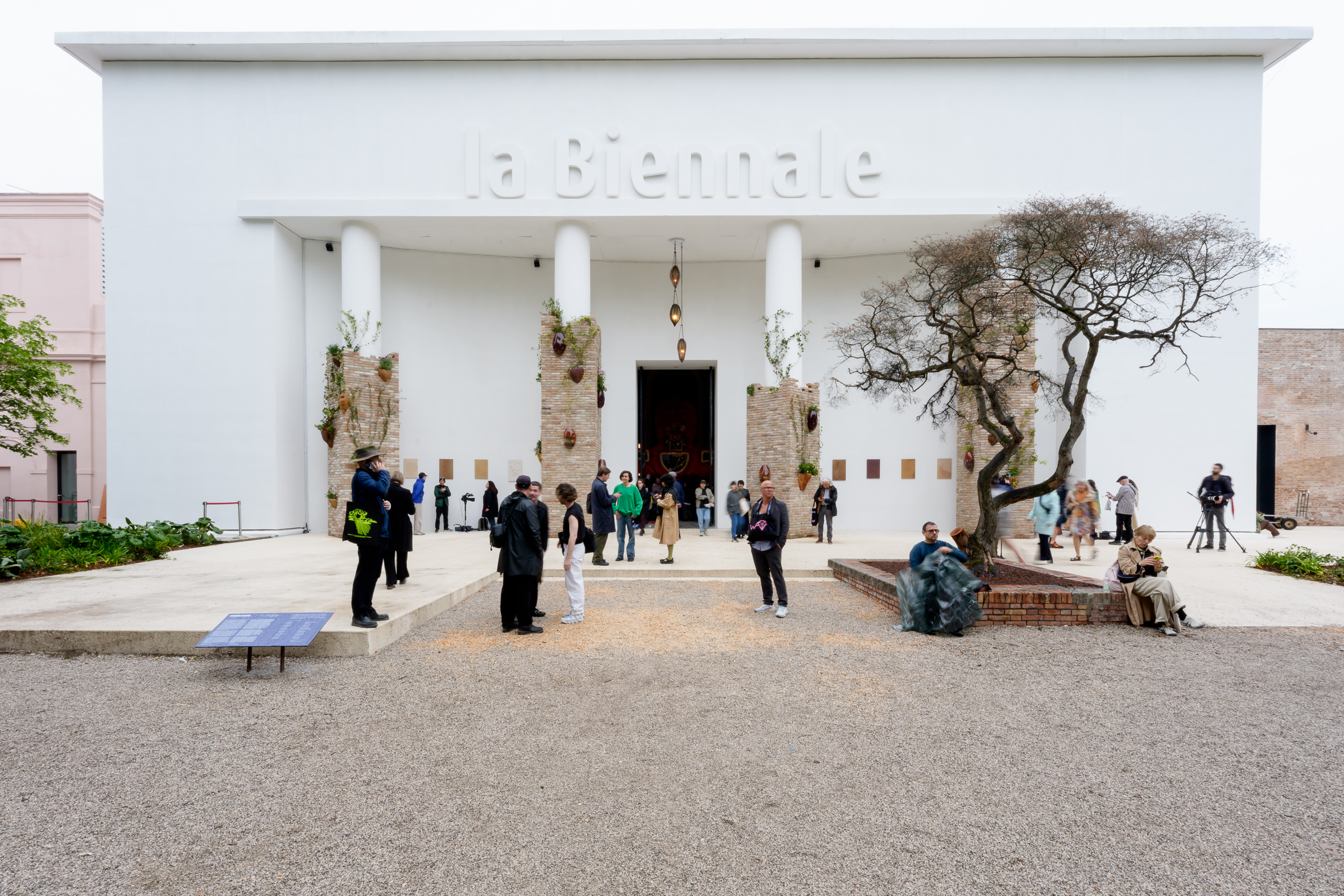
Female nudity and art that stinks: key takeaways from Venice Biennale 2026

The 2026 Venice Biennale opened with 99 participating countries, including first-timers Somalia and Qatar, under the shadow of curator Koyo Kouoh's death. Her planned theme of "enhancement" and the main show "In Minor Keys" were disrupted by political protests: Pussy Riot objected to Russia's inclusion, and a strike against Israel's participation forced several national pavilions (UK, Austria, France) to close. Key takeaways include pervasive female nudity across pavilions, debates over Russia's presence, criticism of the US pavilion's lackluster art, maritime themes dominating several shows, and the rise of olfactory art.

Art Rotterdam focuses on photography

The 27th edition of Art Rotterdam took place at the Rotterdam Ahoy, featuring over 150 galleries with a heavy emphasis on the Dutch art scene. This year’s fair was marked by a strategic integration with the photography fair Unseen and coincided with major local developments, including the relocation of the Nederlands Fotomuseum to its new 'Santos' home and the opening of the Fenix Museum of Migration. Notable presentations included Sakir Khader’s poignant photography of Palestinian resistance at No Man's Art Gallery and Shimon Kamada’s atmospheric oil paintings at Diez Gallery.

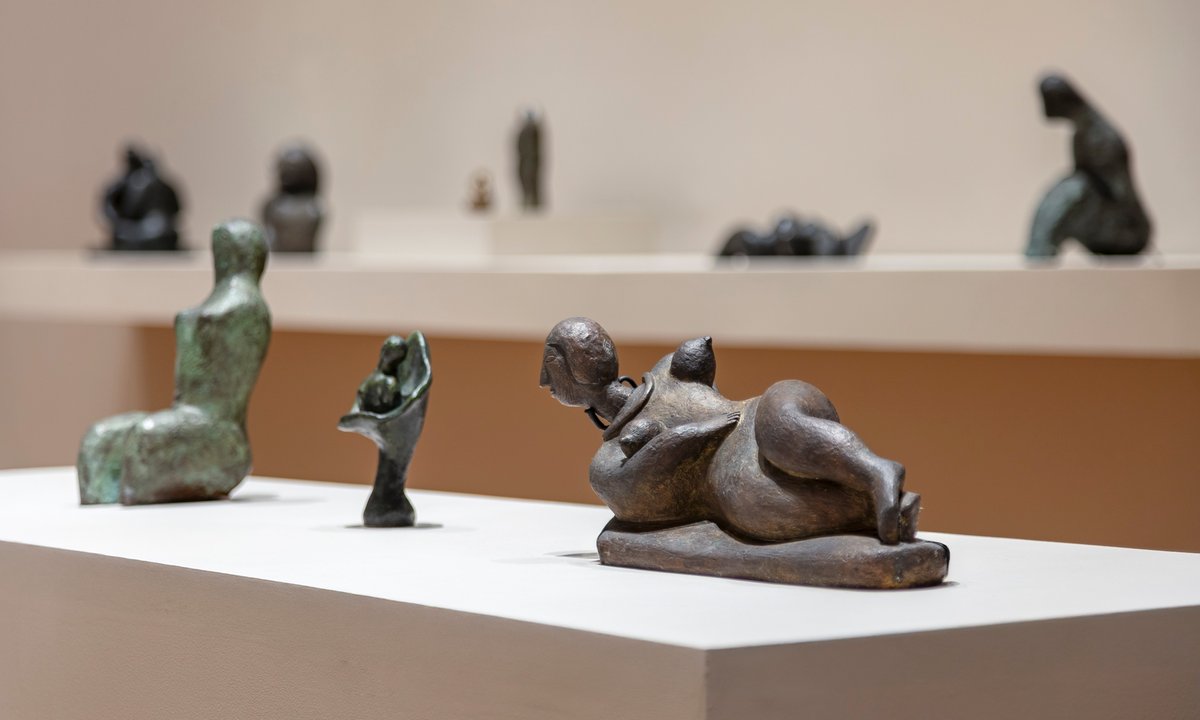
Pioneering sculptor Geles Cabrera’s Mexico City retrospective marks centennial

A major retrospective of pioneering sculptor Geles Cabrera has opened at the Museo del Palacio de Bellas Artes in Mexico City, celebrating her centennial year. The exhibition, titled "Partituras Corporales," spans seven decades of her work, featuring nearly 100 sculptures in materials from volcanic stone to plexiglass, and highlights her radical focus on the expressive, often erotic, human body. It follows her recent receipt of Mexico's highest artistic honor, the 2024 Bellas Artes Medal in Visual Arts.

Biennale Arte 2026: which national pavilions strike us and why

The 61st International Art Exhibition of La Biennale di Venezia, titled "In Minor Keys" and curated by Koyo Kouoh (who passed away in May 2025), opened amid intense controversy over its artist list and geopolitical tensions. Protests erupted against the participation of Israel and Russia, with a petition signed by 22 countries to exclude Russia, threats from the European Commission to suspend funding, and the resignation of the international jury. Around 18 national pavilions staged strikes and partial closures to denounce the normalization of Israel's presence and precarious labor in the art world. The Austria Pavilion's performance by Florentina Holzinger, featuring a girl hanging upside down inside a tilting bell, became a viral symbol refocusing attention on art itself.

72 Hours in Venice: Palazzos, Protests, and a Biennale on the Brink

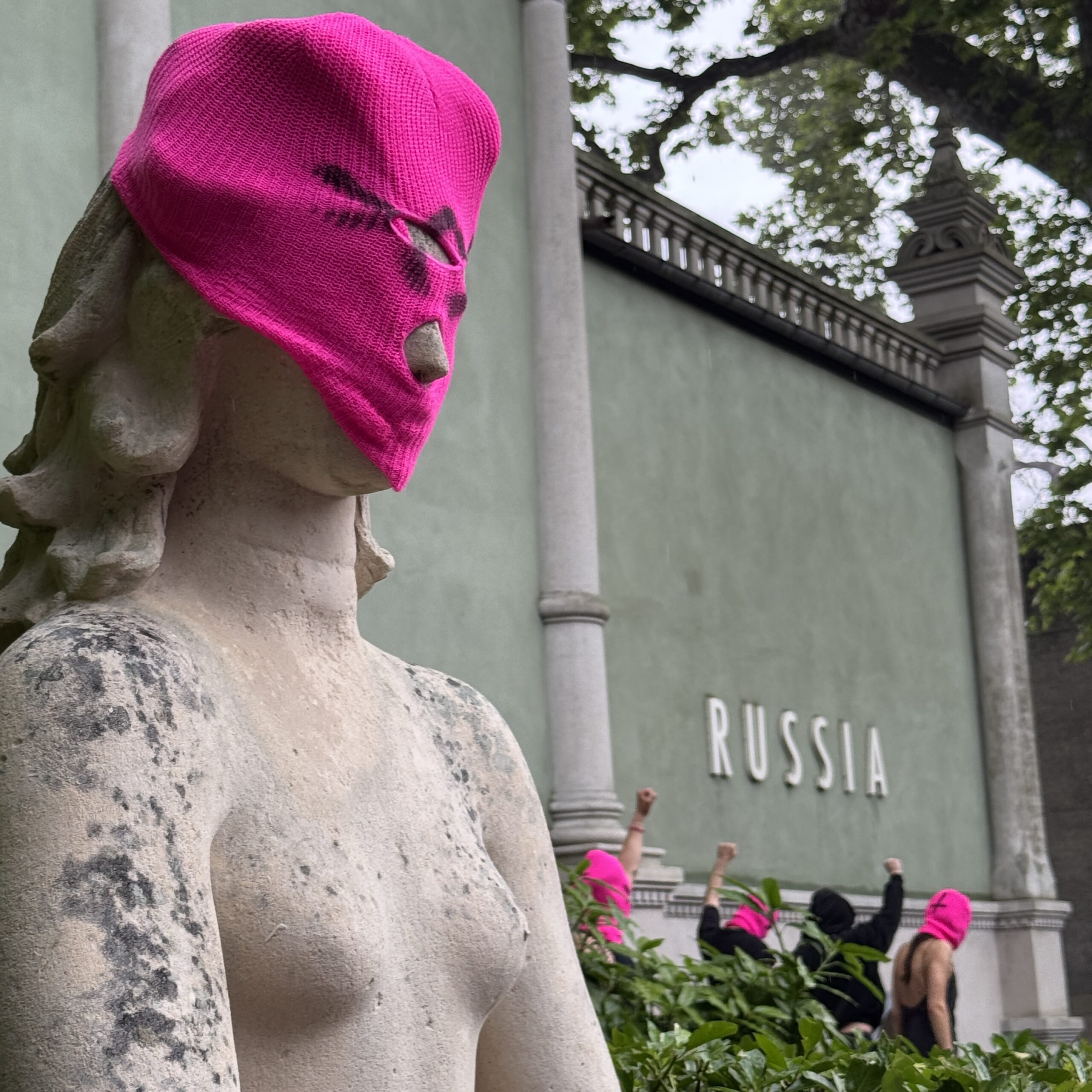
The article recounts a journalist's 72-hour visit to the Venice Biennale, beginning with a protest by Pussy Riot and Femen at the Russian Pavilion. The action features pink smoke, chants of "Blood is Russia's art," and a guerrilla performance of the song "Disobey," set against a backdrop of internal Biennale strife—including juror resignations over countries whose leaders face ICC arrest warrants (Netanyahu and Putin). The narrative also notes the presence of alt-right figures like Ryan Coyne and sculptor Alma Allen's troubled U.S. pavilion representation.

Artists Pay Tribute to Koyo Kouoh in Poetry Caravan at Venice Biennale

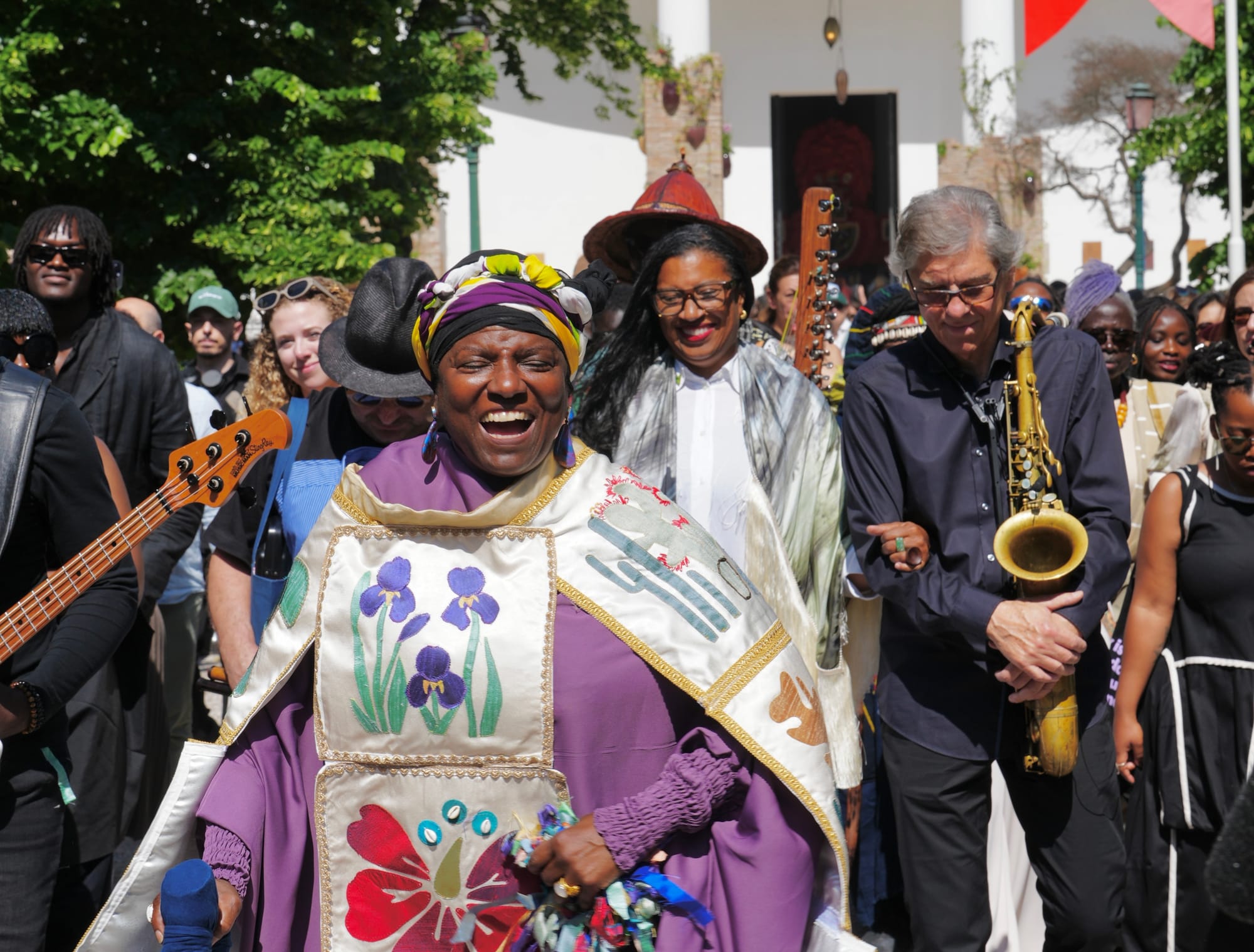
At the Venice Biennale on May 7, 2026, Cuban artist María Magdalena Campos-Pons led a poetry caravan across seven locations in the Giardini to honor Koyo Kouoh, the late curator of the Biennale's main exhibition "In Minor Keys," who died of cancer at age 57 in 2025. The procession, inspired by a 1999 voyage Kouoh took with nine African poets from Dakar to Timbuktu, featured performances by poets Natalie Diaz, Robin Coste Lewis, Batool Abu Akleen, and Anne Waldman, kora player Saliou Cissokho, and Kouoh's husband, Swiss saxophonist Philippe Mall, who played a composition dedicated to her. The event was organized by a team of Kouoh's assistants and advisers, including Marie Hélène Pereira, who served as stand-in lead of the 2026 Biennale.

"Hier darf laut gelacht werden"

During the opening week of the Venice Biennale, multiple reports detail controversies surrounding the Israeli and Russian pavilions. According to Hyperallergic, artist Belu-Simion Fainaru of the Israeli pavilion threatened legal action against the Biennale after the jury sought to exclude Israel and Russia from prizes over alleged human rights violations, citing antisemitism and nationality-based discrimination. This may have prompted the jury's sudden resignation. Meanwhile, taz reports that Russia's pavilion is a macabre 'dance of death' blending techno and political denial, while Israel's pavilion faces a 'silent boycott' and social ostracism. Zeit describes protests by Pussy Riot and Femen outside the Russian pavilion as a defining image, with activists chanting 'blood sticks to the art of this country.'

FORGING PATHS: AFRO-BRAZILIAN ANCESTRY AND FEMININE POWER IN THE WORK OF NÁDIA TAQUARY

FORJAR CAMINOS: ANCESTRALIDAD AFROBRASILEÑA Y PODER FEMENINO EN LA OBRA DE NÁDIA TAQUARY

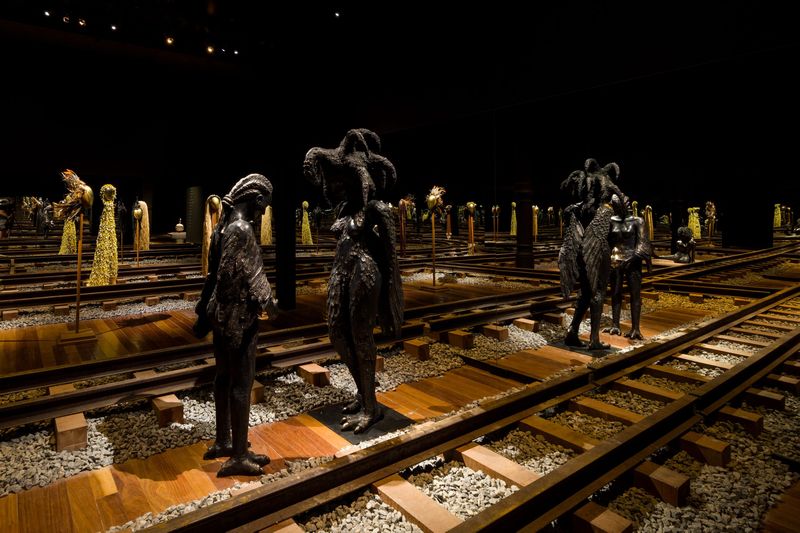
The exhibition "Ònà Irin: caminho de ferro" by artist Nádia Taquary has opened at Sesc Belenzinho in São Paulo, featuring large-scale sculptures and an immersive video installation. Curated by Amanda Bonan, Ayrson Heráclito, and Marcelo Campos, the show centers on a massive installation of iron rails that symbolize the Yoruba deity Ogum, the opener of paths. The works integrate traditional Afro-Brazilian materials such as cowrie shells, beads, and metals to explore spiritual protection and the historical significance of jewelry as a form of resistance and identity for enslaved and freed Black women.