filter_list Showing 12 results for "Korea" close Clear
dashboard All 18 museum exhibitions 12article culture 2person people 2trending_up market 1article news 1
date_range Range Today This Week This Month All
Subscribe

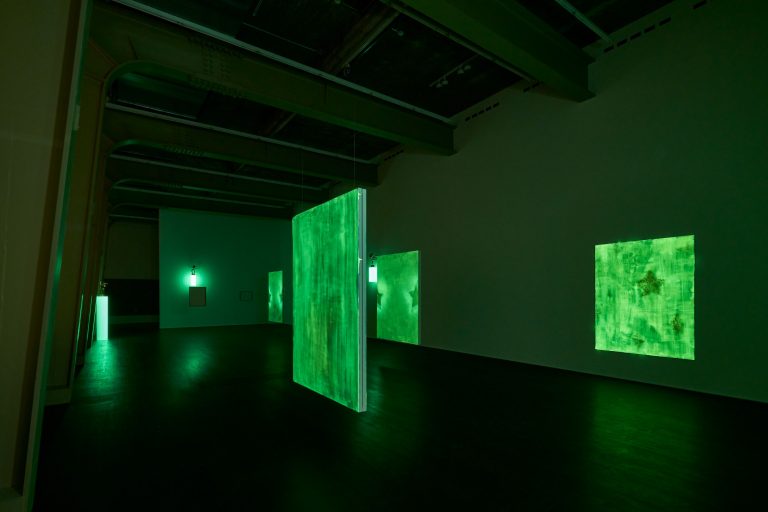
Queer Horizon: “Spectrosynthesis Seoul” at Art Sonje Center

The fourth edition of "Spectrosynthesis," Sunpride Foundation's exhibition series dedicated to LGBTQ+ art in Asia, opens at Art Sonje Center in Seoul. Curated by Sunjung Kim and Youngwoo Lee, the show unfolds in two parts: "The Two-Sided Seashell" and "Tender: Invisibly Visible, Unlocatably Everywhere," featuring works by artists including Sin Wai Kin and Young-Jun Tak. The exhibition engages with queer theory, particularly José Esteban Muñoz's concept of queerness as a horizon of potentiality, and responds to South Korea's recent political turbulence, including the 2024 martial law declaration and presidential impeachment.
Hotel Room Transforms into Media Art Exhibition Space

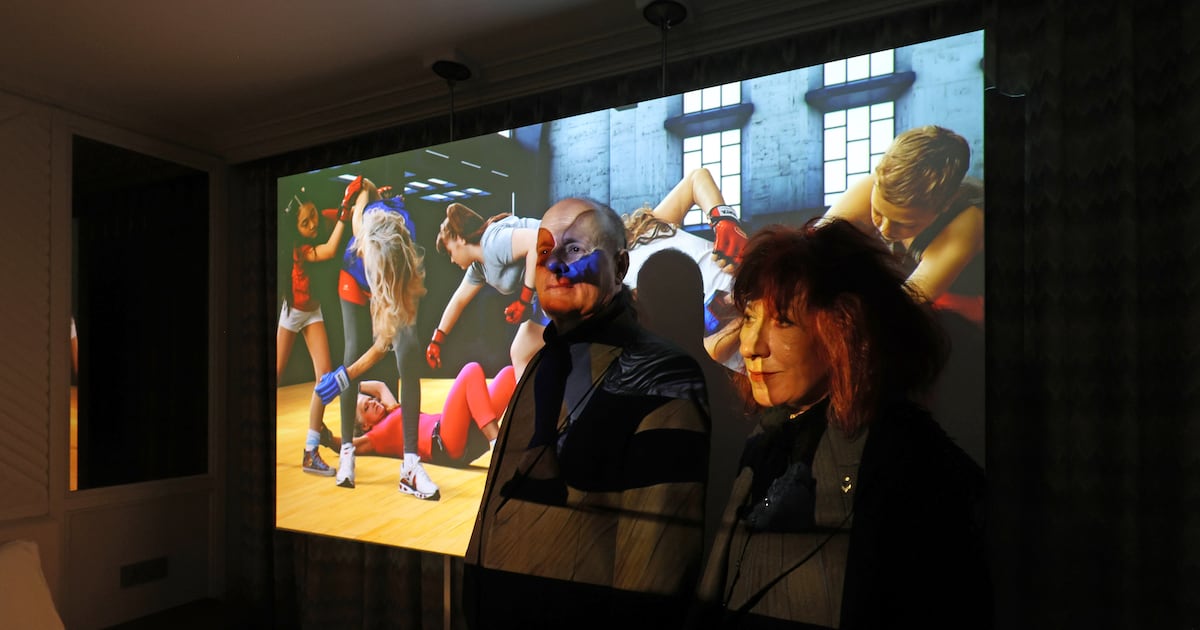
South Korea's only media art fair, Loop Plus, was held from April 23 to 26 at the Grand Josun Busan Hotel in Haeundae, Busan. The fair transformed 26 hotel rooms on the 13th floor into exhibition spaces, featuring media artworks from 19 international galleries including Tang Contemporary Art, Esther Schipper, Chiwen Gallery, and Baek Art. Highlights included a 38-minute video installation by Russian artist group AES+F titled *‘Inverso Mundus’*, presented by Tang Contemporary Art, which humorously subverts societal absurdities. The event also included artist booths for Kang Lee-yeon and Lucia Levolino, and institutional booths for the Justice Foundation and Gwangju Media Art Platform. A related festival, Loop Lab Busan 2026, runs until June 28 across multiple venues in Busan.

New media art fair launches second edition in Busan, questions the genre's direction

The Loop Plus media art fair has launched its second edition in Busan, South Korea. The fair, dedicated exclusively to new media art, is confronting fundamental market challenges, specifically the public and collector uncertainty about whether such technologically dependent works can be owned and collected. It aims to build the market and ecosystem for the genre.

Artist Hong Seung-hye opens first solo exhibition in three years, traces inspiration from 'organic geometry'

Korean artist Hong Seung-hye opens her first solo exhibition in three years, titled "On the Move," at Kukje Gallery Busan. The show traces her decades-long exploration of "organic geometry," a concept she coined after a 1997 Photoshop glitch where pixels appeared to move organically on her screen. The exhibition brings together recent works across multiple mediums, including video, sculpture, and audio, such as "Snoopy in Space" (2019), "Light Upon" (2021), "MOVE" (2022), and the new video "Emotical Practice" (2025). Hong draws inspiration from music and choreography, and she expresses wariness about artificial intelligence, preferring to control every aspect of her work herself.

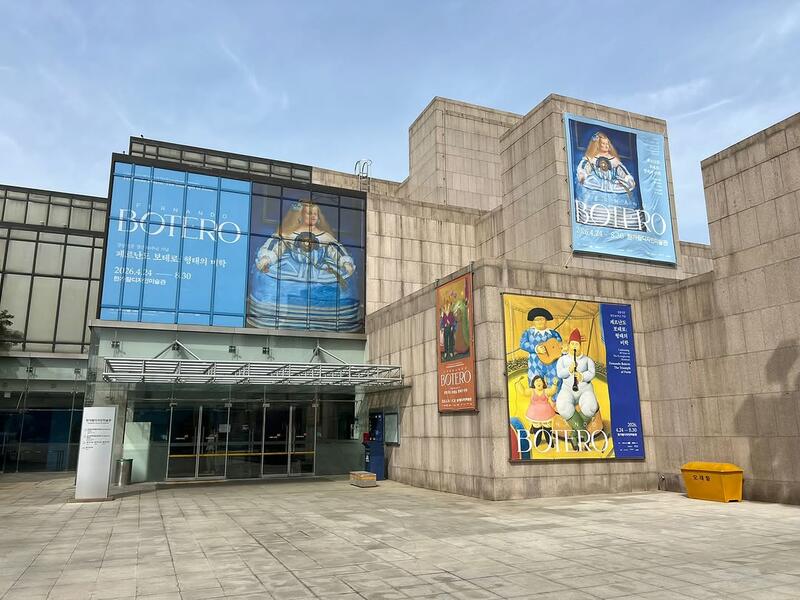
BOTERO RETURNS TO SEOUL WITH HIS LARGEST RETROSPECTIVE IN ASIA

Fernando Botero (1932–2023) returns to Seoul with his largest retrospective in Asia, opening this Friday at the Hangaram Art Museum, Seoul Arts Center. Curated by Lina Botero and organized with the Fernando Botero Foundation, the exhibition features over 112 works, several never before exhibited. The show, titled "Fernando Botero: The Triumph of Form," runs through August 30, 2026, and highlights the Colombian master's signature visual language of volume, sensuality, irony, and humanity.

The Venice Biennale Korean Pavilion was built in 1995 as the 26th national pavilion in Giardini Cast..

The article reports on the upcoming 61st Venice Biennale in 2026, focusing on the Korean Pavilion's exhibition titled "Liberation Space: Fortress and Nest." The Korean Pavilion, built in 1995 as the 26th national pavilion in Giardini Castello Park, will present itself as a temporary monument exploring Korea's post-colonial history, specifically the liberation period (1945-1948) and the concept of sovereignty. Artistic director Choi Bit-na has curated the exhibition to address Korea's geopolitical context, viewing the pavilion's 1995 entry as a key moment of decolonization alongside the demolition of the Government-General building and the founding of the Gwangju Biennale.

‘Into Other Spaces' to reexamine trailblazing women artists across decades

The Leeum Museum of Art in Seoul is hosting 'Inside Other Spaces: Environments by Women Artists, 1956-1976,' an exhibition that reconstructs immersive room-scale works by 11 women artists from underrepresented regions. Co-curated by Andrea Lissoni and Marina Pugliese, the show traces two decades of experimental environments made from light, sound, plastic, and foam, which anticipated installation and media art. The Seoul edition features a new version of Jung Kang-ja's 1967 work 'Muche-jeon (Incorporal Exhibition),' a smoke-filled chamber that evokes the tension of 1970s authoritarian Korea.

Leeum's installation art exhibition explores women-led history of genre

The Leeum Museum of Art in Seoul will open the exhibition "Inside Other Spaces" on May 5, featuring 11 installation artists from Asia, Europe, and the Americas. The show reconstructs full-scale environments from 1956 to 1976, including Korean artist Jung Kang-ja's "Incorporeal Exhibition" (1970), which was forcibly dismantled by the Korean government and is being rebuilt for the first time. The exhibition previously appeared at Munich's Haus der Kunst, Rome's Maxxi, and Hong Kong's M+, with each venue expanding its scope.

Forgotten 'environment' of 11 women artists brought back to life at Leeum

The Leeum Museum of Art in Seoul has opened "Inside other spaces: Environments by women artists 1956-1976," an exhibition restoring immersive artworks by 11 women artists from Asia, Europe, and South America, including Jung Kang-ja, Judy Chicago, Tsuruko Yamazaki, and Aleksandra Kasuba. The show revives pieces that were often dismantled after their original displays, such as Jung Kang-ja's "Incorporeal Exhibition," which was destroyed in 1970 after being deemed political propaganda under South Korea's authoritarian regime. Curators Andrea Lissoni and Marina Pugliese, who first organized the project at Haus Der Kunst in Munich, worked with researchers to reconstruct the works using archival materials, correspondence, and blueprints.

KOO JEONG A “KANGSE X” at Hauser & Wirth, Zurich

Koo Jeong A presents "KANGSE X" at Hauser & Wirth in Zurich, an exhibition that extends from her previous show "ODORAMA CITIES" at the Korean Pavilion of the 60th Venice Biennale. The title derives from the Korean term "KANGSE," meaning spatial strength, and the show encompasses her multifaceted practice across drawing, painting, sculpture, installation, film, and animation, including her earlier work "MYSTERIOUSSS" (2017).

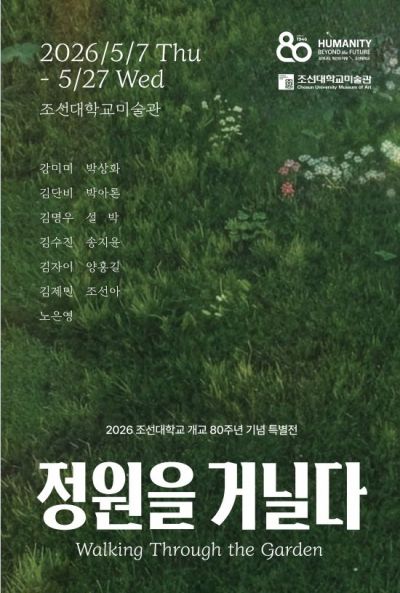
Chosun University Museum of Art Hosts 'Strolling Through the Garden' for 80th Anniversary

Chosun University Museum of Art in Gwangju, South Korea, is hosting a special exhibition titled 'Strolling Through the Garden' from May 7 to May 27 to celebrate the university's 80th anniversary. The show features 34 works by 13 contemporary artists working in Western painting, Korean painting, installation, and media art, organized around three themes: 'Garden of Imagination,' 'Garden of Senses,' and 'Garden of Metaphor.' Admission is free, and the exhibition coincides with the university's Rose Week (May 14–17), encouraging visitors to experience nature and art together on campus.

Seoul Museum of Craft Art opens two exhibitions centered on brief but ambitious Korean Empire

The Seoul Museum of Craft Art opens two special exhibitions on Tuesday, both centered on the Korean Empire (1897-1910), a brief period when Korea sought to modernize through craft and industrial innovation. The larger exhibition, “The Hybrid,” marks 140 years of diplomatic relations between Korea and France, gathering 24 objects from European collections—23 from France and one from Germany—some not displayed in Korea in over 120 years. The second, “Folded Time, Unfolded Memory: Andong Palace,” focuses on the royal women who lived on the museum’s grounds, particularly Empress Sunjeonghyo and Princess Kim Deok-su. Museum director Kim Soo-jung described the two shows as “almost like an omnibus,” connected through the Korean Empire period.