filter_list Showing 10 results for "Making Visible" close Clear
search
dashboard All 14 museum exhibitions 10rate_review review 2article culture 1candle obituary 1
date_range Range Today This Week This Month All
Subscribe

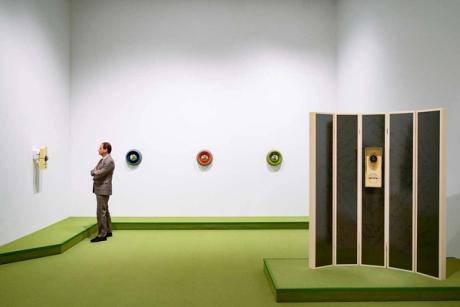
Beware the technology rat trap: Cooper Jacoby’s standout contribution to New York’s Whitney Biennial

Cooper Jacoby's sculptures at the Whitney Biennial explore how AI corporations and other companies turn personal data into financial assets. His five works, displayed in a green-carpeted space he describes as "almost like a rat trap," include the 2026 piece *Estate (July 10, 2022)*—a folding screen with an intercom that uses AI trained on social media posts from deceased creatives to generate vocal outputs. Another series, *Mutual Life*, features eye-like sculptures with clock hands that spin based on the biological age of anonymous individuals in the artist's network. Jacoby's work highlights the lack of regulation around digital life and death, and the opaque nature of AI systems.
A Poetic and Material Institutional Critique: Gala Porras-Kim at kurimanzutto and the Venice Biennale

UNA CRÍTICA INSTITUCIONAL POÉTICA Y MATERIAL: GALA PORRAS-KIM EN KURIMANZUTTO Y LA BIENAL DE VENECIA

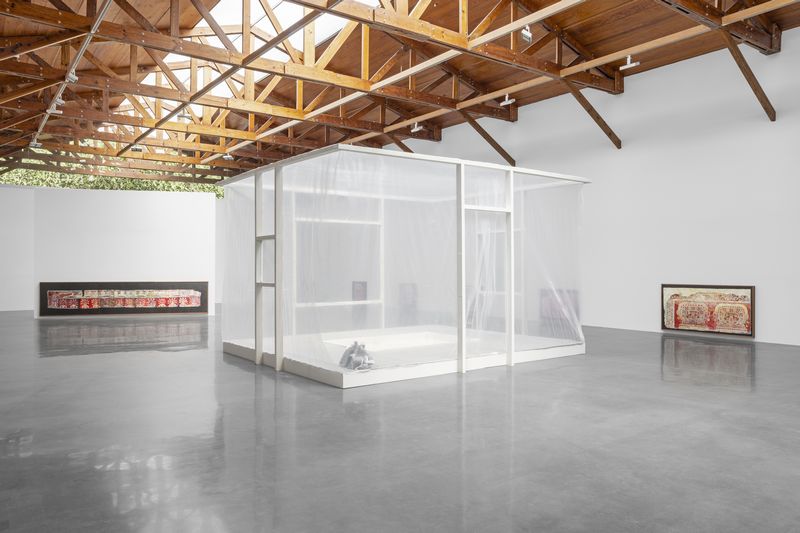
Colombian artist Gala Porras-Kim presents her first solo exhibition at kurimanzutto gallery in Mexico City, titled "Espacios del futuro replican los del pasado" (2026), alongside her participation in the 2026 Venice Biennale. The show critically examines how museum conservation protocols transform objects by detaching them from their original material, ritual, and spiritual contexts. Central to the exhibition is "The Motion of an Alluvial Record" (2024), a greenhouse that recreates the humidity and temperature of Yucatecan mangroves, allowing clay and sediment to shift continuously, resisting the linear, stratified time of Western archives and evoking cyclical Maya cosmologies. Another series, "Uprooted" (2026), reproduces fragments of looted Teotihuacan murals from Techinantitla, now held by the Metropolitan Museum of Art and the Ethnological Museum of Berlin, reinstalling them near the floor to restore their original architectural scale and orientation.

Hito Steyerl “Mechanical Kurds” at Villa Arson, Nice

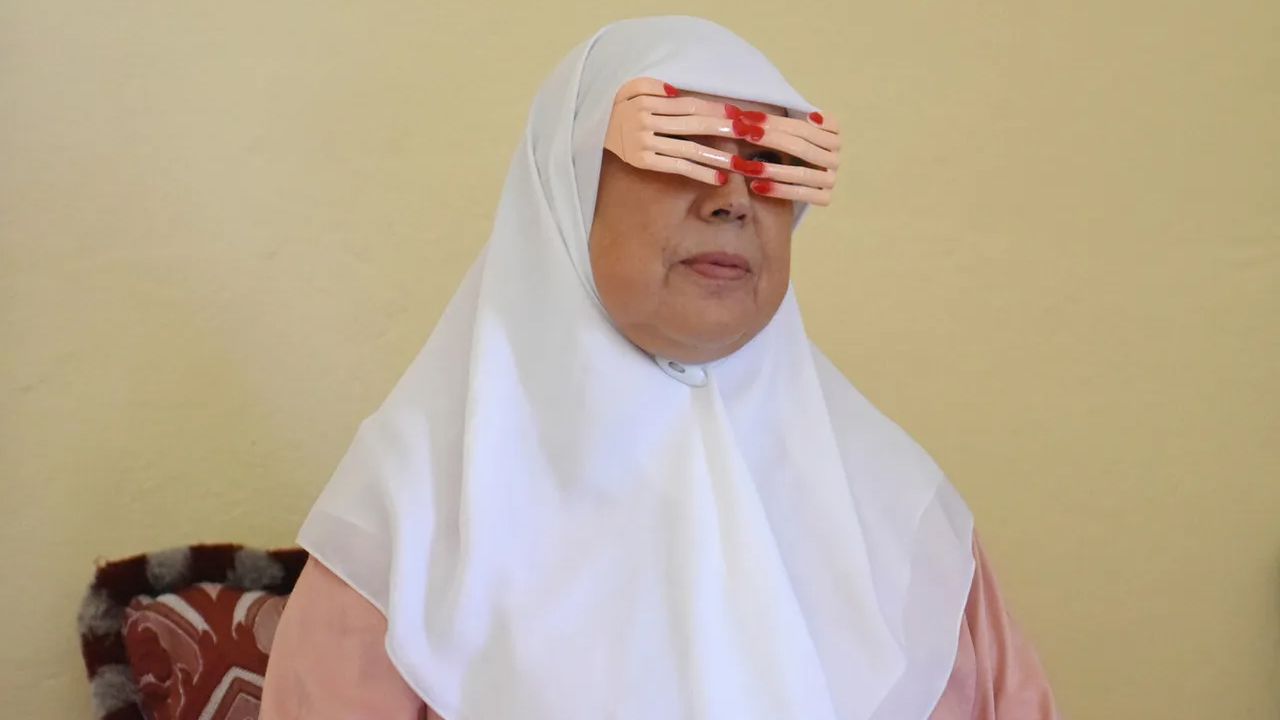
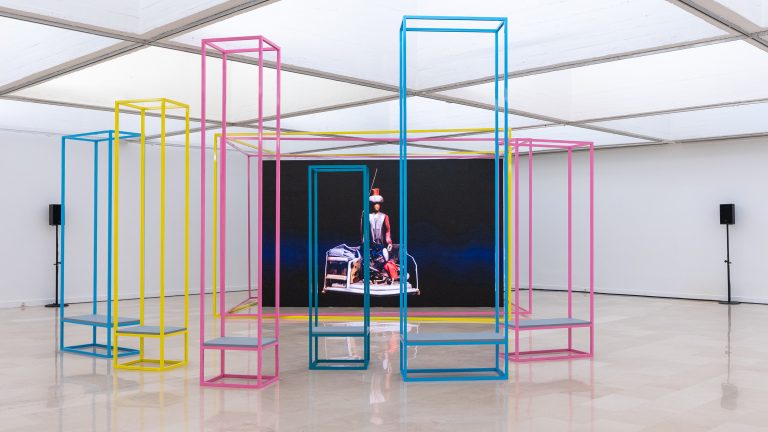
From February 20 to May 31, 2026, Villa Arson art center in Nice presents "Mechanical Kurds," a video installation by German artist Hito Steyerl. The work blends fiction, documentary, and critical speculation to examine invisible micro-labor chains, the geopolitics of images, and the delegation mechanisms behind so-called autonomous technologies.

Collaged Denim Sculptures by Nick Doyle Unravel American Mythology

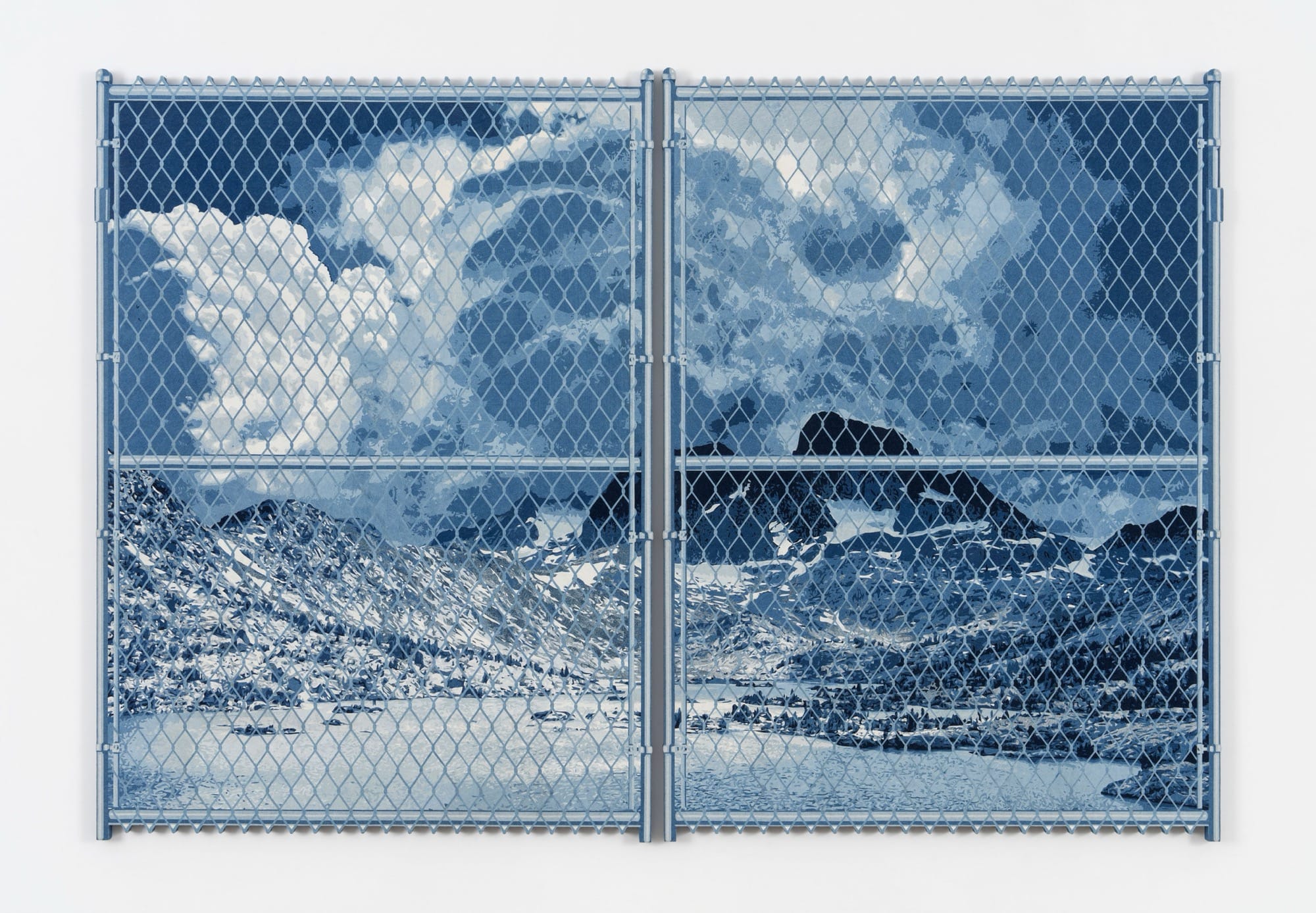
Brooklyn-based artist Nick Doyle creates large-scale wall sculptures using layered and bleached denim, exploring American mythology and its contradictions. His solo exhibition "Collective Hallucinations" at Perrotin features works such as stylized cacti, landscapes, tarot cards, and a fortune teller's shop, all rendered in denim. Doyle's practice began after finding a discarded roll of denim in 2018, which he saw as a metaphor for the complexities of American history, including slavery, masculinity, and Manifest Destiny.

Kim Dacres Revitalizes Sleek Tires, Chains, and Gears in Defiant Sculptures

Kim Dacres transforms discarded auto and bicycle rubber into sculptural portraits that celebrate Black hairstyles and community. Her new exhibition "Lost on a Two Way Street" at Charles Moffett in New York features busts with braided buns and gear-like crowns, alongside flat wall works evoking Victorian cameos. The show also includes reimagined U.S. flags with Black and brown figures, addressing the current political climate and the gap between national symbols and lived reality.

In dreamy photographs, the artist Widline Cadet tells the complex story of her family’s migration

Artist Widline Cadet, who was separated from her mother for six years as a child during her family's migration from Haiti to New York, has spent nearly a decade creating a multimedia "living archive" of photographs, video, sound, and sculpture. Her largest solo exhibition to date, "Currents 40: Widline Cadet," is now on view at the Milwaukee Art Museum, exploring themes of diaspora, memory, and familial connection through dreamlike, often fragmented imagery.

Currents of the 61st Biennale: Inside Venice’s Flow of Art and Power

The 61st Venice Biennale jury, composed of five curators—Solange Oliveira Farkas, Zoe Butt, Elvira Dyangani Ose, Marta Kuzma, and Giovanna Zapperi—resigned on April 30th amid internal tensions over decisions that conflicted with the late Koyo Kouoh's curatorial vision. The jury had previously stated it would refrain from considering countries whose leaders are charged with crimes against humanity by the International Criminal Court. Meanwhile, Filipino artist Jon Cuyson prepares to present his installation at the Philippine Pavilion, featuring works shipped 60 days before geopolitical conflict escalated, navigating unstable maritime routes. His project includes the film series "Sea of Love (Dagat ng Pag-ibig)" and a new fourth film, "Sea of Echoes," exploring themes of migration, queer experience, and ecological resilience through mussels as non-human protagonists.

Monopol Gives Away 5 x 2 Tickets for Photo Exhibition at Museum Rietberg

Monopol verlost 5 × 2 Tickets für Foto-Ausstellung im Museum Rietberg

The Museum Rietberg in Zurich is presenting the exhibition "Fast ein Paradies" (Almost a Paradise), which critically examines colonial-era photography as an instrument of power. The show juxtaposes historical photographs with contemporary artworks that recontextualize this material, featuring artists like Sasha Huber, Sammy Baloji, Raphaël Barontini, and Andrea Chung, who intervene in the archival images to challenge colonial narratives and restore agency to the subjects.

In Antwerp, as photography show asks 'What is a normal family?'

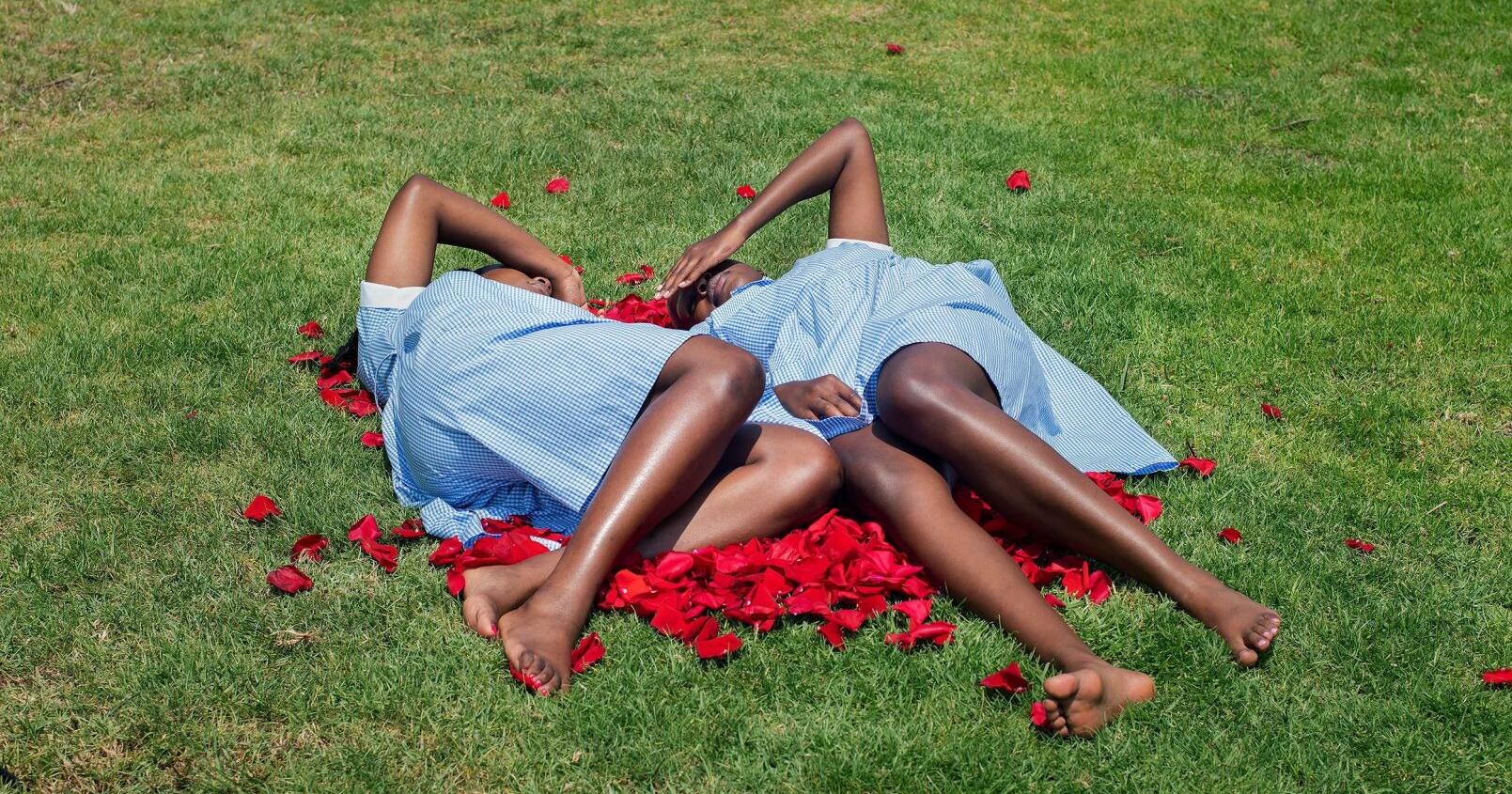
The FOMU photography museum in Antwerp has opened a new exhibition titled 'Families', curated by Anne Ruygt. The show explores the evolving concept of family through historical and contemporary photography, featuring works by artists such as Mous Lamrabat, Cecil Beaton, Omar Victor Diop, Mayara Ferrão, Peter Hujar, Carmen Winant, and Seiichi Furuya. It includes diverse perspectives, from 'hidden mother portraits' and post-mortem photography to AI-generated images of queer Black and Indigenous women, questioning traditional notions of kinship and representation.

Art exhibition shines light on Romani persecution during Holocaust

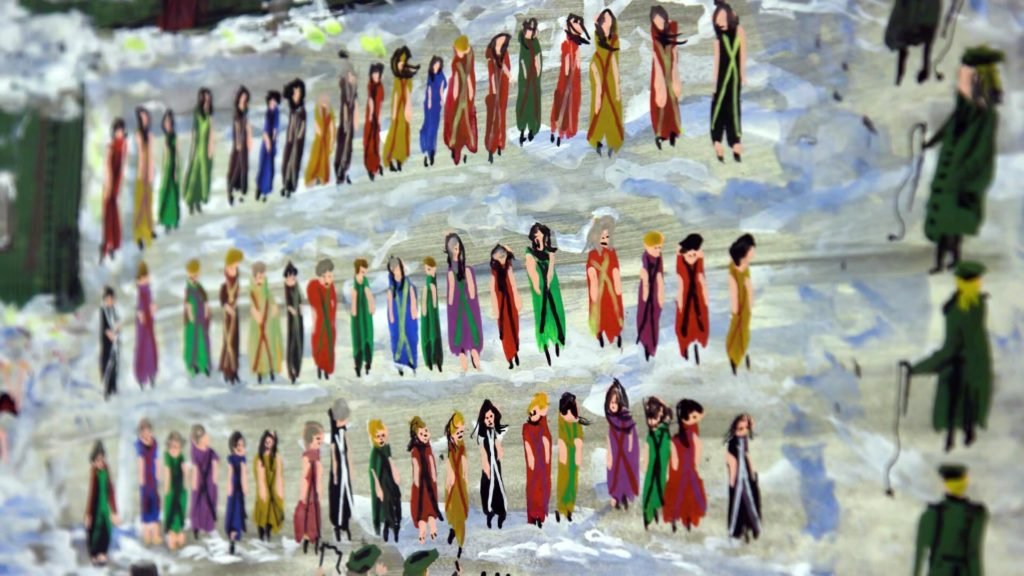
An exhibition titled "Ceija Stojka: Making Visible" at The Drawing Center in New York City highlights the persecution of Roma and Sinti people during the Holocaust, a lesser-known chapter of Nazi atrocities. The show features paintings and drawings by Ceija Stojka, a Romani artist, writer, and activist who survived the genocide and died in 2013 at age 79. Her works, described as acts of memory and imagination rather than documentary, depict her experiences and stories passed down to her, with the exhibition also including documentary films by Karin Berger and Stojka's writings, such as her 1988 memoir "We Live in Secrecy."