filter_list Showing 14 results for "sim" close Clear
dashboard All 29 museum exhibitions 14article news 7article local 4rate_review review 2article culture 1article policy 1
date_range Range Today This Week This Month All
Subscribe

Lee Ufan: ‘I try to bring together those things which are made and unmade’

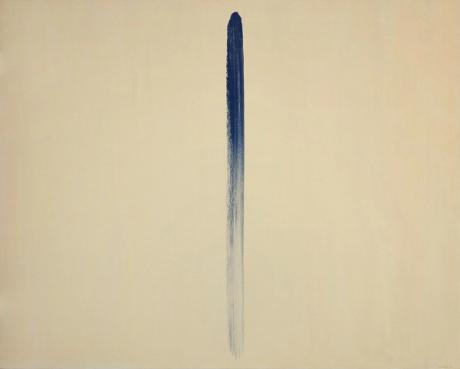
Lee Ufan, the South Korean artist and founding member of the Mono-ha movement, is being honored with a major solo exhibition at SMAC San Marco Art Centre as an official Collateral Event of the Venice Biennale, marking his 90th year. Simultaneously, a new display of his painting and sculpture opens at Dia Beacon in New York State, and his first show in Portugal opens at Casa e Parque de Serralves in July. In an interview with The Art Newspaper, Ufan discusses his artistic journey, his rejection of the artist's hand, and the influence of seeing a Barnett Newman exhibition at MoMA in 1971, which led him to develop his signature From Point and From Line paintings that use repeated marks to express the passage of time.


David Hockney : tout savoir sur la superstar de la peinture exposée à la galerie Lelong

Beaux Arts Magazine has published a comprehensive dossier on David Hockney, coinciding with his current exhibition at Galerie Lelong in Paris. The article presents a multi-episode series covering the British artist's career, from his iconic "Pool Paintings" like *A Bigger Splash* (1967) to his recent works created on iPad in Normandy. It highlights his ongoing exhibitions at multiple venues, including a major retrospective at the Centre Pompidou starting June 21, a dialogue with Matisse at the Musée Matisse in Nice, a show at the Van Gogh Museum, and a loan from Tate Britain to the Musée Granet in Aix-en-Provence. The piece also explores Hockney's fascination with Old Masters, his use of technology, and his enduring status as a pop art and hyperrealist superstar.

The Carnegie International Makes Its Mark

The 59th Carnegie International opens in Pittsburgh, featuring 61 artists from around the world in the oldest survey of its kind in the United States. Critic Ed Simon reviews the exhibition, noting it captures the excitement of earlier editions while providing vital commentary on authoritarianism and militarism. In other news, activists protested Jeff Bezos's co-chair role at the Met Gala with a costumed action and guerrilla projections on his penthouse; Iran withdrew from its national pavilion at the Venice Biennale; MoMA PS1 announced the first US survey of Mexican artist Teresa Margolles; and Hakim Bishara reflects on MoMA's Marcel Duchamp exhibition.

A sturdy soldier in a sequin dress

"Eine kräftige Soldatin im Paillettenkleid"

Media reviews of the Venice Biennale's opening week offer contrasting takes on the German and US pavilions. Critics describe the German pavilion, curated by Sung Tieu and Henrike Naumann, as a dense, ironic East-West narrative that layers Nazi architecture with DDR prefab construction, creating what Jörg Häntzschel calls a "shockingly seamless symbiosis." The US pavilion, featuring sculptures by Alma Allen, is panned by Maximilíano Durón in ArtNews as politically timid and empty, lacking the clear colonial critiques of previous editions by Simone Leigh and Jeffrey Gibson.

There is a major Paulo Nazareth exhibition to see in Venice (but the artist himself hasn't seen it)

C’è una grande mostra di Paulo Nazareth da vedere a Venezia (ma l’artista stesso non l’ha vista)

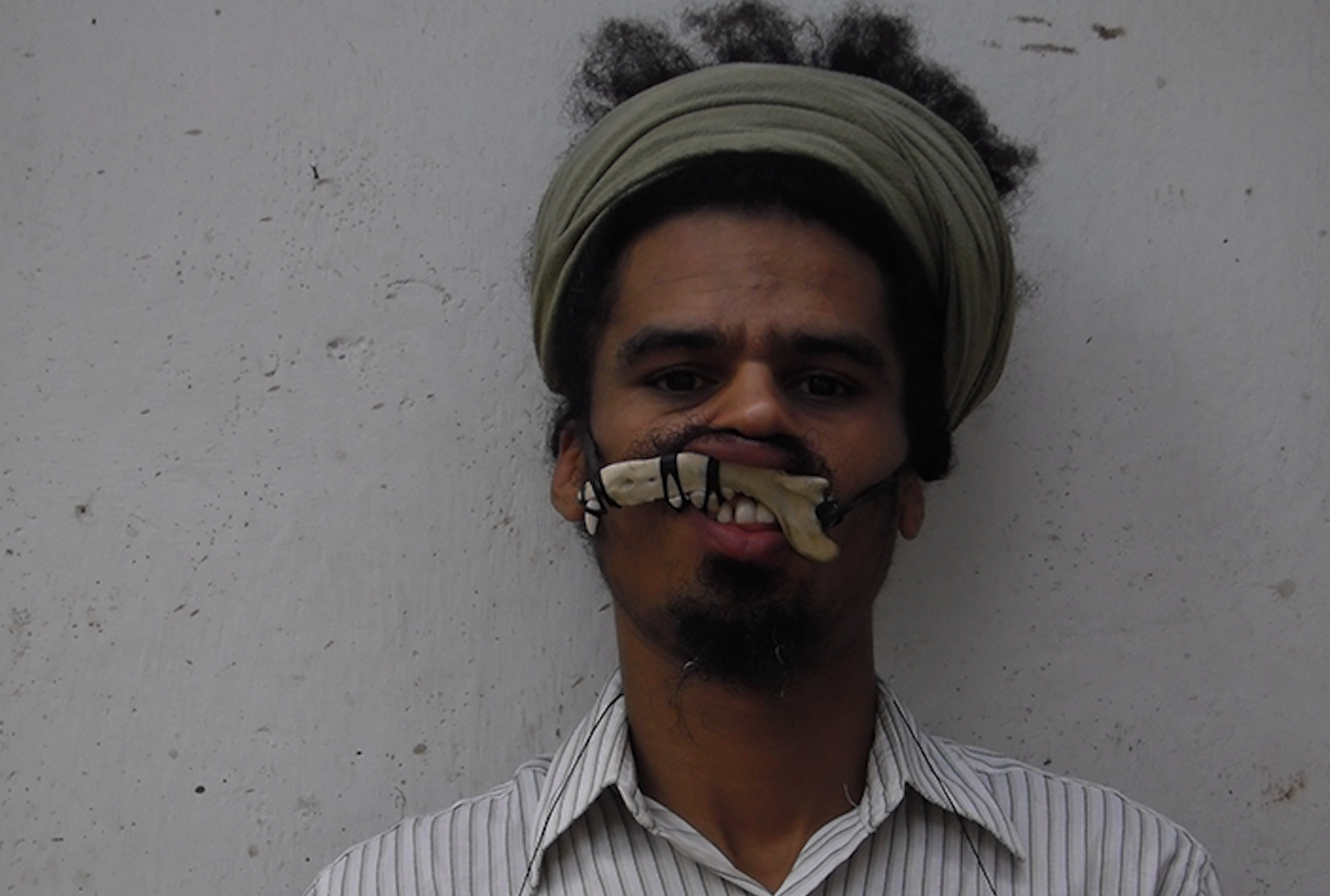
A major exhibition of Brazilian artist Paulo Nazareth, titled "Algebra," has opened at Punta della Dogana in Venice, but the artist himself is absent. Nazareth has kept a promise not to set foot in Europe until he has crossed African territories on foot, as they existed before the arbitrary divisions imposed by the 1884 Berlin Conference. He did not participate in the installation or opening, instead staging a simultaneous event in Veneza, a working-class district of Ribeirão das Neves, Brazil—a gesture he also made when invited to the 2013 Venice Biennale. The exhibition centers on structural violence and uses attention and care as strategies for healing, with the word "algebra" referring to the act of recomposing what was broken.

Australian artist Khaled Sabsabi reveals details of presentations in the Australia Pavilion and in the International Exhibition In Minor Keys at Biennale Arte 2026 – News Hub

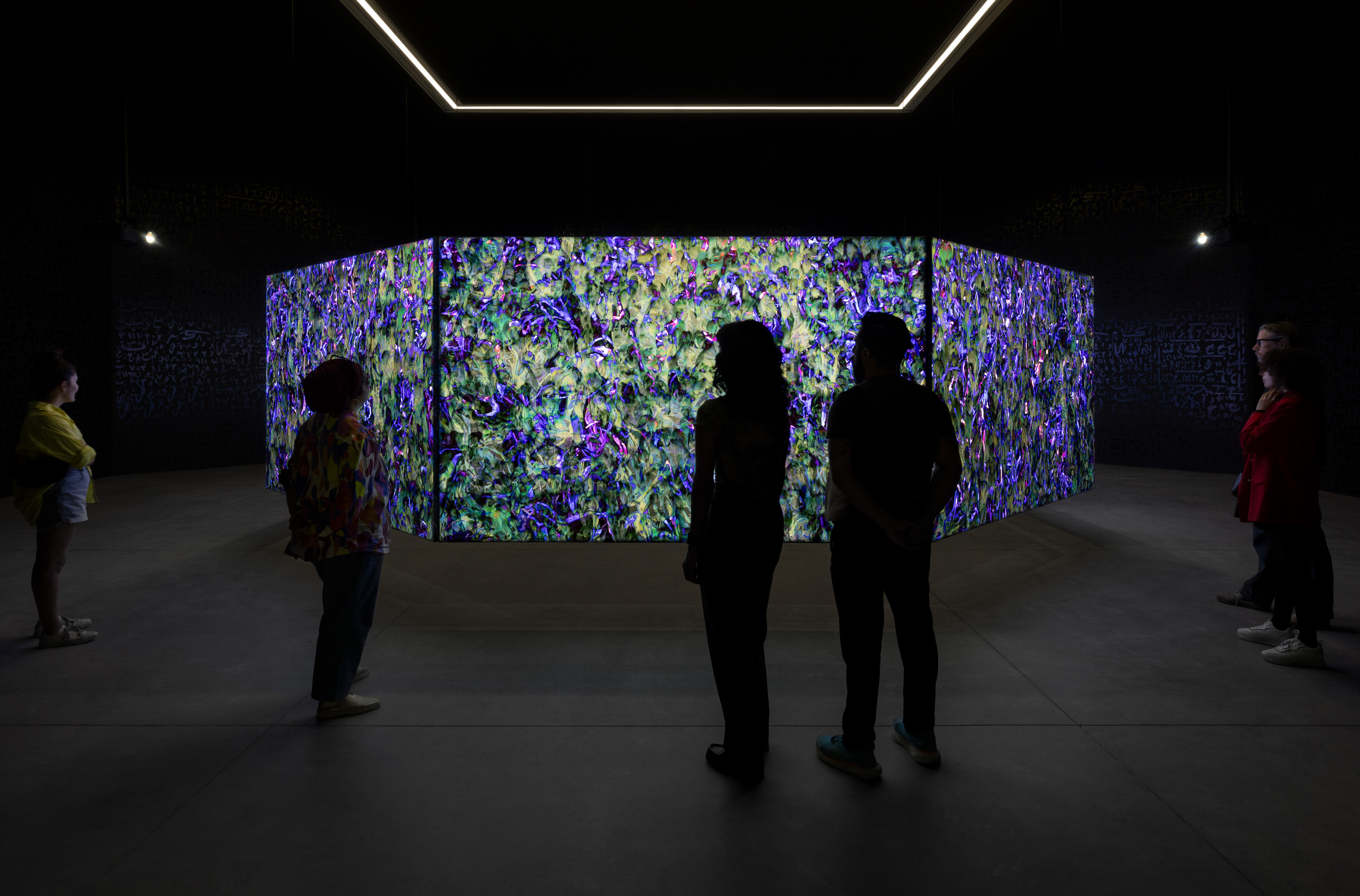
Australian artist Khaled Sabsabi will present two major installations at the 2026 Venice Biennale. At the Australia Pavilion, he unveils "conference of one’s self," an immersive multisensory work featuring eight monumental canvas paintings, video projections, and a soundscape inspired by a 12th-century Sufi allegory. Simultaneously, he becomes the first Australian artist to also exhibit in the International Exhibition, titled "In Minor Keys" curated by Koyo Kouoh, with a second installation called "khalil" at the Arsenale. Both works explore spirituality, migration, and shared humanity through a framework of Sufi thought.

Khaled Sabsabi Unveils Biennale Arte 2026 Showcase

Khaled Sabsabi will represent Australia at the 61st Venice Biennale in 2026 with two major installations. At the Australia Pavilion, he presents "conference of one's self," an immersive multisensory installation featuring eight monumental canvas paintings, suspended video projectors, and an analogue soundscape, all inspired by the 12th-century Sufi allegory "The Conference of the Birds." In a historic first for an Australian artist, Sabsabi also debuts a second work, "khalil," in the Biennale's main exhibition "In Minor Keys" curated by Koyo Kouoh at the Arsenale. Both works explore spirituality, migration, and shared humanity through a Sufi philosophical framework.

This Museum Show Will Make You Question Whether You’re Still Human

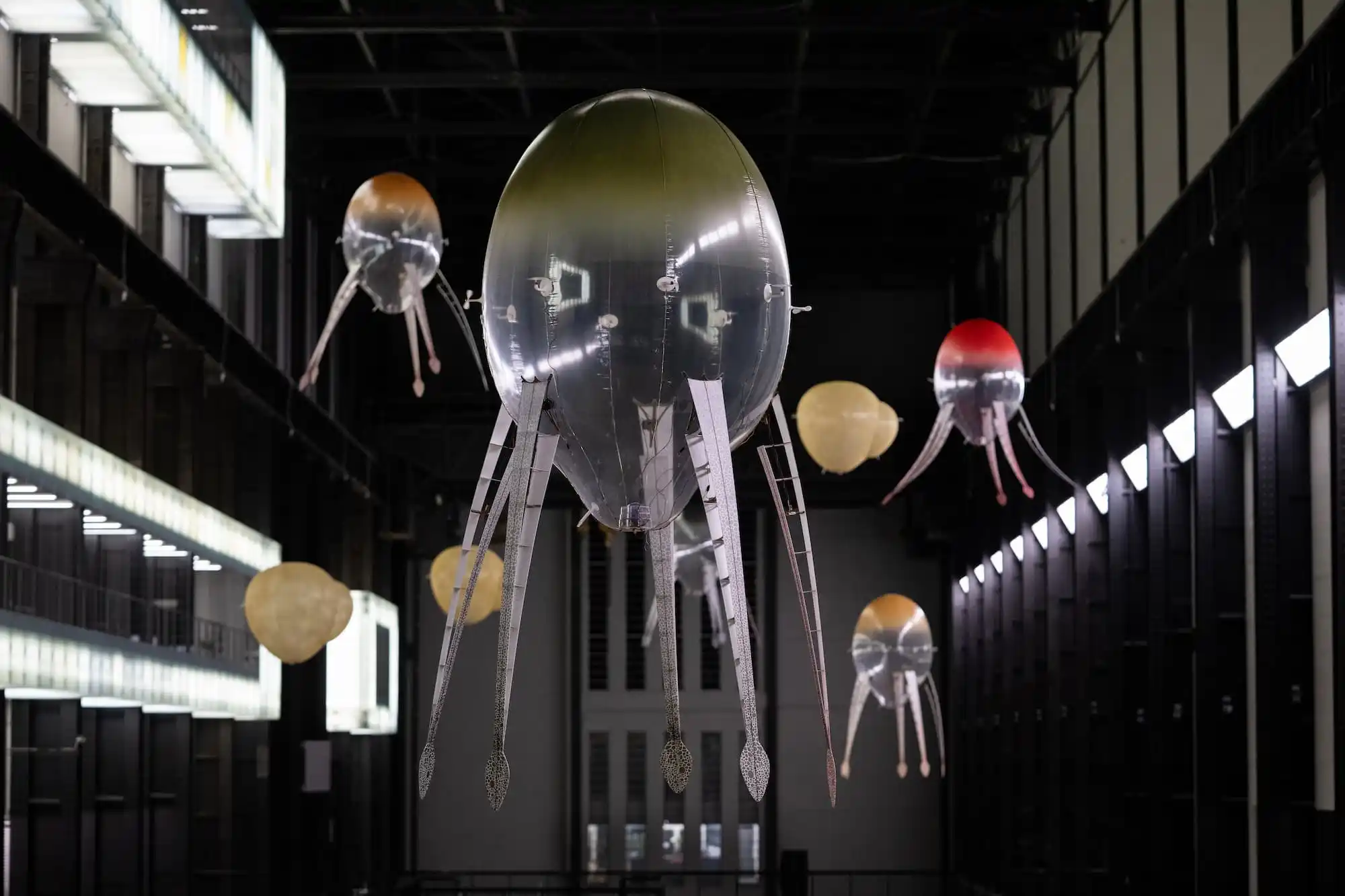
The New Museum in New York has opened "New Humans: Memories of the Future," an exhibition curated by Chief Curator Massimiliano Gioni that explores a century of art predicting the fusion of humans and machines. The show features works by artists including Anicka Yi, Francis Picabia, Constantin Brancusi, and Marcel Duchamp, alongside robots and technological artifacts that blur the boundaries between bodies and technology. The exhibition is housed within OMA's newly expanded museum space on the Bowery.

Rosy Simas on Creating a Space for Peace in Minneapolis

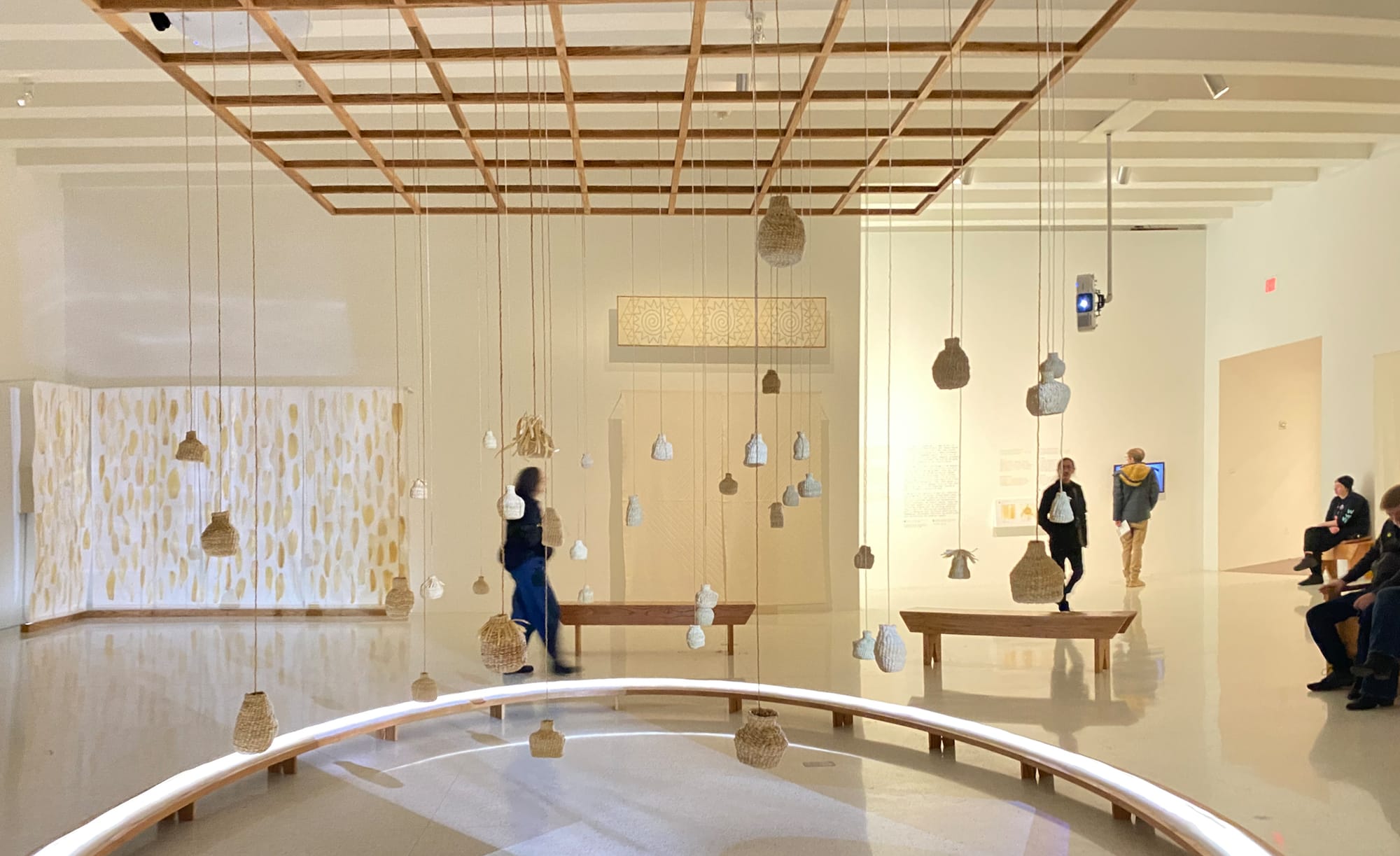
Minnesota-based interdisciplinary artist Rosy Simas opened a contemplative installation titled "A:gajë:gwah dësa’nigöëwë:nye:' (i hope it will stir your mind)" at the Walker Art Center on the same day that Trump-appointed border czar Tom Homan announced the end of Operation Metro Surge, a federal immigration enforcement operation in the Twin Cities. The installation features salt bottles made from woven corn husks, each honoring one of Simas's relatives, and is inspired by the teachings of Handsome Lake (Ganyodaiyo’), her fifth great-grandfather’s half-brother, who promoted the Seneca concept of a "good mind." The exhibition, on view through July 5, is part of a two-part project that also includes performances in May. Simas, known primarily for choreography, has increasingly gained recognition as a visual artist, recently receiving a Creative Capital Award.

Venice exhibition of site-specific films aims to capture the hyper stimulating times we are living in

The Fondazione In Between Art Film presents "Canicula," the third and final exhibition in its Trilogy of Uncertainties, opening on 6 May at the Complesso dell’Ospedaletto in Venice. Curated by Leonardo Bigazzi, the show features eight newly commissioned site-specific films that explore themes of excess, sensory overload, and geopolitical tension. Works include Roman Khimei and Yarema Malashchuk's "Affirmations" (2026), depicting fictional deathbed testimonies of Russian soldiers, Lawrence Abu Hamdan's "450XL: The Story of a Fugitive Sound" (2026) about a sonic attack in Belgrade, and Maya Watanabe's "Jarkov" (2025-26) reflecting on Arctic ice melt and Pleistocene remains.

Inside the UAE Pavilion at Venice Biennale, a whisper becomes a portrait of a nation

The UAE Pavilion at the 61st Venice Biennale presents 'Washwasha,' an exhibition curated by Bana Kattan with assistant curator Tala Nassar. The show features six artists—Mays Albaik, Jawad Al Malhi, Farah Al Qasimi, Alaa Edris, Lamya Gargash, and Taus Makhacheva—whose works explore the concept of whispering in Arabic, encompassing oral history, language, rumor, and daily noise. Installations include glass sculptures, sound-based pieces from barbershops and farms, and a reconstructed hammam installation by Al Malhi that plays recordings of wedding rituals. The exhibition runs until November 22.

After the firestorm: First look at Australian artist’s Venice Biennale works

Australia has opened its pavilion at the Venice Biennale featuring artist Khaled Sabsabi's multimedia installation "conference of one's self," a vivid work inspired by a 12th-century Sufi poem. The exhibition follows a political firestorm: Creative Australia initially selected Sabsabi and curator Michael Dagostini to represent the country, then rescinded the invitation after controversy over a 2007 video featuring Hezbollah leader Hassan Nasrallah. The decision was later reinstated, and Sabsabi also has a companion work in the main Biennale exhibition curated by Koyo Kouoh. The pavilion is funded by the federal government and private donors including Simon Mordant and the Turnbull Foundation.

During the Venice Biennale there is also the Ibiza Pavilion, inside a takeaway pizzeria

Durante la Biennale di Venezia c’è anche il Padiglione Ibiza, dentro una pizzeria da asporto

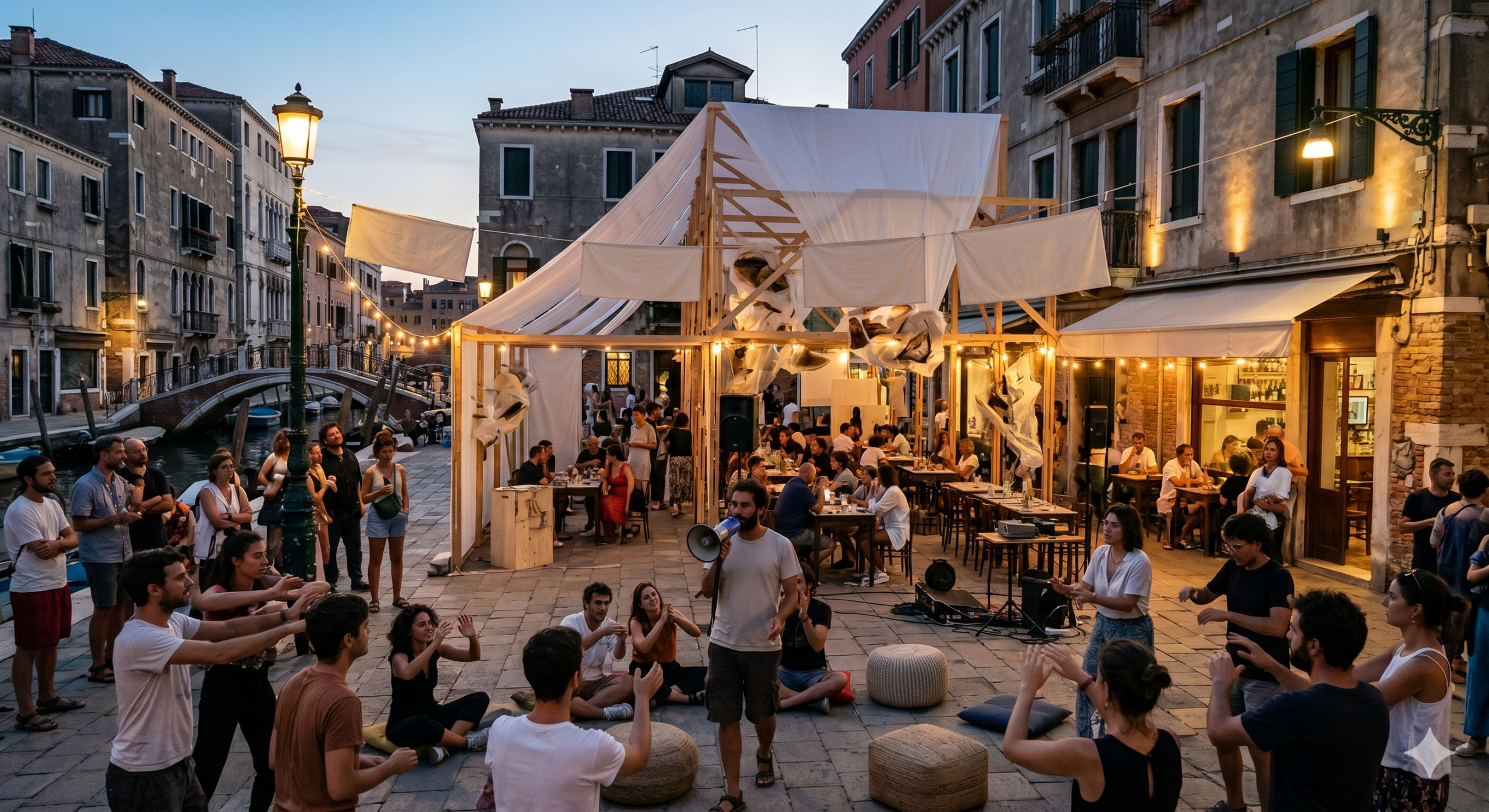
During the Venice Art Biennale, an independent project called the Ibiza Pavilion opens from May 7 to 9, 2026, inside Pizza al Volo, a popular takeaway pizzeria in Campo Santa Margherita, Dorsoduro. Conceived and curated by Margherita Chiarva with support from Victoria Genzini and Gabriele Della Maddalena, the three-day initiative features a group exhibition, performances, collective embroidery, tarot readings, and somatic practices by international artists connected to Ibiza through experience or collaboration, including Noemi Manser, Beatrice Dettori, Liz Kueneke, COSIMA, and Maria Giulia Alvigini.

Here's what the much-talked-about Russian Pavilion at the Venice Biennale looks like. Photos and video

Ecco com’è il chiacchieratissimo Padiglione Russia della Biennale di Venezia. Foto e video

The Russian Pavilion at the 2026 Venice Biennale has opened amid intense controversy over its unauthorized participation. The pavilion, housed in a 1914 building recently restored by Italian architects 2050+, features a program of musical improvisations, ensemble performances, techno concerts, and interactive actions, including free used clothing. The space is designed as a fragrant flower shop with a chill-out room featuring a conifer grove and video installations. The exhibition, titled "L’Albero Radicato nel Cielo" (The Tree Rooted in the Sky), is organized by young poets, musicians, and philosophers who prefer to remain anonymous as a collective, coordinated by the Gnessin Russian Academy of Music. However, due to sanctions, the pavilion is only open from May 5 to 8, as organizers cannot obtain the necessary permit to operate beyond the private opening.