filter_list Showing 6 results for "MACRO" close Clear
dashboard All 83 article news 32museum exhibitions 15gavel restitution 13article policy 9person people 6trending_up market 6candle obituary 1article local 1
date_range Range Today This Week This Month All
Subscribe

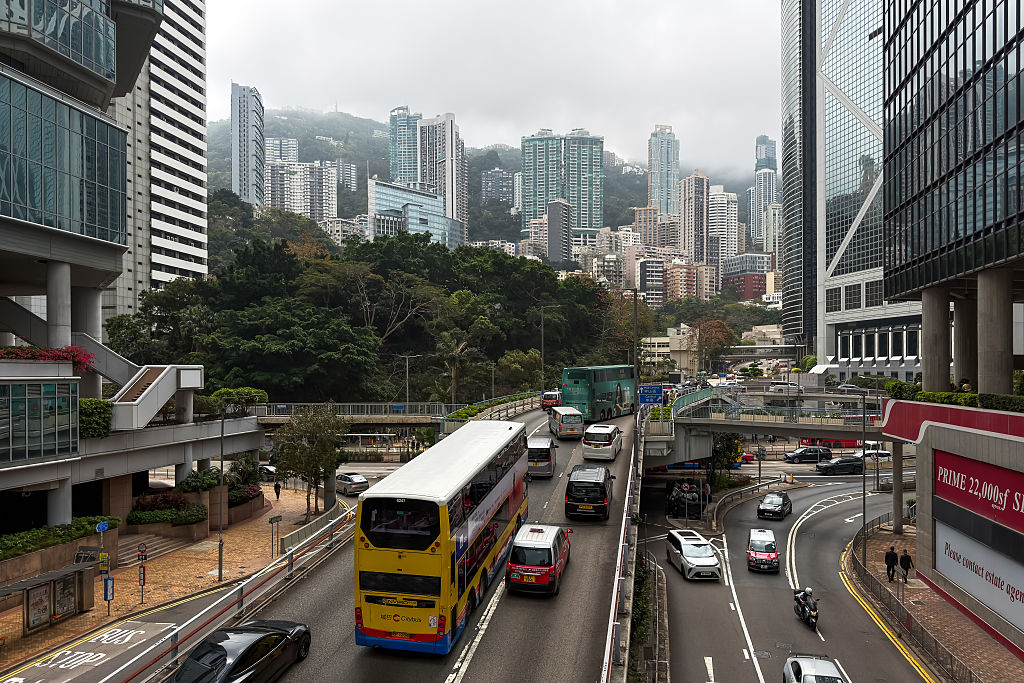
Hong Kong Art Week 2026: Art Basel Preview

hong kong art week art basel preview 1234778380

Hong Kong’s art market is signaling a cautious recovery in 2026 as the city prepares for its marquee Art Week. Despite macroeconomic improvements in real estate and equities, the sector is grappling with significant logistical hurdles caused by the US–Israel–Iran War. Shipping costs between Europe and China have surged by 30%, leading to the cancellation of the International Antiques Fair and the withdrawal of high-profile delegations like the Sharjah Art Foundation.

The Art Market Year in Review

The art market experienced a turbulent 2025, beginning with a 12% decline in sales from 2024, following a 3% drop in 2023, as reported by the Art Basel and UBS Global Art Market Report. Major auction houses Christie’s, Sotheby’s, and Phillips saw average sales fall 6% in the first half of the year. However, the market rebounded by autumn, with strong sales at London and Paris art fairs and a 15% year-on-year increase in auction sales at the three main houses by December, according to Pi-eX. Key events included Sotheby’s failed sale of Alberto Giacometti’s *Grand tête mince* in May, followed by a record-breaking $236 million sale of Gustav Klimt’s *Portrait of Elisabeth Lederer* in November, and a $31.4 million record for François-Xavier Lalanne’s *Hippopotame Bar*.

upsilon gallery milan opening 1234756444

Upsilon Gallery, founded by German-Argentine dealer Marcelo Zimmler, will open its first continental European location in Milan on November 18. The 200-square-meter space is situated near Via Monte Napoleone in the Quadrilatero fashion district, joining a wave of international galleries—including Thaddaeus Ropac, Cardi Gallery, and Robilant + Voena—that are betting on Milan's potential to become a global art capital. The inaugural exhibition features four canvases from Osvaldo Mariscotti's Valley series, with a bilingual catalogue edited by critics David Ebony and Alex Grimley, and coincides with twin shows in Upsilon's London and New York outposts.

Booming stock market is fueling a mega-billion return to classic art and a backlash to junk

A booming stock market and increased disposable income among the ultra-wealthy have fueled a $2.2 billion fall auction season in New York, led by Gustav Klimt's "Portrait of Elisabeth Lederer," which sold for $236.4 million at Sotheby's. Other major sales include Frida Kahlo's "El sueño (la cama)" setting a record for a female artist at $55 million, and Mark Rothko's "No. 31 Yellow Stripe" fetching $62 million at Christie's. The surge is attributed to a convergence of high-quality estates coming to market—including those of Leonard Lauder, Robert and Patricia Ross Weis, and Jay and Cindy Pritzker—and renewed confidence among wealthy buyers after a stagnant period for art prices.

Art market 2025 review: all eyes on the Gulf as Trump destabilises global order

The global art market continued to contract in 2025, with prominent galleries such as Blum, Clearing, Sperone Westwater, Tilton, Kasmin, TJ Boulting, Project Native Informant, Nir Altman, and Altman Siegel closing due to challenging macroeconomic conditions. However, a rebound emerged at the top end by autumn, driven by Sotheby's white-glove sale of the Pauline Karpidas collection, strong VVIP sales at Art Basel Paris, and New York's November auctions, where Klimt's *Portrait of Elisabeth Lederer* (1914-16) sold for $236.3 million and Frida Kahlo's *El Sueño (la cama)* (1940) for $54.7 million. Christie's and Sotheby's reported increased sales from 2024, with second-half auctions up 26% year-on-year, though recovery remains uneven and concentrated in classic secondary-market tastes.

Comment | 'AI will transform the art market—just not how you expect'

The article argues that AI's most transformative impact on the art market will not come from generating new artworks or NFTs, but from streamlining back-office operations like logistics, insurance, provenance checks, and shipping. It notes that only 3.4% of the $1.7 trillion in privately held art is traded annually, and that antiquated processes deter younger buyers. By automating these friction-heavy tasks, AI could unlock billions in liquidity, potentially raising the turnover rate to 4.4% and injecting over $17 billion into the ecosystem.