filter_list Showing 7 results for "Corriere della Sera" close Clear
search
dashboard All 13 article news 7article policy 2article culture 1museum exhibitions 1candle obituary 1person people 1
date_range Range Today This Week This Month All
Subscribe

"Man besitzt Kunst nicht, man ist nur ihr Verwalter"

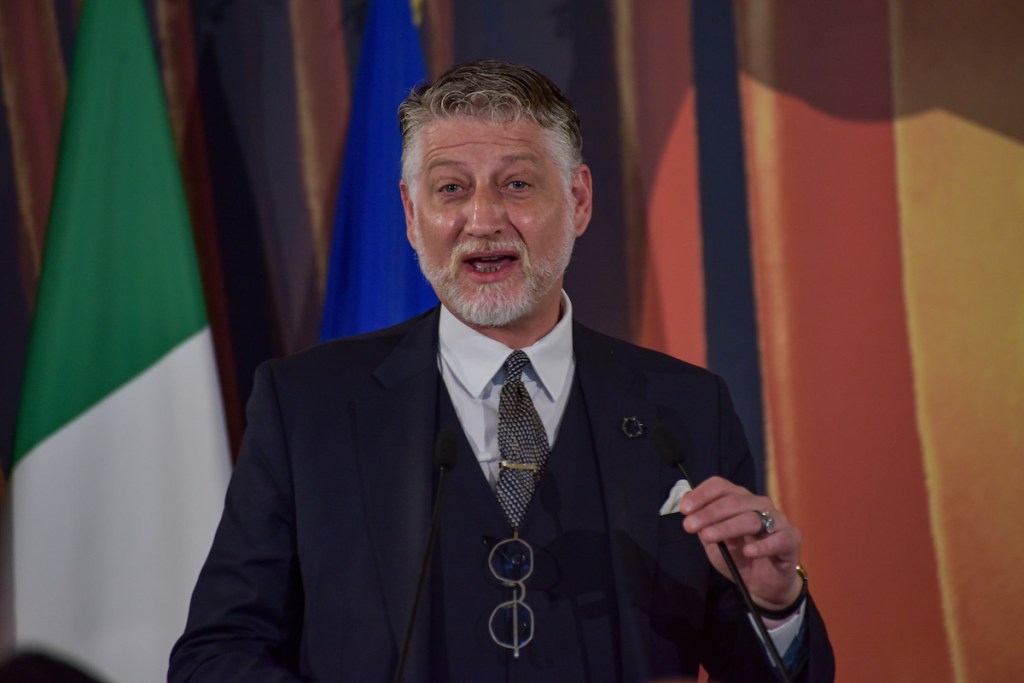
The 61st Venice Biennale opened on Saturday without ceremony or an opening celebration, amid political turmoil over the participation of Russia and Israel. Italy's Culture Minister Alessandro Giuli criticized Biennale director Pietrangelo Buttafuoco for not informing the government about Russia's participation request, suggesting it could have been used as leverage for a ceasefire in Ukraine. The entire jury resigned after attempting to exclude both Russia and Israel from prize awards, leading to the cancellation of the traditional jury decision in favor of a public vote, which over 70 participating artists have protested by withdrawing from this year's prizes. Separately, a rare photograph from the early 1940s has surfaced showing Lucas Cranach the Elder's painting "Venus with Cupid as Honey Thief" in Adolf Hitler's Munich apartment, raising unresolved questions about whether the work was looted from Jewish owners before 1935.
Political Fallout Rocks Venice Biennale Prize System

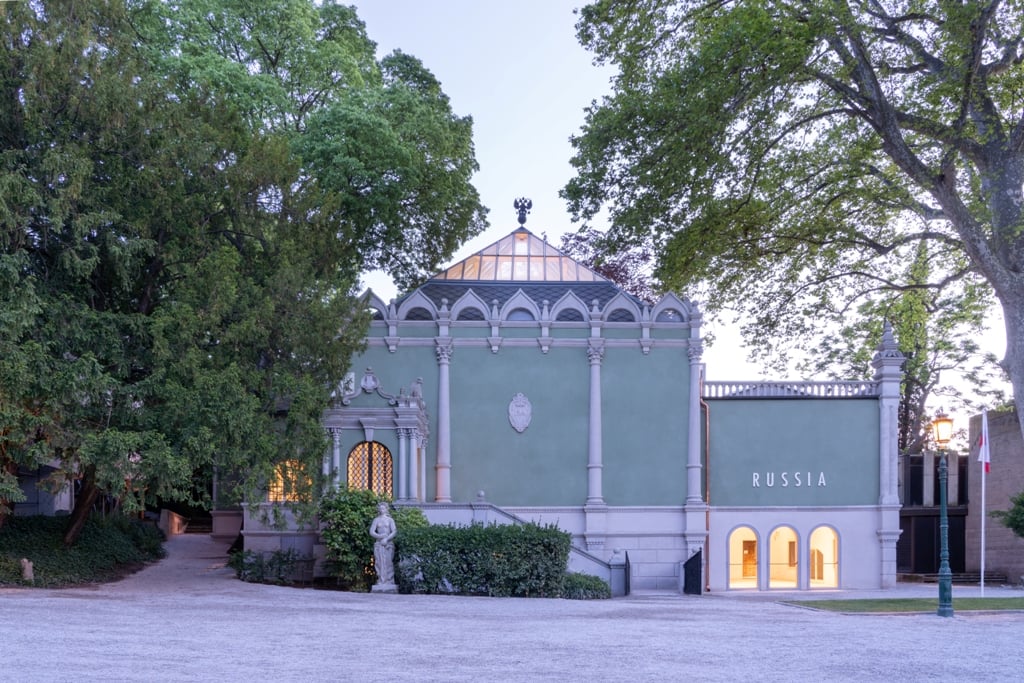
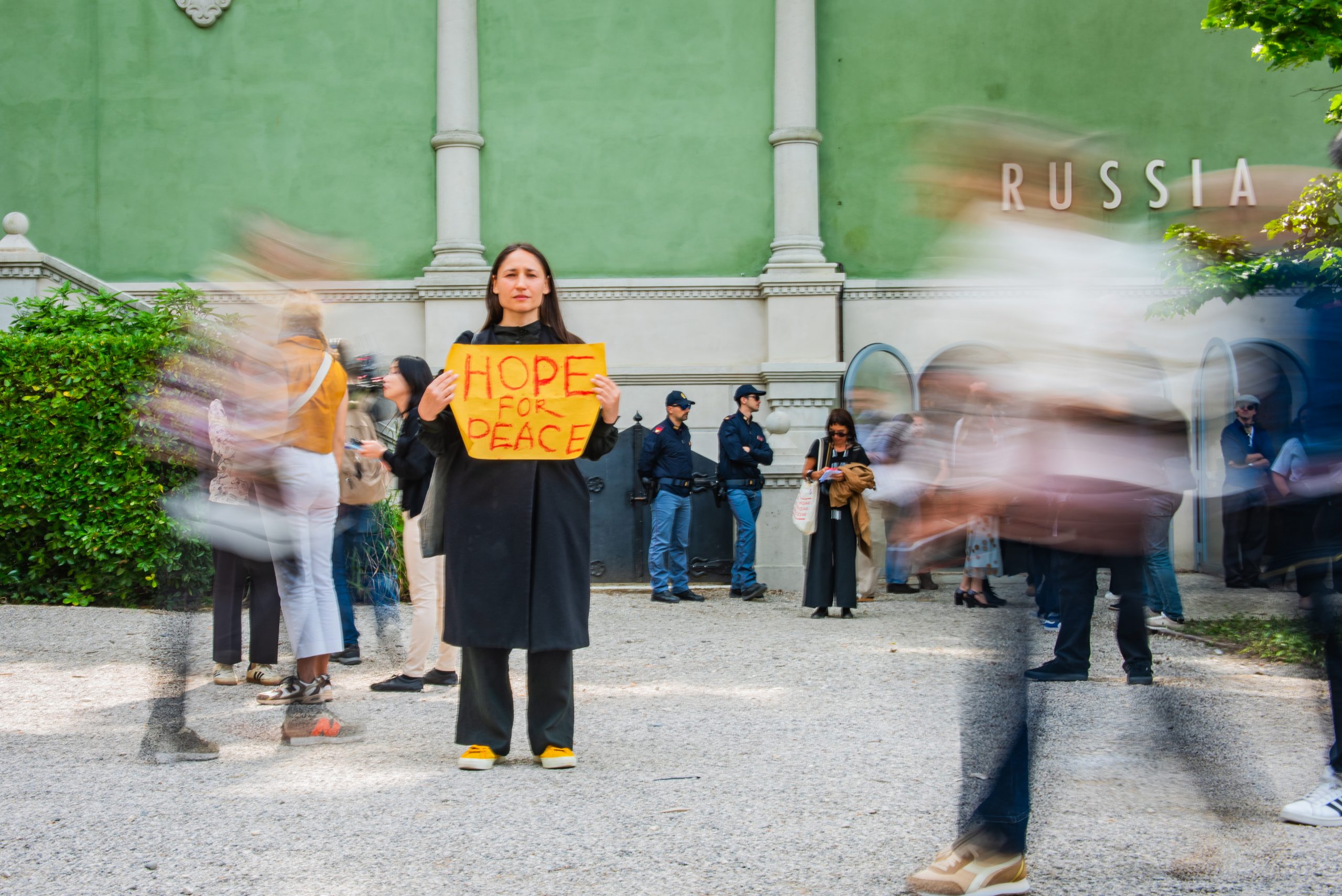
Dozens of artists participating in the 2026 Venice Biennale have withdrawn from consideration for the newly created Visitor Lion awards, replacing the traditional Gold and Silver Lion prizes. A total of 57 artists from the main exhibition and 22 national pavilions signed a statement published on e-flux on May 9, acting in solidarity with the five-person prize jury that resigned on April 30 over the continued participation of Russia and Israel. The jury had objected to awarding prizes to artists from countries whose leaders face International Criminal Court charges, including Russian president Vladimir Putin and Israeli prime minister Benjamin Netanyahu. In response, the Biennale organizers postponed the awards ceremony to November 22 and introduced visitor voting, a move they described as consistent with openness and dialogue. Meanwhile, the Russian Pavilion, which returned after lending its space to Bolivia in 2024, faced protests, closure after previews, and a €2 million funding pull by the European Union for the 2028 Biennale.

Putin ‘Won’ the Venice Biennale, Quips Italian Culture Minister

Italian Culture Minister Alessandro Giuli stated that Russian President Vladimir Putin "won" the 2024 Venice Biennale, criticizing Russia's controversial return to the event. Giuli, who repeatedly denounced Russia's presence, told Corriere della Sera that Russian artists in the pavilion cannot express dissent against their regime. The Biennale faced widespread calls to remove Russia, with the EU threatening to withhold a €2 million grant, but organizers argued they lacked legal authority to exclude the country. Protests by Pussy Riot and FEMEN marked the pavilion's opening, while the Biennale's jury resigned en masse after announcing that nations charged with crimes against humanity would be ineligible for Golden Lions.

Venice Biennale’s jury resigns

The entire jury of the 61st Venice Biennale, presided by Brazilian curator Solange Farkas and comprising four other curators, resigned just nine days before the exhibition's scheduled opening on 9 May 2026. The jury had announced it would not award prizes to countries whose leaders are charged with crimes against humanity by the International Criminal Court, a move widely understood to target Israel and Russia. In response, the Biennale's organisers cancelled the prize-giving ceremony and will instead award Golden Lions via a popular vote among ticketholders. The row escalated further when the Israeli representative, sculptor Belu-Simion Fainaru, accused the jury of discrimination and threatened legal action, prompting intervention from Italy's culture ministry.

suffering life models in florence are threatening legal action over working conditions

Life models at the Accademia di Belle Arti di Firenze (Florence Academy of Fine Arts) are threatening legal action and a potential nude protest over poor working conditions. They complain of exhausting work, insufficient breaks, and renewable annual contracts offering 500 hours over 11 months with no insurance, holidays, sick leave, or timecards. The models argue that a 2024 Italian ministry law requiring permanent contracts for those with three years of service does not apply to them because the academy claims they were hired under simplified procedures. Union president Giancarlo Iacomini met with academy director Gaia Bindi on April 9 to seek a resolution, calling the situation "deeply contradictory."

‘Exhausted’ life models at Florence art academy threaten nude protest

Life models at the Accademia di Belle Arti di Firenze (Florence Academy of Fine Arts) are threatening legal action and a nude protest in the academy's courtyard over poor working conditions. They describe their work as “exhausting,” involving eight-hour sessions with minimal breaks, and say their renewable annual contracts—offering 500 hours over 11 months—lack insurance, paid leave, sick days, or a digital timecard. The dispute centers on Italy’s ministry of universities and research rules introduced last year, which the academy interprets as excluding models hired more than three years ago under simplified procedures from permanent contracts. Union president Giancarlo Iacomini has met with academy director Gaia Bindi to seek a resolution, while the academy says it will publish a new public recruitment notice that counts previous contracts as qualifications.

Ministry of Culture inspectors present report on Biennale: Russia pavilion will remain closed

Gli ispettori del Ministero della Cultura in Biennale presentano relazione: il padiglione Russia resterà chiuso

Italian Ministry of Culture inspectors have submitted a report to the Prime Minister's office regarding Russia's participation in the 2026 Venice Art Biennale. The report concludes that Russia did not receive a formal invitation from the Biennale Foundation to participate, nor did it sign the participation agreement—a situation shared by other countries with permanent pavilions. While Russia submitted a project and appointed a commissioner, its pavilion will remain closed to the public due to EU sanctions, though a private vernissage may proceed. The report finds no serious violations that would cancel Russia's participation, but notes critical issues that warranted more caution. The international jury resigned en masse after announcing it would not consider countries whose leaders are accused of crimes against humanity by the International Criminal Court, including Russia and Israel, and after an Israeli artist threatened a discrimination lawsuit.