
filter_list Showing 3 results for "Polynesia" close Clear
dashboard All 8 article news 3museum exhibitions 2article local 1article culture 1article museums 1
date_range Range Today This Week This Month All
Subscribe

omai portrait joshua reynolds national portrait gallery fundraising campaign 2268648

The National Portrait Gallery (NPG) in London is in a last-minute push to raise £50 million ($60 million) to acquire Joshua Reynolds's 1776 portrait of Omai, a Polynesian visitor to Britain, before a temporary export ban expires on March 10. Despite raising roughly £25 million through a grassroots campaign involving public donations, a £2.5 million grant from the Art Fund, and £10 million from the National Heritage Memorial Fund, the NPG remains short of its goal and is reportedly in secret talks with the Getty Museum to jointly purchase the painting.
brooklyn museum removing overpainting erotic gauguin relief panel 1234775759

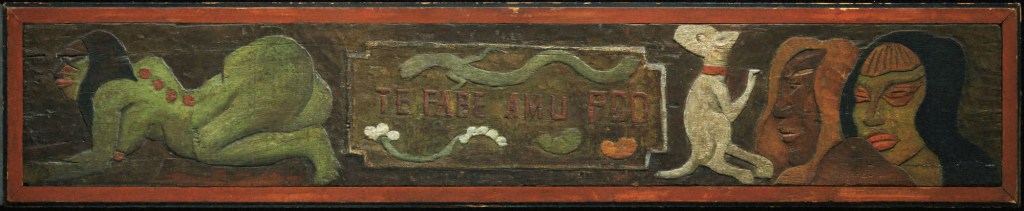
The Brooklyn Museum is preparing to investigate the restoration of Paul Gauguin’s relief panel, *Te Fare Amu*, which was recently gifted to the institution by the Henry and Rose Pearlman Foundation. The artwork features a crouching nude figure whose genitals were painted over with green pigment by the collector Henry Pearlman in 1954 to bypass U.S. Customs indecency laws. While a 2017 conservation assessment at the Art Institute of Chicago deemed the overpainting too risky to remove, Brooklyn Museum conservators plan to re-evaluate the piece when it arrives for exhibition this fall.

rapa nui easter island moai statues sea levels flooding 1234749640

A new study published in the Journal of Cultural Heritage warns that rising sea levels will impact Chile’s Rapa Nui National Park, a UNESCO World Heritage site, by 2080. Coastal flooding threatens at least 51 culturally significant artifacts, including the iconic Moai statues—nearly 1,000 volcanic tuff figures created by a native Polynesian tribe over 500 years ago, some weighing up to 80 tons. Researchers from the University of Hawai’i at Mānoa used advanced computer models to simulate wave patterns and map projected flooding, overlaying this data with the locations of cultural assets provided by local partners.