filter_list Showing 6 results for "Sphinx" close Clear
search
dashboard All 23 museum exhibitions 9article news 6trending_up market 2article culture 2gavel restitution 2rate_review review 1article local 1
date_range Range Today This Week This Month All
Subscribe

french culture ministry admits stolen louvre jewels valued at 102 m are not insured

Masked thieves stole jewels once belonging to Emperor Napoleon III and Empress Eugénie from the Louvre in a daylight smash-and-grab, using a furniture lift to access the first floor and cutting into display cases. The stolen items, including a diamond-encrusted brooch, diadems, necklaces, and the empress's crown (which was dropped during the escape), are valued at $102 million. French officials have admitted the loot is not privately insured, meaning the state will not be reimbursed if the items are not recovered. Louvre director Laurence des Cars blamed a "terrible failure" in security, offered her resignation (which was refused), and acknowledged staff did not detect the thieves soon enough.

hatshepsut statues destroyed research

New research challenges the long-held belief that Pharaoh Thutmose III destroyed statues of his predecessor Hatshepsut out of vengeful rage after her death in 1458 B.C.E. Jun Yi Wong, a research fellow at the Metropolitan Museum of Art, examined hundreds of statue fragments from Hatshepsut's mortuary temple at Deir el-Bahri in Luxor. His study, published in Antiquity on June 24, reveals that the statues were broken according to a ritual practice called deactivation—snapped at the neck, waist, and knees—while faces were left intact. Wong found that the fragments were not immediately buried but later reused by everyday Egyptians as building materials, suggesting pragmatic reuse rather than targeted erasure.

London gallery Project Native Informant closes after 12 years, citing 'volatile and unsustainable environment'

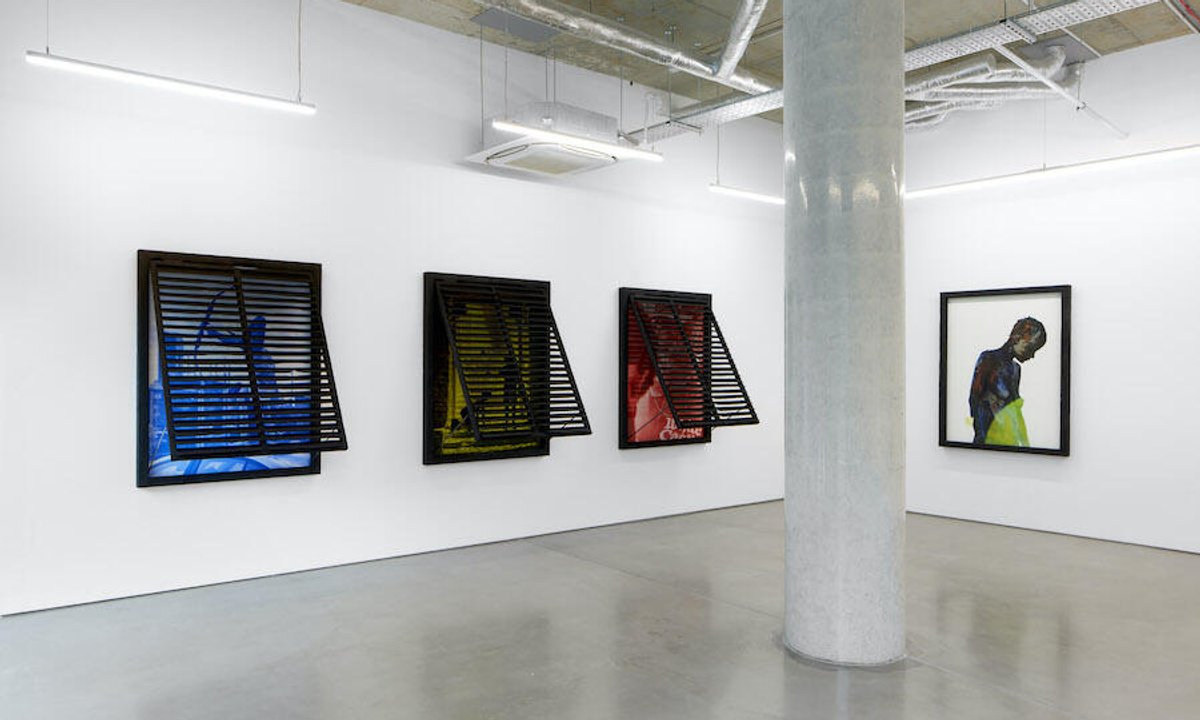
Project Native Informant, an east London gallery known for its adventurous program featuring artists like DIS, Sin Wai Kin, Juliana Huxtable, and Hal Fischer, is closing after 12 years. Founder Stephan Tanbin Sastrawidjaja announced the decision on Instagram on October 31, citing a volatile and unsustainable global economic, political, and social environment, along with personal factors. The gallery had not staged an exhibition since July 2024 and had previously lost commercially viable artist Joseph Yaeger, who signed with Modern Art and Gladstone in 2023.

ancient egyptian iconography roman bathhouse sagalassos turkey

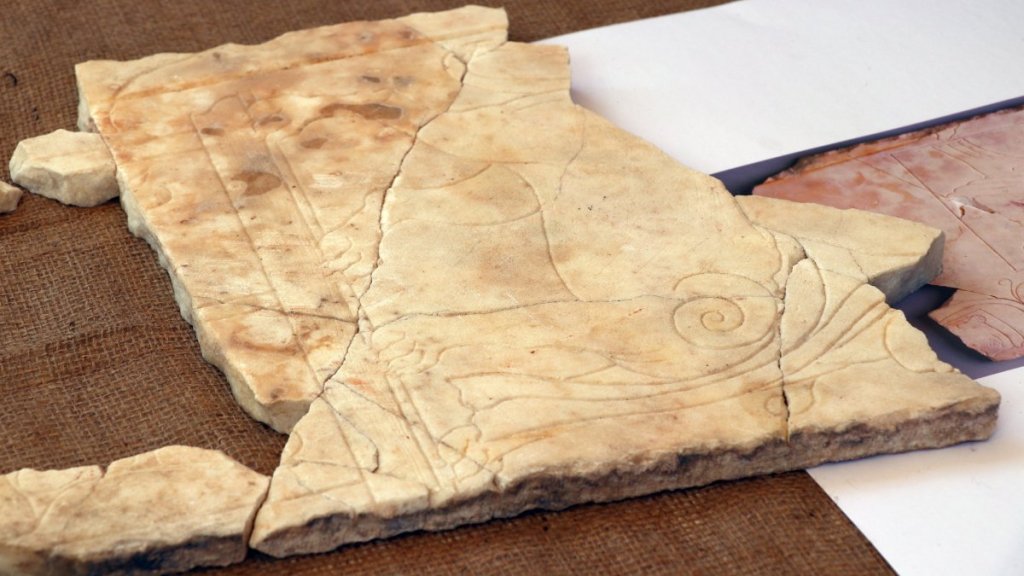
Archaeologists have identified ancient Egyptian iconography on a marble lintel in a Roman-era bathhouse at Sagalassos, Turkey. The carving depicts the sphinx god Tutu, flanked by two human figures wearing the crowns of Upper and Lower Egypt, along with deities Horus and Sobek. Dating to the reign of Emperor Augustus (27 BCE–14 CE), the panel was found in the frigidarium and was sourced from marble quarried over 124 miles away in the Afyonkarahisar region.

egypt alexandria artifacts lifted sea

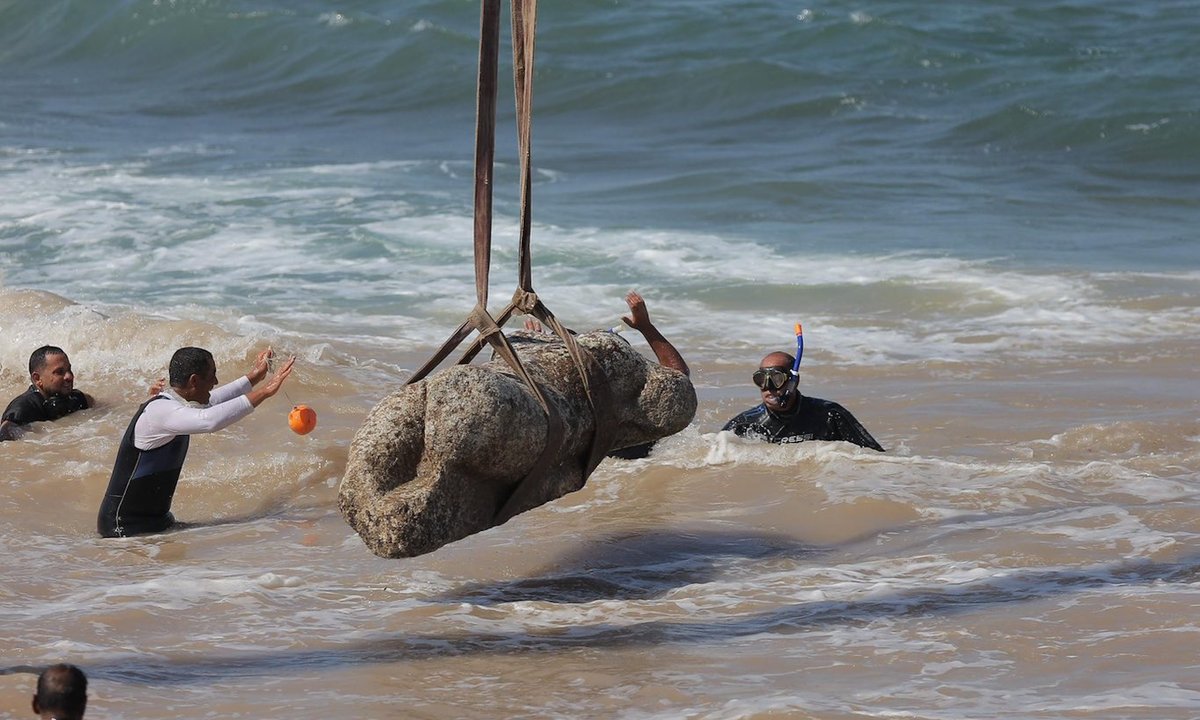
Egypt's Ministry of Tourism and Antiquities recovered underwater ruins from a sunken city off the coast of Alexandria on August 21. Divers and cranes retrieved ancient statues, including royal figures and sphinxes from the pre-Roman era, such as a partially preserved sphinx with the cartouche of Ramses II. The site in Abu Qir bay also revealed limestone buildings, residential and commercial structures, a 125-meter dock over 2,000 years old, a merchant ship, stone anchors, and a harbor crane from the Ptolemaic and Roman eras. Tourism and Antiquities Minister Sherif Fathy noted that only specific material meeting strict criteria is brought up, with the rest remaining underwater heritage.

Ancient artefacts from sunken city lifted out of Mediterranean near Alexandria

Ancient artefacts from the sunken city of Canopus, submerged off the coast of Alexandria, have been recovered for the first time in 25 years. During a three-day underwater heritage event (19-21 August), archaeologists lifted limestone structures, a quartz sphinx bearing cartouches of Ramses II, and a white marble statue of a Roman nobleman from the Mediterranean. The operation was led by the European Institute for Underwater Archaeology (IEASM) in cooperation with the Egyptian Ministry of Tourism and Antiquities, with French underwater archaeologist Franck Goddio playing a key role. The finds are now on display in the exhibition 'Secrets of the Sunken City' at the Alexandria National Museum.