dashboard All 3143 museum exhibitions 1419article news 415article local 374article culture 215trending_up market 204person people 184article policy 121rate_review review 96candle obituary 57gavel restitution 52article events 2article event 2article satire 1article museums & heritage 1
date_range Range Today This Week This Month All

Arts Groups Speak Out Against US Trade Representative’s Potential New Tariffs

The U.S. Trade Representative, Jamieson Greer, has launched a Section 301 investigation into 60 countries to determine if forced labor practices create unfair trade advantages. This move follows President Trump’s continued push for sweeping tariffs after previous attempts were struck down by the Supreme Court. Major art organizations, including the Association of Art Museum Directors (AAMD) and Heritage Auctions, are formally petitioning for works of art and antiquities to be exempt from any resulting duties.

Institute of Museum and Library Services Saved from Defunding After Legal Challenge

The American Library Association (ALA) and the American Federation of State, County and Municipal Employees (AFSCME) have reached a settlement with the U.S. Department of Justice to halt the Trump administration’s efforts to dismantle the Institute of Museum and Library Services (IMLS). The agreement ensures the federal agency will continue its operations, reinstates previously terminated grants, and reverses staff reductions. This legal victory follows a period of significant uncertainty where the agency's budget was slated for a 98% reduction, threatening its role as the primary federal supporter of museums and libraries.

DePaul Art Museum Advisory Board Calls on University to Save the Institution, Expressing ‘Anger, Frustration, and Deep Sadness’ Over Abrupt Closure

The advisory board of Chicago's DePaul Art Museum has sent a strongly worded letter to DePaul University leadership, condemning the decision to permanently close the 40-year-old museum on June 30. The letter, signed by board chair Scott J. Hunter and members including artists Brendan Fernandes and former Expo Chicago head Tony Karman, expresses "anger, frustration, and deep sadness" over the abrupt closure and the university's unilateral plans for the museum's 4,000-object collection.

DHS Appropriates Japanese Artist’s Work in Racist X Post

The U.S. Department of Homeland Security (DHS) used a painting by Japanese artist Hiroshi Nagai in a social media post without his permission. The agency cropped his 2017 untitled beach scene and overlaid it with the text "America After 100 Million Deportations," accompanied by a caption about national peace. Nagai, 78, expressed being "at a loss" and disappointed that a government agency would use his work to promote a political message he does not endorse.

An Urgent Call From Artists and Curators of the 61st International Art Exhibition of La Biennale di Venezia 2026

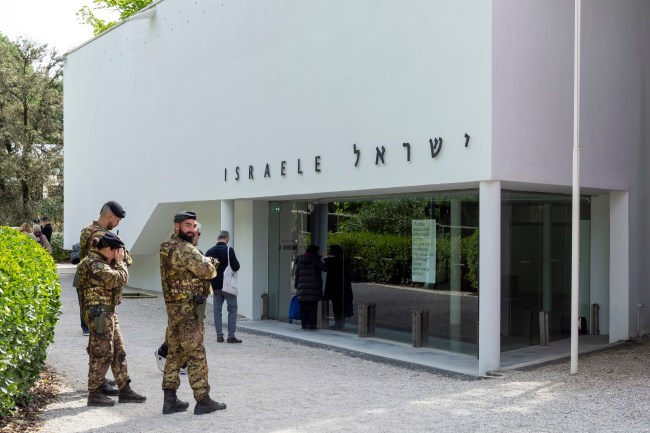
A group of seventy-four artists and curators participating in the 61st Venice Biennale have issued an urgent letter to the institution's leadership, including director Pietrangelo Buttafuoco. The signatories are protesting the decision to relocate the Israeli Pavilion to the Arsenale, placing it in close proximity to the central exhibition, "In Minor Keys," which was conceived by the late curator Koyo Kouoh. The group argues that this relocation violates Kouoh’s curatorial vision of radical solidarity and introduces a threatening military and police presence into the exhibition space.

Outgoing Tate Director Argues for Bigger Tax Breaks for Donors

Outgoing Tate director Maria Balshaw has publicly called on UK Chancellor Rachel Reeves to implement larger tax breaks for wealthy philanthropists who donate to museum endowment funds. She argues this would level the playing field with US institutions and provide crucial financial stability for UK museums.

Smithsonian’s governing body quietly losing members

The Smithsonian Institution's Board of Regents is shrinking, with two members' terms expiring in March and no replacements announced. A third regent's term expires next week, with three more set to end in the autumn, and there are no concrete plans to fill these vacancies. The delay stems from a requirement for both Congress and the President to approve new members.

V&A Pulls Catalog Materials Due to Chinese Censorship Laws

The Victoria and Albert Museum (V&A) in London has admitted to removing maps and images from two exhibition catalogs following censorship demands from a Chinese printing firm. Documents revealed that C&C Offset Printing flagged content in the catalogs for the exhibitions "Music Is Black" and "Fabergé: Romance to Revolution" as violating Chinese law. The censored items included a 1930s map of British trade routes and a photograph of Vladimir Lenin, which the printer claimed could not be produced under Beijing’s strict regulations.

Is Chinese Censorship Reaching Inside Britain’s Museums?

London’s Victoria and Albert Museum (V&A) has come under fire following reports that it altered exhibition catalogues to comply with Chinese government censorship. To reduce production costs, the museum utilized printers in China, which are subject to Beijing’s General Administration of Press and Publication (GAPP) regulations. Consequently, the museum removed historical maps and an image of Vladimir Lenin from publications for the "Music is Black" and "Fabergé: Romance to Revolution" exhibitions after they were flagged by Chinese authorities.

An open letter to La Biennale di Venezia calls out inaction in the face of global atrocities

A group of 74 artists and curators invited to the 61st Venice Biennale have issued an open letter to the institution's president, Pietrangelo Buttafuoco. The signatories are protesting the decision to relocate the Israeli Pavilion to the Arsenale, placing it in close proximity to the central exhibition 'In Minor Keys' curated by the late Koyo Kouoh. The letter demands the exclusion of official delegations from countries accused of war crimes—specifically Israel, Russia, and the United States—and accuses the Biennale of complicity through its silence on global atrocities.

Art Fund Launches ‘Empowering Curators’ Program for Global Majority Professionals

Art Fund, a British charity, launched the Empowering Curators program, a five-year initiative creating twenty multi-year curatorial roles for senior to mid-career professionals from global majority backgrounds. Ten initial fellows have been announced, with placements at major institutions including Tate Liverpool, the Whitworth Art Gallery, and Royal Museums Greenwich, where they will develop exhibitions, installations, and academic programs.

Dozens of Venice Biennale Artists Demand Israel’s Exclusion

A coalition of 182 artists, curators, and art workers participating in the 2026 Venice Biennale, organized under the Art Not Genocide Alliance (ANGA), formally delivered a letter demanding the exclusion of Israel from the exhibition. The signatories, including prominent artists like Yto Barrada, Alfredo Jaar, and Miet Warlop, argue that the Biennale must not normalize Israeli policies towards Palestinians.

Major Corporate Sponsor Withdraws from Sydney Biennale, Citing Alleged Hate Speech

A major corporate sponsor, PwC, has withdrawn from the 25th Sydney Biennale following a police complaint alleging antisemitic hate speech by a participating DJ. The NSW Jewish Board of Deputies filed the complaint against US electronic music producer Zubeyda Muzeyyen (DJ Haram) over comments made during the opening night party, which the Board claims incited hatred against Jewish Australians.

When a Palestinian Artist Asserts Her Own Humanity

Palestinian artist Basma al-Sharif faced a coordinated smear campaign and threats after being invited to screen her film "Morgenkreis" at the Kunstakademie Düsseldorf. The controversy erupted not over the film's content, but over her social media posts referencing Palestinian resistance and historical injustices, leading to demands from public officials and advocacy groups to cancel the event.

Germany Creates New Council to Oversee Returns of Looted Art

The German government has established a new council, the Coordination Council for Returns of Cultural Property and Human Remains from Colonial Contexts, to oversee the restitution of artifacts acquired during the colonial era. The council will include representatives from federal, state, and municipal authorities and is intended to provide a structured, national approach to handling these complex returns.

Kunsthalle Mainz Facing the End?

Kunsthalle Mainz vor dem Aus?

The Kunsthalle Mainz is facing potential closure by the end of the year following the withdrawal of funding by the Mainzer Stadtwerke. The crisis is compounded by the departure of director Stefanie Böttcher, who is moving to the Kunsthalle Kiel, and the fact that her position has not been advertised for replacement. Despite its international reputation and successful recent exhibitions, such as the current Britta Marakatt-Labba retrospective, the institution lacks a secured financial future and a leadership succession plan.

US Government Submits Plans for Triumphal Arch to Commission

US-Regierung reicht Plan für Triumphbogen bei Kommission ein

President Donald Trump has submitted formal plans to the Commission of Fine Arts for a monumental triumphal arch to be located near Washington, D.C. Proposed to stand at 76 meters tall, the structure would significantly surpass the height of Paris's Arc de Triomphe. The project, which Trump describes as the "largest and most beautiful" in the world, is slated for a site near the Arlington Memorial Bridge leading to the Lincoln Memorial.

What is Art Allowed to Do?

Was darf die Kunst?

German Minister of State for Culture Wolfram Weimer has sparked a heated debate over artistic freedom after excluding three bookstores from the German Bookstore Prize due to undisclosed intelligence reports. The controversy has escalated into a broader confrontation with cultural institutions, highlighted by the Berlin Volksbühne's public criticism and Weimer's subsequent refusal to participate in a scheduled panel discussion. This incident follows a string of high-profile disputes regarding political expression in the arts, particularly concerning the Berlinale and documenta fifteen.

At the Funeral of an Art Center

A l’enterrement d’un centre d’art

The article reports on the closure of a contemporary art center, described metaphorically as a funeral. It details the final days of the institution, the reactions from the artistic community, and the circumstances leading to its demise, such as funding cuts or policy changes.

European Commission Tells Venice Biennale to ‘Clear Its Name’ Regarding Russian Pavilion or Risk Losing $2.3 M. Grant for 2028

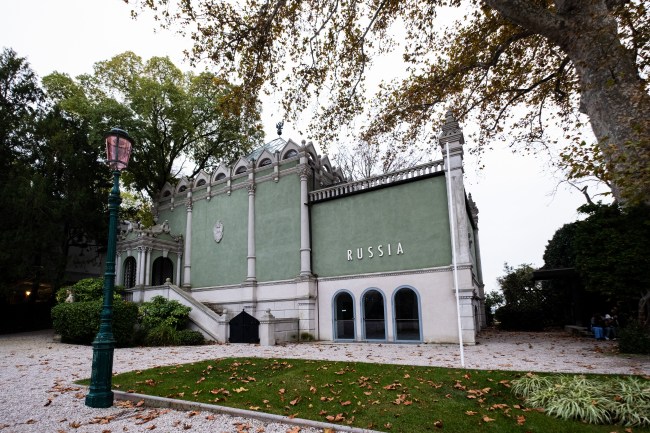
The European Commission has issued a 30-day ultimatum to the Venice Biennale, threatening to withdraw a €2 million ($2.3 million) grant for the 2028 edition unless the organization addresses concerns regarding the Russian Pavilion's inclusion in 2026. The Commission alleges that hosting a government-funded delegation violates EU sanctions and provides a cultural platform for Russian state interests amidst the ongoing war in Ukraine. The Biennale's president, Pietrangelo Buttafuoco, must respond by May 11, just two days after the exhibition's public opening.

Ukraine Sanctions Russian Culture Figures Linked to Country’s Participation in Venice Biennale

Ukrainian President Volodymyr Zelenskyy has issued a decree imposing sanctions on five Russian cultural figures involved in the Russian Pavilion for the 2026 Venice Biennale. The sanctioned individuals include pavilion commissioner Anastasia Karneeva, former culture minister Mikhail Shvydkoy, and three performers from the Intrada Ensemble. Ukrainian officials argue that these figures use international art platforms to legitimize Russian aggression and spread state propaganda, specifically citing past activities in occupied territories like Crimea and Donetsk.

The Politics of Russia’s Return to the Venice Biennale

Russia has announced its intention to return to the Venice Biennale in 2026, marking its first participation since the full-scale invasion of Ukraine in 2022. The proposed pavilion, titled "The Tree is Rooted in the Sky," plans to feature 38 participants from Russia and several Global South nations. The announcement has sparked intense backlash from the European Commission and culture ministers across 22 countries, who argue that Russia’s presence undermines democratic values and serves as a tool for "dark cultural diplomacy."

European Commission Tells Venice Biennale to Ditch Russian Pavilion

The European Commission has formally accused the Venice Biennale of violating EU sanctions against Russia by planning to reopen the Russian Pavilion for the 2026 edition. In a letter to the Biennale's president, the Commission argues that hosting a government-funded national pavilion constitutes accepting indirect support from the Russian state during its ongoing war in Ukraine. The organization has threatened to withhold a $2.3 million grant intended for the 2028 edition unless the Biennale addresses these concerns by May 11.

Lawsuit Alleges DOGE Cancelled $349,000 HVAC Grant to Museum after ChatGPT Flagged It As DEI

Lawsuit Alleges DOGE Cancelled $349,000 HVAC Grant to Museum after ChatGPT Flagged It As DEI

The High Point Museum in North Carolina had a $349,000 federal grant to replace its HVAC system canceled after staff at the Department of Government Efficiency (DOGE) used ChatGPT to evaluate the proposal. According to a federal lawsuit, the AI chatbot flagged the climate-control project as related to diversity, equity, and inclusion (DEI) initiatives, leading to its termination, despite the grant's stated purpose of preserving the museum's collection.

Why Did Trump Officials Award $2 Million to a Small Art School in Queens?

The Trump administration's National Endowment for the Humanities awarded a $2 million grant to a small art school in Queens with only three full-time employees. This grant was part of a new pattern of large, handpicked awards, a significant departure from the agency's typical grant-making process which historically avoided such large sums to very small institutions.

Dizzy, Nauseous Columbus Art Museum Workers Issue Complaints About Chemical Fumes

Workers at the Columbus Museum of Art have filed a complaint with OSHA, reporting symptoms like headaches, nausea, and dizziness believed to be caused by fumes from a chemical floor sealant used during renovations. The sealant, GT 275, is intended for outdoor or well-ventilated use and carries warnings about inhalation risks, with a former employee expressing concern over potential long-term health effects from exposure.

Blue Shields Placed at 34 Archaeological Sites Across Lebanon, Signaling Enhanced Protections

The Lebanese Culture Ministry has placed distinctive blue shields at 34 archaeological sites across the country. This action formally designates the sites as protected cultural property under the 1954 Hague Convention, aiming to shield them from destruction during the ongoing armed conflict involving Israel and Hezbollah.

Italy’s Culture Minister Calls For Resignation Over Russian Pavilion’s Return to Venice Biennale

Italy's Culture Minister Alessandro Giuli has demanded the resignation of Tamara Gregoretti, the government's representative on the Venice Biennale board, accusing her of failing to alert the ministry to Russia's planned return to the 2026 exhibition. Russia announced it will reopen its national pavilion for the first time since 2019 with a presentation titled 'The Tree Is Rooted in the Sky,' curated by Anastasia Karneeva and featuring over 30 artists.

Prado Implements New Crowd Control Measures to Combat Overtourism

The Prado Museum in Madrid has implemented new crowd control measures to combat overtourism, including reducing the maximum size of tour groups from 30 to 20 people and restricting group access to off-peak afternoon hours. The museum is also promoting "thematic routes" to disperse visitors into less crowded galleries.

Arts and heritage organisations largely exempted from new UK regulations on memberships

The UK government has exempted charitable and heritage organizations from new consumer regulations that would have allowed members to cancel and receive refunds within a two-week cooling-off period. The Digital Markets, Competition and Consumers Act (DMCCA), set to take effect next year, will not apply to membership schemes of qualifying cultural and heritage charities.