
filter_list Showing 3 results for "MEET" close Clear
search
dashboard All 579 museum exhibitions 226article local 122article news 57article culture 47trending_up market 47article policy 39person people 27rate_review review 7candle obituary 3gavel restitution 3article event 1
date_range Range Today This Week This Month All
Subscribe

art detective arthur brand netherlands national archives

Arthur Brand, a self-proclaimed art detective, recovered 25 documents stolen from the Netherlands National Archives in 2015. The trove includes items on UNESCO’s Memory of the World Register, such as a 1602 report of the Dutch East India Company’s first meeting, a 1700 report of a visit to Mughal India’s Emperor Aurangzeb, and a ship’s log by 17th-century admiral Michiel de Ruyter. Brand was contacted after a person clearing an attic found the box and showed it to a former history professor. Brand took possession on condition of returning the documents to the National Archives, which had been unaware the items were stolen.

benin dialogue group ocotober 2018

Major European museums have agreed to loan important artifacts, including the Benin bronzes looted during the 1897 Benin Expedition, back to Nigeria for a new museum planned to open in 2021. The agreement was reached at a meeting of the Benin Dialogue Group in the Netherlands, involving representatives from Austria, Germany, the Netherlands, Sweden, and Britain, who committed to facilitating a rotating display at the planned Royal Museum in Benin City within three years, though specific objects and loan periods remain unconfirmed.

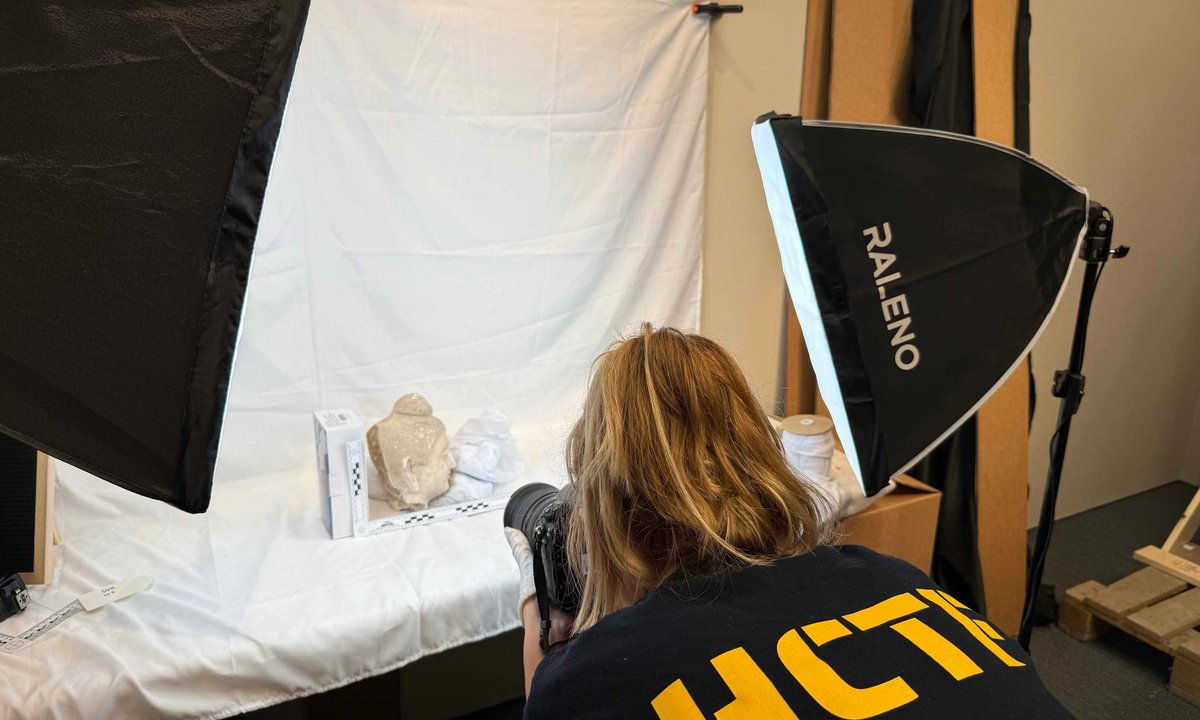
Meet the global taskforce working to recover stolen cultural heritage

The London Metropolitan Police's Art and Antiques Unit, in collaboration with the Heritage Crime Task Force (HCTF) of the Organisation for Security and Co-operation in Europe (OSCE), is processing over 300 recovered cultural artefacts. The objects—including statues, frescoes, chainmail armour, and stucco heads—were voluntarily handed over by an individual who had kept them for over a decade. Experts are conducting forensic analysis, photography, and archaeological assessment to determine authenticity and origin, with initial findings suggesting items from Cambodia's Angkor Period, the Gandhara region of Pakistan and Afghanistan, the Indus Valley civilisation, and possibly a mosque in Syria or Iraq.