filter_list Showing 8 results for "THIS" close Clear
dashboard All 971 museum exhibitions 538article local 143article news 100article culture 75trending_up market 37rate_review review 32person people 19article policy 17gavel restitution 8candle obituary 2
date_range Range Today This Week This Month All
Subscribe

France reckons with Nazi-looted art in a new Paris museum gallery

France has opened a new permanent gallery at the Musée d'Orsay in Paris dedicated to displaying Nazi-looted artworks that remain unclaimed. The gallery features 13 works from the MNR (Musées Nationaux Récupération) collection, including a painting by Alfred Stevens originally destined for Hitler's planned museum in Linz. The display is the first in the museum's history to show the backs of paintings, revealing stamps, labels, and inventory marks that trace how each piece moved from private Jewish homes into Nazi hands. The museum also launched its first research unit to trace rightful heirs, led by Ines Rotermund-Reynard.

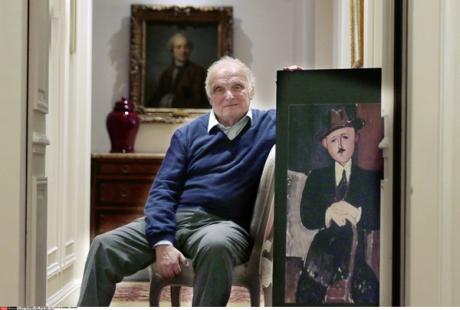
Nahmad Seeks to Reopen Modigliani Restitution Case With New Witnesses

David Nahmad's lawyers are asking a New York court to reconsider its April 3 decision in the restitution case over Amedeo Modigliani's *Seated Man with a Cane* (1918), which awarded the painting to the estate of dealer Oscar Stettiner. They cite new eyewitness testimony from Frédéric Allain, who recalls a different Modigliani—smaller, darker, and without a seated man or cane—hidden by the Van der Klip family in Paris during World War II, suggesting the wrong painting may have been the focus of the case. The filing also references a 1946 report describing the missing work as a self-portrait and a new catalogue raisonné by Marc Restellini that finds no link between the painting and Stettiner. Mondex, representing Stettiner's heirs, rejects the claims, asserting that *Seated Man with a Cane* bears Stettiner's name and was in the family's possession from 1944 to 1996.

David Nahmad maintains that his Modigliani was not looted by the Nazis

David Nahmad is continuing his legal battle to prove that his Modigliani painting, *Seated Man with a Cane* (1918), was not looted by the Nazis from the Jewish dealer Oscar Stettiner. Despite a recent New York ruling against him, Nahmad’s lawyers have filed a motion to review the case based on new eyewitness testimony. Two witnesses claim the painting they saw in the Van der Klip family—which bought the Nazi-looted work in 1944—is completely different from Nahmad’s painting, lacking a seated man or a cane. Nahmad’s legal team also cites a 1946 French bailiff report and a recent catalogue raisonné by Marc Restellini to argue that Mondex, the restitution firm working for Stettiner’s heirs, misidentified the work.

Musée d’Orsay displays Renoir and Degas works looted by Nazis

The Musée d’Orsay in Paris has opened a new gallery dedicated exclusively to artworks suspected of being looted or forcibly sold during the Nazi occupation of France. Among the 13 works on display is Edgar Degas's *Dinner at the Ball* (1919), originally owned by Jewish collector Fernand Ochsé, who was deported to Auschwitz with his wife in 1941. The painting passed through multiple hands before being identified as one of over 100,000 artworks plundered by the Nazis. The museum has assembled a team of six provenance researchers to spend three years tracing the original owners of these works, which are part of the "MNR" (Musées nationaux récupération) collection—some 2,200 pieces deemed too important to sell but whose owners remain unknown.

Manhattan D.A.’s Office Returns More Than 650 Looted Artifacts to India

On April 28, Manhattan District Attorney Alvin L. Bragg, Jr., announced the return of 657 trafficked antiquities valued at nearly $14 million to India. The items were recovered by the D.A.'s Antiquities Trafficking Unit and Homeland Security Investigations, and formally returned at a ceremony in New York. Among the repatriated pieces are a bronze figure of Avalokiteshvara (valued at $2 million), stolen from the Mahant Ghasidas Memorial Museum in Raipur in 1982; a red sandstone Buddha statue (valued at $7.5 million) smuggled by convicted dealer Subhash Kapoor; and a sandstone Ganesha sculpture looted by trafficker Vaman Ghiya and sold through Christie's by Nancy Wiener, who was later convicted of antiquities trafficking.

Les États-Unis restituent près de 300 biens culturels à l’Italie

Italy presented 337 cultural artifacts repatriated from the United States at the Caserma "La Marmora" in Rome, following operations between December 2025 and April 2026. The objects span from the 5th century BCE to the 3rd century CE, including Roman sculptures, bronze works, pottery, jewelry, coins, and architectural fragments. Among the notable pieces is a marble head attributed to Alexander the Great, stolen from a Roman museum in 1960, and a bronze sculpture looted from Herculaneum. The recovery involved the Manhattan District Attorney's office, the FBI, Homeland Security Investigations, and Christie's New York, with 221 items seized through the DA's collaboration and 116 returned in April.

France Passes Law Easing Process of Returning Looted Art

France has passed a new law that simplifies the process of returning looted art and cultural artifacts to their countries of origin. The legislation, championed by President Emmanuel Macron, is seen as a major step in addressing colonial-era acquisitions, particularly for African artworks held in French museums. Experts describe the law as a seismic shift in restitution policy, enabling faster and more systematic returns without requiring individual parliamentary approvals for each item.

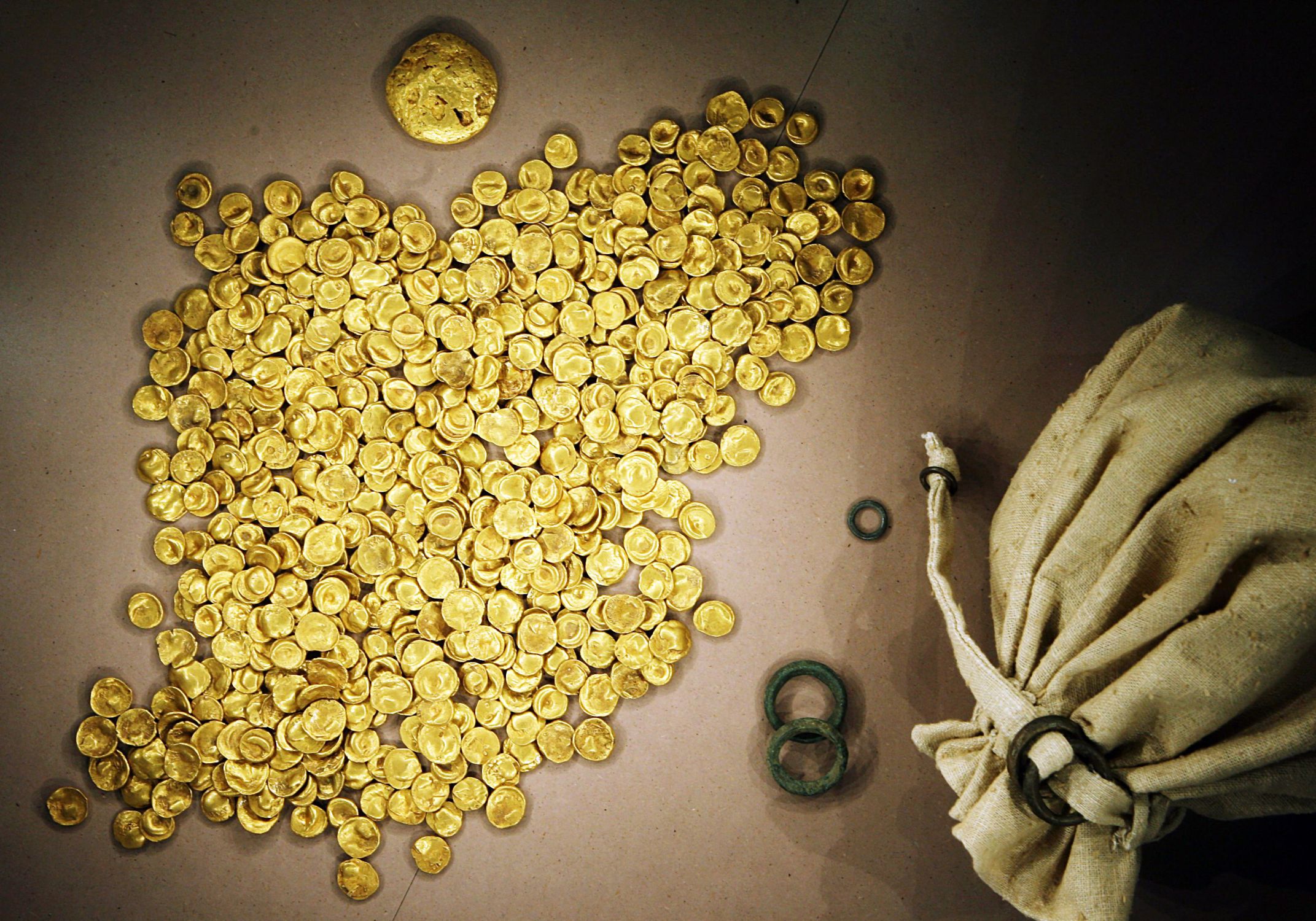
Investigators search again for stolen Celtic gold treasure

Ermittler suchen erneut nach gestohlenem Kelten-Goldschatz

More than three years after the theft of a Celtic gold treasure from the Kelten Römer Museum in Manching, Bavaria, investigators are conducting a new search for the missing loot. Four perpetrators were arrested and sentenced to long prison terms in July 2025, but only a small portion of the stolen gold coins was recovered. Now, based on new intelligence, Bavarian state police are searching the property of the main suspect and his partner in Plate, Mecklenburg-Vorpommern, using X-ray and radar technology. They believe 411 gold coins and a gold casting ingot—about three kilograms of gold—are professionally hidden there, along with cash from other burglaries. The suspect's partner is under investigation for money laundering for allegedly offering to help sell the gold.