filter_list Showing 903 results for "SEA" close Clear
search
dashboard All 903 museum exhibitions 485article local 121trending_up market 75article news 67article culture 59person people 28rate_review review 23article policy 19gavel restitution 19candle obituary 7
date_range Range Today This Week This Month All
Subscribe

Tough Stuff: Women in The American Glass Studio

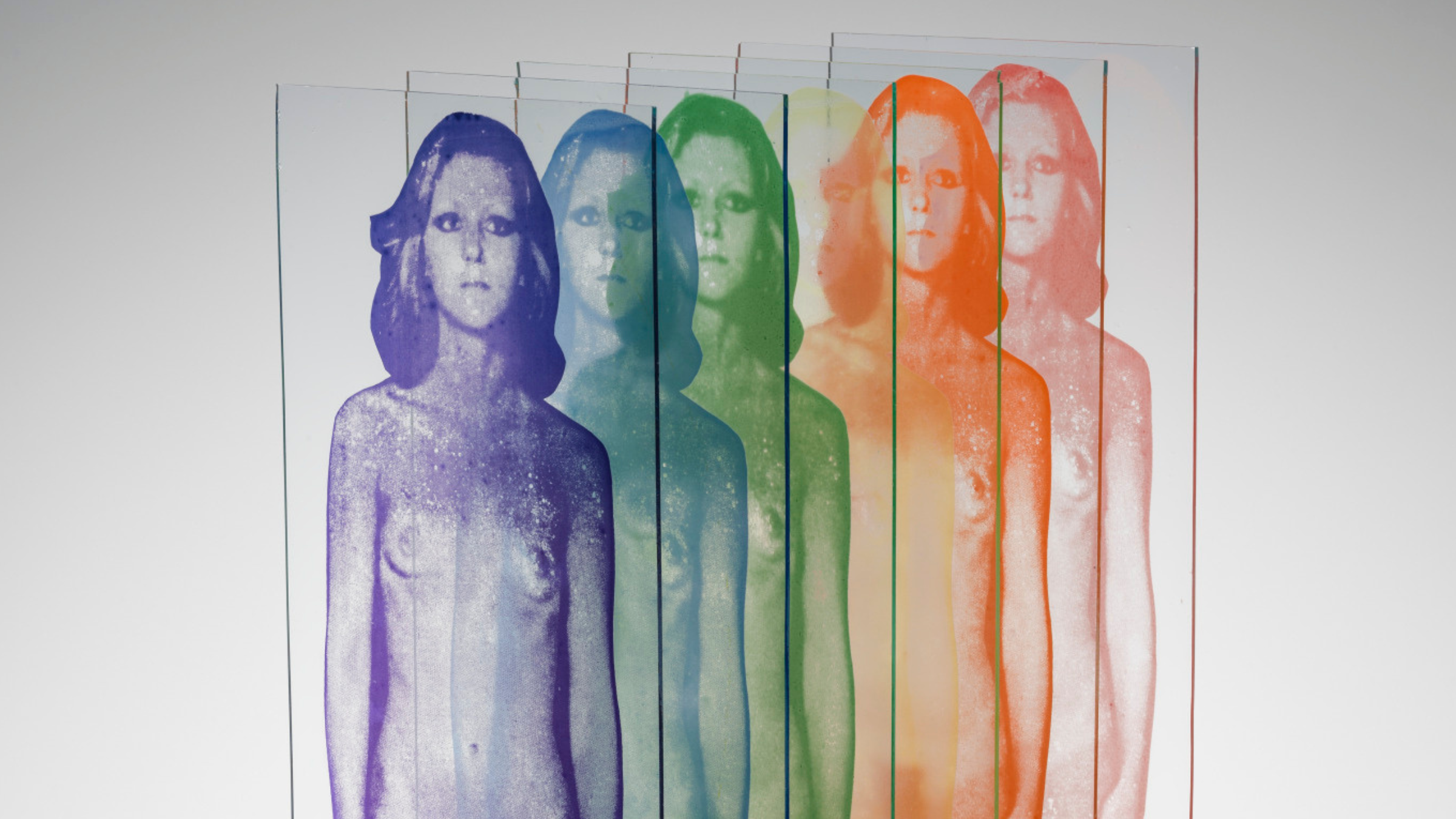
The Corning Museum of Glass (CMoG) opened "Tough Stuff: Women in the American Glass Studio" on May 16, 2026, as part of its 75th anniversary celebration. This is the first survey exhibition dedicated to women artists who shaped the American Studio Glass Movement from the 1960s onward, featuring over 200 works by artists including Claire Falkenstein, Audrey Handler, Margie Jervis, Susie Krasnican, Kathleen Mulcahy, Ginny Ruffner, Ruth Tamura, and Toots Zynsky. The exhibition draws from CMoG’s permanent collection, the Rakow Research Library, and loans from the artists, and is complemented by an oral history initiative preserving first-person accounts.
‘These are artifacts from history’: exhibition celebrates objects of sporting victory

A new exhibition at the American Museum of Natural History in New York, titled "For the Win," showcases championship rings, trophies, medals, and jewelry spanning nearly 150 years of US sports history. Highlights include Jesse Owens's 1936 Olympic gold medal, Breanna Stewart's 2024 WNBA championship ring, the 1877 NYPD Medal of Valor, and items from Kevin Durant and the Seattle Seahawks. The exhibition, timed to the upcoming World Cup, is housed in the museum's gems and minerals space to emphasize craftsmanship.

The Best Booths at NADA New York, From Quietly Ominous Ceramics to Ecstatic Jazz Paintings

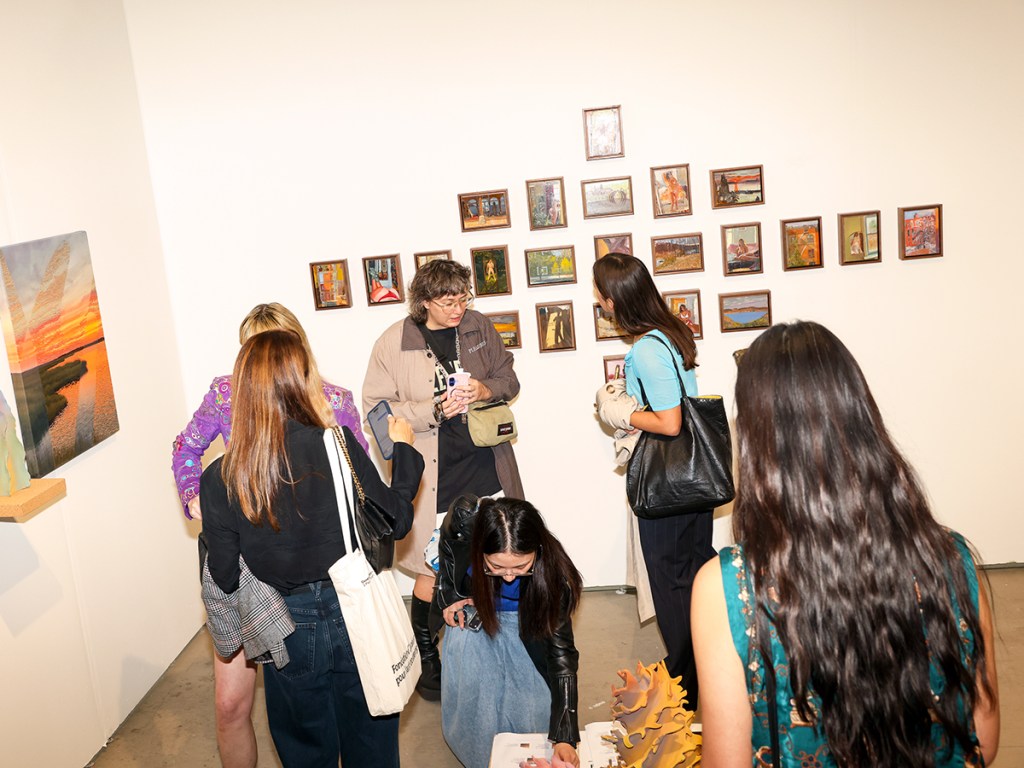
The New Art Dealers Alliance opened the 12th edition of NADA New York on May 14, 2026, at Chelsea’s Starrett-Lehigh building, coinciding with Frieze and 1-54 fairs nearby. The fair featured 110 exhibitors, including 51 first-time galleries from New York to Shanghai, with standout presentations by Andrae Green and Cyle Warner at Forgotten Lands, Ruth Owens at Voltz Clarke, and Keiko Narahashi at Tappeto Volante Gallery. This year’s edition emphasized ceramics and fiber art, marking a shift from recent years’ focus on figurative painting.

GEORGE FEBRES: TRADUCCIÓN, IRONÍA Y LIBERACIÓN. UN ARTISTA ECUATORIANO EN LA DIÁSPORA

George Febres (Guayaquil, 1943 – New Orleans, 1996) was an Ecuadorian artist whose work blended pop art, neo-surrealism, and Southern U.S. culture, shaped by his experience as a migrant and queer individual. The article traces his life from a privileged but unstable childhood in Ecuador to his migration to the United States, where he was drafted during the Vietnam War and eventually settled in New Orleans. Febres used bilingualism and ironic appropriation of tropical imagery to create a hybrid, irreverent body of work that challenges the official historiography of Ecuadorian art.

Your guide to Christie's 20/21 auction week in New York

Christie's is holding its 20/21 auction week in New York from May 9–22, 2026, featuring seven live auctions and two online sales at its Rockefeller Center galleries. Highlights include the dedicated sale "MASTERPIECES: The Private Collection of S.I. Newhouse" (led by Constantin Brancusi's *Danaïde* and Jackson Pollock's *Number 7A, 1948*), the Impressionist and Modern Art Day Sale, and "Defined Space: The Collection of Henry S. McNeil, Jr.," which focuses on Minimalist works by Donald Judd and Dan Flavin. Other consignors include prominent collectors Agnes Gund, Marian Goodman, and Joanna Carson. The public can view works for free from May 9–21.

Art Lovers Movie Club: Elisabeth Brun, ‘Big Tech Blues’, 2025

ArtReview's Art Lovers Movie Club presents Elisabeth Brun's film 'Big Tech Blues' (2025), an auto-documentary that follows a small village in northern Norway as it resists the installation of a SpaceX Starlink 'Gateway' transmission site. The film blends personal essay, documentary footage, and interviews with residents who protest the hub over concerns about noise pollution, radiation, and environmental impact on the rural coastline. Brun contrasts slick Starlink promotional material with slow, intimate scenes of the landscape and community organizing on Facebook, highlighting the irony of using digital tools to fight digital infrastructure.

Billboards celebrating peace will arrive in L.A. as part of the Broad's Yoko Ono exhibit

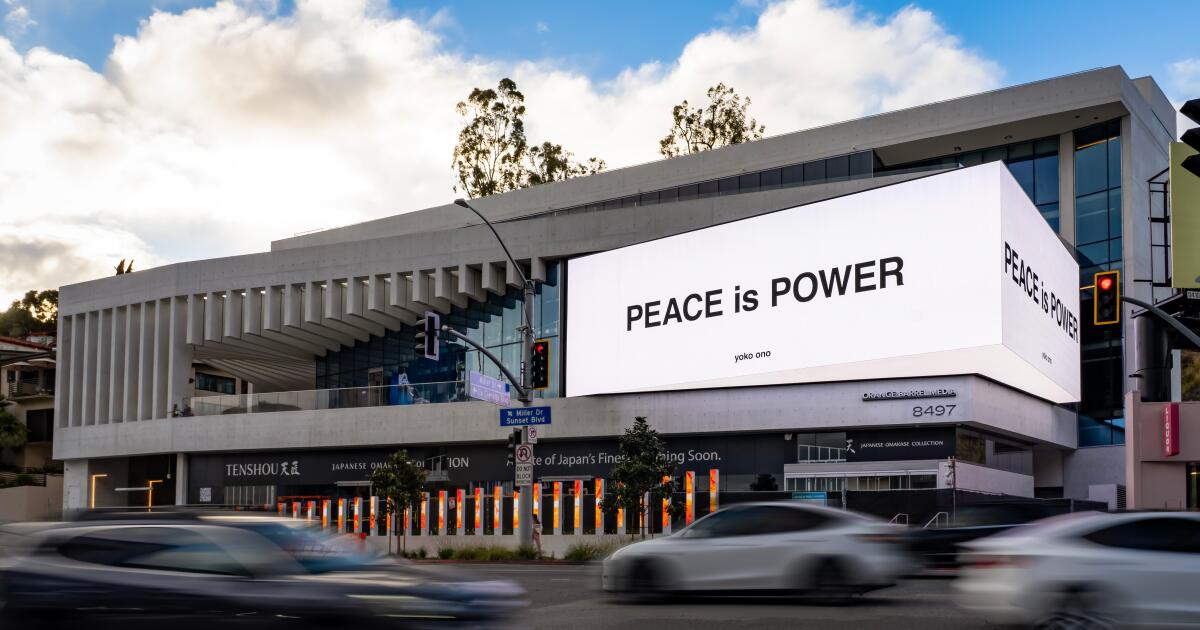
Yoko Ono will install seven digital billboards across Los Angeles bearing peace messages like "THINK PEACE" and "IMAGINE PEACE," as part of her upcoming exhibition "Yoko Ono: Music of the Mind" at the Broad museum opening May 23. The billboards echo her 1969 "WAR IS OVER!" campaign with John Lennon. Ancillary programming includes re-creations of her performance works "Cut Piece" (1964) and "Sky Piece to Jesus Christ" (1965), plus a concert series "Yoko Only" guest-curated by Yuka Honda featuring Yo La Tengo, Nels Cline, Sleater-Kinney, and others.

South Korean ceramic artist Jongjin Park wins 2026 Loewe Foundation Craft Prize.

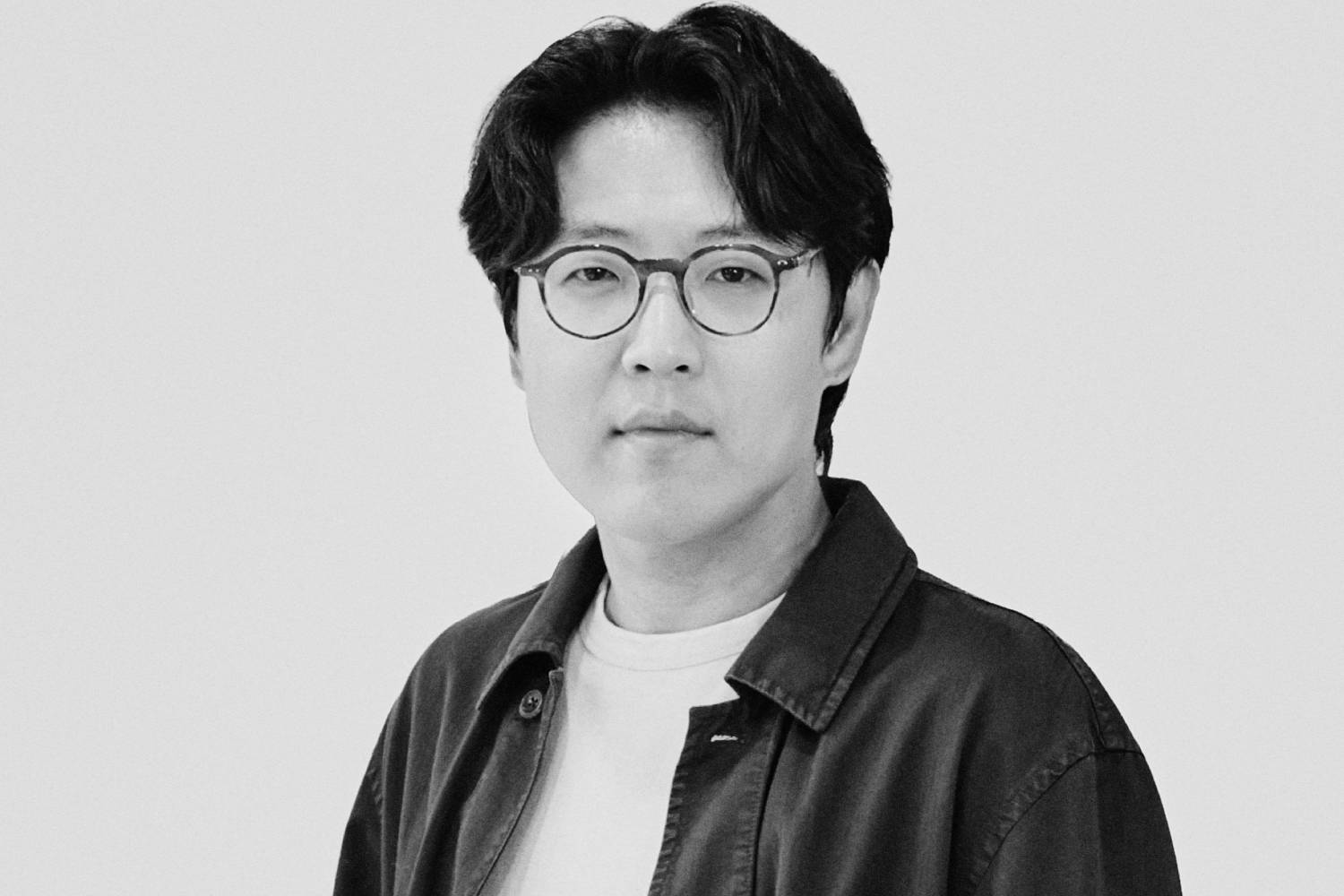
South Korean ceramic artist Jongjin Park has won the 2026 Loewe Foundation Craft Prize for his piece "Strata of Illusion" (2025), a partially-collapsed seat-like form made from paper and coated in porcelain slip. The award comes with a €50,000 ($58,700) prize, and Park's work will be exhibited alongside other shortlisted entries at the National Gallery Singapore, opening tomorrow and running through June 14.

Boats and trains, not planes: reflections on a greener—but sometimes greenwashed—Venice Biennale

The article recounts the author's train journey from London to Venice for the 61st Venice Biennale, highlighting the environmental benefits and pleasant experience of traveling by rail versus flying, despite higher costs and longer duration. It then focuses on the Biennale's central exhibition "In Minor Keys" curated by the late Koyo Kouoh, which foregrounds environmental themes through works that engage with earth, nature, and ecological stakes, featuring artists like Otobong Nkanga, Célia Vasquez Yui, Theo Eshetu, Linda Goode Bryant, and Annalee Davis.

Bidding battle for Matisse leads Sotheby’s $303.3m Modern art evening sale in New York

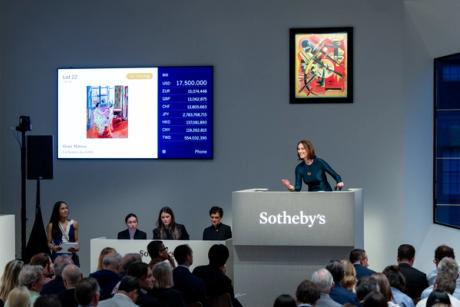
Sotheby’s Modern evening auction on 19 May in New York achieved $303.3m with fees, falling within its pre-sale estimate of $244m to $322.8m. The standout lot was Henri Matisse’s 1919 painting *La Chaise lorraine*, which sold for $48.4m after a ten-minute bidding battle, becoming the second most valuable Matisse painting at auction. Other highlights included Alberto Giacometti’s *La Clairière (Composition avec neuf figures)* at $23.1m, Pablo Picasso’s *Arlequin (Buste, 1909)* at $42.6m, and a Mark Rothko untitled work on paper at $9.27m. The sale also saw strong demand for works by female Surrealists Leonor Fini and Leonora Carrington, while a Rodin sculpture was passed and a Gottlieb painting was withdrawn.

Grayson Perry’s life story to be told in ‘outrageous’ musical

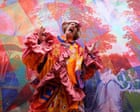
Grayson Perry’s life story is being adapted into a stage musical titled *Grayson the Musical*, co-created with Richard Thomas, composer of *Jerry Springer: The Opera*. The show follows Perry from his childhood in Chelmsford to his rise as a Turner Prize-winning ceramicist and tapestry-maker, featuring his iconic dresses and his teddy bear Alan Measles. Perry wrote the lyrics, with a book by screenwriter Sara-Ella Ozbek and direction by Sean Foley. A workshop production will run for five performances in July at Soho Theatre Walthamstow, the east London borough where Perry once kept a studio and which inspired his famous work *The Walthamstow Tapestry*.

Close encounters: the new wave of women photographers – in pictures

The Saltzman-Leibovitz photography prize, founded in 2025 by Lisa Saltzman and Annie Leibovitz, announces its winners and runners-up for 2026. Bolivian photographer Marisol Mendez wins for her series 'MADRE,' which challenges patriarchal representations of women in Bolivia through portraits of matriarchs and references to the Inca moon goddess. Runner-up Miranda Barnes documents African American debutante cotillions in Detroit, while other featured photographers include Bettina Pittaluga and Cole Ndelu, whose works explore body diversity and the fusion of Zulu cosmology with Catholicism. The exhibition runs at Photo London, Olympia, 13–17 May 2026.

Comment | Flourishing markets beyond the big three will benefit the art ecosystem—and the planet

The article analyzes the shifting dynamics of the global art market, reporting that regions outside the traditional 'big three' hubs of the US, UK, and China have increased their market share from 17% in 2015 to 24% in 2025. This shift is driven by nationally protective regulations like Brexit and tariffs, which have stifled the free circulation of contemporary art. While the US market remains dominant at 44%, countries such as South Korea, Switzerland, Japan, and Australia have seen growth, and emerging cultural energy is noted in places like Bangkok, Warsaw, Margate, and Qatar.

Drained, Drowning, and Decay: The Best National Pavilions at the Venice Biennale

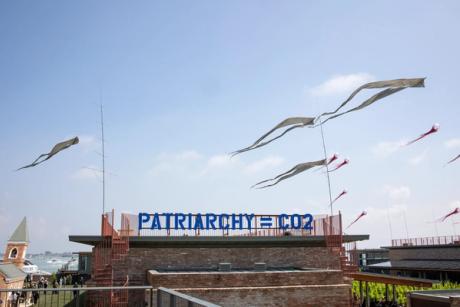
The 2026 Venice Biennale is defined by themes of ruin and decay, with standout national pavilions exploring bodily, infrastructural, and archaeological collapse. The Slovenian Pavilion features the Nonument Group repurposing materials from past Biennales into a ruin of a mosque for Bosnian Muslim soldiers from World War I. Syria presents its first national pavilion since the Civil War, with Sara Shamma invoking Palmyra, destroyed by ISIS. Germany's pavilion, titled "Ruin," features works by Henrike Naumann (who died in February) and Sung Tieu, questioning the pavilion's fascist architecture and nationalist residue. The Austrian Pavilion, curated by Florentina Holzinger, offers a visceral performance titled "Sea World." The Biennale is also marked by the abrupt resignation of its five-member jury, who refused to consider nations charged with crimes against humanity, leading to awards being chosen by public vote. Additionally, the main exhibition "In Minor Keys" was affected by the death of its curator, Koyo Kouoh.

Fondazione Sandretto Re Rebaudengo’s New Art Island Made a Sunny Splash in a Rainy Venice Vernissage Week

Patrizia Sandretto Re Rebaudengo, an ARTnews Top 200 collector, inaugurated a new art site on the island of San Giacomo in Venice’s Northern Lagoon during the rainy preview week of the Biennale. The island, purchased in 2018, features two Napoleonic-era powder magazines transformed into exhibition spaces: one hosting the group show “Don’t have hope, be hope!” from the Sandretto Re Rebaudengo Collection, and the other presenting “Fanfare/Lament,” a solo exhibition by Matt Copson curated by Hans Ulrich Obrist. The site also includes permanent installations by artists such as Claire Fontaine, Mario Garcia Torres, Hugh Hayden, Goshka Macuga, Pamela Rosenkranz, and Thomas Schütte, and will serve as a venue for exhibitions, performances, and residencies.

Venice Diary Day 2: “In Minor Keys” Is a Major Statement on Perseverance and Play

The article is a diary entry from the 2026 Venice Biennale, focusing on the exhibition "In Minor Keys" curated by the late Koyo Kouoh. The author describes an emotional experience, beginning with a poem by Refaat Alareer on the Arsenale wall, and highlights works by Guadalupe Maravilla, Alexa Kumiko Hatanaka, and others that address themes of perseverance, healing, and survival. Maravilla's sculptures reference a child kidnapped by ICE, while Hatanaka's linocuts explore bipolar disorder as an adaptive trait. The show also features artist-led collectives like Denniston Hill and fierce pussy, emphasizing institution-building and world-making.

First Impressions of a Venice Biennale Torn Apart by the Present

The 61st Venice Biennale, titled "In Minor Keys," opens amid turmoil: its curator Koyo Kouoh died of cancer during planning, and the festival jury resigned after a controversial statement about excluding Israel and Russia from prizes, replaced by a Eurovision-style people's choice award. The main exhibition, completed by a team of five collaborators using Kouoh's plans, features over 110 artists and collectives, with highlights including works by Big Chief Demond Melanchon, Tammy Nguyen, Guadalupe Maravilla, Ayrson Heráclito, and a section focused on Michael Armitage's Nairobi Contemporary Art Institute.

Dark clouds, protests and resignations dampen start of 61st Venice Biennale

The 61st Venice Biennale opened under grey skies and rain, with political tensions overshadowing the art world's premier event. The Russian pavilion, absent for two editions due to the Ukraine war, reappeared with a party atmosphere, though the Italian ministry of culture confirmed it would not be open to the public. The Ukrainian culture minister called Russia's symbolic presence powerful. The Iranian pavilion withdrew without explanation, and a protest by 60 artists from the In Minor Keys show marched through the Giardini humming in solidarity against Israel's participation. Over 200 artists, including Lubaina Himid and Alfredo Jaar, signed an open letter demanding the Israeli pavilion's cancellation. The event also proceeded without its curator, Koyo Kouoh, who died in May 2025; her curatorial team delivered the exhibition following her plans.

Venice Diary Day 1: At the Giardini, Artists Refuse to Make Fascism Cozy

Henrike Naumann's posthumous installation at the German Pavilion, which retains its 1938 Nazi-era fascist architecture, refuses to make the space 'cozy' by adorning windows with violently ripped domestic fabrics. The 2026 Venice Biennale is the first under president Pietrangelo Buttafuoco, associated with neo-fascist politics, and is overshadowed by controversy over his 'neutrality' policy allowing all countries to participate despite human rights concerns. The exhibition jury initially announced it would not consider pavilions from countries whose leaders are charged with crimes against humanity, then abruptly quit, leaving the situation unresolved. The US Pavilion features unimpressive blobs by Alma Allen, while the Russian Pavilion offers cut flowers and free vodka, and Andreas Angelidakis responds to fascist aesthetics at the Greek Pavilion.

David Nahmad maintains that his Modigliani was not looted by the Nazis

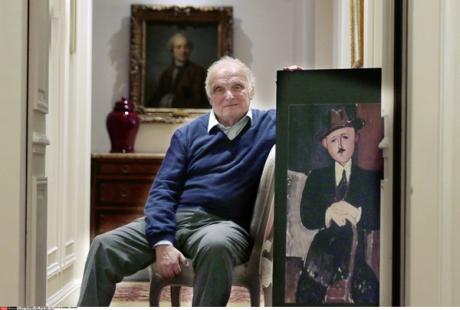
David Nahmad is continuing his legal battle to prove that his Modigliani painting, *Seated Man with a Cane* (1918), was not looted by the Nazis from the Jewish dealer Oscar Stettiner. Despite a recent New York ruling against him, Nahmad’s lawyers have filed a motion to review the case based on new eyewitness testimony. Two witnesses claim the painting they saw in the Van der Klip family—which bought the Nazi-looted work in 1944—is completely different from Nahmad’s painting, lacking a seated man or a cane. Nahmad’s legal team also cites a 1946 French bailiff report and a recent catalogue raisonné by Marc Restellini to argue that Mondex, the restitution firm working for Stettiner’s heirs, misidentified the work.

Nahmad Seeks to Reopen Modigliani Restitution Case With New Witnesses

David Nahmad's lawyers are asking a New York court to reconsider its April 3 decision in the restitution case over Amedeo Modigliani's *Seated Man with a Cane* (1918), which awarded the painting to the estate of dealer Oscar Stettiner. They cite new eyewitness testimony from Frédéric Allain, who recalls a different Modigliani—smaller, darker, and without a seated man or cane—hidden by the Van der Klip family in Paris during World War II, suggesting the wrong painting may have been the focus of the case. The filing also references a 1946 report describing the missing work as a self-portrait and a new catalogue raisonné by Marc Restellini that finds no link between the painting and Stettiner. Mondex, representing Stettiner's heirs, rejects the claims, asserting that *Seated Man with a Cane* bears Stettiner's name and was in the family's possession from 1944 to 1996.

How the adoption of canvas in Venice changed the way artists painted

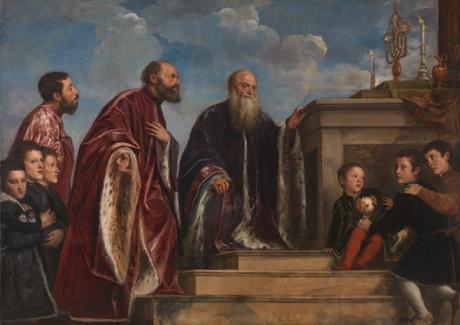
Art historian Cleo Nisse has published a new book, *Venetian Canvas and the Transformation of Painting*, examining how 16th-century Venetian painters such as Titian, Veronese, and Tintoretto pioneered the use of canvas as a painting support. Nisse reveals that canvas was not a uniform material—artists experimented with different weaves, including tabby and herringbone patterns, and even repurposed sailcloth and tablecloth-quality fabrics to achieve specific visual effects. The book argues that canvas was already familiar in the late Middle Ages for banners and alternatives to tapestry, and that Vittore Carpaccio was the first master of the medium, varying canvas types for expressive purposes in his *Legend of St Ursula* series.

‘We are complicit’: Austrian artist Florentina Holzinger’s immersive Venice Biennale pavilion brings apocalypse to the city

Austrian artist Florentina Holzinger has created 'Seaworld Venice,' an immersive and confrontational installation for the Austrian Pavilion at the 2024 Venice Biennale. The work explores climate change, technology, and a dystopian flooded future, drawing comparisons to the 1995 film 'Waterworld'—though neither Holzinger nor curator Nora-Swantje Almes had seen it. Known for extreme performance art involving nudity, blood, live piercing, and heavy machinery, Holzinger's previous works have caused audience members to faint or require medical treatment. The pavilion marks a significant platform for her radical, hybrid practice that blends theatre, dance, opera, and performance art.

Seen a ghost? The eeriest images from Fotografia Europea – in pictures

Fotografia Europea, the international photography festival in Reggio Emilia, Italy, has opened with 20 exhibitions and related events under the theme 'ghosts of the moment'. The festival features works by artists including Tania Franco Klein, Giulia Vanelli, Felipe Romero Beltrán, and Salvatore Vitale, exploring themes of memory, migration, identity, and the unseen forces shaping contemporary life. The festival runs until 14 June 2026.

What It Takes to Build the Venice Biennale

Three weeks before the Venice Biennale opens on May 5, the city remains a construction site, with the Giardini closed and parts of the Arsenale requiring special access. Artist Faustin Linyekula rehearses his performance *The Galeazze Project* in a 16th-century roofless complex, working with the existing gravel, natural light, and lagoon acoustics rather than imposing a structure. Geopolitical conflicts, supply chain disruptions, and the sudden resignation of the Biennale’s international jury via Instagram add pressure to the already challenging logistics of mounting the global exhibition.

Duo Who Sold Fake Warhol, Banksy Plead Guilty in $2M Fraud

A father and daughter from New Jersey, Erwin Bankowski and Karoline Bankowska, pleaded guilty in federal court on April 28 to running a counterfeit art scheme that sold fake works attributed to Andy Warhol, Banksy, Pablo Picasso, Richard Mayhew, and others. Between 2020 and 2025, they placed over 200 counterfeit pieces, many made by an artist in Poland, into galleries and auction houses across the U.S., defrauding buyers of at least $2 million. They fabricated provenance, forged gallery stamps and certificates of authenticity, and misrepresented Native American heritage works, violating the Indian Arts and Crafts Act. They face up to 20 years in prison, restitution of at least $1.9 million, and deportation after serving their sentences.

Som Supaparinya “Mo num en ts” at Museion, Bolzano

Museion in Bolzano presents "Mo num en ts" (2025), a film by Thai artist Som Supaparinya that combines historical research and fieldwork. The work was produced through the Han Nefkens Foundation – Southeast Asian Video Art Production Grant 2024, dedicated to the memory of artist Dinh Q. Lê.

The Cosmos in a Drop: Interview with Wallace Chan

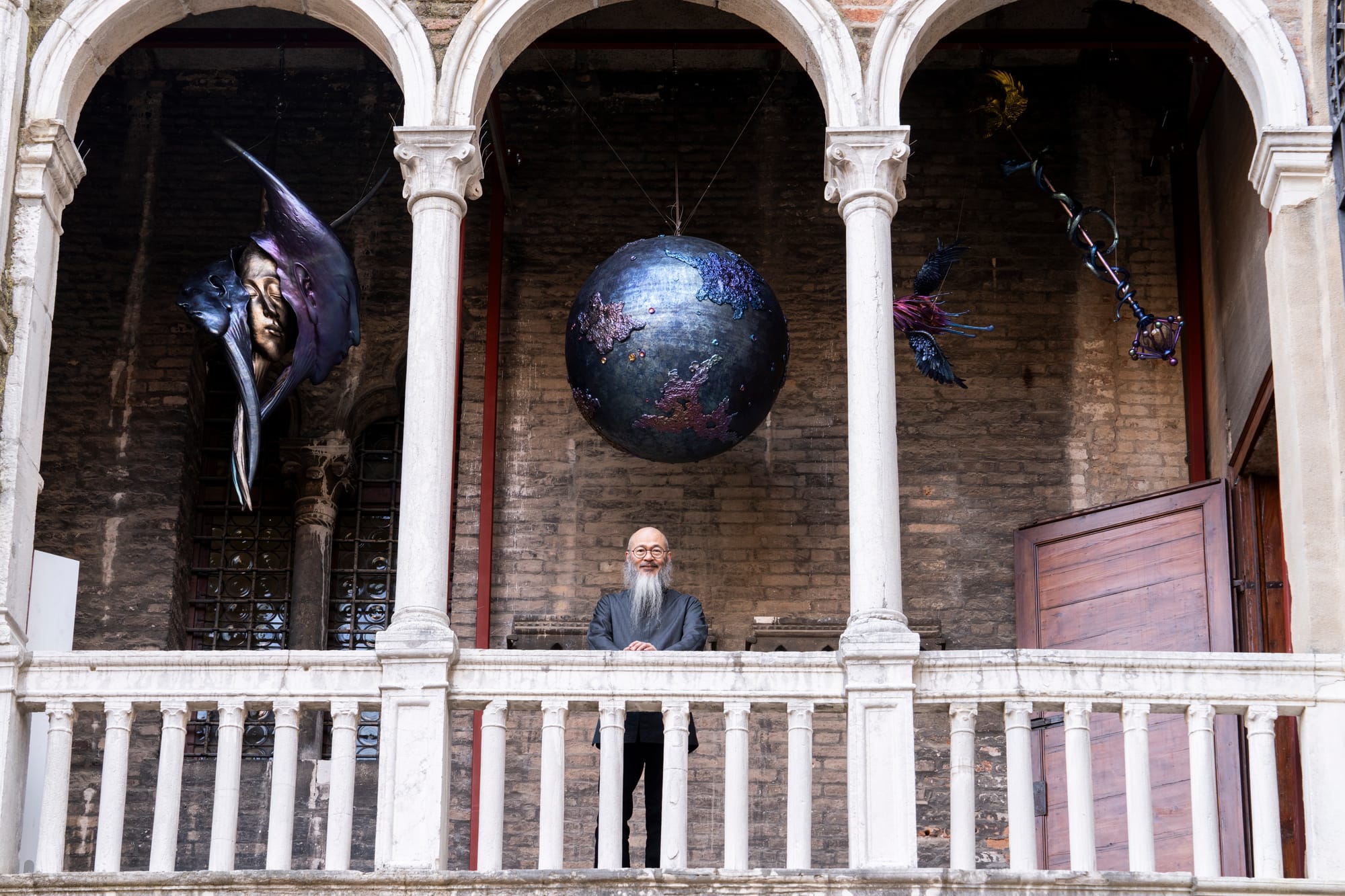
Wallace Chan, the Chinese artist known for his work across microscopic gemstone carving and monumental titanium sculpture, is presenting two concurrent exhibitions in Venice during the 61st Venice Biennale: “Vessels of Other Worlds” at the Pietà Chapel and “Mythos” at Scala Contarini del Bovolo. In an interview with ArtAsiaPacific, Chan discusses his artistic journey from traditional Chinese Buddhist carving to Western iconography, the spiritual resonance of the Pietà Chapel (where Vivaldi composed), and how his works explore themes of transformation, birth, growth, and rebirth through the lens of Buddhist philosophy and Catholic ritual.

In This Nazi-Era Restitution Dispute, the Focus Turns to a Missing Cow

A family is seeking restitution of a painting they believe is a lost Rubens work, looted by Nazis during World War II. However, an expert has cast doubt on the claim, arguing the painting is a copy because it lacks a distinctive detail found in the original: a urinating cow. The dispute has shifted focus to this missing element, complicating the family's efforts to recover the artwork.

Marisol Mendez wins 2026 Saltzman-Leibovitz Photography Prize

Bolivian artist Marisol Mendez has won the 2026 Saltzman-Leibovitz Photography Prize for her work *MADRE*. The award includes a $15,000 cash prize, and Mendez's winning piece will be exhibited alongside works by other nominees at Photo London from May 13 to 17. The prize was founded in 2025 by photographers Lisa Saltzman and Annie Leibovitz. Miranda Barnes took second place, with Cole Ndelu, Lindeka Qampi, and Bettina Pittaluga also nominated.