filter_list Showing 802 results for "Ada" close Clear
search
dashboard All 802 museum exhibitions 468article news 87article culture 74article local 69trending_up market 53person people 22rate_review review 16article policy 8gavel restitution 3candle obituary 1article event 1
date_range Range Today This Week This Month All
Subscribe

Venice Biennale Artists Decline Consideration for Golden Lions Chosen by Public Vote

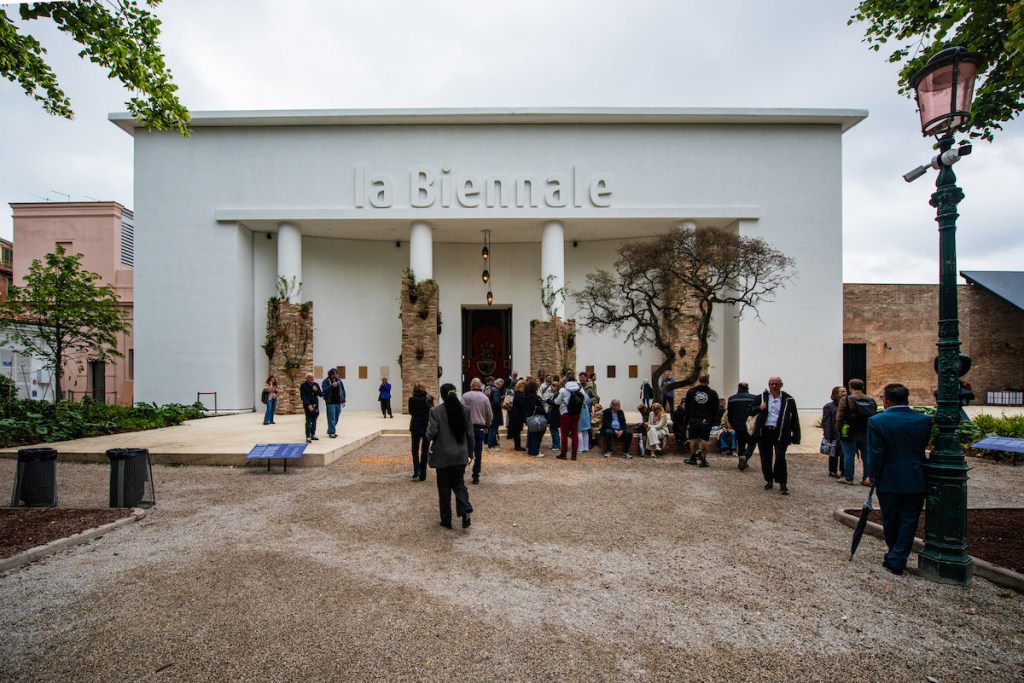
Nearly half of the artists in the main exhibition of the Venice Biennale have signed a statement declining consideration for the Golden Lion awards, in solidarity with the jury that resigned last month. The statement, published by e-flux, includes prominent names such as Alfredo Jaar, Tuan Andrew Nguyen, Otobong Nkanga, and Walid Raad, as well as national pavilion representatives from France, Lithuania, and the Netherlands. The Biennale had planned to replace the jury-selected Golden Lions with "Visitor Lions" decided by public vote, but the artists' refusal marks an unprecedented protest within the exhibition.
At the Venice Biennale, Ukraine’s Pinchuk Art Centre finds fragile moments of joy amid loss

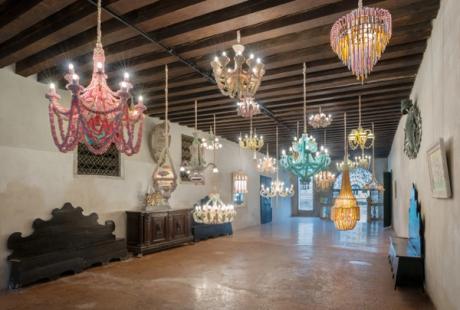
The Pinchuk Art Centre in Kyiv has transformed its Venice Biennale presentation from a glamorous celebration of young artists into a somber exhibition responding to the Russian invasion of Ukraine. This year's show, titled "Still Joy — From Ukraine into the World" (9 May-1 August) at the Palazzo Contarini-Polignac, features works by international artists like Tacita Dean and Julian Charriere alongside Ukrainian artists, as well as testimonials from soldiers collected by former marine Hlib Stryzhko. The exhibition explores how joy can persist amid trauma, with installations including pink scrolls bearing survivors' quotes, light box photographs of bombed interiors with rescued pot plants, and a sculpture of bells with displaced women's fingerprints.

Drained, Drowning, and Decay: The Best National Pavilions at the Venice Biennale

The 2026 Venice Biennale is defined by themes of ruin and decay, with standout national pavilions exploring bodily, infrastructural, and archaeological collapse. The Slovenian Pavilion features the Nonument Group repurposing materials from past Biennales into a ruin of a mosque for Bosnian Muslim soldiers from World War I. Syria presents its first national pavilion since the Civil War, with Sara Shamma invoking Palmyra, destroyed by ISIS. Germany's pavilion, titled "Ruin," features works by Henrike Naumann (who died in February) and Sung Tieu, questioning the pavilion's fascist architecture and nationalist residue. The Austrian Pavilion, curated by Florentina Holzinger, offers a visceral performance titled "Sea World." The Biennale is also marked by the abrupt resignation of its five-member jury, who refused to consider nations charged with crimes against humanity, leading to awards being chosen by public vote. Additionally, the main exhibition "In Minor Keys" was affected by the death of its curator, Koyo Kouoh.

Parasol Unit returns with a showcase of women from Central Asia and beyond

Parasol Unit, the London non-profit exhibition space that closed in 2020 after 16 years, has relaunched with a new exhibition titled "Turandot: To the Daughters of the East" as an official collateral event of the Venice Biennale. Held at the historic Palazzo Franchetti, the show features 11 female artists from Central Asia and surrounding regions, curated by founder Ziba Ardalan. The exhibition spans video, installation, sculpture, painting, textile, and sound works by artists including Lida Abdul, Huma Bhabha, Mona Hatoum, and Tala Madani, and runs from 9 May to 31 October.

Venice Diary Day 2: “In Minor Keys” Is a Major Statement on Perseverance and Play

The article is a diary entry from the 2026 Venice Biennale, focusing on the exhibition "In Minor Keys" curated by the late Koyo Kouoh. The author describes an emotional experience, beginning with a poem by Refaat Alareer on the Arsenale wall, and highlights works by Guadalupe Maravilla, Alexa Kumiko Hatanaka, and others that address themes of perseverance, healing, and survival. Maravilla's sculptures reference a child kidnapped by ICE, while Hatanaka's linocuts explore bipolar disorder as an adaptive trait. The show also features artist-led collectives like Denniston Hill and fierce pussy, emphasizing institution-building and world-making.

First Impressions of a Venice Biennale Torn Apart by the Present

The 61st Venice Biennale, titled "In Minor Keys," opens amid turmoil: its curator Koyo Kouoh died of cancer during planning, and the festival jury resigned after a controversial statement about excluding Israel and Russia from prizes, replaced by a Eurovision-style people's choice award. The main exhibition, completed by a team of five collaborators using Kouoh's plans, features over 110 artists and collectives, with highlights including works by Big Chief Demond Melanchon, Tammy Nguyen, Guadalupe Maravilla, Ayrson Heráclito, and a section focused on Michael Armitage's Nairobi Contemporary Art Institute.

Dark clouds, protests and resignations dampen start of 61st Venice Biennale

The 61st Venice Biennale opened under grey skies and rain, with political tensions overshadowing the art world's premier event. The Russian pavilion, absent for two editions due to the Ukraine war, reappeared with a party atmosphere, though the Italian ministry of culture confirmed it would not be open to the public. The Ukrainian culture minister called Russia's symbolic presence powerful. The Iranian pavilion withdrew without explanation, and a protest by 60 artists from the In Minor Keys show marched through the Giardini humming in solidarity against Israel's participation. Over 200 artists, including Lubaina Himid and Alfredo Jaar, signed an open letter demanding the Israeli pavilion's cancellation. The event also proceeded without its curator, Koyo Kouoh, who died in May 2025; her curatorial team delivered the exhibition following her plans.

May Book Bag: from a guide on entering the art world to a publication about artists influenced by Ovid’s Metamorphoses

The May Book Bag article from The Art Newspaper reviews four new art-related publications. It covers "Metamorphoses: Ovid and the Arts," edited by Francesca Cappelletti and Frits Scholten, which examines Ovid's influence on Western art through works by artists like Titian, Caravaggio, and Louise Bourgeois. Other featured books include Hettie Judah's "How to Enter the Art World," a practical guide for emerging artists; "Derrick Adams: Prints," showcasing the artist's printmaking from 2019-2025; and "Whistler's Legacy" by Daniel Sutherland, which explores the legacy of James Abbott McNeill Whistler through his close associates.

‘She had a fresh, informed eye’: mural depicting late Venice Biennale curator Koyo Kouoh displayed in lagoon city

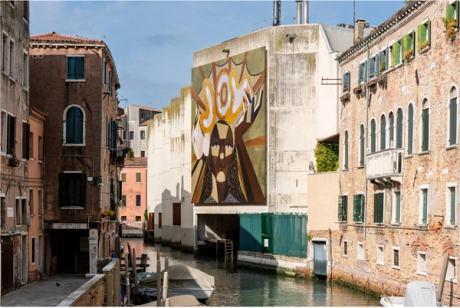
A mural honoring Koyo Kouoh, the late curator of the 2025 Venice Biennale, has been unveiled in Venice. Created by US artist Derrick Adams, the collage titled "Heavy is the head that wears the crown" adorns the facade of the Palazzetto dello sport Giobatta Gianquinto near the Arsenale. Kouoh died on 10 May 2025 at age 57 after a cancer diagnosis. The tribute was organized by curator Francesco Bonami, who had invited Kouoh to join the jury for the 50th Venice Biennale in 2003.

‘It’s a world heritage site, but it’s my home’: the last resident of Casa Milà on life in Gaudí’s masterwork

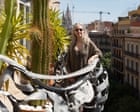
Ana Viladomiu, a 70-year-old writer, is the last remaining tenant of Antoni Gaudí’s Casa Milà (La Pedrera) in Barcelona, a UNESCO World Heritage site that receives about a million visitors annually. She has lived in the luminous apartment since 1988, originally moving in with her then-husband Fernando Amat, owner of the iconic design store Vinçon. Viladomiu holds a rare renta antigua (fixed-rent contract) that allows her to stay until she or Amat dies, after which the not-for-profit foundation managing the building will take ownership. The rest of the building now houses offices and cultural event spaces.

Texas Man Who Orchestrated $20 M. Crypto Scam Based on Fictitious Van Gogh and Picasso Masterpieces Sentenced to 23 Years in Prison

A Houston man, Robert Dunlap, was sentenced to 23 years in federal prison for orchestrating a $20 million cryptocurrency scam. Between 2018 and 2023, Dunlap defrauded nearly 1,000 investors by promoting a digital asset called “Meta-1 Coin,” falsely claiming it was backed by a $1 billion art collection featuring works by Salvador Dalí, Vincent van Gogh, and Pablo Picasso, as well as $44 billion in gold. He used forged legal and insurance documents to conceal that he owned neither the art nor the gold. A federal jury in the Northern District of Illinois convicted him on mail fraud charges in 2025, and US District Judge LaShonda A. Hunt imposed the sentence, also ordering restitution.

Venice Bound? Here’s All the News You Need to Know About This Year’s Biennale

The 61st Venice Biennale is embroiled in geopolitical controversy over Russia's return to the event in 2026, which has sparked widespread backlash. Nearly 10,000 artists and cultural leaders signed an open letter opposing Russia's participation, and the European Union withdrew €2 million in funding for the 2028 edition. Leaked emails reveal Biennale officials worked with Russian pavilion commissioner Anastasia Karneeva to circumvent EU sanctions, while Italy's culture minister Alessandro Giuli plans to boycott the opening week. Meanwhile, activists continue to push for Israel's removal from the Biennale, though Israel will be accommodated in the Arsenale this year.

The forgotten Chinese conceptualists: Melbourne show brings together works by New Measurement Group

An exhibition at Buxton Contemporary in Melbourne, titled "Poetry Goes No Further Than Language: a Historical Moment of Art Becoming Art Again," brings together the complete artistic output of the New Measurement Group, a pioneering Chinese conceptual art collective from Beijing, alongside four conceptual experiments by Shanghai-based artist Qian Weikang. Curated by Carol Yinghua Lu and artist Liu Ding, the show aims to reassess early Chinese conceptual art, featuring works by the New Measurement Group (Chen Shaoping, Gu Dexin, Wang Luyan), pieces from the New Wave art movement, and new commissions by Melbourne artist Darcey Bella Arnold. The curators faced challenges locating the group's five publications, including one purchased on eBay from Europe, and used re-enactment and re-fabrication to recreate lost works like Qian's "Ladder Poem" (1990).

‘The doorbell went at 5am. Six masked men were outside’: Belarus Free Theatre bring totalitarian terror to the Venice Biennale

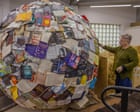
Belarus Free Theatre (BFT), an exiled troupe based in London, is presenting its first major visual art project, titled 'Official. Unofficial. Belarus.', at the Venice Biennale. The installation, masterminded by the founders' daughter Daniella Kaliada, features contributions from former political prisoners, painters, sculptors, composers, and world-renowned chef Rasmus Munk, who created a dish evoking detention under an authoritarian regime. The work includes a giant ball of banned books, surveillance cameras attached to an iron crucifix, and a custom scent of a freshly dug grave, all reflecting the terror of life under Belarusian dictator Alexander Lukashenko.

Newsmakers: Nalini Malani Lets the Walls Speak with a New Installation in Venice

Nalini Malani's latest installation, *Of Woman Born*, opens at the Magazzini del Sale in Venice during the Venice Biennale. Commissioned by the Kiran Nadar Museum of Art, the work projects hand-drawn animations onto the crumbling brick walls of a 15th-century salt warehouse, creating a cave-like environment where images flicker like ancient cave paintings. The installation draws on tens of thousands of drawings and incorporates mythology, literature, and sound, with a central focus on the myth of Orestes to explore themes of violence, displacement, and gender politics. Malani has also extended her recurring 'Skipping Girl' figure across Venice via posters and public signage to guide viewers to the exhibition.
Sharjah Biennial Lines Up 109 Artists for 2027 Edition, Titled ‘What Remains, Sits Restive’

Final book in trilogy asks: What is the future of the art world?

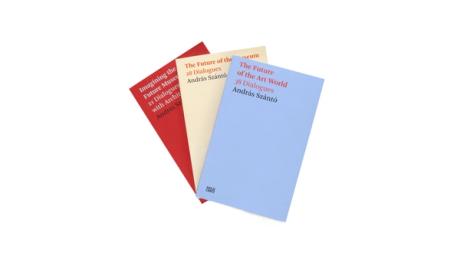
Cultural strategist András Szántó has published the third and final volume of his trilogy on the future of museums, titled *What Is the Future of the Art World?*. The book features dialogues with a wide range of art-world figures—including gallerists José Kuri and Atsuko Ninagawa, collectors Alain Servais and Sylvain Levy, artists William Kentridge and Holly Herndon & Mathew Dryhurst, curator Fatoş Üstek, network scientist Albert-László Barabási, former Art Basel director Marc Spiegler, and Sheikha Al-Mayassa Al Thani—who discuss topics such as the definition of the art world, its rules, and its future trajectory. Szántó notes that there is no consensus on whether the art world is still expanding or entering a phase of slowdown, with different regions moving on divergent paths.

Is A Random Unknown Artist More Valuable Than Picasso? AI Thinks So.

An experiment using a custom AI model to evaluate artistic value independent of market context found that the model assigned a seven-figure price to an unknown street artist's work while valuing a Picasso at under $1,000. The project, run by an art journalist with a data scientist and an AI expert, trained a Fine Art Large Vision Model on millions of images and price data. Without metadata like artist name or gallery affiliation, the model's predictions were technically interesting but commercially useless; only when those market signals were added did predictions align with real auction outcomes.

How Art Firms Are—or Should Be—Using A.I. Right Now

Art firms are increasingly experimenting with artificial intelligence, but concrete use cases remain limited and industry-specific tools are still in their infancy. A new partnership between Bonhams and tech company ARTDAI aims to apply AI to market analytics, valuation, and specialist research, while companies like Artsy and Artnet are integrating AI capabilities into their platforms. Industry experts, including former Art Basel chief Marc Spiegler, note that the art market's small size has historically discouraged tech development, but AI now makes high-performance tools accessible to smaller businesses.

Art for art’s sake, but for people’s health too | Letter

Art Fund director Jenny Waldman responds to a philosophical article about art's intrinsic value, arguing that while art should be enjoyed for its own sake, promoting its measurable health benefits can serve as a crucial entry point for new audiences. She cites the organization's National Art Pass adverts and recent research with King's College London, which demonstrated immediate physiological responses to viewing original art, as tools to invite people who might otherwise feel excluded from cultural institutions.

Vancouver Art Gallery's "Future Geographies" Exhibit Explores How Art Responds to Climate Change

The Vancouver Art Gallery has opened "Future Geographies: Art in the Century of Climate Change," an exhibition curated by Eva Respini, the gallery's interim co-CEO and curator at large. Featuring over 30 artists and 35 works—including sculptures, paintings, video installations, and photographs—the show explores climate change through themes of living knowledge, consumed earth, speculative worlds, and material memory. Highlights include Brian Jungen's whale-skeleton sculpture made from plastic chairs and Clarissa Tossin's multimedia weaving of Amazon boxes. The exhibition also incorporates sustainability in its organization, using recycled cardboard for labels, overland shipping for loans, and commissioning local artists.

Singapore Art Museum at 30: tough decisions

The Singapore Art Museum (SAM) is celebrating its 30th anniversary while navigating the challenges of its 2022 relocation to Tanjong Pagar Distripark, a remote industrial building that has drawn mixed reactions—some visitors find it too inaccessible, while younger audiences applaud the move away from the colonial civic district. Director and CEO Eugene Tan defends the decision, citing the building's high ceilings and flexible spaces as ideal for contemporary art, and announces a fifth gallery opening by 2026 that will bring total exhibition space to 3,800 square meters. The museum also plans to experiment with open-air exhibition techniques in the new space, aiming to reduce energy demands.

Lenz Geerk’s Theatre of the Mind: painting as regulation of appearance

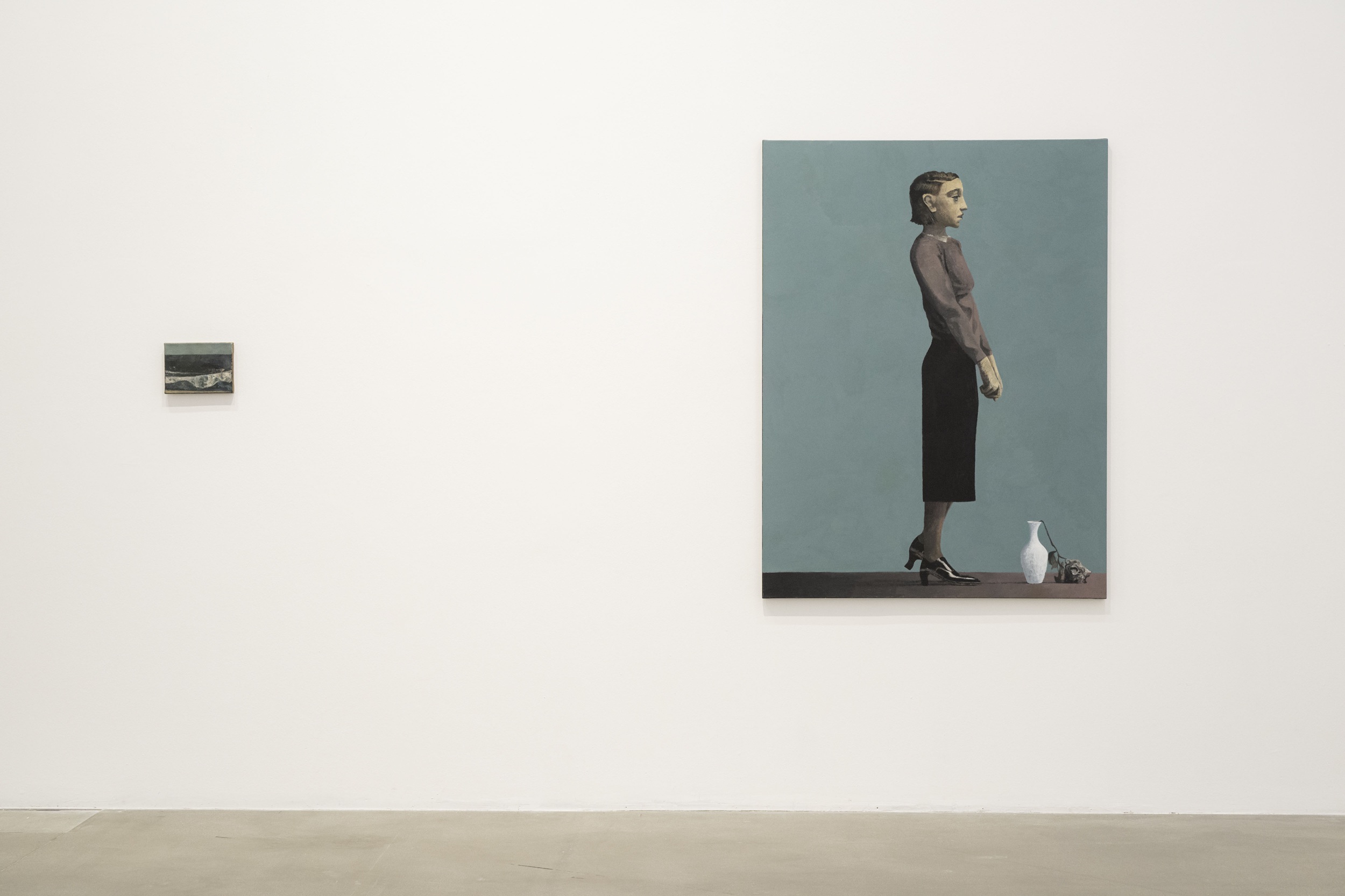
Fondazione Sandretto Re Rebaudengo in Turin presents "Theatre of the Mind," the first Italian institutional solo exhibition by German-born painter Lenz Geerk. The show features recent works from 2022 to 2024, exploring painting as a perceptual device where figures, objects, and domestic interiors exist in unstable, unresolved configurations. Installation views by Giorgio Perrottino accompany the exhibition, which runs at the foundation's space.

Rare art lands in new downtown Calgary gallery ahead of auction

Cowley Abbott Fine Art, a Toronto-based auction house, has opened its first permanent western Canada gallery in Calgary's East Village. The new space launches with a three-day public preview of museum-quality artworks heading to its Spring Live Auction on May 27 at the Globe and Mail Centre in Toronto. Highlights include rare works by Pierre-Auguste Renoir, Vincent van Gogh, Emily Carr, and members of the Group of Seven such as Lawren Harris and A.Y. Jackson. Among the standout pieces is Emily Carr's 1936 canvas "Wind," estimated at $500,000 to $700,000, and a Lawren Harris painting valued similarly. The gallery aims to attract both collectors and casual visitors, with Peter Ohler, Western Canada Representative and Director of Private Sales, emphasizing that the space is open to anyone interested in art.

8 Art Films Worth Watching in May

8 Kunstfilme, die sich im Mai lohnen

Monopol magazine presents eight art films worth streaming in May, including a documentary featuring 40,000 slides from critic Jerry Saltz capturing the 1990s New York art scene, Shirin Neshat's film "Women Without Men" about women in 1953 Tehran, Christian Petzold's new film "Miroirs No. 3," and a documentary on the Shroud of Turin. The roundup also includes a politically charged drama directed by Yael Bartana and a Dada-metal film, offering a diverse selection of art-related cinema.

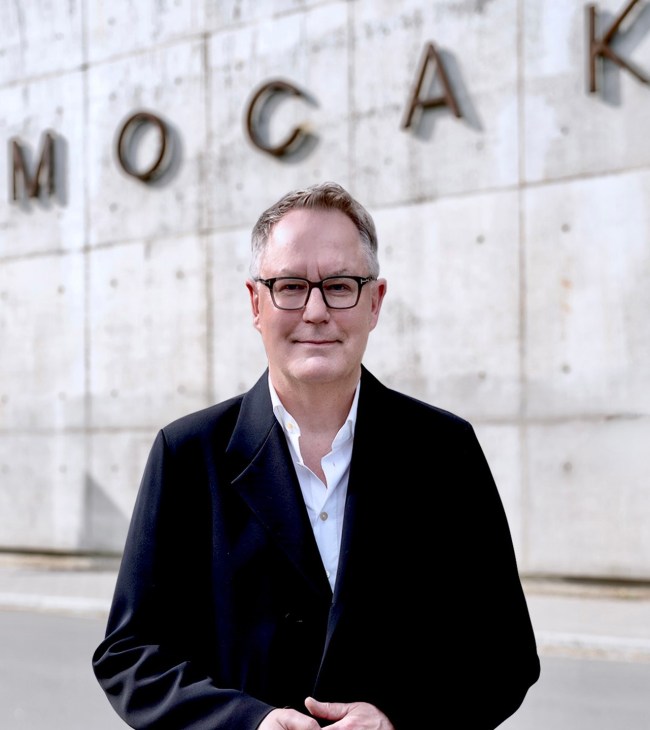
Adam Budak dismissed as director of MOCAK amid controversy

Adam Budak has been dismissed as director of the Museum of Contemporary Art in Krakow (MOCAK), effective from 12 May, with his employment ending on 30 June. The city of Krakow cited improper performance of duties related to work organization and team management, following an investigation triggered by a complaint signed by 37 employees. Budak disputes the decision, calling it baseless and made under time pressure, and is considering an appeal. Artists including Paulina Ołowska and Robert Knoke have rallied in support, with several artists withdrawing from MOCAK's 2026–27 programme in solidarity.

81 artists withdraw from Venice Biennale competition

Sharjah Biennial announces theme and artists

Krakow’s MOCAK Sacks Director Adam Budak, Angering Artists

The City of Krakow dismissed Adam Budak as director of the Museum of Contemporary Art in Krakow (MOCAK) on May 16, citing improper performance of duties related to work organization and team management. Budak, who took the helm last summer, was replaced by acting director Grzegorz Kuźma, formerly the museum's deputy director, and will be officially terminated when his contract ends June 30. The dismissal followed an internal investigation spurred by a complaint signed by thirty-seven MOCAK staffers. In response, artists and curators including Paulina Olowska, Sabine Breitweiser, Alison Gingeras, and Candice Breitz signed a petition demanding Budak be heard, while several artists withdrew from MOCAK's 2026–27 programming.

Dialing Up the Dollars: Giorno Poetry Systems Names Inaugural Recipients of New Need-Based Grant

Giorno Poetry Systems (GPS), the New York-based nonprofit founded in 1965 by artist John Giorno, has announced the twelve inaugural recipients of its new need-based grant, the Treat a Stranger grants. Each recipient receives an unrestricted grant of $4,545 to cover daily expenses like food, housing, health care, and emergencies. The grants are a relaunch of GPS's AIDS Treatment Project grants from 1984–1994, and are named after Giorno's mantra, “Treat a complete stranger with the same compassion you would treat a lover or a good friend.” Winners are selected by a rotating anonymous jury of LGBTQIA+ artists, poets, and musicians through a multi-meeting nomination and voting process.