filter_list Showing 795 results for "ifac" close Clear
search
dashboard All 795 museum exhibitions 356article news 144gavel restitution 92trending_up market 72article culture 48article local 34article policy 24person people 9rate_review review 9candle obituary 6article museum 1
date_range Range Today This Week This Month All
Subscribe

libya national museum red castle reopens after 14 years

Libya’s National Museum, also known as the Red Castle Museum (As-Saraya Al-Hamra), has reopened in Tripoli for the first time since the 2011 revolution that ended Muammar el-Qaddafi’s rule. The museum, the largest in North Africa, closed at the onset of Libya’s military instability during the Arab Spring. Its 10,000-square-meter gallery houses artifacts spanning prehistory through Greek, Roman, and Islamic periods, including millennia-old mummies. Renovations began in 2023, with a full public reopening scheduled for early 2026; currently admission is limited to students.

sothebys is selling a watch gifted to admiral nelson before his last and defining victory at the battle of trafalgar

Sotheby’s is auctioning a historic watch gifted to Admiral Horatio Nelson by officers of the HMS Victory in 1805, just weeks before his death at the Battle of Trafalgar. The gilt metal, gold, and enamel timepiece, known as the “Victory Watch,” is the top lot in Sotheby’s “Fine Watches” online sale, with a high estimate of £400,000 ($537,000). It is the first time the watch has come to auction in 20 years, and the current bid stands at £65,000 ($87,300).

the hunt sanxingdui civilization china

The article recounts the rediscovery and ongoing excavation of the ancient Sanxingdui civilization in Sichuan, China, beginning with a peasant's accidental find of jade relics in 1929. After decades of political disruption, large-scale digs resumed in the 1980s, uncovering over 50,000 artifacts—including distinctive bronze masks with gold foil—that offer the only clues to this Bronze Age city's culture, trade networks, and mysterious collapse around the 11th century B.C.E.

thirty five arrested in bulgaria criminal art trafficking network

Bulgarian authorities, with support from Europol, arrested 35 individuals and conducted 131 searches across Bulgaria, seizing over 3,000 cultural artifacts valued at more than €100 million. The operation targeted a criminal network trafficking artifacts from Thracian and Greco-Roman civilizations across Europe, with connections to illegal excavations in Bulgaria and the Balkans. The investigation, which began after a 2020 house raid that uncovered 7,000 artifacts, involved law enforcement from Albania, France, Germany, Greece, Italy, and the UK, and was coordinated from Sofia and Eurojust in The Hague.

pascaline early arithmetic machine christies sale

Christie’s has halted the sale of a rare 17th-century Pascaline arithmetic machine, originally scheduled for auction on November 19, after the Administrative Tribunal of Paris suspended its export license. The machine, invented by Blaise Pascal and estimated at €2–3 million, was pulled from sale at the consignor’s request following pressure from French cultural campaigners who argue it should be classified as a National Treasure to prevent its departure from France.

borso deste bible on view in rome

The Borso d'Este Bible, often called the 'Mona Lisa of Illuminated Manuscripts,' has gone on rare public display at the Italian Senate in Rome as part of the Vatican's Holy Year celebrations. The two-volume manuscript, commissioned by Duke Borso d'Este in the mid-15th century and created by calligrapher Pietro Paolo Marone and illuminators Taddeo Crivelli and Franco dei Russi, is usually kept in a safe at a library in Modena. It was transported with elaborate security and is now showcased behind humidity-controlled glass with a digital touch-screen experience for visitors.

yemen national museum damaged israeli air strikes

The National Museum of Yemen was damaged during Israeli airstrikes on Sanaa on Wednesday, according to the Houthi Ministry of Culture. The bombardment, part of escalating regional tensions linked to the Gaza war, killed 45 people and injured 165. Video footage shows the museum courtyard littered with rubble, and its windows and doors destroyed, though the building remains standing. The museum had only reopened in May 2023 after a decade-long closure due to Yemen's civil war.

gaza artifacts removed school building

Archaeological treasures from Gaza's five main archaeological sites were evacuated from the French Biblical and Archaeological School of Jerusalem's storehouse in Gaza City, following an Israeli order to vacate the building before a threatened military strike. The operation, described by school director Olivier Poquillon as a "high-risk" and "last-minute rescue," involved improvised transport and logistics in a context where almost no international actors remain on the ground. The relics include artifacts from a fourth-century monastery designated as a UNESCO World Heritage site.

egyptian antiquities trafficker jfk airport prison sentence

Egyptian doctor Ashraf Omar Eldarir has been sentenced to six months in prison by U.S. District Judge Rachel P. Kovner for smuggling hundreds of ancient Egyptian artifacts into the United States. Eldarir was arrested in 2019 after importing over 600 artifacts without declaring them on customs forms, including a polychrome relief, Roman limestone pieces, gold amulets, and wooden tomb model figures dating to 1900 BCE. The largest seizure of smuggled antiquities at JFK Airport occurred in January 2020, when customs officers found 590 artifacts wrapped in bubble wrap and foam, with loose sand and dirt indicating recent excavation. Eldarir pleaded guilty to four counts of smuggling and used fake provenances—including forged documents and photoshopped photographs—to sell artifacts at U.S. auction houses.

france returns colonial era human remains to madagascar

France has returned three colonial-era human skulls to Madagascar, including one believed to belong to King Toera, a Malagasy king executed by French troops in 1897. The skulls were handed over to Malagasy representatives at the French Culture Ministry on Monday, after being held in Paris’s National Museum of Natural History. French Culture Minister Rachida Dati called the return “historic,” while her Malagasy counterpart Volamiranty Donna Mara described it as healing an “open wound” after 128 years.

art collection featuring snoop doggs smoked blunts fetches 148k at auction

Snoop Dogg's art collection, titled 'Ashes to Art,' sold for $148,100 at auction. The top lot, 'Snoop Doggy Dogg Genesis Burn,' featuring the rapper's signed and burned 1993 LAPD mugshot with a partially smoked blunt, fetched $70,000. Other works included 'DoggyStyle Decoded' with an original CD and joint tip, which sold for $16,500. The seven original pieces were created in collaboration with artist Erica Kovitz and coated in epoxy and marijuana resin.

man arrested stone of destiny scottish museum

A 35-year-old man wearing a kilt was arrested at Perth Museum in Scotland on July 12, 2025, after allegedly breaking the glass protecting the Stone of Destiny, a 336-pound historical artifact central to British coronations. The museum was evacuated as a precaution, and no artifacts were damaged. The man is set to appear at Perth Sheriff Court, and the Stone of Destiny display remains closed.

mars meteorite sothebys auction

A 54-pound chunk of Mars, believed to be the largest Martian meteorite ever discovered on Earth, will be auctioned at Sotheby’s New York on July 16 with an estimate of $2 million to $4 million. Named NWA 16788, the meteorite was found in November 2023 in Niger’s Agadez region and accounts for 6.5 percent of all known Martian material on Earth, making it 70 percent larger than the next largest piece. Sotheby’s is billing it as the most valuable meteorite ever offered at auction, and it will be on public view from July 8–15 before the live sale.

archaeologists peru ancient 3500 year old city penico

Peru’s Ministry of Culture has unveiled the archaeological site of Peñico, a 3,500-year-old city in the province of Huaura, after eight years of research and conservation. Dating back to 1800 BCE, the “City of Social Integration” was strategically built to enhance monumentality, prevent flooding, and promote trade. It likely served as a hub linking Pacific coast cultures with the Andes and Amazon. Archaeologist Ruth Shady, director of the Caral Archaeological Zone, led the research and noted that Peñico emerged after the Caral civilization was devastated by climate change. The site includes 18 structures, among them a major administrative building with depictions of conch shell trumpets called pututus, and yielded artifacts such as clay sculptures, necklaces, and stone tools. The site opened for tourism on July 3, with a traditional Andean festival planned for July 12.

remnants enaissance equestrian statue french dig

Archaeologists from INRAP (the National Institute of Preventive Archaeological Research) have unearthed a Renaissance-era limestone equestrian statue in Toul, northeastern France. The statue, broken into 27 pieces, was found buried under a roadway among the remains of a medieval gate demolished around 1700. The largest fragment measures about three-and-a-half feet, and the intact work would have stood over five feet high. The horse's trunk and head are preserved, along with the rider's hips and upper thighs, but the rider's head and limbs are missing, making identification uncertain. INRAP suggests the rider may have been Henry II, King of France, or more likely John III of Lorraine, Cardinal of Lorraine and Bishop of Toul, and that Italian artists may have been involved in its creation.

germany colonial restitution conduct

Germany's culture minister Monika Grütters has released a 130-page code of conduct for museums, titled "Guide to Dealing With Collection Goods From Colonial Contexts," which outlines methods for identifying and confronting colonial-era artifacts in German collections. The guidelines, published by the German Association of Museums, include best practices for provenance research, a list of former and current colonies, and alternatives to full restitution such as long-term loans and joint custody agreements. The release coincides with the Prussian Cultural Heritage Foundation's official ceremony returning nine artifacts to Indigenous Alaskan communities, and follows increased pressure from public outcry over the Humboldt Forum and similar restitution efforts by French president Emmanuel Macron.

bayeux tapestry 93 penises offer clues

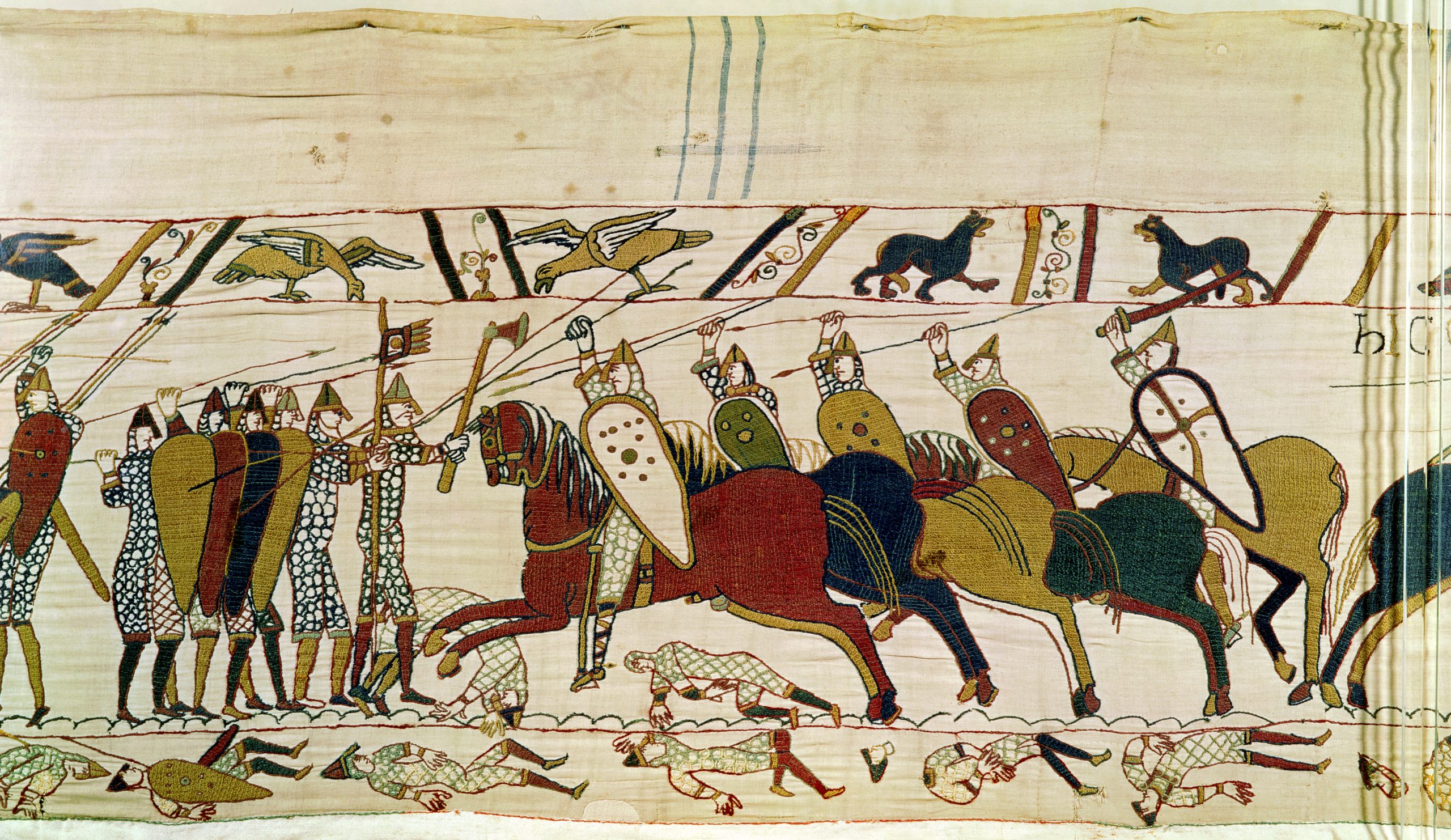
The article examines historian George Garnett's analysis of the 93 penises depicted in the Bayeux Tapestry, a 225-foot-long embroidery chronicling the Norman conquest of England in 1066. Garnett, a professor of Medieval history at Oxford University, argues that the size and placement of these genitalia—88 on horses and five on men—offer clues about the tapestry's meaning. He notes that the largest equine phallus belongs to Duke William's stallion, followed by those of Harold Godwinson and Odo of Bayeux, suggesting a hierarchy of importance. More significantly, Garnett interprets four penises attached to men in the tapestry's border as references to Aesop's fables, indicating themes of deceit, shame, and illicit sex, which he believes challenge the traditional attribution of the tapestry's commission to Odo of Bayeux.

looted antiquities sold facebook marketplace palmyra syria

Thieves in Syria are looting ancient artifacts from archaeological sites like Palmyra, a UNESCO World Heritage city dating back to the 3rd century BCE, and selling them on Facebook Marketplace. The looting has surged since the overthrow of former president Bashar al-Assad in December, with traffickers listing funerary gold, statues, and mosaics alongside ordinary secondhand goods. The Antiquities Trafficking and Heritage Anthropology Research (ATHAR) Project reports that nearly one-third of its 1,500 Syrian cases occurred in December alone, and sales are happening faster than ever—mosaics that once took a year to sell now move in two weeks.

how nebra sky disc made study

Researchers from Otto-von-Guericke University in Magdeburg, Germany, and the Saxony-Anhalt-State Museum of Prehistory, in collaboration with engineering firm DeltaSigma Analytics and coppersmith Herbert Bauer, have successfully replicated the manufacturing process of the Nebra Sky Disk, a 3,600-year-old bronze artifact depicting the cosmos. By analyzing a small sample of the disk using advanced techniques like energy dispersive X-ray spectroscopy and electron backscatter diffraction, the team determined the disk was cast and then forged at least 10 times through repeated heating and hammering. Bauer replicated this by annealing a similar metal mixture 55 times, revealing that the disk's microstructure matches a stage after 10 forging cycles, not the final 55, indicating the original preform was thinner and wider than assumed.

women ancient pompeii

A new exhibition at the Pompeii Archaeological Park, titled “Being a Woman in Ancient Pompeii,” aims to correct centuries of historical neglect by highlighting the lives of real women from the ancient city. Through frescoes, artifacts, inscriptions, and an interactive app, the show presents the stories of entrepreneurs, priestesses, innkeepers, artisans, sex workers, and slaves—including Clodia Nigella, a public pig-keeper; Faustilla, a pawnbroker; Asellina, a tavern owner who employed bar workers and sex workers; Julia Felix, an independent property owner who rented out her bathhouse; and Eumachia, a businesswoman. Co-curated by archaeologist Francesca Ghedini, the exhibition uses archaeological evidence to reconstruct the personalities and daily activities of these women, whose roles have long been obscured by male-dominated historical narratives.

scientists recreate egyptian blue pigment

A team of researchers has successfully recreated Egyptian blue, the world's oldest synthetic pigment, which was used by ancient Egyptians from as early as 3100 B.C.E. The study, published in NPJ Heritage Science, was led by John S. McCloy of Washington State University and Edward P. Vicenzi of the Smithsonian Institution's Museum Conservation Institute, in collaboration with the Carnegie Museum of Natural History. The researchers experimented with various minerals, heating them in ovens at around 1,000 degrees Celsius for up to 11 hours, and used modern microscopy and analysis techniques to compare their results with ancient artifacts from the Carnegie Museum's collection.

napoleon sword could fetch 1 million auction

A ceremonial saber commissioned by Napoleon Bonaparte in 1802 sold for €4.6 million ($5.2 million) at Giquello auction house in Paris on May 22, far exceeding its estimate of €700,000–€1 million. The sword, made by master armorer Nicolas-Noël Boutet, was given to Marshal Emmanuel de Grouchy on the eve of the Battle of Waterloo in 1815 and remained in his family ever since. It features a curved Damascus blade, gold-plated silver mounts, and a stingray-skin sheath, with classical imagery including Medusa, Hercules, and Mars. The sale was part of a 20-lot auction at Hôtel Drouot that also included a 15th-century sword, a Gabonese mask, and a 17th-century tapestry.

extreme mold damage denmark

A newly discovered mold species, aspergillus section restricti, is damaging artworks and cultural objects across Denmark. Detected in 12 museums including the National Museum of Denmark and Skagens Museum, the fungus thrives in dry environments—the very conditions used to preserve artifacts. Conservators describe it as an "epidemic" that also poses health risks to visitors. The National Museum is relocating affected works to a new warehouse near Copenhagen, but no solution has been found yet. Preliminary studies are underway at 150 additional cultural sites to assess the spread.

jewels buddha auction sothebys hong kong piprahwa gems

Sotheby’s Hong Kong will auction a collection of several hundred ancient Indian gem relics linked to Buddha’s mortal remains, known as the Piprahwa Gems, on May 7. The gems, dating to the Mauryan Empire (circa 240–200 BC), were unearthed in 1898 by British engineer William Caxton Peppé in Piprahwa, India, and have been held in a private British collection for over a century. The sale is estimated at HK$100 million (about $12.9 million USD).

new arrests drents museum heist romanian gold artifacts

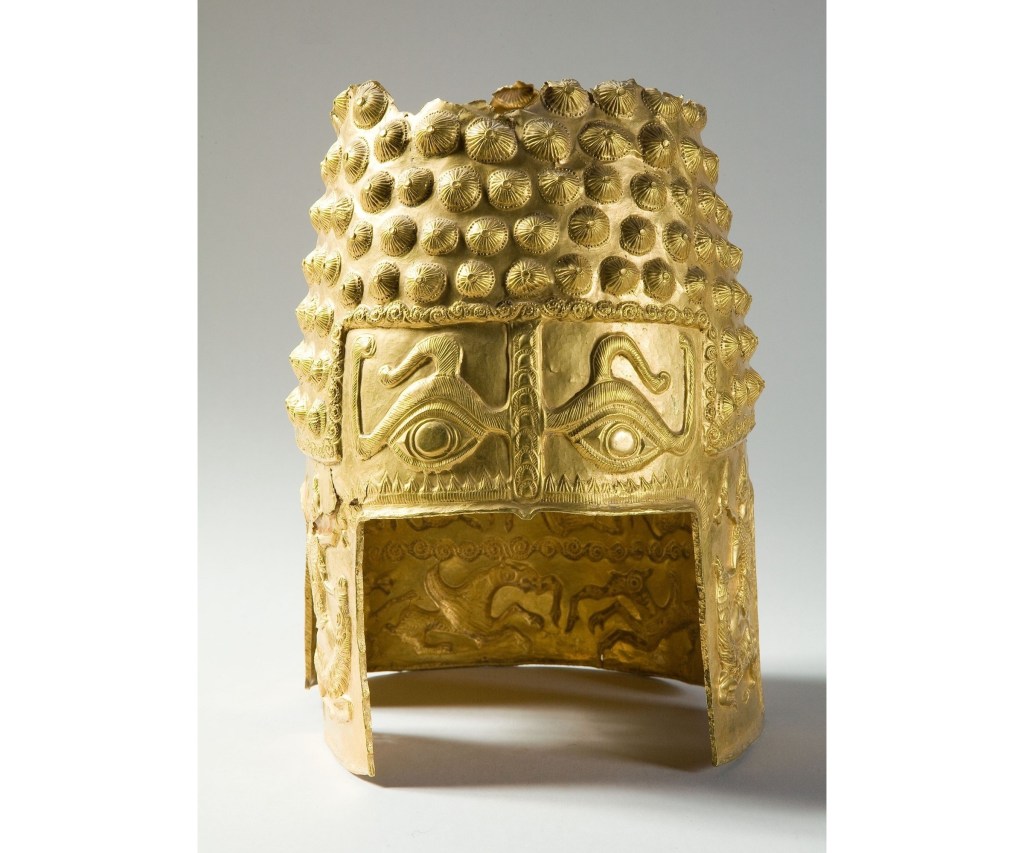
Dutch police arrested two more suspects, a 20-year-old and an 18-year-old from Heerhugowaard, in connection with the January 2025 theft of Romanian gold artifacts from the Drents Museum in Assen. The stolen items include the golden helmet of Coțofenești and three gold bracelets from 450 BCE, valued at over €5.8 million. The suspects were identified via security camera footage from a hardware store where they purchased tools similar to those used in the heist. Police searched properties in Heerhugowaard and Opmeer, seizing digital evidence, but the artifacts remain missing.

art rob teeters art advisor sagaponack home collecting

Art advisor Rob Teeters opens his 1950s Sagaponack home to CULTURED magazine, revealing how he curates his personal collection alongside his husband, ceramicist Bruce M. Sherman. The home features a mix of ancient artifacts, such as a third-century Roman marble head, and contemporary works by Wade Guyton, Sherrie Levine, and Matias Faldbakken, alongside Sherman's own polychrome ceramics. Teeters, who founded Front Desk Apparatus in 2006 and leads the Dallas nonprofit art space the Power Station, discusses the nuanced process of living with art and how arrangement, lighting, and even the texture of a room affect the experience.

Nicht mal Engel sind frei von der Gewalt

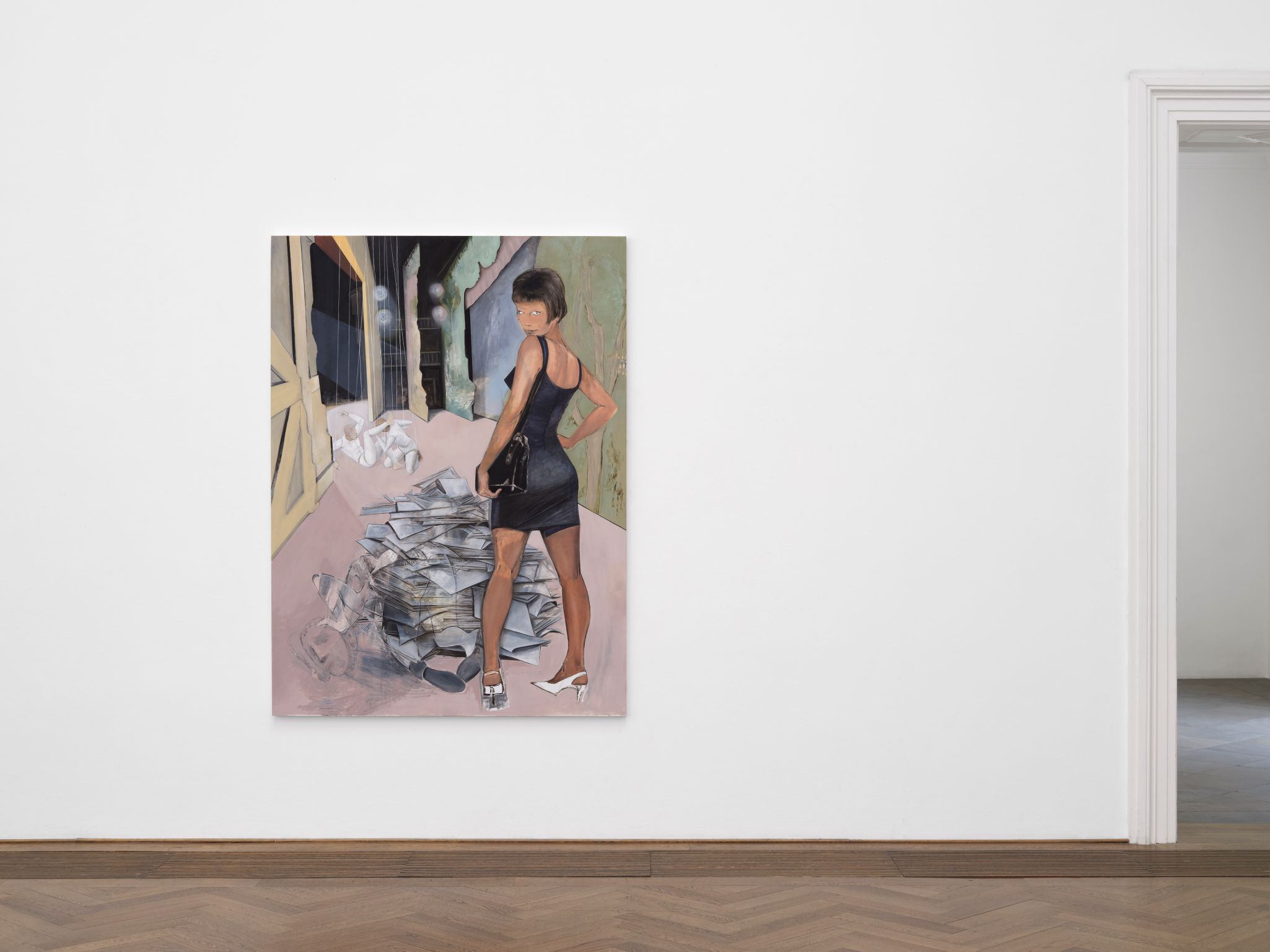
Janiva Ellis presents a multifaceted exhibition at Kunsthalle Basel, exploring the history of violence in modernity through paintings that blend history painting, cartoon, and abstraction. Her works, including "Glint" and "Une nuit agitée," feature angels, hybrid creatures, and dystopian landscapes, questioning the origins and functions of violence in art history and society.

Monuments in Motion

Denkmäler in Bewegung

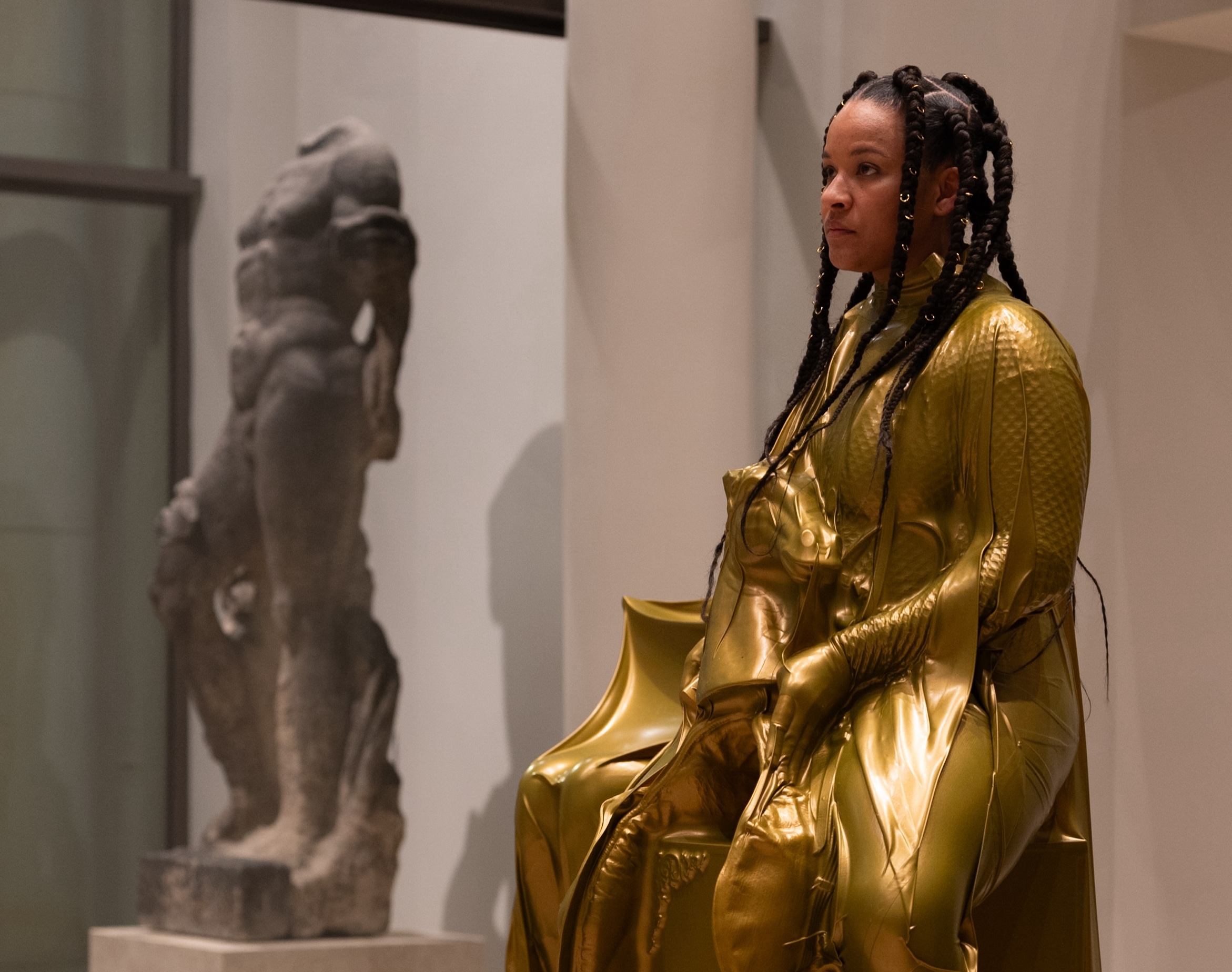
Berlin-based artist Sarah Ama Duah, who transitioned from fashion to sculpture, creates works that explore Afro-German memory culture. Her practice includes beeswax portraits, found objects like Delft porcelain and baroque vases, and performances at venues such as the Humboldt Forum. In 2025, she received the Wolfram Beck Prize for Sculpture. Duah's early fashion work, including silicone garments shown at the Fashionclash Festival in Maastricht, evolved into sculptural investigations of clothing, body, and space, leading her to study performance and sculpture at the Berlin University of the Arts under Jimmy Robert.

Agosto Machado Is Dead; Artist Memorialized New York’s Avant-Garde

Agosto Machado, an experimental theater veteran and artist known for his deep connection to New York's avant-garde scene, has died. He was a dedicated archivist who collected ephemera from his friends and colleagues in the downtown arts community.

‘Paper Gardens’: The Flower and the Serpent Beneath

The Museum of Art and Photography (MAP) in Bengaluru is hosting 'Paper Gardens,' an exhibition that re-examines the history of botanical art through the lens of British colonialism. While the show features visually stunning hand-coloured lithographs of rhododendrons and medicinal plants, it juxtaposes these aesthetics with the harsh realities of the East India Company’s surveys. The exhibition highlights how local Indian artists and knowledge keepers were often marginalized or left anonymous, even as their expertise was essential to the scientific and commercial success of the British Empire.