filter_list Showing 3070 results for "BIEN" close Clear
search
dashboard All 3070 museum exhibitions 1541article news 487trending_up market 316person people 206article culture 172candle obituary 104article policy 82rate_review review 81article local 57gavel restitution 20article event 3article events 1
date_range Range Today This Week This Month All
Subscribe

Venice Diary Day 3: Offsite Highlights Include Fleshy Films and Vegetarian Videos

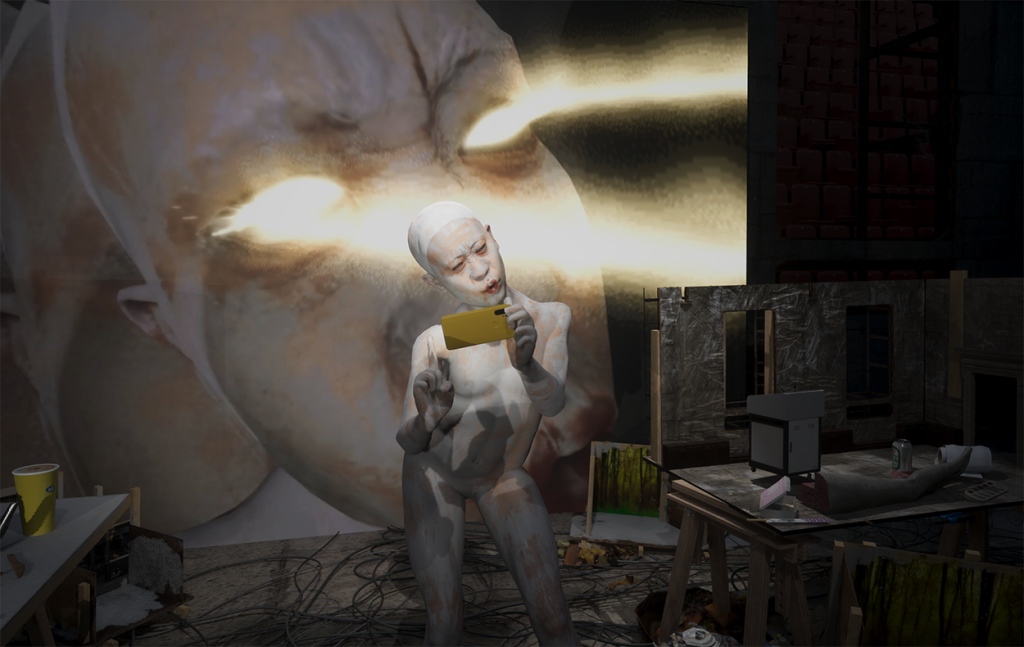
The article reports on the author's third day at the Venice Biennale, focusing on offsite exhibitions. Highlights include Li Yi-Fan's animated video "Screen Melancholy" (2026) at the Taiwan Pavilion, described as chaotic, absurdist, and uncanny, featuring a naked CGI character interacting with ChatGPT. The author also praises Janis Rafa's video installation "Baby I'm Yours, Forever" (2026) at Fondazione In Between Art Film, which transforms scenes from a meat refrigeration plant into haunting surreal imagery. The piece notes the resurgence of video art, aided by LED screens that create immersive environments.
Venice Biennale Special 2026—podcast

This episode of The Art Newspaper's podcast is a Venice Biennale special, covering the opening week of the 2026 edition. Host Ben Luke, along with Louisa Buck and Jane Morris, reviews the main exhibition "In Minor Keys," curated by the late Koyo Kouoh and realized by five collaborators. The podcast features interviews with artists Gabrielle Goliath, whose work for the South African pavilion was cancelled and is instead staged in a Venice church, and Lubaina Himid, showing in the British pavilion. It also includes conversations with writer Saidiya Hartman and Daniella Kaliada of Belarus Free Theatre about their collateral projects. The episode concludes with a focus on two restored Tintoretto paintings at the Basilica of San Giorgio Maggiore, funded by Save Venice.

As Her Venice Biennale Opens, Koyo Kouoh Foundation Launches in Memory of Late Curator

The Koyo Kouoh Foundation has launched in Basel, Switzerland, coinciding with the opening of the 2026 Venice Biennale, which features the late curator Koyo Kouoh's main exhibition "In Minor Keys." The foundation aims to continue Kouoh's work supporting contemporary African cultural production globally, including plans for the Koyo Kouoh Prize and a permanent home for the Koyo Kouoh Collection. It is led by her partner, saxophonist Philippe Mall, and includes board members such as artist Alfredo Jaar, curator Adrienne Edwards, and former Kunstmuseum Basel director Josef Helfenstein.

Sound-based Holy See pavilion opens at Venice Biennale as Vatican’s contemporary art ambitions grow

The Holy See's pavilion at the Venice Biennale has opened, featuring a sound-based exhibition titled "The Ear is the Eye of the Soul" (9 May–22 November). The show, inspired by the medieval Benedictine nun Saint Hildegard of Bingen, includes commissioned audio works by high-profile artists and musicians such as Brian Eno, FKA Twigs, Patti Smith, Jim Jarmusch, and Precious Okoyomon. The exhibition takes place across two Venetian sites—the Mystical Garden of the Discalced Carmelite and the Santa Maria Ausiliatrice complex—and is co-organized by Hans Ulrich Obrist, artistic director of the Serpentine Gallery, and curator Ben Vickers, in collaboration with Soundwalk Collective.

Here’s Why the Venice Biennale Main Show Lost One Artist During the Planning Stages

The Venice Biennale's main exhibition, curated by the late Koyo Kouoh, originally included 111 artists when announced in February, but now lists only 110. ARTnews reveals that the removed artist is Bodys Isek Kingelez, a Congolese sculptor known for his colorful cardboard "extreme maquettes" of fantastical cities. A Biennale spokesperson stated that works initially considered for Kingelez were ultimately unavailable. Kingelez, who died in 2015, was to be one of the few deceased artists in the show, alongside figures like Marcel Duchamp and Issa Samb.

Lubaina Himid on capturing the 'uneasiness' of Britain for her Venice Biennale pavilion

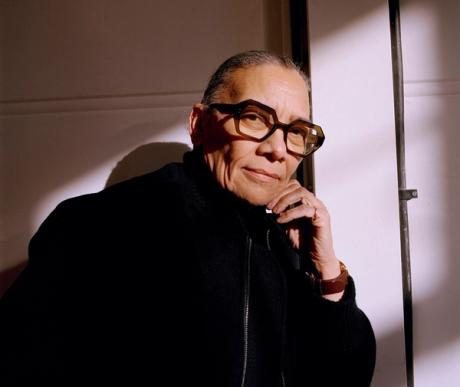
Lubaina Himid, the Turner Prize-winning artist born in Zanzibar and raised in England, is representing Great Britain at the Venice Biennale with a pavilion that captures the 'uneasiness' of living in Britain. The exhibition features her signature paintings, prints, and cutout figures, alongside a soundscape by Magda Stawarska, designed to evoke ambiguous encounters and the gap between a question and an answer. Himid describes the pavilion as a reflection of Britain's everyday pleasantness undercut by a persistent sense of otherness, drawing on her own experience as an East African brought up by English women.

At the Venice Biennale, Koyo Kouoh’s ‘In Minor Keys’ Looks Deeply at Lush Gardens and a Scarred Earth

Koyo Kouoh's exhibition 'In Minor Keys' at the 2026 Venice Biennale centers on the practices of two deceased artists, Issa Samb and Beverly Buchanan, whose ways of thinking animate the show through dedicated 'Shrines' in the Central Pavilion. The exhibition also draws on Marcel Duchamp's legacy, featuring works by over a dozen contemporary artists including Akinbode Akinbiyi, Guadalupe Rosales, Natalia Lassalle-Morillo, Guadalupe Maravilla, Sofía Gallisá Muriente, and Avi Mograbi, whose installation 'Between a River and a Sea' contrasts pre-1948 business directories with a 2023 Gaza Yellow Pages. A section called 'The Schools' highlights artist-run spaces such as Denniston Hill, Guest Artists Space (G.A.S.) Foundation, blaxTARLINES, and the Nairobi Contemporary Art Institute.

Alvaro Barrington takes a road trip to the Venice Biennale

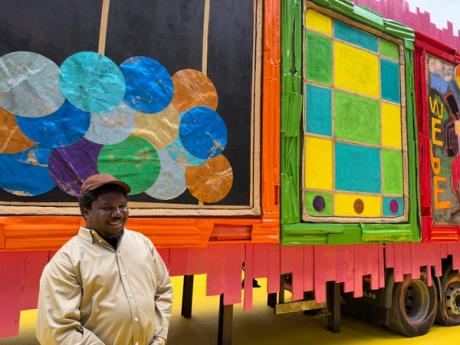
Artist Alvaro Barrington has created a vibrant haulage truck titled "Labor Day Parade ’91" (2026) as his contribution to the 61st Venice Biennale, part of the exhibition "In Minor Keys." The truck, decorated with scenes linked to his background and art historical references, was driven from London to Venice on an epic road trip across Europe. It is now parked in the Giardini next to the Austrian pavilion, with its front tyres punctured to prevent movement. During the preview, the work was admired by artist Julie Mehretu and Dia Art Foundation director Jessica Morgan.

Our pick of the best pavilions at the 61st Venice Biennale

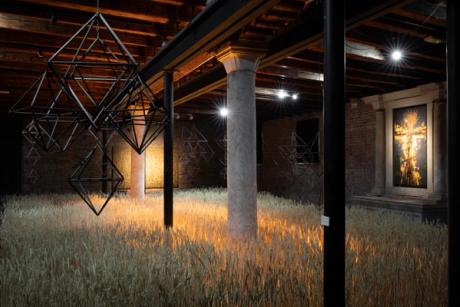
The article highlights standout national pavilions at the 61st Venice Biennale. The Belarus Pavilion features a powerful installation by the Belarus Free Theatre, including a wheat field built by former political prisoners, straw spiders made from prison bars, and a confession booth that runs facial recognition. The Brazil Pavilion presents a joint exhibition by Rosana Paulino and Adriana Varejão, focusing on colonial wounds and trauma through works like Paulino's 'Aracnes' and Varejão's 'Still Life amid Ruin'. The Bosnian Pavilion by Mladen Bundalo invites tactile engagement with themes of diaspora and migration, while the Austrian Pavilion by Florentina Holzinger draws attention with nude performers in water-filled pools.

Hotel and art hub Casabianca opens on Italy's Lake Como

The De Santis family, accomplished hoteliers on Lake Como, has opened Casabianca, a new hotel and art hub in a 1930 villa designed by Piero Ponci. The property features three apartment-style suites launching later this year, while its lower floors are already open to the public for €15, displaying around 50 works from the family's collection of post-war Italian art, including pieces by Arte Povera artists such as Alighiero Boetti, Mario Merz, and Jannis Kounellis. The venture is the latest in a series of heritage hotel restorations by the family, who previously revived the Grand Hotel Tremezzo and Passalacqua.

Arthur Jafa: ‘America has always been a demonic state. And we love it’

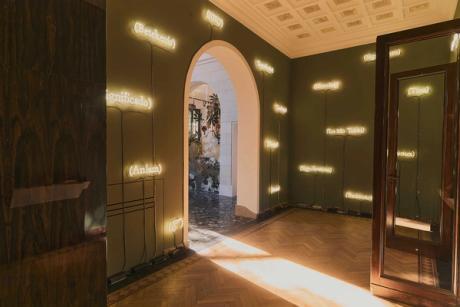
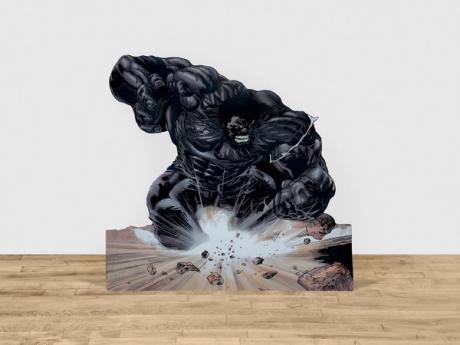
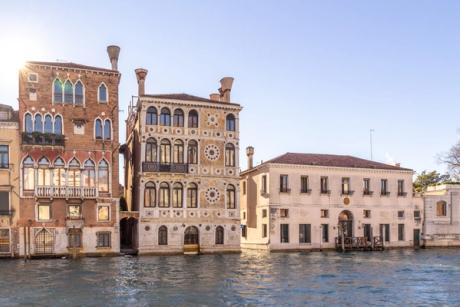
The article covers the exhibition "Helter Skelter: Richard Prince and Arthur Jafa" at the Prada Foundation’s Ca’ Corner della Regina in Venice, curated by Nancy Spector. It brings together over 50 works by Prince and Jafa in a call-and-response format, exploring themes of appropriation, race, violence, and American identity. The show pairs Prince’s iconic rephotographed images and Jafa’s video work "Love Is The Message, The Message is Death" (2016) with new and existing pieces, including Jafa’s "Big Wheel II" and Prince’s "Blasting Mats."

How Well Do the Met Gala’s Attendees Know Their Art History? We Critique Looks by Madonna, Hunter Schafer, and More

The article critiques nine outfits from the 2026 Met Gala, which was held under the theme 'Fashion Is Art' in conjunction with the Costume Institute's new exhibition 'Costume Art' at the Metropolitan Museum of Art. It analyzes how attendees like Hunter Schafer, Lauren Sánchez Bezos, and Kylie Jenner referenced specific artworks—such as Gustav Klimt's *Mäda Primavesi* and John Singer Sargent's *Madame X*—in their fashion choices, evaluating the success of these art-historical allusions.

‘It’s really important that the public is not just a silent witness’: Marina Abramović on her Venice Biennale exhibition

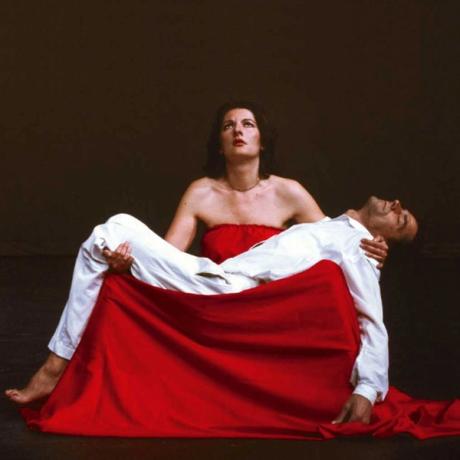
Marina Abramović is the first living female artist to have a solo exhibition at the Gallerie dell'Accademia in Venice, where her work will be installed alongside the museum's permanent collection. The show, titled *Transforming Energy*, features interactive 'transitory objects' such as stone beds and crystal-embedded structures that visitors are invited to use, as well as a juxtaposition of her 1983 photograph *Pietá (with Ulay)* with Titian's final masterpiece *Pietá* (1575-76). Abramović, who won the Golden Lion for Best Artist at the 1997 Venice Biennale, emphasizes audience participation over passive viewing, banning telephones and encouraging visitors to spend at least three hours engaging with the works.

The Met’s Costume Institute Needs an Art History Lesson

The Metropolitan Museum of Art's Costume Institute spring exhibition, "Costume Art," pairs fashion with artworks from the Met's collection, including ancient Greek statues and Andy Warhol screenprints, alongside garments by designers from Charles James to CFGNY. Curator Andrew Bolton aims to suggest that fashion can expand understanding of art, but the show's juxtapositions often feel vague and sloppy, with only occasional resonant pairings like a Jean Paul Gaultier shirt and Joe Brainard drawing linked by queer artist lineage.

The Venice Biennale has long been a sales platform—now no one is pretending otherwise

The Venice Biennale, traditionally a government-subsidized non-commercial institution where sales were downplayed, is experiencing an unprecedented open embrace of commerce. For the first time, Christie's is hosting an invitation-only selling exhibition in Venice, offering works ranging from Old Masters like Lucas Cranach to Modern and contemporary giants such as Andy Warhol, Louise Bourgeois, and Mark Bradford, with prices from $500,000 to over $35 million. Dealers, auction houses, and private foundations are openly pricing and selling works to collectors, spurred partly by Italy's reduced 5% VAT rate on art imports, now Europe's lowest.

Derrick Adams Offers Monumental Tribute to Koyo Kouoh in Venice

American artist Derrick Adams has installed a monumental portrait of the late curator Koyo Kouoh on a building façade near the Arsenale in Venice, ahead of the 2026 Venice Biennale that Kouoh was to curate. The painting, titled "Heavy is the head that wears the crown (2026)," depicts Kouoh with a crown that transforms into the word "JOY" emitting golden light. The project was spearheaded by curator Francesco Bonami, who invited Kouoh to serve on the jury of the 50th Venice Biennale, and is intended as an accessible public homage rather than an exclusive art-world event.

Luca De Michelis, chief executive of Marsilio Arte, on his favourite spots in Venice beyond the Biennale

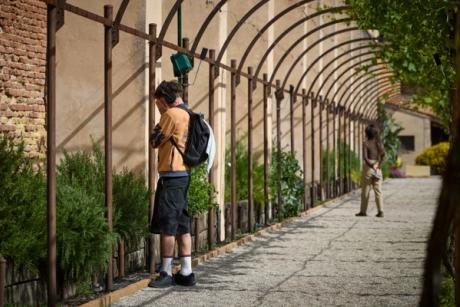
Luca De Michelis, CEO of Marsilio Arte, shares his personal guide to Venice beyond the Biennale, highlighting historic sites, shopping, dining, and cultural venues. His recommendations include Palazzo Grimani, Micheluzzi Glass, the Gardens of the Church of the Redeemer on Giudecca, Antiche Carampane restaurant, the newly opened Dries Van Noten Foundation, San Giorgio Maggiore island, Codroma for spritz, and the upcoming exhibition 'Strange Rules' at Palazzo Diedo’s Berggruen Arts & Culture.

Montclair Art Museum Hires Esteemed Curator Kate Kraczon After Layoffs at Brown University

The Montclair Art Museum in New Jersey has appointed Kate Kraczon as its new chief curator, effective June 15. Kraczon previously served as director of exhibitions and chief curator at the David Winton Bell Gallery at Brown University, where she was laid off in late 2024 amid a wave of cuts. She succeeds Gail Stavitsky, who held the post since 1994. The museum also recently hired Todd Caissie, an enrolled member of the Osage Nation and former director of Canada’s New Brunswick Internment Camp Museum, as its director.

7 Books We’re Looking Forward to in May

ARTnews has published a list of seven art books to look forward to in May 2026, covering a wide range of topics from contemporary theory and AI imagery to historical biographies and the Venice Biennale. Featured titles include Dena Yago's collected writings 'That Figures,' Victoria Johnson's biography of Frederic Church 'Glorious Country,' Trevor Paglen's 'How to See Like a Machine,' Nicholas Fox Weber's 'Anni Albers: A Life,' Massimiliano Gioni's 'High Waters: An Oral History of the Venice Biennale,' Rennie McDougall's 'Nonstop Bodies: How Dance Shaped New York City,' and Paul Elie's 'Last Supper: Art, Faith, Sex and Controversy in the 1980s.'

Aspen AIR Festival to Feature Lucy Raven, Camille Henrot, Los Thuthanaka, Morgan Bassichis, and More

The Aspen AIR Festival returns for its second edition from July 27-31 in Aspen, Colorado, featuring performances, exhibitions, and talks under the theme “Figures in a Landscape.” Returning artists include Matthew Barney, who will present sculptures related to his TACTICAL parallax performance, and Lucy Raven, who will show her film Murderers Bar with a new score by Deantoni Parks. New commissions include Camille Henrot’s operatic work Commedia dell’arte, a performance by Los Thuthanaka blending Andean sounds with electronics, and a piece by Kali Malone and Stephen O’Malley originally created for the Holy See Pavilion at the Venice Biennale. The festival also includes talks by Adrián Villar Rojas, Lyle Ashton Harris, Ivan Cheng, Morgan Bassichis, and a keynote by filmmaker Julie Dash.

Saudi Arabia Museum of Contemporary Art Gets $490 M. from Powerful Real Estate Firm

The forthcoming Saudi Arabia Museum of Contemporary Art has received a $490 million construction grant from Diriyah Company, a real estate firm chaired by Crown Prince Mohammed bin Salman. Designed by Dubai-based Godwin Austen Johnson, the museum will span 883,000 square feet—larger than the Louvre in Paris—and will be located in Diriyah, with additional exhibitions in Riyadh. The grant supports Saudi Arabia's Vision 2030 plan to diversify the economy away from oil.

Two Brazilian curators selected to organise 2027 Bienal de São Paulo

The Fundação Bienal de São Paulo has appointed Brazilian curators Amanda Carneiro and Raphael Fonseca as chief curators for the 2027 Bienal de São Paulo, Latin America's largest and longest-running visual arts event. Carneiro, a curator at the Museu de Arte de São Paulo (MASP) since 2018, also organized the main exhibition at the 2024 Venice Biennale. Fonseca, based in Lisbon, works at Culturgest, serves as curator-at-large for Latin American art at the Denver Art Museum, and is curating the Taiwan Pavilion at the 61st Venice Biennale. The event will take place at the Pavilhão Ciccillo Matarazzo in Ibirapuera Park, with further details expected in coming months.

Rare Roy Lichtenstein Work Could Net $60 Million at Auction

A long-lost Roy Lichtenstein painting from his iconic 'Girl' series, *Anxious Girl* (1964), has resurfaced after more than 30 years in a private collection and will be offered at Christie’s 20th Century Evening Sale in New York on May 18. The work, one of only 10 comic-inspired female portraits Lichtenstein produced during his breakthrough period between 1963 and 1965, carries an estimate of $40–60 million. The consignor acquired it from legendary Pop art patrons Horace and Holly Solomon over three decades ago.

From monumental glass sculptures to a lagoon in the sky: what to see beyond the Venice Biennale pavilions

The article highlights several must-see exhibitions and installations beyond the main Venice Biennale pavilions. Patrizia Sandretto Re Rebaudengo's redevelopment of the island of San Giacomo opens on 7 May, transforming abandoned Napoleonic-era powder magazines into exhibition spaces with a solo show by British artist Matt Copson and a group show from her collection. American artist Melissa McGill presents 'Marea', a street-spanning installation of 100 paintings created with local residents and students, addressing climate change and rising sea levels. Dale Chihuly returns to Venice with 'Chihuly: Venice 2026', featuring monumental glass installations along the Grand Canal, including 'Gold Tower' (2025). Wallace Chan unveils titanium sculptures at the Chapel of Santa Maria della Pietà, with a parallel exhibition at the Long Museum in Shanghai.

What Is the Venice Biennale? Everything You Need to Know

The Venice Biennale returns for its 61st edition, running from May 9 to November 22, 2026. The event, often called the Olympics of the art world, comprises a central exhibition curated by an artistic director, national pavilions from dozens of countries, and officially approved Collateral Events. This year's edition was to be curated by Koyo Kouoh, a celebrated Cameroonian-born curator, but she died at 57 in May 2025 before announcing the title and theme, “In Minor Keys.” The Biennale organization has moved forward with a team of five curatorial advisers executing her vision. The event is overseen by president Pietrangelo Buttafuoco and is expected to draw over 800,000 visitors.

Has the world grown weary of art biennials? In search of an antidote, a Portuguese festival turns to anarchism

Anozero, a biennial art festival held in Coimbra's Monastery of Santa Clara-a-Nova, has opened a ghostly edition that uses installations—including Taryn Simon's sound piece of laments in multiple languages—to protest plans by the Portuguese government to redevelop the 17th-century convent into a hotel under its Revive programme. Festival co-founder Carlos Antunes threatens to cancel the biennial if the development proceeds, framing the event as a warning to the developer about the spirits that haunt the building.

Venice Biennale’s 2026 Golden Lion Jury to Be Led by Videobrasil Founder

The Venice Biennale has announced the five-member jury for its 2026 edition, which will award the prestigious Golden Lion prizes. The jury president is Solange Oliveira Farkas, founder of the Videobrasil Biennial, and she will be joined by curators and academics Zoe Butt, Elvira Dyangani Ose, Marta Kuzma, and Giovanna Zapperi.

Thomas J. Price’s Monumental Sculpture Anchors V&A East’s Opening in London

The V&A East Museum, the Victoria and Albert Museum's second site in East London, opened to the public on April 18. The inaugural presentation features new site-specific commissions by artists Rene Matić, Carrie Mae Weems, and Tania Bruguera, with Thomas J. Price's monumental sculpture serving as a key anchor piece for the new institution.

Story of Black British music writ large in first exhibition at V&A East

The V&A East has officially opened in Stratford with its inaugural exhibition, 'The Music is Black,' a comprehensive survey of Black British music. Curated by Jacqueline Springer, the landmark show features over 200 items ranging from traditional African drums and a Ben Enwonwu sculpture to contemporary pieces by Rene Matić and iconic stage outfits from artists like Pauline Black and Stormzy. The exhibition marks the first major show for the new £135m O’Donnell & Tuomey-designed building, which joins the V&A’s expanding portfolio of sites.

raul de nieves pioneer works

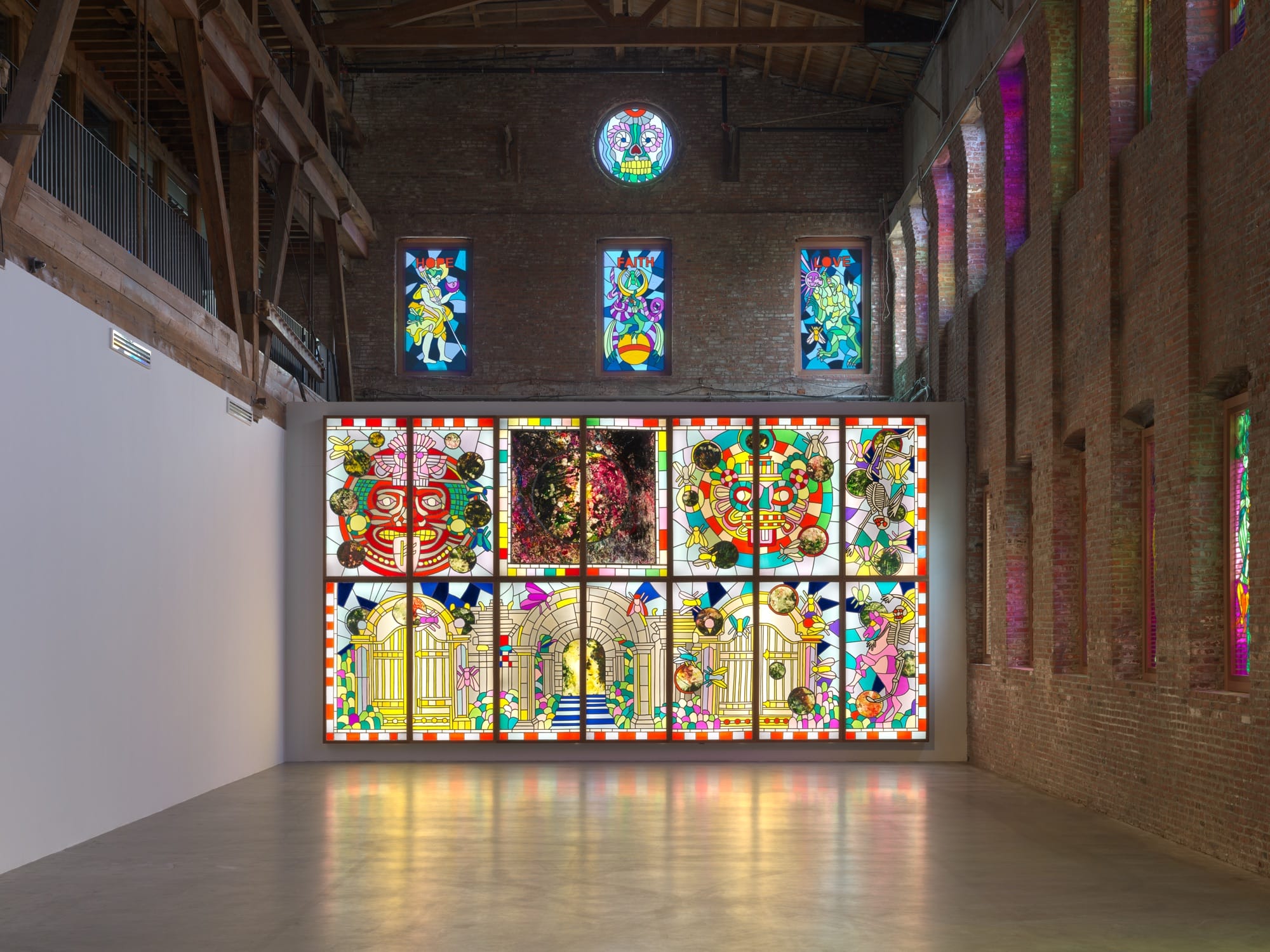
Raúl de Nieves has transformed the industrial architecture of Pioneer Works in Red Hook into a luminous sanctuary through his solo exhibition, "In Light of Innocence." The installation features 50 handcrafted faux stained-glass panels made from acetate and aluminum tape, replacing traditional religious iconography with symbols from tarot, Mexican folklore, and personal text. The centerpiece is a large light box featuring a skeleton that symbolizes transformation and renewal rather than death.