filter_list Showing 4689 results for "AD" close Clear
search
dashboard All 4689 museum exhibitions 2544article local 646article news 418article culture 306trending_up market 288person people 141article policy 113rate_review review 111candle obituary 76gavel restitution 40article event 4article events 1article gallery 1
date_range Range Today This Week This Month All
Subscribe

British artist says the Met ‘should take responsibility’ for dress copyright dispute

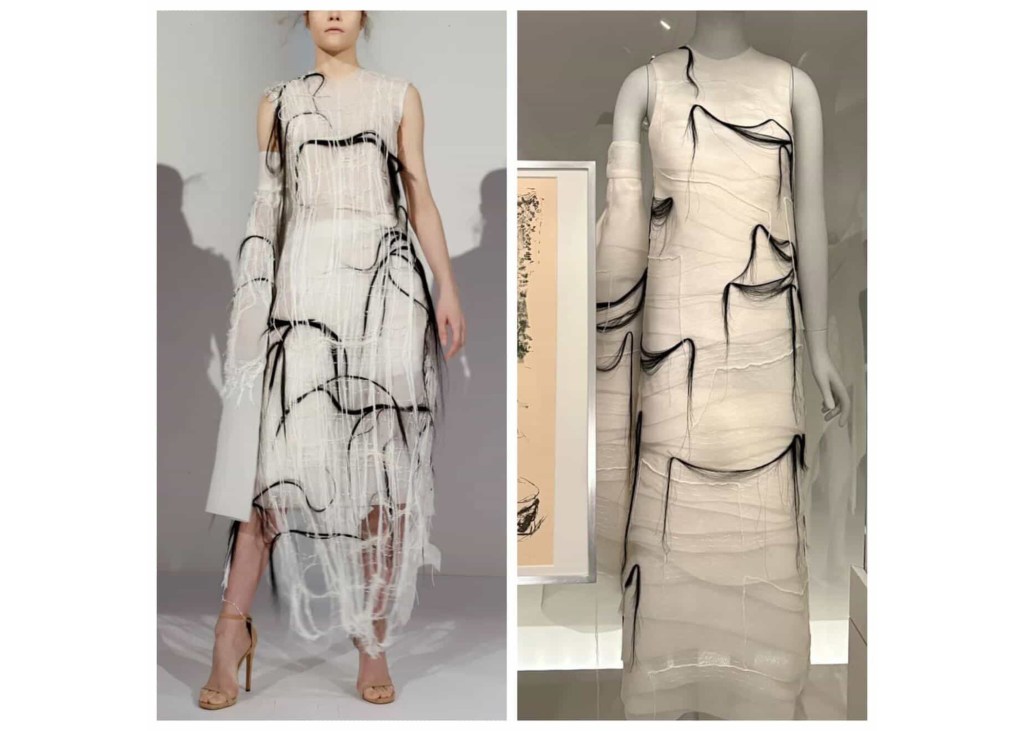
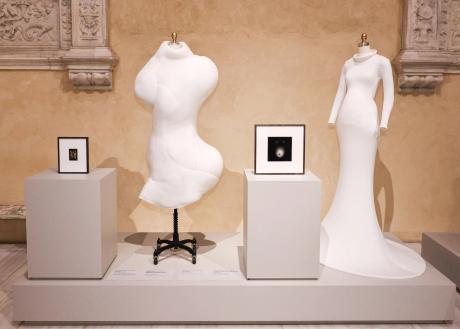
British artist Anouska Samms has publicly criticized the Metropolitan Museum of Art in New York over a copyright dispute involving a dress displayed in the Met Gala opening exhibition. Samms claims the museum included a garment called the Nervina Hair Dress, which she says is a copy of her collaborative work Hair Dress, created with fashion designer Yoav Hadari during their residency at the Sarabande Foundation. The Met had expressed interest in acquiring the original dress for its Costume Art exhibition but shelved those plans in December. Samms says she was not credited or paid, while Hadari acknowledges her IP rights over the textile but asserts the design and construction are his own. The Met has declined to comment, directing the artists to resolve the matter themselves.
Es Devlin Is Creating a Living Portrait of the Entire U.K.

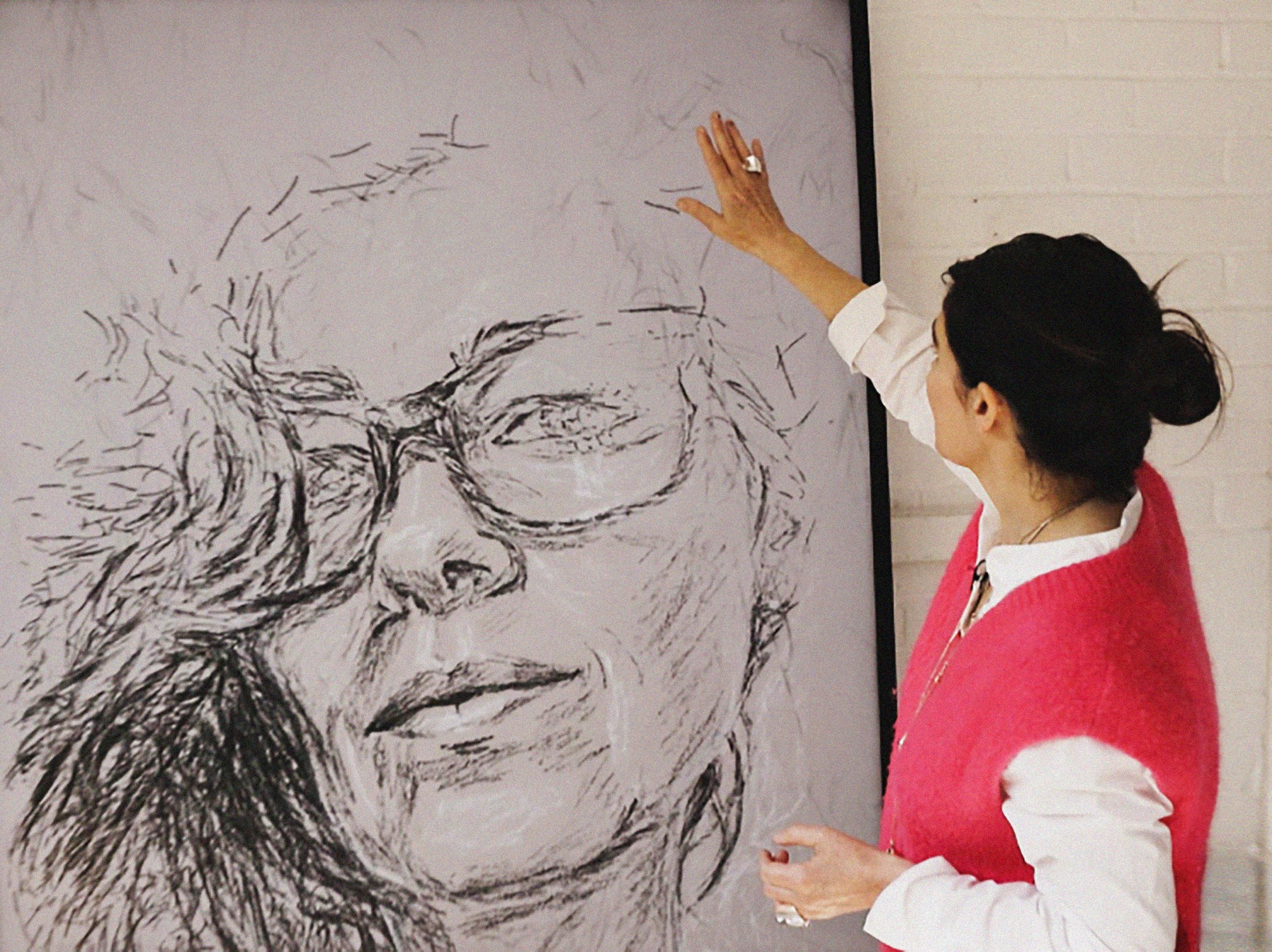
British artist Es Devlin has launched a participatory public artwork titled "A National Portrait for the National Portrait Gallery," inviting all 69 million U.K. residents to upload selfies that are transformed into charcoal-and-chalk-style portraits using an AI model trained on Devlin’s drawings. The portraits appear on a framed screen in the museum’s History Makers gallery, and the project runs through October 27, accompanied by online and onsite drawing classes.

The Best Booths at 1-54 Contemporary African Art Fair, From Surrealist Fantasias to Afro-Brazilian Imaginings

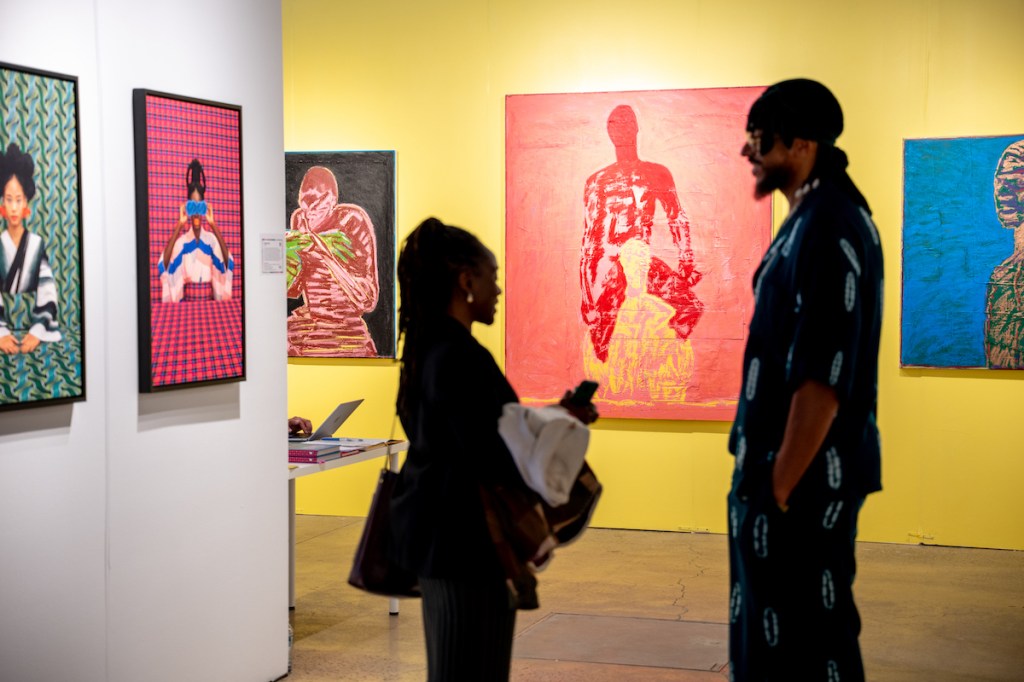
The 1-54 Contemporary African Art Fair has returned to the Starrett-Lehigh Building in Chelsea, New York, featuring over 20 galleries from Africa and the diaspora, with a special focus on Brazil and Afro-Brazilian perspectives. The fair, running through Sunday, includes first-time participants from Lagos, São Paulo, Nassau, and New York, and highlights five standout booths: Sulette van der Merwe's surrealist paintings at Blond Contemporary, Modou Dieng Yacine's Senegalese wrestler-inspired works at 193 Gallery, Ekene Ijeoma's Black Forest Library community project, Rommulo Vieira Conceição's aluminum works at Aura, and the curated section "Brazil Beyond Brazil" featuring 10 artists selected by Igor Simões.

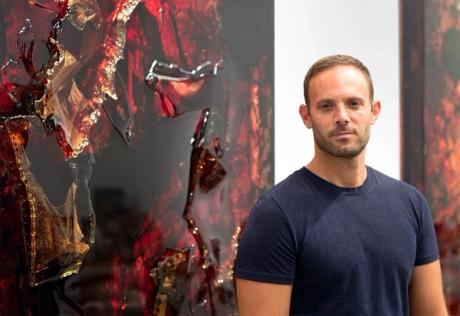
‘Blood can either be a connective tissue or something used for division’: Jordan Eagles on his show a Pioneer Works

Jordan Eagles presents "Bases Loaded," a solo exhibition at Brooklyn's Pioneer Works that explores his lifelong fandom of the New York Mets through works made with donated blood and medical waste. The show features three bodies of work: large-scale reproductions of New York Post covers about the team, cast-resin sculptures of home plate filled with blood and family artifacts, and T-shirts given to blood donors at the Mets ballpark that Eagles cropped and splashed with blood from HIV-positive gay men, arranged by color into orange and grey factions.

‘We can all coexist’: artist Es Devlin uses selfies to unite UK in portrait of a nation

Artist Es Devlin has created a new installation at the National Portrait Gallery in London titled 'A National Portrait for the National Portrait Gallery,' made in collaboration with Google Arts & Culture Lab. The work invites people across the UK to upload selfies, which are transformed into charcoal-and-chalk-style portraits using an AI model trained on Devlin's own hand-drawn works. These portraits then appear on a constantly evolving projected carousel, blending and dissolving into one another. Devlin, known for designing visual worlds for Beyoncé, Adele, and the London Olympics closing ceremony, describes the piece as a non-verbal space for coexistence amid national division.

Most famous image of JMW Turner not a self-portrait, says expert

Dr James Hamilton, a leading Turner expert, has claimed that the most famous portrait of JMW Turner—long believed to be a self-portrait and featured on the UK £20 banknote—is actually by the painter John Opie. Hamilton argues that the work, dated around 1799, was mistakenly included in the Turner Bequest after the artist's death in 1851, when his studio was in disarray and the attribution was never properly verified. He points to stylistic evidence, including Opie's characteristic use of dramatic light and shadow, and calls on Tate Britain to reattribute the painting.

Artist Alleges Hair Dress in the Met’s ‘Costume Art’ Show Copies Her Design

London-based artist Anouska Samms has accused the Metropolitan Museum of Art's Costume Institute and curator Andrew Bolton of displaying a garment in the spring 2026 exhibition "Costume Art" that she claims is a counterfeit of her collaborative work. Samms says the piece, titled Corpus Nervina 0.0, was inspired by a 2023 hair dress she co-created with fashion designer Yoav Hadari for his label Psycheangelic. Despite a contract giving Samms sole ownership of the hair-based textile's intellectual property, the museum's wall label credits only Hadari and states Samms's textile was not used. Samms's lawyer, Jon Sharples, says the museum initially expressed interest in acquiring the original dress but later shifted to a remake after Hadari reported water damage, then stalled entirely before the exhibition opened.

A Lucas Cranach the Elder Masterpiece Once Hung in Hitler’s Munich Apartment

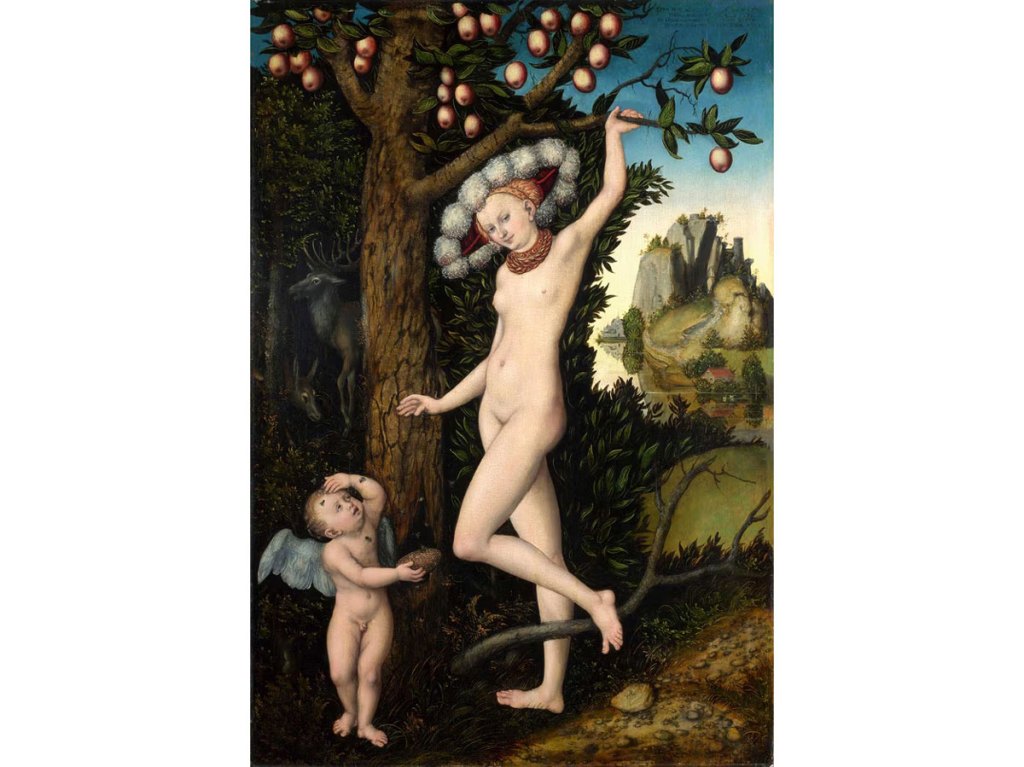
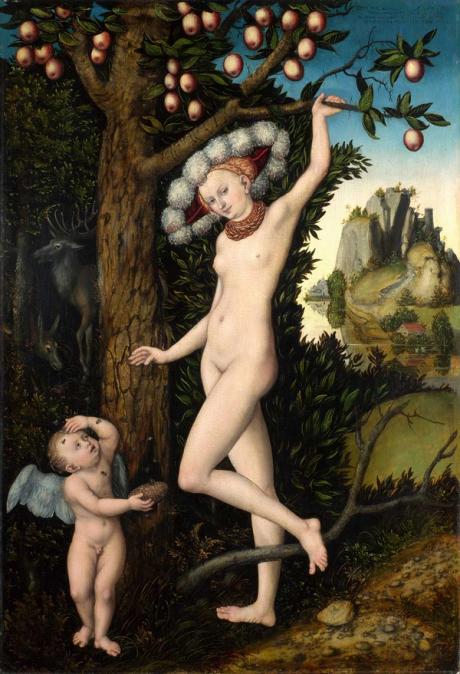
A Lucas Cranach the Elder painting, *Cupid complaining to Venus* (1526–27), once hung in Adolf Hitler's Munich apartment, according to a report by the Art Newspaper. The work was identified in a 1940s photograph published in a 1978 furniture catalog and later in a 2023 article by art historian Birgit Schwarz, who confirmed Hitler's ownership via a 2006 discovery of an album at the Library of Congress. After World War II, American journalist Patricia Lochridge took the painting from a warehouse in Berchtesgaden and smuggled it to the US. The National Gallery in London acquired it in 1963 from A. Silberman Galleries, which falsely claimed it came from the 1909 auction buyer's heir; it had actually been purchased from Lochridge.

Famous Cranach painting spotted in rare photograph of Hitler’s apartment

A rare photograph from the early 1940s reveals that Lucas Cranach the Elder's painting *Cupid complaining to Venus* (1526-27), now a masterpiece in the National Gallery, London, once hung in Adolf Hitler's private Munich apartment. The image, previously published in Germany by provenance expert Birgit Schwarz, appears for the first time in an English-language publication. The painting was acquired by the National Gallery in 1963 from E. and A. Silberman Galleries in New York, which provided a false provenance. It had been taken from a warehouse of recovered art in 1945 by American journalist Patricia Lochridge, who smuggled it into the United States.

Portrait looted by Nazis found in home of Dutch SS leader’s family

An artwork looted by the Nazis from the renowned Goudstikker collection has resurfaced in the home of descendants of Hendrik Seyffardt, a notorious Dutch SS collaborator. The painting, *Portrait of a Young Girl* by Toon Kelder, was discovered by art detective Arthur Brand after a family member contacted him, revealing that the piece had hung for decades in the home of Seyffardt’s granddaughter. Brand traced the painting to a 1940 auction where part of the looted Goudstikker collection was sold, and lawyers for the Goudstikker heirs have confirmed the work was stolen and called for its return.

A mapping of all the intersections between the 2026 Venice Biennale and the fashion world

Una mappatura di tutti gli intrecci tra la Biennale di Venezia 2026 e il mondo della moda

The article maps the growing intersection between fashion brands and the 61st Venice Biennale in 2026, detailing specific collaborations. Zegna is the main sponsor of the Italian Pavilion, supporting Chiara Camoni's project "Con te con tutto" curated by Cecilia Canziani, using materials from Zegna's Oasi Zegna and Lanificio. Bottega Veneta renews its partnership with Pinault Collection to support Lorna Simpson's exhibition "Third Person" at Punta della Dogana, curated by Emma Lavigne, and also presents a public intervention at Campo Manin. Swatch celebrates 15 years of the Swatch Art Peace Hotel with the exhibition "Flora Fantastica" at the Giardini Reali, featuring artist Elisa Insu. The newly opened Fondazione Dries Van Noten at Palazzo Pisani Moretta debuts with "The Only True Protest Is Beauty," curated by Dries Van Noten and Geert Bruloot.

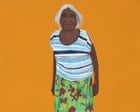
Archibald prize 2026: Richard Lewer’s portrait of artist Iluwanti Ken wins $100,000

Richard Lewer has won the 2026 Archibald Prize, Australia's most prestigious portraiture award, for his portrait of Pitjantjatjara elder, traditional healer, and senior artist Iluwanti Ken. The $100,000 prize was announced at the Art Gallery of New South Wales, with the judging panel selecting the work unanimously from 59 finalists. Lewer, a six-time Archibald finalist, painted Ken life-size against a yellow ochre background, capturing her quiet authority and role as a working artist. The Wynne Prize for landscape painting was also awarded to Gaypalani Waṉambi for *The Waṉambi tree*.

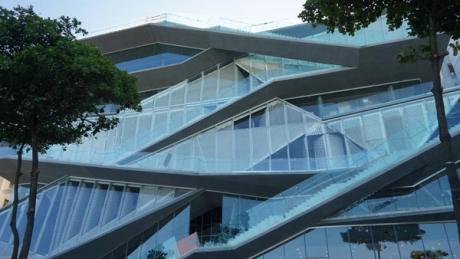
Rio’s Museum of Image and Sound finally opens after 16 years in development

The Museum of Image and Sound (MIS-RJ) on Rio de Janeiro's waterfront opens to the public on May 8 after 16 years of development. The 10,000-sq.-m building, designed by Diller Scofidio + Renfro, features eight floors with panoramic views of Copacabana Beach and a façade honoring Roberto Burle Marx. The project faced multiple delays, funding suspensions, and controversy over urban redevelopment, including backlash when a nightclub on the site was demolished in 2010. Work resumed in 2021, and the $62.5 million museum was completed with public and private funds from donors like Itaú, Vale, and Rede Globo.

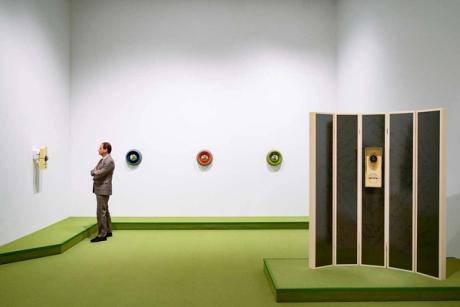
Beware the technology rat trap: Cooper Jacoby’s standout contribution to New York’s Whitney Biennial

Cooper Jacoby's sculptures at the Whitney Biennial explore how AI corporations and other companies turn personal data into financial assets. His five works, displayed in a green-carpeted space he describes as "almost like a rat trap," include the 2026 piece *Estate (July 10, 2022)*—a folding screen with an intercom that uses AI trained on social media posts from deceased creatives to generate vocal outputs. Another series, *Mutual Life*, features eye-like sculptures with clock hands that spin based on the biological age of anonymous individuals in the artist's network. Jacoby's work highlights the lack of regulation around digital life and death, and the opaque nature of AI systems.

‘It’s a tiny bit of joy!’ How trinket swapping is making the world a happier place, one china sheep at a time

Trinket exchange boxes, where people swap small items like pins, stickers, and ceramic animals, are rapidly spreading across the UK and US. The phenomenon, which began in Philadelphia in autumn 2024, has grown from 800 to nearly 1,500 installations in two months, according to Portland-based artist Rachael Harms Mahlandt, who tracks them on a world map. In Edinburgh, pet-sitter Sam Stevens runs a popular pink box outside Argonaut Books, inspired by a San Francisco exchange, and has seen her follower count jump overnight as locals trade trinkets for fun.

A ‘bird of Mexico City’ strikes a revolutionary pose: Pieter Henket’s best photograph

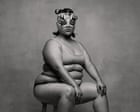
Photographer Pieter Henket describes the creation of his portrait "La Mujer" (The Woman), part of his series "Birds of Mexico City." The image features Ixchel Paz, a young Mexican woman wearing a lucha libre wrestling mask, captured in a dignified pose on the first day of the project. Henket explains how the series evolved from an earlier project, "Birds of New York," which celebrated young people in New York during the first Trump administration. After the pandemic, he traveled to Mexico City with his husband Roger Inniss, collaborated with stylist Chino Castilla and his team, and encouraged subjects to express their identities through costume and culture.

'I wanted to catch the desperation': Dries Verhoeven on turning the Dutch pavilion into a bunker for the Venice Biennale

Artist Dries Verhoeven has transformed the Dutch pavilion at the Venice Biennale into a bunker-like space by covering its iconic glass-and-steel structure with metal shutters. Inside, visitors experience a gradually darkening environment and a raw vocal performance by 13 rotating performers, intended to evoke desperation and confusion about contemporary global crises. The work critiques the modernist ideals of openness and optimism embodied by the pavilion, designed by Gerrit Rietveld in 1953.

Muscle memory: Natasha Tontey’s wild Venice installation explodes perceptions of Indonesian history

Natasha Tontey's new installation "The Phantom Combatants" at the Ateneo Veneto in Venice reimagines the story of Len Karamoy, a woman who was part of the CIA-funded Permesta resistance movement in North Sulawesi, Indonesia (1957-1961). The 22-minute film, commissioned by the LAS foundation and Amos Rex, features absurdly muscular mutant warriors and draws on Indigenous belief systems, video games, Indonesian soap operas, and B-movie aesthetics to explore themes of autonomy, resistance, and historical perspective.

The Bahamas returns to the Venice Biennale with a joy-filled posthumous collaboration

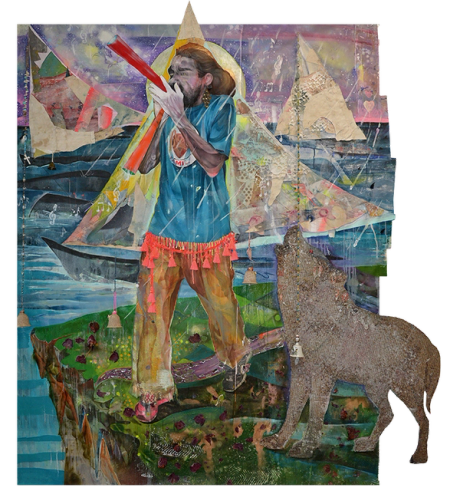
The Bahamas will return to the Venice Biennale in 2026 after a 13-year absence with a posthumous exhibition for artist John Beadle, who died in 2024 at age 60. Beadle was originally selected to represent the country in 2015 but the government withdrew funding. The exhibition, titled "In Another Man’s Yard," will feature Beadle’s work alongside that of his mentee, Lavar Munroe, using materials from Beadle’s studio including sails from Haitian migrant sloops. The pavilion is organized by commissioner Amanda Coulson and curator Krista Thompson, who raised private funds after the government declined to support the project.

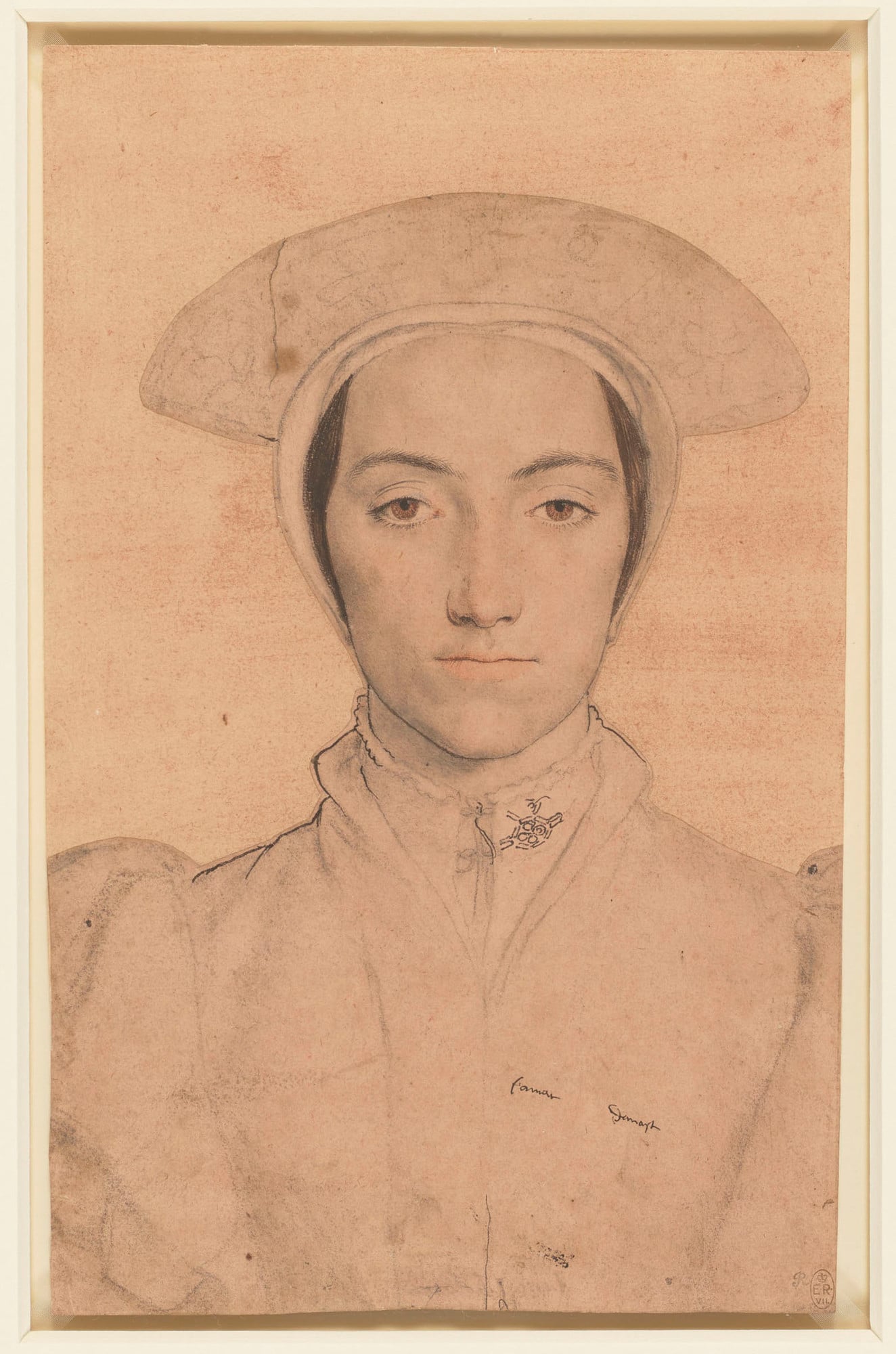
AI Helps UK Researchers Identify Unknown Subject in Hans Holbein Drawing as Anne Boleyn

Researchers Karen L. Davies and Hassan Ugail used artificial intelligence facial recognition to analyze two Hans Holbein drawings from the Royal Collection Trust. Their study, published in npj Heritage Science, suggests that a portrait previously labeled as Anne Boleyn actually depicts her mother, Elizabeth Howard, while a drawing cataloged as an unidentified woman is the true likeness of Anne Boleyn. The findings challenge long-held identifications based on 18th-century inscriptions and align more closely with contemporary descriptions of Boleyn as slender with dark hair.

A.I. Identifies Holbein Drawing as Possible Portrait of Anne Boleyn

Researchers at the University of Bradford have used artificial intelligence to analyze preparatory drawings by Hans Holbein the Younger in the Royal Collection at Windsor Castle. The AI model, which previously identified a forgotten Raphael painting, suggests that a drawing long believed to depict Anne Boleyn actually shows her mother, Elizabeth Howard, while another drawing labeled "Unidentified Woman" likely portrays Anne Boleyn herself. The findings, published in Heritage Science, are based on biometric analysis of facial features, bone architecture, and proportional relationships, offering quantifiable evidence to resolve long-standing scholarly uncertainty about the sitters' identities.

Chanel and Guggenheim Launch Transatlantic Curatorial Fellowship

Chanel and the Solomon R. Guggenheim Foundation have announced a new transatlantic curatorial fellowship, set to launch in 2027. The Chanel Culture Fund Fellowship is a one-year program for MA- and PhD-level scholars, who will begin at the Guggenheim Museum in New York before moving to the Peggy Guggenheim Collection in Venice. The announcement coincides with the start of the Venice Biennale, and the open call for fellows will begin this fall. The fellowship includes a stipend and travel support, and is designed to complement the Peggy Guggenheim Collection's existing International Fellowship.

Fiona Pardington’s portraits of the lost birds of Aotearoa New Zealand – in pictures

Fiona Pardington has created a new series of human-scale photographic portraits of native New Zealand birds, many of which are extinct or endangered, using taxidermy specimens from regional museums. The series, titled "Taharaki Skyside," will be exhibited at the Aotearoa New Zealand pavilion at the 2026 Venice Biennale. Pardington, who has Māori and Scottish ancestry, incorporates the birds' eyes with superimposed historical landscapes to evoke their lost habitats and spiritual significance as intermediaries between human and divine worlds in Māori culture.

Mystery sitter in Holbein portrait could be Anne Boleyn, AI analysis finds

Researchers using AI have analyzed two Renaissance sketches by Hans Holbein from the Royal Collection, known as the Windsor sketch and the Unidentified Woman. The AI model, developed by Professor Hassan Ugail at the University of Bradford, compared the entire Holbein corpus and found that the Unidentified Woman may actually be Anne Boleyn, while the Windsor sketch—long thought to depict Boleyn—may instead show her mother, Elizabeth Howard. The study suggests the works were incorrectly inscribed in the 1700s, leading to centuries of misidentification.

The Devil Wears Prada 2 to Lenny Henry: your complete entertainment guide to the week ahead

The Guardian's weekly entertainment guide highlights two major art exhibitions opening in May 2025: 'Aleksandra Kasuba' at Tate St Ives (2 May to 4 October) and 'Zurbarán' at the National Gallery, London (2 May to 23 August). The Kasuba show is the first UK presentation of the Lithuanian American artist's proto-immersive 'spatial environments,' featuring early paintings, mosaics, and installations focused on utopian social harmony. The Zurbarán exhibition presents a blockbuster survey of the 17th-century Spanish Baroque master, known for his intense religious subjects and dramatic chiaroscuro.

In Venice to Install Work for the Biennale, Artist Guadalupe Maravilla Alleges Racial Profiling by Police

New York–based artist Guadalupe Maravilla, in Venice to install his work for the 2026 Venice Biennale, alleges he was racially profiled by police after leaving the Arsenale venue. Two officers demanded his documents, called backup, and attempted to handcuff him before he de-escalated the situation and left. Maravilla, known for his 'Disease Thrower' sculptures that address migration and healing, shared the incident on Instagram and provided a statement to ARTnews.

The art of politics: how global conflicts are playing out in this year's Venice Biennale

Israel is making a controversial return to the 2025 Venice Art Biennale after its pavilion was locked in 2024 with a note demanding a ceasefire in Gaza. The artist representing Israel, Belu-Simion Fainaru, will present his project "Rose of Nothingness" in the Arsenale, while Russia also returns to the Biennale after its Giardini pavilion was reassigned to Bolivia in 2024. The Art Not Genocide Alliance (ANGA) has renewed calls for a boycott and is organizing strike action to disrupt the event, accusing Israel of genocide.

Simply divine: the extraordinary supernatural visions of Francisco de Zurbarán

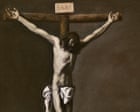
Francisco de Zurbarán, one of the three great Spanish 17th-century painters alongside Velázquez and Murillo, is finally receiving his first solo exhibition in the UK at the National Gallery in London. The show highlights his distinctive style of religious painting, characterized by stark chiaroscuro, sculptural realism, and a meditative stillness that makes the immaterial seem tangible. Works such as his crucified Christ and The Apparition of Saint Peter to Saint Peter Nolasco exemplify his ability to depict visions and inner spirituality, often commissioned by powerful religious foundations in Seville during the Counter-Reformation.

Natasha Tontey to Unveil Major New Immersive Installation Exploring Indigenous Resistance During Venice Biennale

Artist Natasha Tontey will unveil a major immersive installation titled "The Phantom Combatants and the Metabolism of Disobedient Organs" during the Venice Biennale at the Ateneo Veneto di Scienze, Lettere ed Arti. Jointly commissioned by Berlin’s LAS Art Foundation and Helsinki’s Amos Rex, the work combines video, sound, light, and sculpture to reimagine the story of Len Karamoy, a combatant in the CIA-supported Permesta movement that fought the Indonesian government from 1957 to 1961 in North Sulawesi. Tontey, a Minahasan Indigenous artist, uses LiDAR, quantum ghost imaging, and other technologies to explore Indigenous identity, ecology, and the blurring of history and myth.

Judge Orders Prado to Hold Disputed Velázquez Painting in Divorce Case

A Spanish judge has ordered the Museo del Prado in Madrid to take custody of a painting attributed to Diego Velázquez, which is at the center of a divorce dispute between steel magnate José María Aristrain and his ex-wife Gema Navarro. The work, a portrait of Philip IV linked to Velázquez’s early years in Madrid, was removed from Aristrain’s residence on March 17 and transferred to the Prado’s storage after Navarro filed a complaint alleging it had been wrongly withheld from her. The Ministry of Culture, acting with court and prosecutorial support, designated the museum as custodian until ownership is resolved. The painting had previously surfaced at auction, failing to sell in 2007 amid attribution doubts, before being acquired by Navarro in 2015 for €878,000.