
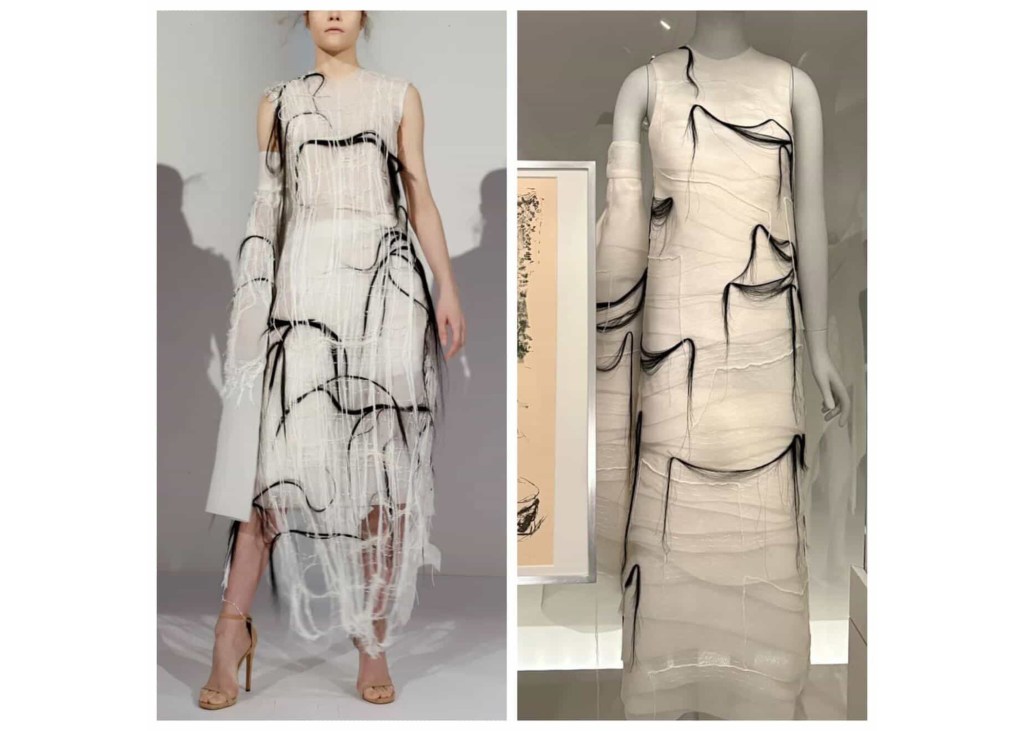
London-based artist Anouska Samms has accused the Metropolitan Museum of Art's Costume Institute and curator Andrew Bolton of displaying a garment in the spring 2026 exhibition "Costume Art" that she claims is a counterfeit of her collaborative work. Samms says the piece, titled Corpus Nervina 0.0, was inspired by a 2023 hair dress she co-created with fashion designer Yoav Hadari for his label Psycheangelic. Despite a contract giving Samms sole ownership of the hair-based textile's intellectual property, the museum's wall label credits only Hadari and states Samms's textile was not used. Samms's lawyer, Jon Sharples, says the museum initially expressed interest in acquiring the original dress but later shifted to a remake after Hadari reported water damage, then stalled entirely before the exhibition opened.
This dispute matters because it highlights ongoing tensions around intellectual property, credit, and compensation in the fashion-art crossover space, especially when major institutions like the Met acquire or exhibit works derived from collaborative projects. The case raises questions about how museums verify provenance and authorship, and whether contractual agreements between artists and designers are respected in high-profile exhibitions. It also underscores the power dynamics between emerging artists and established institutions, as Samms learned of the garment's inclusion only through a social media tag after the gala opening.