filter_list Showing 2346 results for "Venice" close Clear
search
dashboard All 2346 museum exhibitions 1139article news 413trending_up market 293article culture 133person people 121candle obituary 80article policy 65rate_review review 50article local 32gavel restitution 17article event 2article events 1
date_range Range Today This Week This Month All
Subscribe

Curators Announced for 16th Baltic Triennial

The Contemporary Art Center (CAC) Vilnius has appointed artist Nikita Kadan and curator Natalia Sielewicz as curators of the 16th Baltic Triennial, scheduled for 2027. Kadan is a Kyiv-based artist, while Sielewicz is chief curator at Warsaw's Museum of Modern Art. The duo has proposed "grief and resurrection" as the triennial's theme, framing despair and mourning as spaces for careful listening and potential renewal.
Faces of Russian Art

Gesichter der russischen Kunst

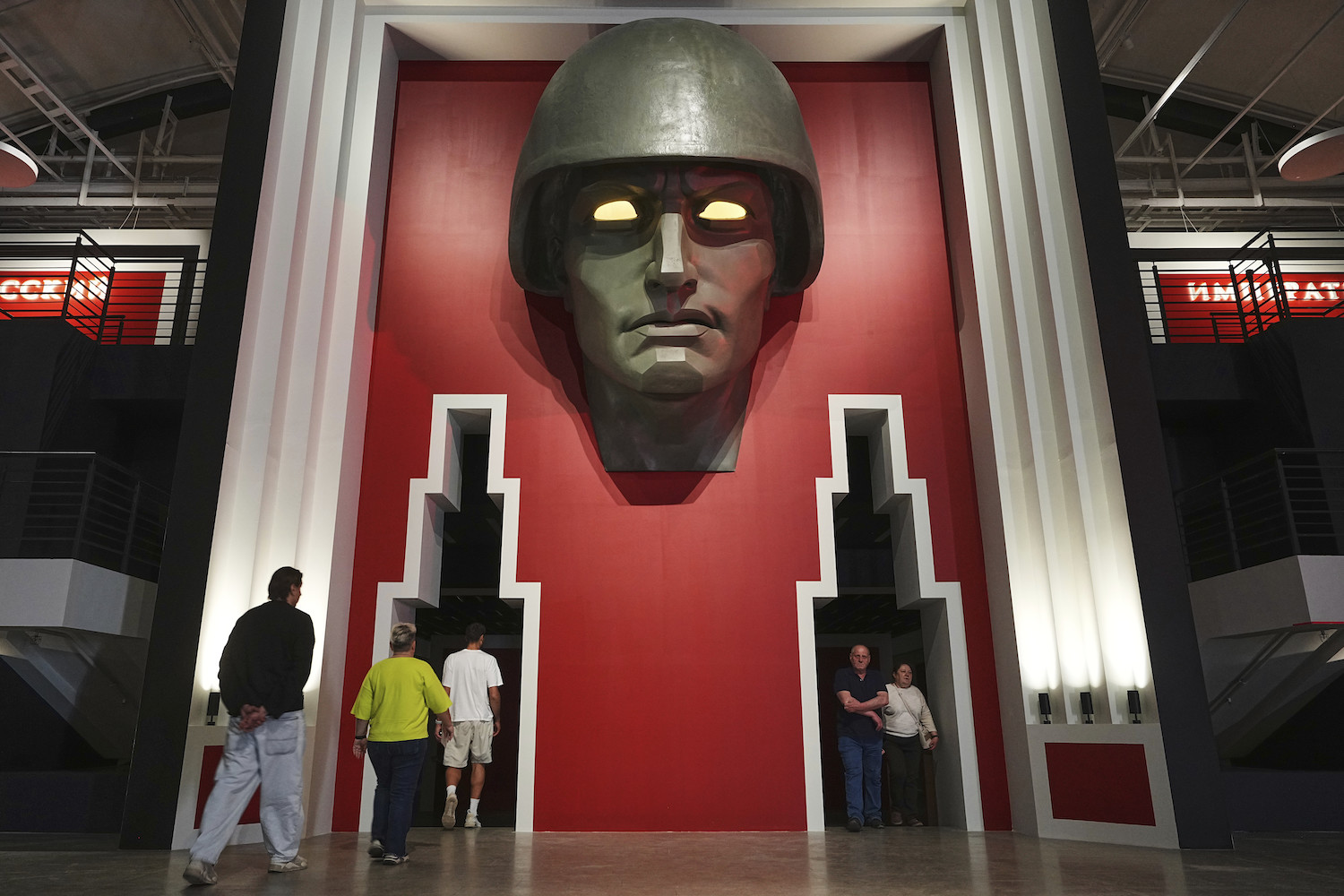
On the Venice Biennale, the Russian Pavilion presents itself as a space for dialogue, while simultaneously a major exhibition in St. Petersburg titled "Russischer Imperativ" (Russian Imperative) opened on May 8 at the Manezh exhibition hall, glorifying war as a historical imperative of Russian identity. Curated by Anton Belikov, a Moscow artist and former Russian soldier who fought in Ukraine, the show features works from state museums like the Tretyakov Gallery, blending historical battles with the current war in Ukraine, and includes a monumental, fascistoid design with a ten-meter-tall installation of a soldier's head. The exhibition has sparked outrage on social media and in Russian exile media for its militaristic propaganda.

Künstler Harald Metzkes ist tot

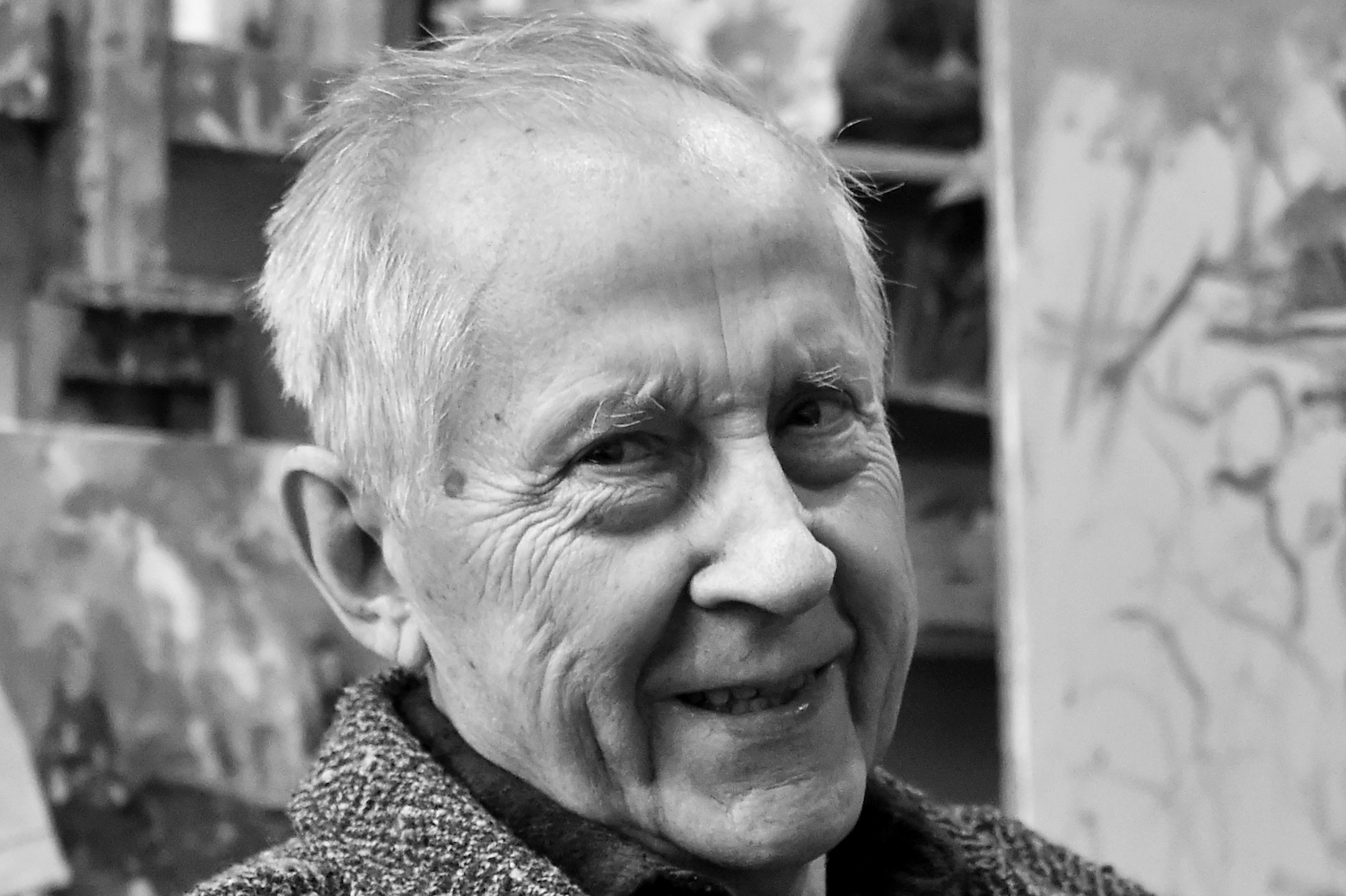
German painter Harald Metzkes has died at the age of 97 in Wegendorf, Brandenburg, surrounded by his family. His son, sculptor Robert Metzkes, confirmed the news to the German Press Agency. Metzkes, who grew up in East Germany, was a leading figure of the Berlin School of painting and resisted the official doctrine of socialist realism, instead creating a personal "world theatre" of harlequins, circus scenes, and theatrical figures inspired by Rembrandt, Velázquez, and Paul Cézanne. His best-known work includes "Der Abtransport der sechsarmigen Göttin." After training as a stonemason and studying at the Dresden Academy of Fine Arts, he worked as a freelance artist in Berlin, supporting himself with book illustrations. His work gained international attention when one of his paintings was sent to the Venice Biennale in 1984, and after the fall of the Berlin Wall he built connections with Western collectors.

Some cry censorship, others cry antisemitism

"Die einen schreien Zensur, die anderen Antisemitismus"

A constitutional law scholar, Christoph Möllers, warns in an interview with Die Zeit about the dangerous escalation of cultural policy conflicts, sparked by Documenta 15, where accusations of censorship and antisemitism collide. In Poland, Adam Budak was removed as director of MOCAK in Krakow after just a few months, facing 79 allegations including mobbing and problematic leadership. Meanwhile, the New York spring auctions have launched, and Jason Farago's review of the Venice Biennale in the New York Times criticizes the shift from aesthetic innovation toward identity-driven art. Robin Pogrebin also reports on the merger of the Met and the Neue Galerie, described as a rare convergence of two museum models.

Valie Export ist tot

Valie Export, the pioneering Austrian media and performance artist, has died at age 85 in Vienna. Born Waltraud Lehner in Linz in 1940, she adopted the name Valie Export in the late 1960s, derived from a cigarette brand, and became internationally known for provocative works such as "Tapp- und Tastkino" (1968) and "Aktionshose: Genitalpanik." Her practice critically examined gender roles, power structures, and the representation of the female body through film, video, photography, and performance. She participated in major exhibitions including Documenta, the Centre Pompidou, and the Museum of Modern Art, and represented Austria at the Venice Biennale in 1980 alongside Maria Lassnig. She also taught as a professor of media and performance art in Berlin and Cologne, and the VALIE EXPORT Center opened in Linz in 2017.

"Man besitzt Kunst nicht, man ist nur ihr Verwalter"

The 61st Venice Biennale opened on Saturday without ceremony or an opening celebration, amid political turmoil over the participation of Russia and Israel. Italy's Culture Minister Alessandro Giuli criticized Biennale director Pietrangelo Buttafuoco for not informing the government about Russia's participation request, suggesting it could have been used as leverage for a ceasefire in Ukraine. The entire jury resigned after attempting to exclude both Russia and Israel from prize awards, leading to the cancellation of the traditional jury decision in favor of a public vote, which over 70 participating artists have protested by withdrawing from this year's prizes. Separately, a rare photograph from the early 1940s has surfaced showing Lucas Cranach the Elder's painting "Venus with Cupid as Honey Thief" in Adolf Hitler's Munich apartment, raising unresolved questions about whether the work was looted from Jewish owners before 1935.

10 Highlights You Shouldn't Miss in Venice

10 Highlights, die Sie in Venedig nicht verpassen sollten

The article presents ten must-see highlights of the 61st Venice Biennale, curated by the editors of Monopol magazine. It covers the main exhibition at the Arsenale, national pavilions, and collateral events, including Sandra Knecht's beehouse installation, Isabel Nolan's Irish Pavilion exploring dreams and late medieval humanism, Chiara Camoni's Italian Pavilion blending ceramics and found materials, and Asim Waqif's bamboo construction in the Indian Pavilion. Other featured works include a church filled with surveillance cameras and the new Fondazione Dries Van Noten.

How Tech Billionaires Turn Couture into Content

Wie Tech-Milliardäre Couture zu Content machen

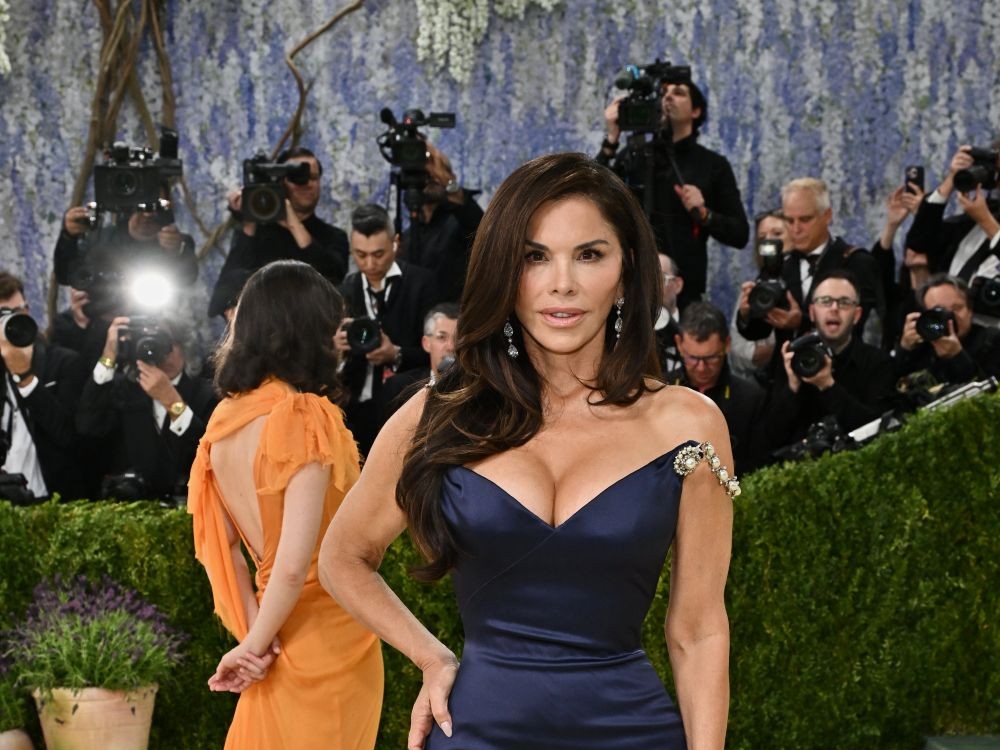
The Met Gala, long considered the premier event for fashion and cultural influence, has become increasingly dominated by tech billionaires. This year, Jeff Bezos and Lauren Sánchez Bezos purchased their role as co-hosts, sparking protests in New York and raising questions about whether money alone now buys entry into the highest echelons of fashion. Individual tickets cost $10,000 and a table $350,000, with sponsors including OpenAI, Snapchat, and Meta. The event, organized by Anna Wintour to raise funds for the Costume Institute at the Metropolitan Museum of Art, raised $31 million last year but has transformed from a benefit into a spectacle optimized for viral moments and algorithmic appeal.

Here You Have the Feeling That Reality Is a Different One

"Man hat hier das Gefühl, dass die Realität eine andere ist"

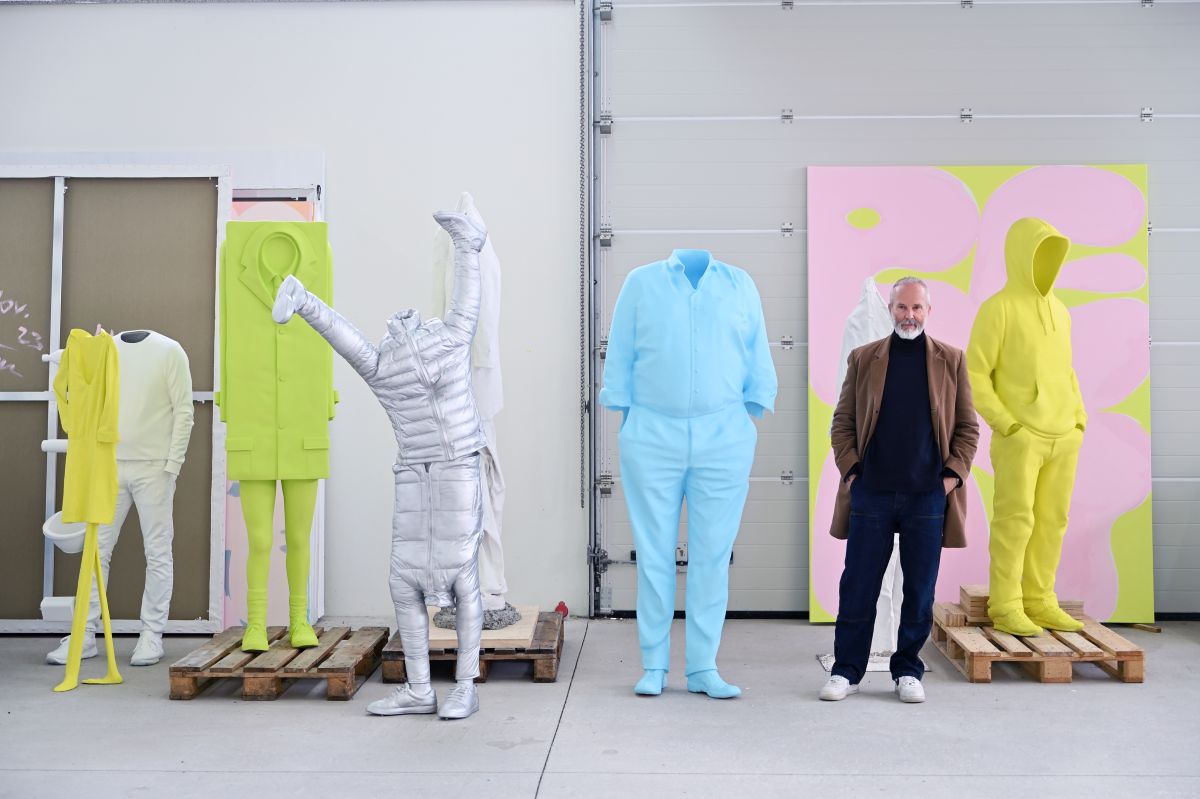
Austrian artist Erwin Wurm discusses his exhibition at the Museo Fortuny in Venice, where he confronts the overwhelming collection of the 19th-century polymath Mariano Fortuny. In an interview, Wurm describes the venue as a historic atelier house filled with tapestries and artifacts, and reflects on how his contemporary sculptures and performances will engage with the dense, time-capsule atmosphere of the space.

"Etwas zaghaft, etwas ängstlich, etwas sicher"

The article surveys recent art-world commentary, focusing on a critical review of the Turner Prize shortlist in The Guardian, where Eddy Frankel calls the selection "timid, anxious, safe" and laments a self-perpetuating, elitist system. It also covers a Hyperallergic essay by Lisa Siraganian questioning whether artworks can possess personhood, sparked by Pierre Huyghe's Venice exhibition. Additionally, it reports on controversy at the Venice Biennale, where the jury preemptively excluded countries whose leaders are sought by the International Criminal Court—namely Russia and Israel—drawing sharp criticism from Die Welt's Marcus Woeller. A podcast interview with US sculptor Alma Allen, selected for the US Pavilion, rounds out the coverage.

"Du bist nun in die ewigen Jagdgründe der Kunst entschwunden"

This week's art news roundup covers several stories: Jonathan Meese publishes an obituary for his mother Brigitte Meese in Der Spiegel, describing her as a central figure in his life and work. Pussy Riot seeks to take over the Russian Pavilion at the Venice Biennale. The European Media Art Festival (EMAF) in Osnabrück faces controversy over antisemitism allegations linked to Palestinian-American filmmaker Basma al-Sharif, leading the city and state government to distance themselves from the festival. In the NZZ, Christian Wildhagen reports on conflicts over official political portraits, citing examples like Swiss councilor Martin Neukom rejecting paintings and Donald Trump criticizing his portrait. Art historian Horst Bredekamp pays tribute to Italian philosopher Federico Vercellone (1955–2026) in the FAZ, highlighting his theory of the 'self-activity of form.'

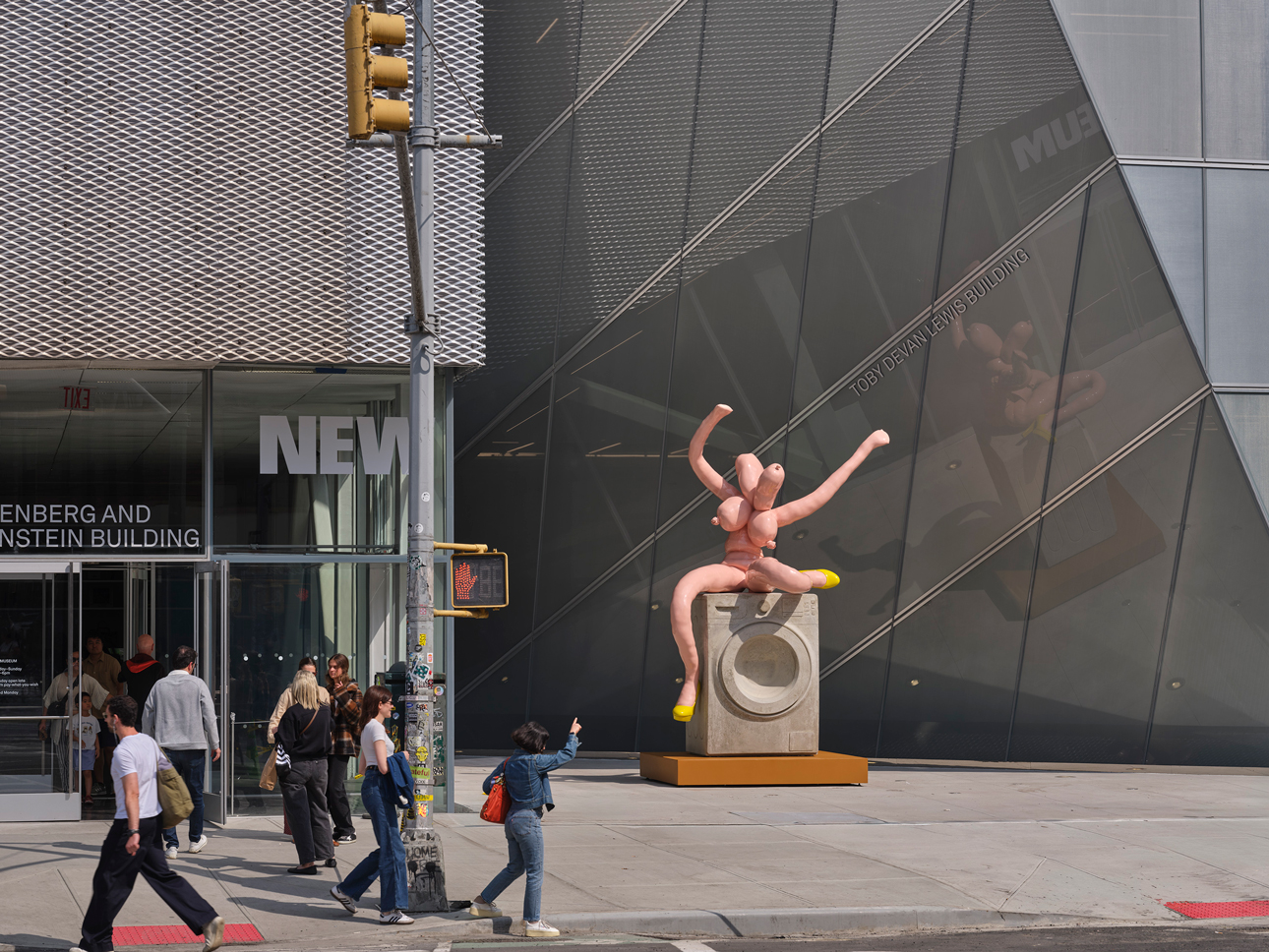
Sarah Lucas Unveils VENUS VICTORIA at the New Museum’s Bowery Plaza

The New Museum has unveiled "VENUS VICTORIA," a new public sculpture by British artist Sarah Lucas, inaugurating the museum's outdoor plaza at the junction of Bowery and Prince Street in downtown Manhattan. The sculpture, which features Lucas's signature Bunny figure seated atop a giant washing machine, was selected by an all-artist jury including Teresita Fernández, Joan Jonas, Julie Mehretu, Cindy Sherman, and Kiki Smith. It opens on May 12, 2026, and will remain on view for two years as the first of five commissions dedicated to public sculpture by women artists.

Henry Moore's King and Queen leads Christie's 20th/21st Century London sales

Christie’s London evening sales achieved a combined total of £197.5 million ($263.8 million) on March 5, 2026, representing a 52 percent increase year-on-year. The night was headlined by Henry Moore’s monumental bronze sculpture 'King and Queen', which sold for a record-breaking £26.3 million after an eight-minute bidding war. The event also debuted a new auction rostrum designed by Sir Jony Ive’s creative collective, LoveFrom, marking the house's 260th anniversary.

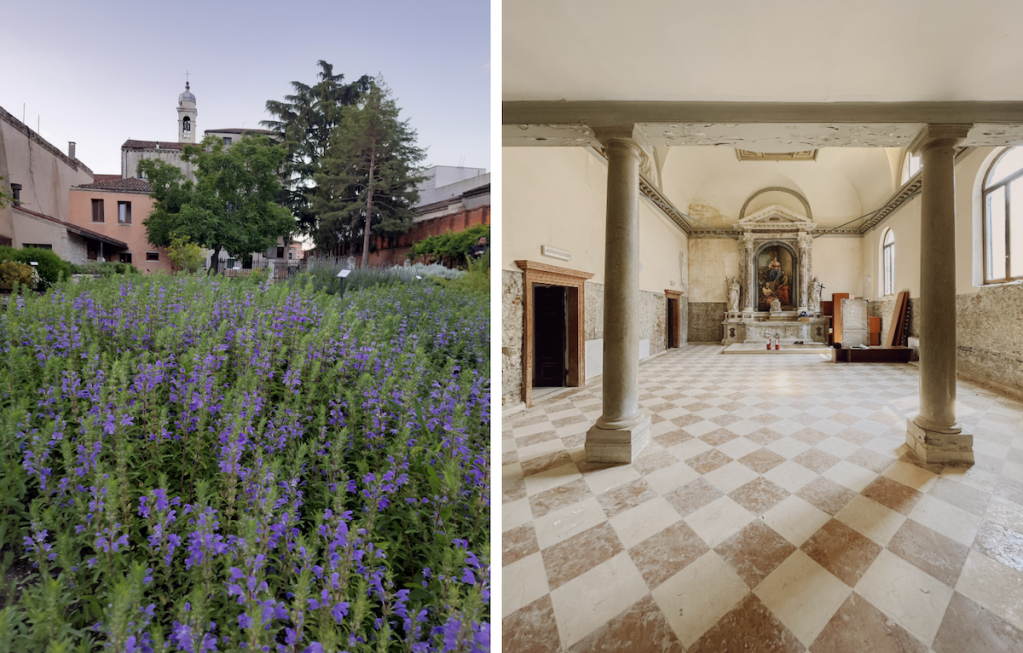
Brian Eno, FKA Twigs, Jim Jarmusch Among Sound Artists Commissioned for Vatican Pavilion at Venice Biennale

The Vatican has announced a star-studded lineup of musicians and artists for its pavilion at the 2026 Venice Biennale, titled "The Ear Is the Eye of the Soul." Curated by Hans Ulrich Obrist and Ben Vickers in collaboration with Soundwalk Collective, the exhibition features commissioned sound works from figures including Brian Eno, FKA Twigs, Patti Smith, and the late Alexander Kluge. The project is inspired by the 12th-century mystic Saint Hildegard of Bingen and will be staged across two historic Venetian locations: the Mystical Garden of the Discalced Carmelites and the Complesso di Santa Maria Ausiliatrice.

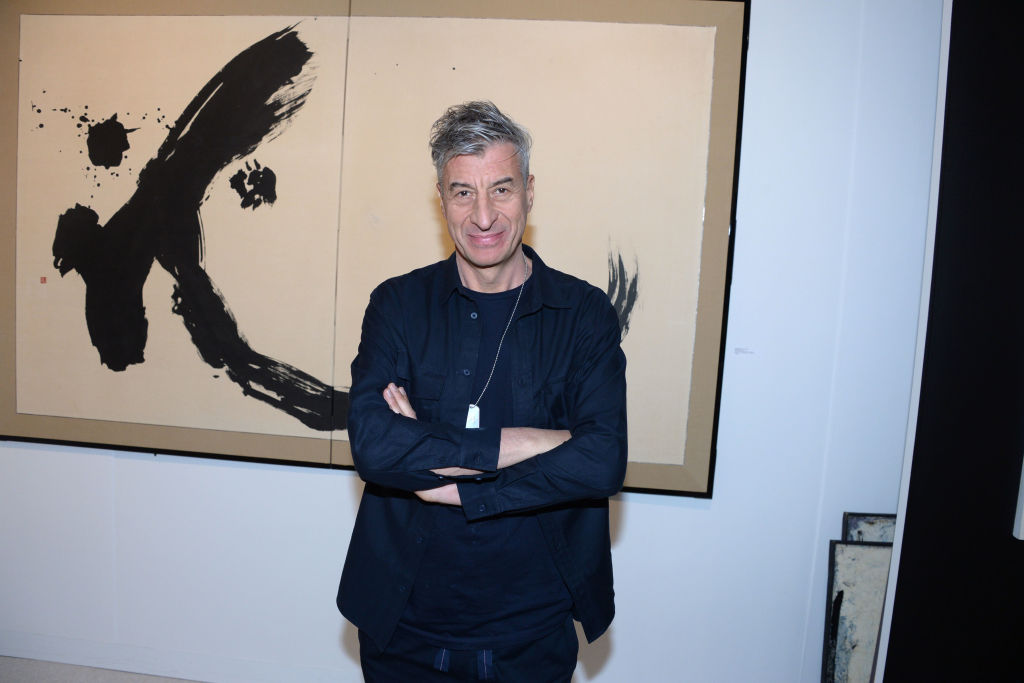
Maurizio Cattelan’s Latest Work is Hotline for People to Confess Their Sins… to Him

Italian conceptual artist Maurizio Cattelan has launched a new project: a hotline and WhatsApp service inviting the public to confess their sins. The project, timed to coincide with the Easter period and the 21st anniversary of Pope John Paul II's death, will culminate in a livestream on April 23 where Cattelan will offer a form of symbolic absolution to selected participants. Alongside the hotline, he is releasing a limited edition of 666 small-scale replicas of his controversial 1999 sculpture, *The Ninth Hour*, which depicts the late pope struck by a meteorite.

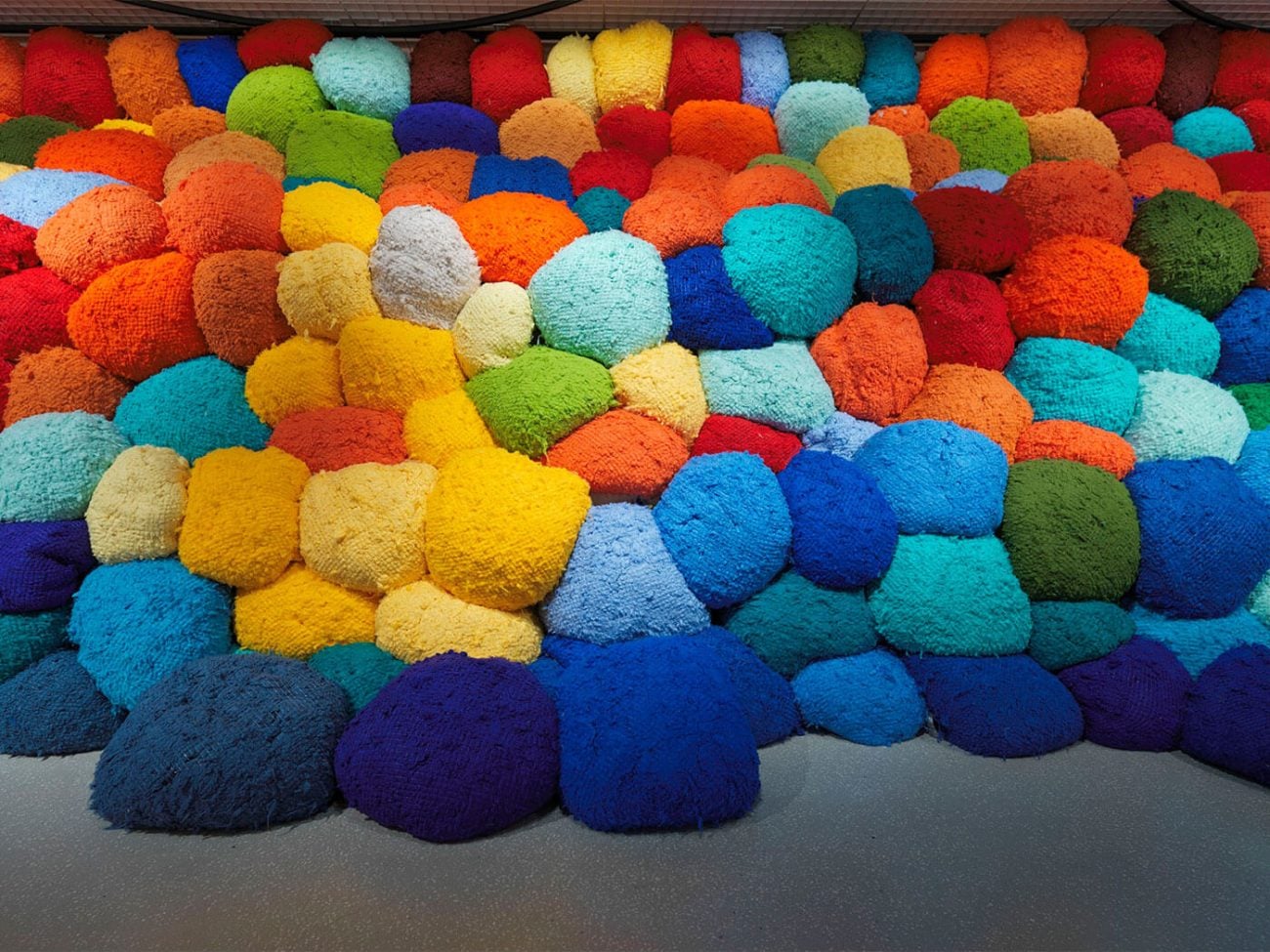
Sheila Hicks en 2 minutes

Sheila Hicks, the American textile artist born in 1934, is profiled in a concise overview of her career. The article traces her journey from studying under Josef Albers at Yale and learning weaving from Andean artisans in Chile, to establishing her studio in Mexico and later Paris. It highlights her monumental commissions for hotels, embassies, and public spaces, as well as her intimate "Minimes" works. Key milestones include her 2014 piece "Pillar of Inquiry/Supple Column" at the Whitney Biennial, her 2017 installation at the Venice Biennale, and a major retrospective at the Centre Pompidou in 2018.

6 musées incontournables à visiter à Venise

Beaux Arts Magazine highlights six must-visit museums in Venice, including the Palazzo Ducale, Gallerie dell'Accademia, Peggy Guggenheim Collection, and the Pinault Collection venues Palazzo Grassi and Punta della Dogana. The article notes that during the Biennale, the city is filled with free pavilions, but the main museums have high entry fees, offset by passes like the Venice Museum Pass (€59) and Venice City Pass (€119). It also mentions a current Marina Abramović exhibition at the Gallerie dell'Accademia, marking her as the first living female artist honored there.

« Les artistes sont des fous, des enfants » : rencontre avec Annette Messager au cœur du bric-à-brac poétique de son atelier

French artist Annette Messager, 82, welcomes Beaux Arts Magazine into her Malakoff studio and home ahead of her exhibition at the Musée de la Chasse et de la Nature in Paris. The studio is a chaotic, poetic bric-à-brac filled with hybrid creatures, stuffed toys, anatomical objects, and textile works, including her iconic piece "Les Piques" (1992–1993). Messager, who won the Golden Lion at the Venice Biennale in 2005, discusses her playful yet serious approach to art, describing artists as "mad, like children" who play constantly, sometimes very seriously. Her upcoming shows include presentations at Centre Pompidou Málaga, Galería Albarrán Bourdais in Madrid, the National Taiwan Museum of Fine Arts, and the Kunsthalle Prague.

Venice Biennale 2026: What are the major trends that will mark the 99 national pavilions?

Biennale de Venise 2026 : quelles sont les grandes tendances qui vont marquer les 99 pavillons nationaux ?

The article previews the 2026 Venice Biennale, highlighting key trends across its 99 national pavilions. Major themes include the hybridization of theater, dance, and performance, particularly in pavilions from Austria, Luxembourg, Belgium, and Lithuania, where artists like Florentina Holzinger, Aline Bouvy, Miet Warlop, and Eglė Budvytytė use radical, body-centric works. Geopolitical engagement is also central, with the Ukrainian pavilion featuring Zhanna Kadyrova's work on resistance and the British pavilion exploring themes of exile and migration. Other notable pavilions include Spain's focus on imagery, a sound installation for the Vatican, a polyphonic piece for Romania, and a film on sign language song for Poland.

Kiev bombardé

The Journal des Arts issue of May 15, 2026, covers multiple art-world stories: the Venice Biennale opening amid controversy, France's final adoption of a law on restitution of colonial-era looted cultural property, the new V&A East museum targeting younger audiences, tensions in Giverny where Monet's legacy does not benefit all, and the structuring of the Nabis art market.

IA et musées

This issue of Le Journal des Arts covers several major art news stories: the opening of the Venice Biennale amid a tense climate, the final adoption of a French law on the restitution of cultural property looted during colonization, the new V&A East museum targeting younger audiences, the uneven economic benefits of Monet's legacy in Giverny, and the structuring of the Nabis art market.

Relaxe pour le coupeur de tête

The latest issue of Le Journal des Arts (n°677, May 15, 2026) covers several major art-world stories: the Venice Biennale opening amid controversy, the final adoption of a French law on the restitution of cultural property looted during colonization, the V&A East museum's strategy to attract younger audiences, the uneven economic impact of Monet's legacy on the town of Giverny, and the structuring of the market for Nabis artists.

1,1 milliard de dollars

The Journal des Arts' issue No. 677, dated May 15, 2026, leads with the opening of the Venice Biennale amid a tense climate. Other top stories include the final adoption of a French law on the restitution of cultural property looted during colonization, the V&A East museum's strategy to attract younger audiences, a report on how Monet's legacy in Giverny does not benefit everyone locally, and an analysis of the structuring market for the Nabis artists.

Record pour Pollock

The Journal des Arts' May 15, 2026 issue (No. 677) covers a range of art-world developments: the Venice Biennale opens amid controversy, a French law on the restitution of cultural property looted during colonization is definitively adopted, the V&A East museum targets younger audiences, the town of Giverny struggles to benefit from Monet's legacy, and the market for Nabis artists is becoming more structured.

Venice Biennale: A Silent US Pavilion

Biennale de Venise : un Pavillon US silencieux

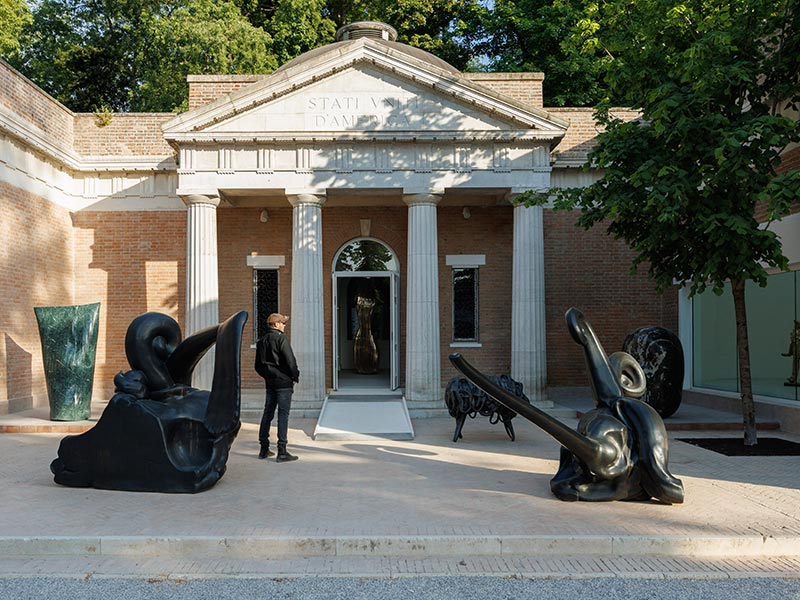
The US Pavilion at the 2026 Venice Biennale, featuring artist Alma Allen, opened to sparse crowds despite a 10% overall attendance increase at the Biennale. The pavilion was embroiled in controversy before opening: Allen was selected by the American Arts Conservancy (AAC), a private entity created in 2025 at the initiative of Donald Trump after the dissolution of the federal committee that previously oversaw the pavilion. AAC head Jenni Parido, a former pet food executive, chose the self-taught, little-known artist who had never had a solo museum exhibition. Major funders the Ford and Mellon Foundations withdrew, forcing the AAC to launch a public donation appeal. The exhibition features 25 abstract bronze, stone, and burl-wood sculptures that the artist describes as biomorphic landscapes, but critics find them pleasant yet silent, lacking the promised political or visceral resonance.

Le coup d’envoi des ventes de New York

Le Journal des Arts' issue n°677 (May 15, 2026) leads with the opening of the Venice Biennale amid a tense climate. Other top stories include the final adoption of a French law on the restitution of cultural property looted during colonization, the V&A East museum's strategy to attract younger audiences, a report on how Monet's legacy in Giverny does not benefit everyone locally, and an analysis of the structuring market for works by the Nabis artists.

La Biennale de Venise s’ouvre dans un climat houleux

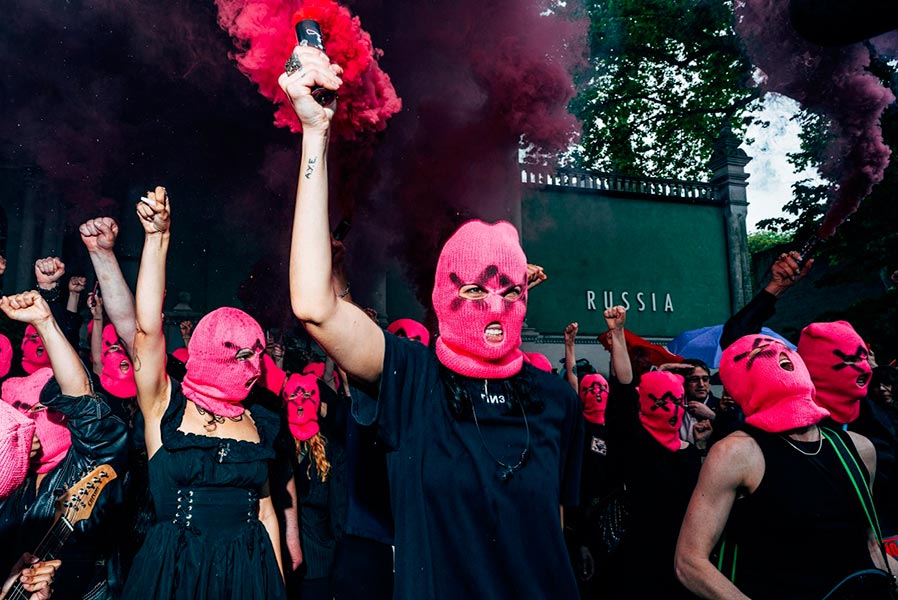
The 61st Venice Biennale opened amid intense controversy after its president, Pietrangelo Buttafuoco, announced the return of the Russian pavilion, which had been absent since the start of the Ukraine war. The European Commission suspended its €2 million subsidy for the 2028 edition, and the entire Biennale jury resigned on April 30. Buttafuoco later declared the Russian pavilion would remain closed, but protests erupted during the pre-opening days (May 6–8), drawing 28,000 professionals. Pussy Riot members, Femen activists, and the Free Nations League staged demonstrations, while the Israeli pavilion remained open despite a letter signed by nearly 200 artists calling for its exclusion.

The Venice Biennale Reaches Full Capacity

La Biennale de Venise fait le plein

The Venice Biennale has reached full capacity, with all exhibition spaces and pavilions fully booked for the upcoming edition. The article reports on the overwhelming demand from participating countries and artists, highlighting the logistical challenges and the record number of national pavilions confirmed for the event.

Cécile Debray : « Une proposition poétique de dialogue entre trois œuvres pour une délectation esthétique »

Cécile Debray, president of the Musée national Picasso-Paris, discusses a rare collaboration with galleries to present a three-artist exhibition in Venice during the Biennale. The show brings together Pablo Picasso, Giorgio Morandi, and Claudio Parmiggiani around the theme of the object and still life, highlighting unexpected philosophical and poetic connections. Debray explains how the selection of 14 Picasso works balances iconic pieces with lesser-known ones, including sculptures, to create a dialogue with Morandi's rigorous, serial approach and Parmiggiani's metaphysical art.

Who are the members of the Venice Biennale jury?

Qui sont les membres du jury de la Biennale de Venise ?

The 61st Venice Biennale, opening May 9, 2026, has announced its international jury, which is composed entirely of women. The five members are Solange Oliveira Farkas (president), Zoe Butt, Elvira Dyangani Ose, Marta Kuzma, and Giovanna Zapperi, hailing from Brazil, Thailand, Spain, the United States, and Switzerland. Their backgrounds span the Global South, feminist studies, and transnational curatorial practices.