filter_list Showing 10 results for "61e Biennale de Venise" close Clear
search
dashboard All 10 museum exhibitions 7article news 3
date_range Range Today This Week This Month All
Subscribe

In Venice, 22 unmissable exhibitions on the sidelines of the biennial

À Venise, 22 expositions incontournables en marge de la biennale

The article highlights 22 must-see exhibitions happening alongside the 61st Venice Biennale, which is expected to be affected by geopolitical tensions but still promises artistic vibrancy. Notable events include Bvlgari's dual projects featuring artists Lotus L. Kang, Lara Favaretto, and Monia Ben Hamouda; the unveiling of the Asscher collection at the Ama Venezia foundation with works by Charles Ray, Jenny Saville, and Richard Serra; and the inaugural exhibition "The Only True Protest Is Beauty" at the Fondation Dries Van Noten, showcasing 200 objects across fashion, design, and art. Other highlights include a dialogue between Picasso, Morandi, and Parmiggiani at the Fondazione Bevilacqua La Masa.

Who is Yto Barrada, France's representative at the Venice Biennale with a world-spanning work?

Qui est Yto Barrada, représentante de la France à la Biennale de Venise avec une œuvre-monde ?

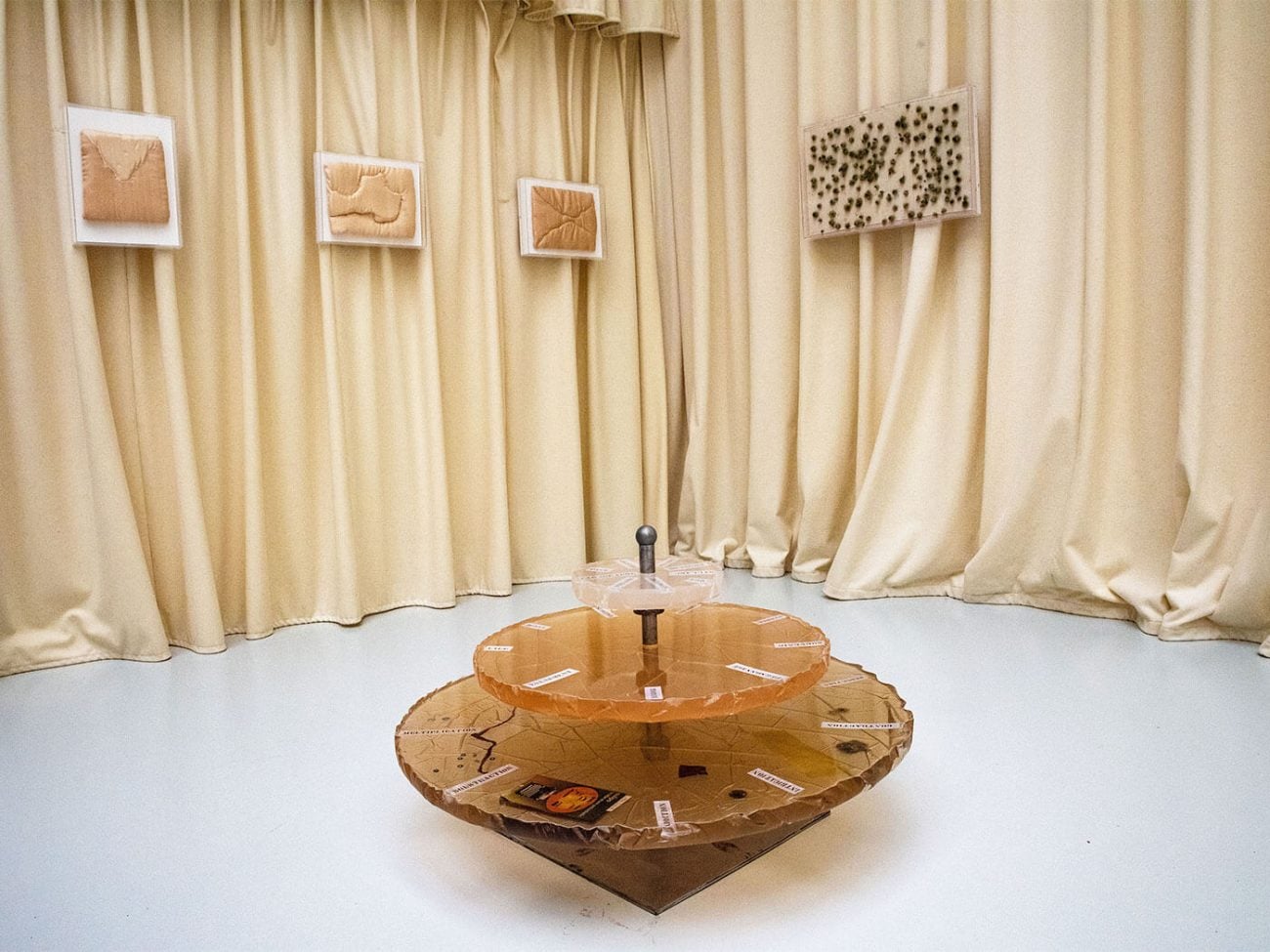
Yto Barrada, the artist representing France at the 2026 Venice Biennale, has created a multidisciplinary installation titled "Saturne" for the French Pavilion. The work centers on textiles and natural dyeing, weaving together themes of postcolonial history, migration, craft transmission, and the symbolism of Saturn—from its astronomical mystery to its mythological role as the devourer of children. The installation features wool curtains, Aubusson tapestry, goat skins, wasp-nest sculptures, masks, muzzles, a color chart, and video, all housed in a renovated pavilion designed with the help of numerous artisans. Barrada, born in Paris in 1971 and raised in Tangier, founded the Cinémathèque de Tanger and later The Mothership, a research center focused on textiles and natural dyes. The exhibition is curated by Myriam Ben Salah.

Venice Biennale 2026: What are the major trends that will mark the 99 national pavilions?

Biennale de Venise 2026 : quelles sont les grandes tendances qui vont marquer les 99 pavillons nationaux ?

The article previews the 2026 Venice Biennale, highlighting key trends across its 99 national pavilions. Major themes include the hybridization of theater, dance, and performance, particularly in pavilions from Austria, Luxembourg, Belgium, and Lithuania, where artists like Florentina Holzinger, Aline Bouvy, Miet Warlop, and Eglė Budvytytė use radical, body-centric works. Geopolitical engagement is also central, with the Ukrainian pavilion featuring Zhanna Kadyrova's work on resistance and the British pavilion exploring themes of exile and migration. Other notable pavilions include Spain's focus on imagery, a sound installation for the Vatican, a polyphonic piece for Romania, and a film on sign language song for Poland.

In Pictures: The Highlights of the 2026 Venice Biennale

En images : les grands moments de la Biennale de Venise 2026

The 2026 Venice Biennale, titled "In Minor Keys" and curated by Koyo Kouoh, opened on May 9, 2026, at the Arsenale and Giardini venues. Kouoh, who died suddenly in May 2025 at age 57, conceived the event as a counterpoint to global noise and fury, inviting visitors to slow down and tune into minor tonalities. The exhibition features works addressing colonial memory, slavery, and Gaza, with a team of four curators executing her vision. Highlights include Maria Magdalena Campos-Pons's tribute to Kouoh and Toni Morrison, Hala Schoukair's installation, and Gabrielle Goliath's "Elegy," alongside collateral shows like the Dries van Noten Foundation at Palazzo Pisani Moretta and the Victor Pinchuk Foundation's "Still Joy – from Ukraine into the World."

Venice Biennale 2026: The Pavilions Not to Be Missed

Biennale de Venise 2026 : les pavillons à ne surtout pas manquer

The 61st Venice Biennale, curated by Koyo Kouoh as an invitation to slow down and reconnect with emotions, features a constellation of contemplative and powerful proposals across the city. Notable national pavilions include the Holy See transforming a monastic garden into an immersive sound experience by Soundwalk Collective, Canada exploring colonial heritage through giant water lilies by Abbas Akhavan, and Austria electrifying the Giardini with radical performances by Florentina Holzinger. Other highlights include Spain dissecting collective memory through postcards, Poland imagining new forms of language between human and underwater worlds, and India's pavilion exploring notions of home.

« No art washing ! » : à la Biennale de Venise, près de 3 000 manifestants réunis pour dénoncer la présence du pavillon israélien

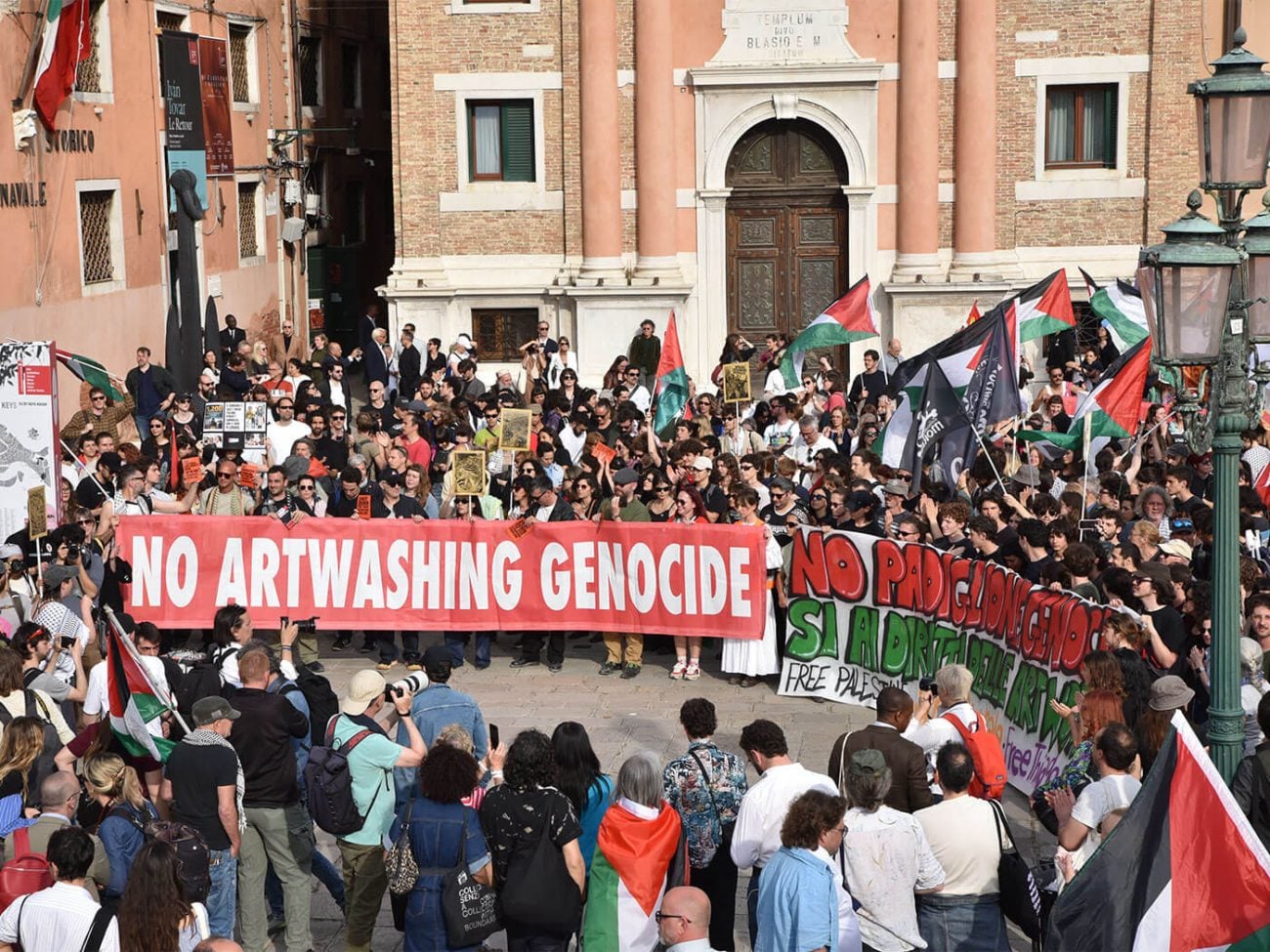
On May 8, 2026, nearly 3,000 protesters gathered in Venice to demonstrate against the presence of the Israeli pavilion at the Venice Biennale. Led by the collective Art Not Genocide Alliance (Anga), the crowd included artists, curators, and cultural workers who chanted slogans such as "Stop al Padiglione genocidio" and called for a strike on the closing day of the professional previews. Dozens of national pavilions, including those of France, Belgium, Poland, Spain, the United Kingdom, Lebanon, and Ukraine, closed in solidarity. The protest followed a letter sent by Anga in March demanding Israel's exclusion, which went unanswered, and the self-dissolution of the awards jury on April 30 over the presence of both Israel and Russia.

Biennale de Venise 2026 : les saturnales éblouissantes d’Yto Barrada pour le pavillon français

Yto Barrada has been selected to represent France at the 61st Venice Biennale in 2026 with her exhibition "Comme Saturne" (Like Saturn) in the French Pavilion. The installation features rebellious stage curtains hiding wasp nests and a copper daguerreotype plate of a planet, a large rock, a Wheel of Fortune, and a nostalgic vanitas arrangement around a missing mirror frame. Curated by Myriam Ben Salah, the show explores textile and natural dyeing, with three cabinets addressing the transmission of know-how, migration of plants and people, postcolonial history, and Enlightenment imperialism. A central room displays 70 pieces forming a symmetrical frieze of red natural dyes, while a black monochrome patchwork highlights the difficulty of achieving black in dyeing. Barrada is the fifth woman to represent France at the Biennale.

Under pressure, the jury of the 61st Venice Biennale will exclude Russian and Israeli pavilions from the awards

Sous pression, le jury de la 61e Biennale de Venise exclura les pavillons russe et israélien du palmarès

The 61st Venice Biennale, titled "In Minor Keys" and running from May 9 to November 22, 2026, has been embroiled in political controversy after organizers decided to reinstate the Russian pavilion, which had been excluded since Russia's 2022 invasion of Ukraine. Under pressure from the European Commission, which threatened to suspend a €2 million grant, the jury announced it will exclude artists from the Russian and Israeli pavilions from winning prizes, citing that leaders Vladimir Putin and Benjamin Netanyahu face International Criminal Court charges for crimes against humanity. The Russian pavilion will remain closed to the public but open for VIP press previews, while the Israeli pavilion stays open to the public. Italian Culture Minister Alessandro Giuli has refused to attend the opening ceremony in protest.

For the 61st Venice Biennale, a quest for beauty despite a troubled world

Pour la 61e Biennale de Venise, une quête de beauté malgré un monde troublé

Koyo Kouoh, the Swiss-Cameroonian curator who was set to become the first African woman to direct the Venice Biennale, died suddenly on May 10, 2025, at age 57, just weeks before the opening of the 61st edition she had conceived. Titled "In Minor Keys," the exhibition at the Giardini and Arsenale will proceed posthumously based on her detailed directives, featuring 111 artists including Laurie Anderson, Wangechi Mutu, and Kader Attia, with a focus on beauty, resilience, and radical emotional connection amid global turmoil.

Under pressure, the Venice Biennale jury resigns and is replaced by a public vote

Sous pression, le jury de la Biennale de Venise démissionne et est remplacé par un vote du public

On April 30, just days before the Venice Biennale's public opening on May 9, the entire international jury responsible for awarding the Golden and Silver Lions resigned. The jury—comprising Solange Farkas, Zoe Butt, Elvira Dyangani Ose, Marta Kuzma, and Giovanna Zapperi—had been caught in a escalating controversy after Biennale president Pietrangelo Buttafuoco reinstated Russia, which had been excluded since the 2022 invasion of Ukraine. The European Union threatened to suspend or cancel its €2 million subsidy if Russia remained included. The jury attempted to exclude countries whose leaders face International Criminal Court arrest warrants, effectively targeting Russia and Israel, but ultimately resigned under pressure from both external diplomatic turmoil and internal institutional opposition to any discrimination between pavilions.