
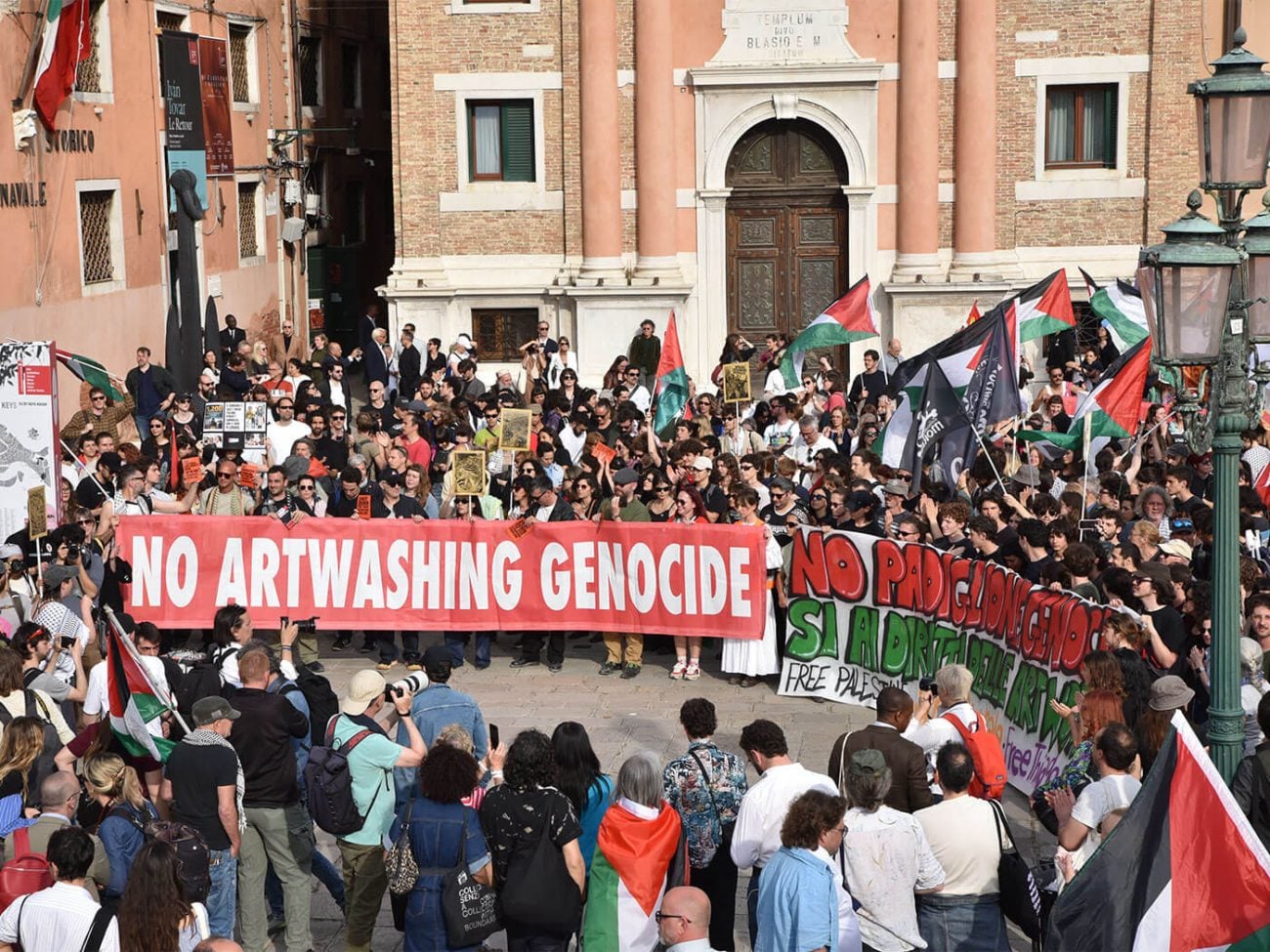
On May 8, 2026, nearly 3,000 protesters gathered in Venice to demonstrate against the presence of the Israeli pavilion at the Venice Biennale. Led by the collective Art Not Genocide Alliance (Anga), the crowd included artists, curators, and cultural workers who chanted slogans such as "Stop al Padiglione genocidio" and called for a strike on the closing day of the professional previews. Dozens of national pavilions, including those of France, Belgium, Poland, Spain, the United Kingdom, Lebanon, and Ukraine, closed in solidarity. The protest followed a letter sent by Anga in March demanding Israel's exclusion, which went unanswered, and the self-dissolution of the awards jury on April 30 over the presence of both Israel and Russia.
This protest marks the largest political demonstration at the Venice Biennale since 1968 and 1974, reflecting deep divisions within the art world over the Israel-Gaza conflict. By shutting down pavilions and obscuring artworks with political messages, participants rejected what they called "art washing"—the use of cultural events to legitimize violence. The action underscores growing pressure on major art institutions to take political stances, and highlights the Biennale's role as a platform for global political discourse, not just artistic display.