filter_list Showing 6 results for "Amulets" close Clear
dashboard All 6 museum exhibitions 4gavel restitution 1article news 1
date_range Range Today This Week This Month All
Subscribe

egyptian antiquities trafficker jfk airport prison sentence 1234750392

Egyptian doctor Ashraf Omar Eldarir has been sentenced to six months in prison by U.S. District Judge Rachel P. Kovner for smuggling hundreds of ancient Egyptian artifacts into the United States. Eldarir was arrested in 2019 after importing over 600 artifacts without declaring them on customs forms, including a polychrome relief, Roman limestone pieces, gold amulets, and wooden tomb model figures dating to 1900 BCE. The largest seizure of smuggled antiquities at JFK Airport occurred in January 2020, when customs officers found 590 artifacts wrapped in bubble wrap and foam, with loose sand and dirt indicating recent excavation. Eldarir pleaded guilty to four counts of smuggling and used fake provenances—including forged documents and photoshopped photographs—to sell artifacts at U.S. auction houses.
‘A very basic human desire to want some control’: US exhibition explores the power of magic

The Toledo Museum of Art has opened an exhibition titled 'Cursed!' that explores the widespread use of magic spells and objects in ancient Mesopotamia, Egypt, Greece, and Rome. The show features amulets, inscribed gemstones, and figurines used for purposes ranging from protecting newborns and winning lawsuits to casting coercive love spells.

scientists recreate egyptian blue pigment 2653299

A team of researchers has successfully recreated Egyptian blue, the world's oldest synthetic pigment, which was used by ancient Egyptians from as early as 3100 B.C.E. The study, published in NPJ Heritage Science, was led by John S. McCloy of Washington State University and Edward P. Vicenzi of the Smithsonian Institution's Museum Conservation Institute, in collaboration with the Carnegie Museum of Natural History. The researchers experimented with various minerals, heating them in ovens at around 1,000 degrees Celsius for up to 11 hours, and used modern microscopy and analysis techniques to compare their results with ancient artifacts from the Carnegie Museum's collection.

Early career artists are invited to apply to Collective programme

Collective Gallery on Calton Hill in Edinburgh has announced its 2026 exhibition programme, featuring solo shows by Paloma Proudfoot and Katie Paterson in the City Dome Gallery. Proudfoot's exhibition, running from March to May 2026, will include new sculptures and a performance exploring the female voice and body, while Paterson's 'Afterlife' presents nearly 200 amulets made from endangered materials, previously shown at Folkestone Triennial 2025. The gallery also launched a new career-development programme called Time + Space, inviting early-career artists to apply by 14 December 2025, with the first edition featuring Alberta Whittle and Aqsa Arif.

The exhibition of the great artist Lucy Orta in a recovered historic palace in Sansepolcro

La mostra della grande artista Lucy Orta in un palazzo storico recuperato a San Sepolcro

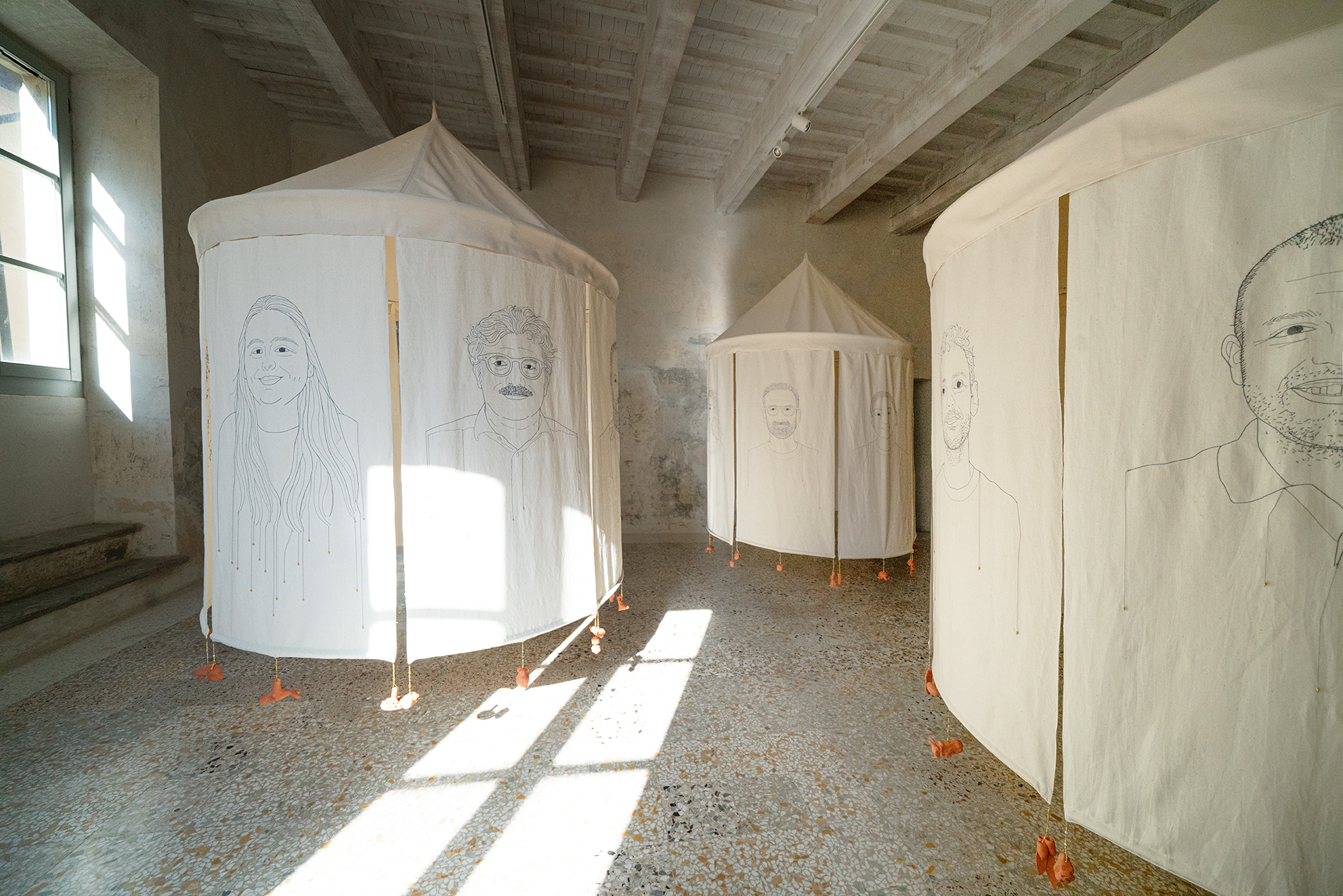
British artist Lucy Orta has unveiled a site-specific installation titled "Trame di Comunità" at CasermArcheologica in Sansepolcro, Tuscany, following an artist residency. The work features five tents constructed from hand-woven vintage linen and hemp, inspired by the protective imagery in Piero della Francesca’s "Polyptych of Mercy." These structures are embroidered with the faces of local residents and adorned with 99 terracotta amulets, incorporating oral testimonies and personal reflections gathered from the community during Orta's stay.

FORGING PATHS: AFRO-BRAZILIAN ANCESTRY AND FEMININE POWER IN THE WORK OF NÁDIA TAQUARY

FORJAR CAMINOS: ANCESTRALIDAD AFROBRASILEÑA Y PODER FEMENINO EN LA OBRA DE NÁDIA TAQUARY

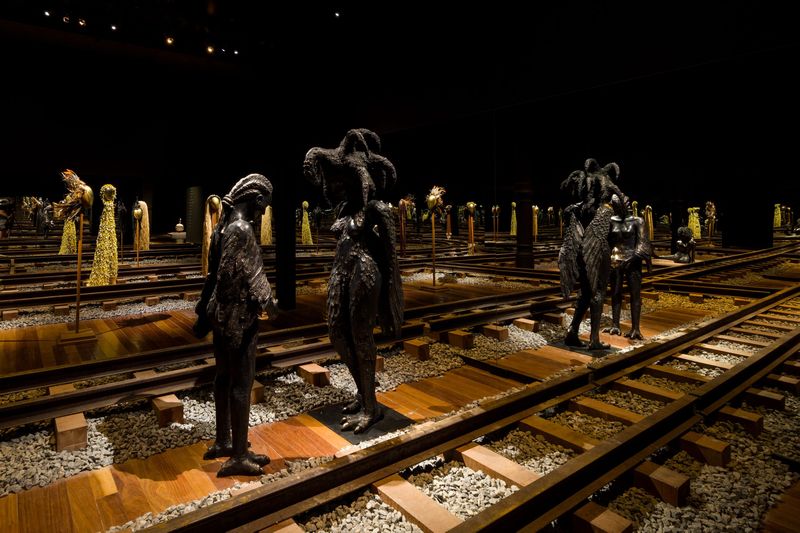
The exhibition "Ònà Irin: caminho de ferro" by artist Nádia Taquary has opened at Sesc Belenzinho in São Paulo, featuring large-scale sculptures and an immersive video installation. Curated by Amanda Bonan, Ayrson Heráclito, and Marcelo Campos, the show centers on a massive installation of iron rails that symbolize the Yoruba deity Ogum, the opener of paths. The works integrate traditional Afro-Brazilian materials such as cowrie shells, beads, and metals to explore spiritual protection and the historical significance of jewelry as a form of resistance and identity for enslaved and freed Black women.