filter_list Showing 8 results for "Bienal de Venecia" close Clear
search
dashboard All 8 museum exhibitions 4person people 2article culture 1article news 1
date_range Range Today This Week This Month All
Subscribe

OSCAR MURILLO: PAINTING AS A WELL OF ACCUMULATION

ÓSCAR MURILLO: LA PINTURA COMO POZO DE ACUMULACIÓN

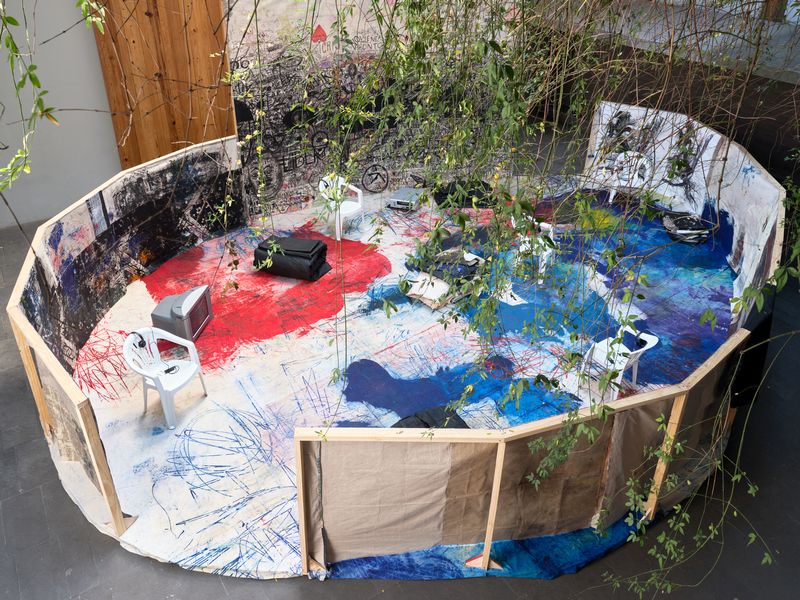
The article profiles Colombian-born artist Oscar Murillo and his expansive, socially-engaged practice. It details his rise to international prominence in the early 2010s with large-scale paintings that incorporate text, textiles, and studio detritus, and highlights his ongoing, collaborative project 'Frequencies,' which involves students from over thirty countries creating works on canvases attached to school desks. The piece also references his major solo exhibitions, including 'El pozo de agua' at kurimanzutto in Mexico City (2026), 'Masas' at WIELS in Brussels (2024), and 'The flooded garden' at Tate Modern (2024).
CISCO MEREL: LA CHANTIN

CISCO MEREL: LA CHANTIN

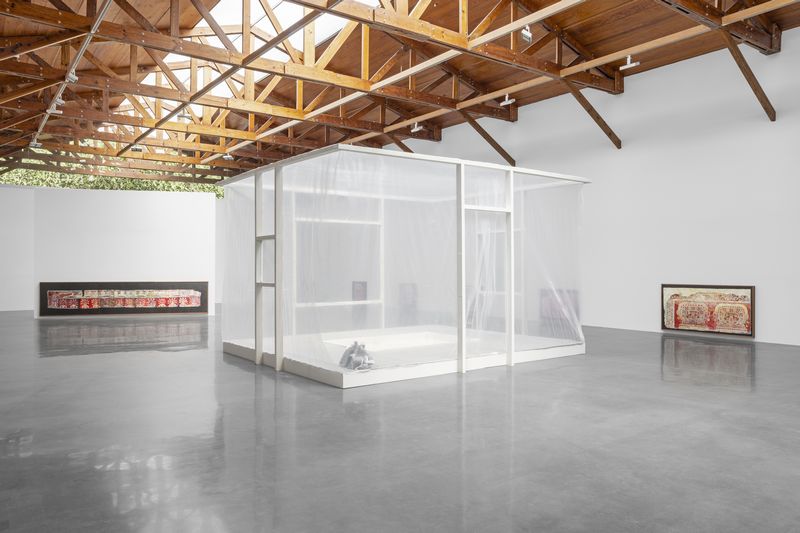
Kunsthalle Lissabon in Lisbon, Portugal, is presenting 'La Chantin,' the first solo exhibition in the country by Panamanian artist Cisco Merel. The exhibition features a site-specific installation exploring the house as an open, collective, and evolving system, inspired by the mobile, wooden 'shanty' structures built by the Afro-Caribbean diaspora during the construction of the Panama Canal.

A Poetic and Material Institutional Critique: Gala Porras-Kim at kurimanzutto and the Venice Biennale

UNA CRÍTICA INSTITUCIONAL POÉTICA Y MATERIAL: GALA PORRAS-KIM EN KURIMANZUTTO Y LA BIENAL DE VENECIA

Colombian artist Gala Porras-Kim presents her first solo exhibition at kurimanzutto gallery in Mexico City, titled "Espacios del futuro replican los del pasado" (2026), alongside her participation in the 2026 Venice Biennale. The show critically examines how museum conservation protocols transform objects by detaching them from their original material, ritual, and spiritual contexts. Central to the exhibition is "The Motion of an Alluvial Record" (2024), a greenhouse that recreates the humidity and temperature of Yucatecan mangroves, allowing clay and sediment to shift continuously, resisting the linear, stratified time of Western archives and evoking cyclical Maya cosmologies. Another series, "Uprooted" (2026), reproduces fragments of looted Teotihuacan murals from Techinantitla, now held by the Metropolitan Museum of Art and the Ethnological Museum of Berlin, reinstalling them near the floor to restore their original architectural scale and orientation.

VARINIA BRODSKY ZIMMERMANN: “ENTIENDO AL MUSEO COMO UN CAMPO DE REVERBERACIÓN”

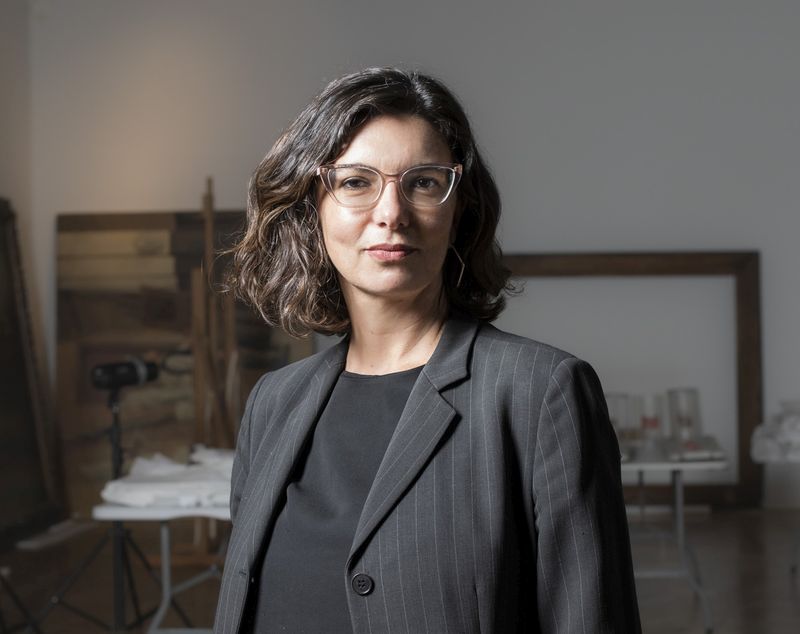
Varinia Brodsky Zimmermann, director of the Museo Nacional de Bellas Artes de Chile, is interviewed as part of a series on contemporary museums in Latin America. She describes the museum as a "field of reverberation" that amplifies social, cultural, and political questions without reacting mechanically to demands. The conversation covers structural challenges facing public museums in Chile, including budget precarity and suspended exhibition projects, and Brodsky advocates for more permeable, horizontal, and sustainable institutions that maintain critical depth while engaging diverse communities.

LATIN AMERICA AT THE VENICE BIENNALE: A VISUAL TOUR OF THE CENTRAL EXHIBITION

LATINOAMÉRICA EN LA BIENAL DE VENECIA: UN RECORRIDO VISUAL POR LA MUESTRA CENTRAL

The 61st Venice Biennale, titled "In Minor Keys," opened its preview days on May 8, 2025, curated by the late Koyo Kouoh (1967–2025). The central exhibition, realized by a team she selected before her death, features 110 participants from around the world, with a strong Latin American presence of 15 artists, collectives, and organizations. The show explores themes of colonial history, plantation economies, geological memory, and environmental crisis through works that emphasize shared materials, politics, and poetics across geographies from Dakar to San Juan.

ART CRITICISM: CLARITY OR MORAL AUTHORITARIANISM?

CRÍTICA DE ARTE: ¿CLARIDAD O AUTORITARISMO MORAL?

The article is a critical essay examining the state of contemporary art production in Mexico, arguing it has become a privatized field designed to please wealthy elites and foreign collectors. It contends that art has shifted from being partly publicly funded to being driven by the market and private initiative, leading to a culture of self-censorship, precarity, and a desperate ambition for visibility and sales.

ENTRE PERRO Y LOBO CANADA LLEVA EL CREPUSCULO A LA BIENAL DE VENECIA

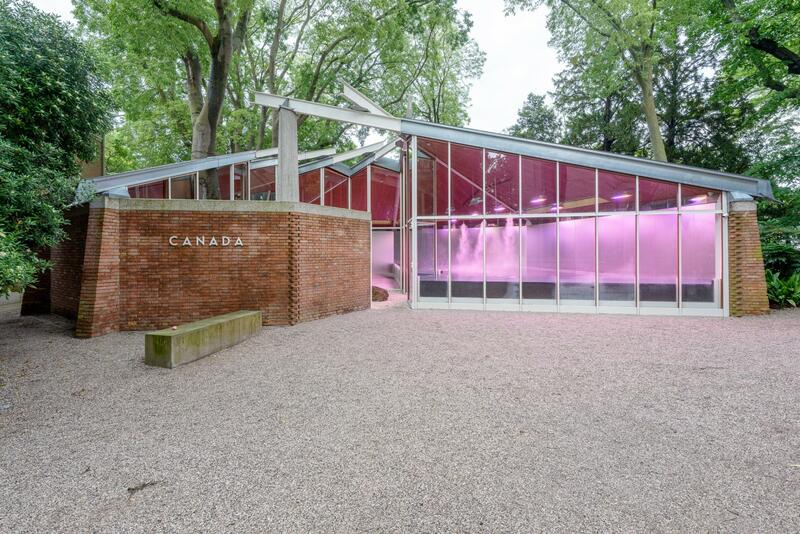
Abbas Akhavan, born in Tehran in 1977, will represent Canada at the 61st Venice Biennale in 2026 with an exhibition titled "Entre chien et loup" (Between Dog and Wolf). Commissioned by the National Gallery of Canada and curated by Kim Nguyen, the Canada Pavilion is transformed into a monumental Wardian case—a 19th-century plant transport device—serving as a greenhouse for Victoria water lilies. The seeds were germinated at the Orto Botanico di Padova in collaboration with the Royal Botanic Gardens, Kew, and the installation will be on view until November 22, 2026.

From Minor Keys to Uproar: The Crisis of the Venice Biennale

DE LAS MINOR KEYS AL ESTRUENDO: LA CRISIS DE LA BIENAL DE VENECIA

The 61st Venice Biennale is engulfed in a structural crisis, marked by geopolitical tensions over the inclusion of Russia (amid its invasion of Ukraine) and Israel (amid the Gaza genocide). The Biennale Foundation, led by Pietrangelo Buttafuoco, defended their participation on legalistic grounds, sparking outrage from over 200 artists, curators, and cultural workers who demanded Israel's exclusion, aligning with Art Not Genocide Alliance (ANGA). The international jury, chaired by Solange Farkas and including Zoe Butt, Elvira Dyangani Ose, Marta Kuzma, and Giovanna Zapperi, resigned collectively on April 30 after deciding not to award prizes to countries whose leaders face International Criminal Court arrest warrants. This led to the cancellation of the traditional Golden and Silver Lions, replaced by audience-voted "Visitor Lions," with awards deferred until November. The European Commission suspended a €2 million subsidy over Russia's participation, and Italian Culture Minister Alessandro Giuli notably skipped the May 9 opening.